En
En
 9 min read
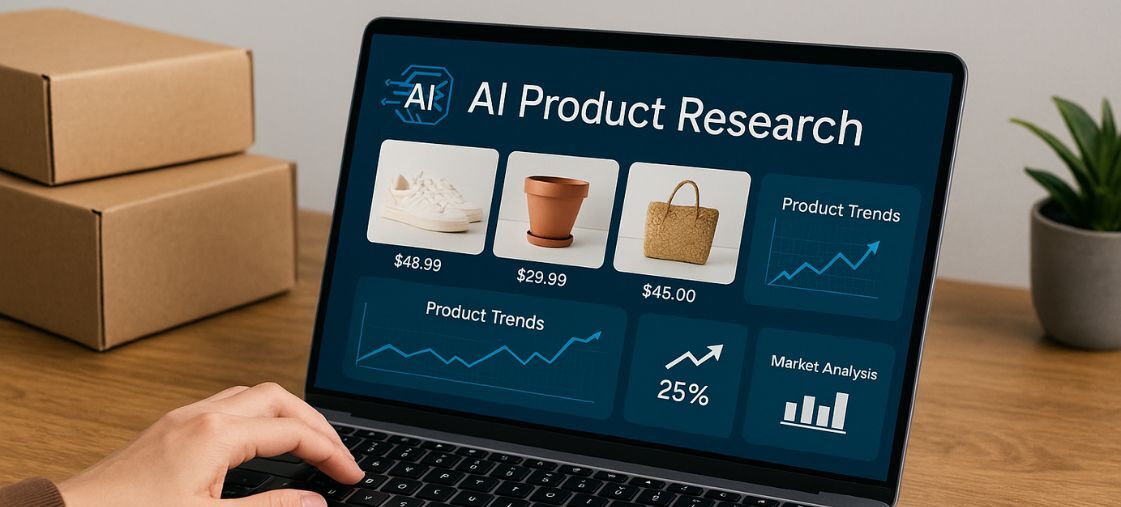
The modern e-commerce landscape is undergoing a massive transformation. As global supply chains grow more complex, consumer expectations shift toward instant fulfillment, and digital acquisition costs climb, independent brands and direct-to-consumer (DTC) operators face a brutal reality: surviving requires more than just a great product. It demands hyper-efficient operations, lightning-fast digital storefront deployment, and absolute precision in product research and market entry.
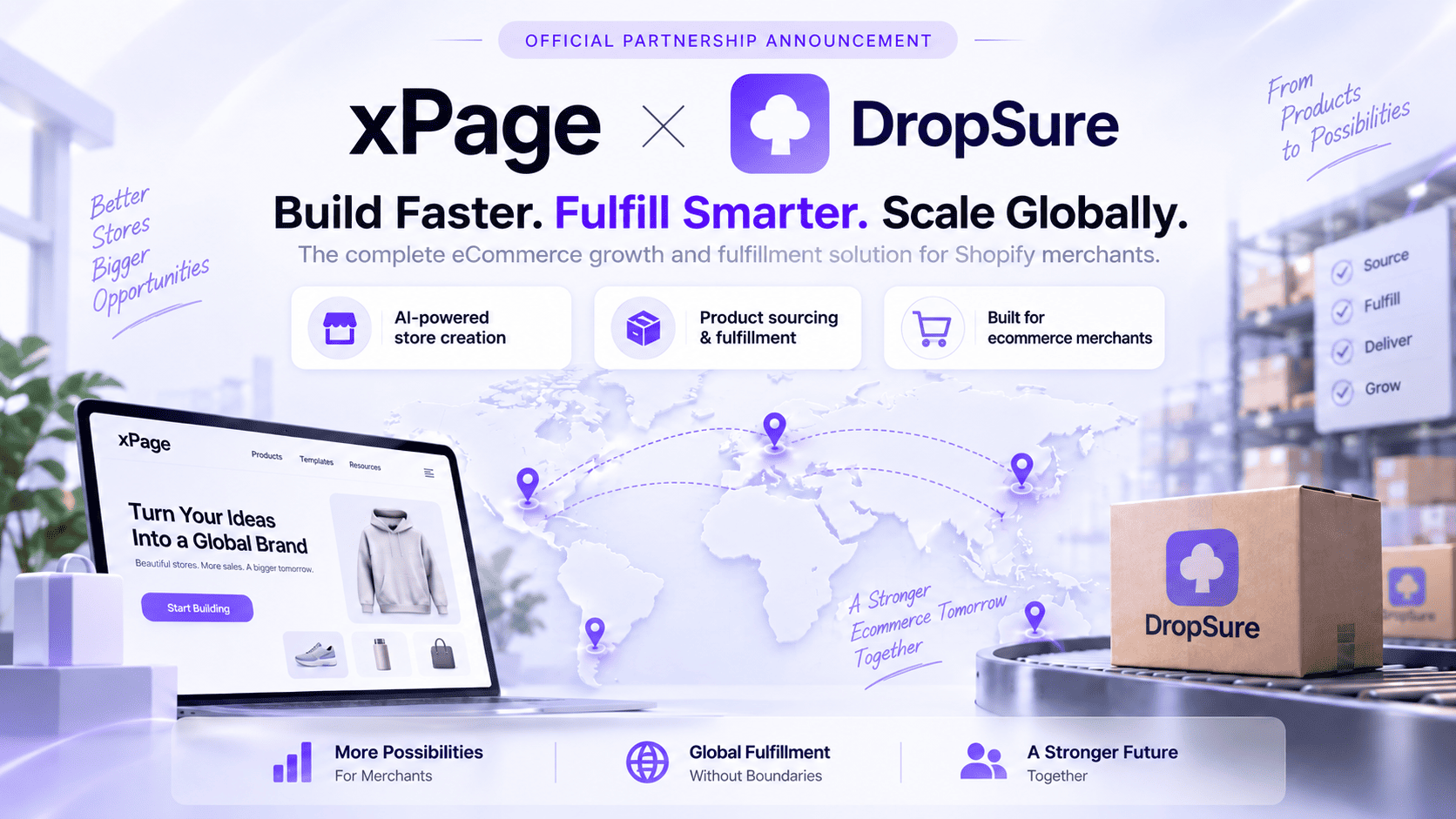
Enter the powerhouse partnership between Xpage and Dropsure . By bridging the gap between cutting-edge AI-driven website creation and intelligent product selection and dropshipping logistics, this collaboration offers a blueprint for modern digital commerce. This comprehensive guide explores how the synergy between Xpage and Dropsure is reshaping how online businesses launch, scale, and sustain profitability.
The E-Commerce Bottleneck: Why Traditional Operations Fall Short
Before diving into the mechanics of the Xpage and Dropsure partnership, it is crucial to understand the pain points plaguing contemporary e-commerce operators. Historically, launching a viable online store required navigating a fragmented ecosystem of disparate tools:
-
The Content and Design Lag: Building high-converting landing pages, optimized product descriptions, and localized storefronts traditionally takes weeks of design and copywriting work.
-
The Product Research Trap: Finding winning, high-margin products without running into saturated markets or compliance traps is notoriously difficult. Many operators waste thousands of dollars testing dead-end inventory.
-
The Logistics Disconnect: Even if a store looks incredible and features a stellar product, poor supplier reliability, slow shipping times, and cumbersome order management can ruin customer lifetime value (LTV).
For years, merchants had to stitch together patchwork solutions—using one platform for site building, another for spy tools, and a third for fulfillment. The Xpage and Dropsure ecosystem changes the game by integrating these critical phases into a seamless, end-to-end workflow.
Xpage: Revolutionizing Digital Storefronts with AI
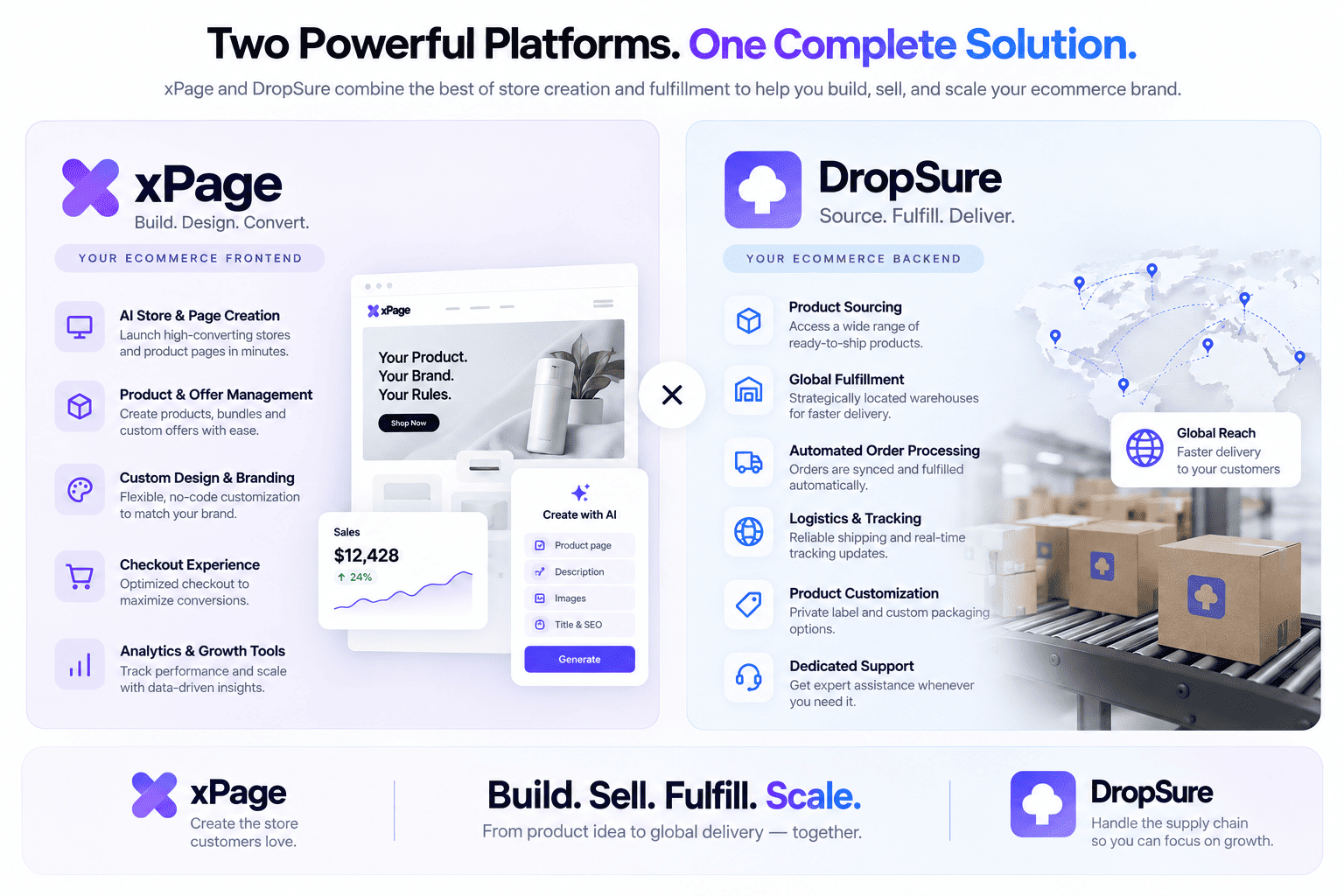
At the core of the digital experience is Xpage , a next-generation platform designed to eliminate the friction of website creation and content scaling.
Core Strengths of Xpage
-
AI-Powered Generation: Xpage leverages advanced artificial intelligence to automate the generation of conversion-focused web architecture, high-end layouts, and SEO-optimized copy tailored to specific target markets.
-
Speed-to-Market: What used to take web development teams months can now be accomplished in minutes. Merchants can rapidly spin up localized landing pages, multi-language international stores, and dynamic product catalogs without writing a single line of code.
-
SEO and Content Architecture: Xpage excels at structural optimization. From managing clean URL hierarchies and technical tags to producing comprehensive, high-intent blog content, the platform ensures organic discoverability across competitive search landscapes.
-
Conversion-Centric Design: Every layout generated by Xpage is built with user experience (UX) and conversion rate optimization (CRO) at its heart, featuring intuitive navigation, trust signals, and streamlined checkout pathways.
By lowering the technical barrier to entry, Xpage empowers digital operators to focus on strategy and growth rather than getting bogged down in front-end design and code maintenance.
Dropsure: Precision Product Selection and Fulfillment Logistics
While Xpage builds the digital engine room, Dropsure fuels it with intelligent product research, competitive insights, and reliable operational backing.
Core Strengths of Dropsure
-
Advanced Product Research and Market Intelligence: Dropsure acts as a vital compass for merchants navigating crowded markets. By utilizing sophisticated data analytics and competitive research tools, it helps operators identify high-potential, low-risk product categories before investing capital.
-
Streamlined Dropshipping Framework: The platform minimizes the friction inherent in the dropshipping and DTC model. By connecting merchants with vetted suppliers and optimizing inventory synchronization, Dropsure ensures that stockouts and fulfillment delays are minimized.
-
Risk Mitigation: A major hurdle for modern e-commerce brands is avoiding high-risk product categories, intellectual property pitfalls, and low-quality items that trigger chargebacks. Dropsure provides the analytical safeguards needed to curate a sustainable catalog.
-
Operational Efficiency: From automated order routing to transparent tracking systems, Dropsure handles the heavy lifting of backend logistics, allowing business owners to scale transaction volume without a proportional increase in operational overhead.
The Synergy: How the Xpage and Dropsure Partnership Powers Growth
When combined, Xpage and Dropsure create a closed-loop ecosystem that addresses every stage of the e-commerce lifecycle—from initial market research to storefront deployment and order fulfillment.
+------------------------+      Integrated Workflow      +-------------------------+
|        XPAGE           | ----------------------------> |        DROPSURE         |
|  - AI Storefront Build |                               |  - Product Intelligence |
|  - High-Intent Content |                               |  - Vetted Supply Chain  |
|  - SEO Architecture    | <---------------------------- |  - Scalable Fulfillment |
+------------------------+      Operational Feedback     +-------------------------+
1. Zero-to-Launch Velocity
Imagine an operator wanting to test a new niche in the American market.
-
Step One: They utilize Dropsure to identify high-margin, trending product opportunities backed by reliable supplier data.
-
Step Two: They feed these insights into Xpage, which instantly generates a fully optimized, beautifully branded storefront complete with persuasive marketing copy, structured product pages, and SEO-friendly category blogs.
-
The Result: A market-ready, professional DTC brand can go live in a fraction of the traditional timeframe, dramatically reducing the cost of testing new concepts.
2. Data-Driven Content and Inventory Alignment
A common failure point in e-commerce is the disconnect between marketing claims and physical inventory. Because Xpage’s content engine and Dropsure’s supply chain analytics communicate effectively through strategic integration, merchants can ensure that their promotional copy accurately reflects product specifications, shipping times, and variant availability. This builds immediate consumer trust and reduces post-purchase friction.
3. International Scalability
Both platforms are engineered to handle growth. Whether a brand is expanding from a single product page into a sprawling multi-category store or targeting international markets with localized subdirectories, the Xpage and Dropsure framework scales seamlessly. Xpage handles the linguistic and structural localization of the site, while Dropsure ensures that the underlying logistics can support cross-border fulfillment.
Case Study Perspective: Streamlining the DTC Workflow
To understand the practical impact of this partnership, consider a mid-sized independent station operator looking to break into specialized home goods or niche lifestyle accessories.
-
Without the Partnership: The merchant spends weeks manually searching supplier directories, vetting quality through trial and error, writing hundreds of product descriptions from scratch, and hiring freelance developers to build a custom Shopify or WooCommerce theme. By the time the store launches, advertising budgets are strained, and trends may have already shifted.
-
With the Xpage + Dropsure Partnership: The merchant uses Dropsure to pinpoint proven product winners within hours. They then deploy Xpage to automatically construct a high-converting, SEO-optimized storefront tailored to US consumer preferences. Automated content generation populates the blog and category pages, driving organic traffic while paid acquisition campaigns are spun up. Backend orders flow effortlessly through Dropsure’s logistics network.
The time-to-market is compressed from months to days, and human error in copywriting, tagging, and inventory management is virtually eliminated.
Best Practices for Maximizing the Xpage and Dropsure Ecosystem
To get the absolute most out of this partnership, digital operators should implement the following strategic playbook:
-
Leverage Data First: Always begin your workflow within Dropsure. Let market research and competitive intelligence dictate what you sell before you dictate how your site looks.
-
Maximize AI Customization: While Xpage provides incredible speed through automation, take advantage of its modular design tools to infuse your unique brand voice, color palettes, and value propositions into the storefront.
-
Prioritize Long-Tail SEO: Use Xpage’s structural capabilities to build out informative, long-form content around your product niche. Combining organic search traffic with Dropsure’s high-margin product selection creates a resilient, high-margin business model independent of rising ad costs.
-
Monitor Supply Chain Metrics: Regularly review fulfillment performance and customer feedback via Dropsure to ensure your storefront’s automated expectations match real-world delivery experiences.
Conclusion: The Future of Frictionless Commerce
The era of struggling with disconnected tools, sluggish web development, and unreliable suppliers is coming to an end. The strategic alliance between Xpage (https://www.xpage.ai/) and Dropsure (https://www.dropsure.com/) represents a maturation of the direct-to-consumer space.
By pairing Xpage’s revolutionary AI storefront creation and content generation with Dropsure’s precision product selection and robust logistics framework, modern e-commerce operators are equipped with an unfair competitive advantage. Whether you are launching your very first independent station or scaling a multi-category empire, integrating these two platforms provides the speed, intelligence, and scalability required to thrive in today’s digital economy.
For an in-depth look at the technical integration and success stories stemming from this alliance, read the official analysis on the Xpage and Dropsure Partnership Blog.
What specific e-commerce niche or product category are you planning to scale using this framework?