En
En
 7 min read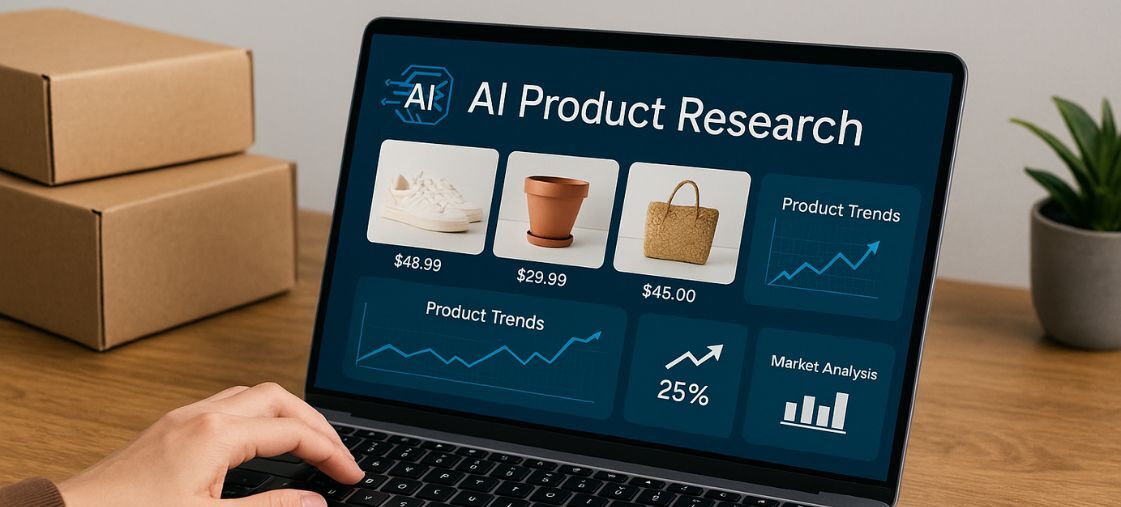
Most sellers don’t miss winning products because they lack skill.
They miss them because they see them too late.
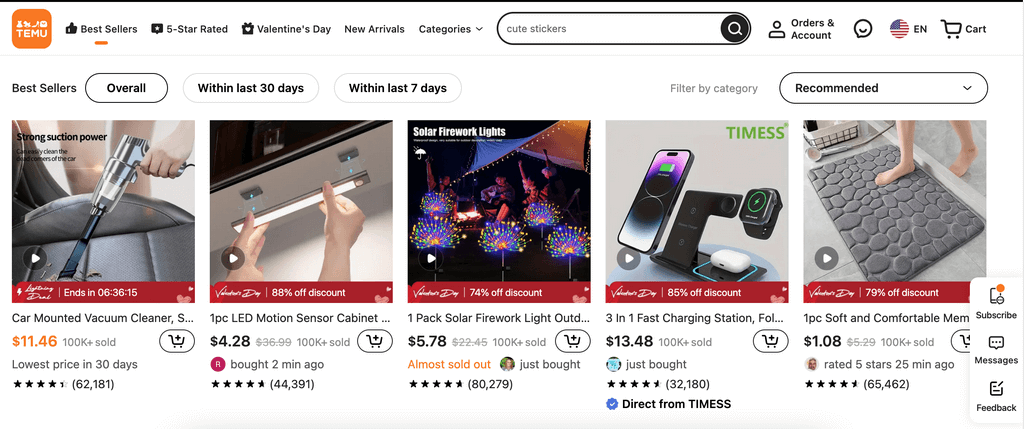
By the time a product shows up on:
-
Bestseller lists
-
“Trending now” pages
-
Social media feeds
The opportunity window is already shrinking.
Competition piles in.
Ad costs rise.
Margins compress.
The real advantage doesn’t belong to the fastest fingers—it belongs to sellers who let systems watch the market for them.
That’s where automated product research comes in.
Why Manual Product Research Is Quietly Holding You Back
Scrolling marketplaces, refreshing dashboards, checking rankings manually—it feels productive.
But it has limits.
Manual research is:
-
Time-consuming
-
Reactive
-
Emotion-driven
-
Easy to miss early signals
Humans are good at judgment.
They’re terrible at monitoring thousands of data points at once.
Automation doesn’t replace decision-making.
It replaces waiting.
What “Automated Product Research” Actually Means
Automated product research isn’t a magic button.
It’s a system where:
-
Tools monitor markets continuously
-
Rules define what “interesting” looks like
-
Alerts notify you when conditions are met
Instead of asking:
“What should I sell today?”
You ask:
“What signals tell me a product might be worth attention?”
That shift changes everything.
Why Timing Matters More Than Product Quality (At First)
Many products aren’t “bad.”
They’re just:
-
Entered too late
-
Launched after saturation
-
Caught during price wars
Early-stage products allow you to:
-
Test with lower ad costs
-
Build listing authority
-
Establish pricing power
-
Collect early reviews
Automation helps you spot momentum, not popularity.
Step 1: Define What a “Winning Signal” Looks Like
Before setting any alert, you need clarity.
Automated tools only work if you tell them what to look for.
Common winning signals include:
-
Sudden increase in sales velocity
-
Rapid growth in search volume
-
New listings gaining reviews quickly
-
Price stability during rising demand
The goal is not “top sellers.”
It’s unusual movement.
Step 2: Start With Categories, Not Individual Products
Beginners often track individual SKUs.
That’s too narrow.
Professional sellers:
-
Monitor entire categories
-
Track sub-niches
-
Watch product clusters
Why?
Because breakout products usually:
-
Signal a broader trend
-
Create space for variants
-
Inspire complementary products
Set alerts at the category or keyword level first.
Step 3: Use Velocity-Based Alerts, Not Ranking Alone
Rankings are lagging indicators.
By the time a product ranks high:
-
The surge already happened
-
Sellers already noticed
-
Competition is forming
Velocity-based alerts focus on:
-
Day-over-day sales changes
-
Review growth rate
-
Search volume acceleration
Speed tells you what’s heating up, not what’s already hot.
Step 4: Set Smart Thresholds (Avoid Alert Fatigue)
One of the biggest automation mistakes is setting alerts too loosely.
Too many alerts = no alerts.
Instead of:
“Alert me when sales increase”
Use:
-
“Alert me when sales increase by 30% in 7 days”
-
“Alert me when a new listing gets 20 reviews in 14 days”
-
“Alert me when search volume doubles month-over-month”
Good alerts are rare and meaningful.
Step 5: Separate “Signal Alerts” From “Action Alerts”
Not every alert requires action.
Professional workflows separate alerts into two layers:
Signal Alerts
These indicate:
-
Something unusual is happening
-
Worth a closer look
-
No decision yet
Action Alerts
These indicate:
-
Conditions meet launch criteria
-
Margin and demand align
-
It’s time to move
This separation prevents emotional overreaction.
Step 6: Combine Multiple Data Sources for Confirmation
One alert alone is noise.
Multiple aligned alerts are signal.
For example:
-
Sales velocity increases
-
Search volume rises
-
Review count accelerates
When these happen together, the probability of a real opportunity increases.
Automation isn’t about speed alone—it’s about confidence.
Step 7: Automate Competitor Monitoring
Winning products attract imitators fast.
Tools can monitor:
-
New listings entering a niche
-
Price changes
-
Review velocity of competitors
-
Ad placement frequency
Alerts here help you:
-
Decide when to enter
-
Know when to differentiate
-
Avoid late-stage pileups
Sometimes the best move is not to enter.
Automation helps you see that early too.
Step 8: Use Alerts to Time Your Launch—Not Just Discover Products
Automation isn’t only for discovery.
It’s also for execution timing.
Smart sellers use alerts to:
-
Launch before peak demand
-
Adjust inventory ahead of trends
-
Raise prices when demand outpaces supply
Alerts turn product launches from guesses into planned events.
Step 9: Build a Daily “Alert Review” Habit
Automation doesn’t remove human judgment.
It protects it.
Set aside:
-
15–30 minutes daily
-
To review alerts calmly
-
To log observations
Ask:
-
Is this noise or signal?
-
Does this fit my margin goals?
-
Is the trend early or already crowded?
Automation brings opportunities.
Discipline filters them.
Step 10: Track Outcomes and Refine Alert Rules
Your first alert setup won’t be perfect.
That’s normal.
After each launch or missed opportunity:
-
Review which alerts fired
-
Which ones mattered
-
Which ones misled
Refine thresholds.
Tighten conditions.
Remove vanity alerts.
Automation improves with feedback.
Common Mistakes in Automated Product Research
Mistake 1: Chasing Every Alert
More alerts don’t mean more opportunities.
Selectivity wins.
Mistake 2: Blind Trust in Tools
Tools surface data.
You still make decisions.
Mistake 3: Ignoring Margin Early
A trending product with weak margins is a trap.
Alerts should always include price and cost context.
Why Automation Gives Small Sellers an Edge
Big companies move slowly.
They:
-
Require approvals
-
Have rigid processes
-
Can’t pivot fast
Automated alerts allow smaller sellers to:
-
React faster
-
Test earlier
-
Adjust quicker
Speed + focus beats size—when systems are in place.
Automation Is Not Laziness—It’s Leverage
There’s a myth that automation means “doing less.”
In reality, it means:
-
Spending time where it matters
-
Avoiding low-value work
-
Making better decisions with less stress
Manual research scales poorly.
Systems scale silently.
Building a Repeatable Winning Process
Winning sellers don’t “get lucky” repeatedly.
They:
-
Define clear signals
-
Set precise alerts
-
Act decisively but selectively
-
Review outcomes objectively
Automation turns randomness into a repeatable process.
Final Thoughts: Be Early, Not Everywhere
You don’t need to chase every trend.
You need to catch the right ones early.
Automated product research doesn’t promise guaranteed winners—but it dramatically improves your timing.
And in e-commerce, timing is often the difference between:
-
Healthy margins and price wars
-
Calm launches and panic sourcing
-
Building brands and chasing leftovers
Stop watching the market manually.
Let systems watch it for you—
so when opportunity appears, you’re already there.