En
En
 8 min read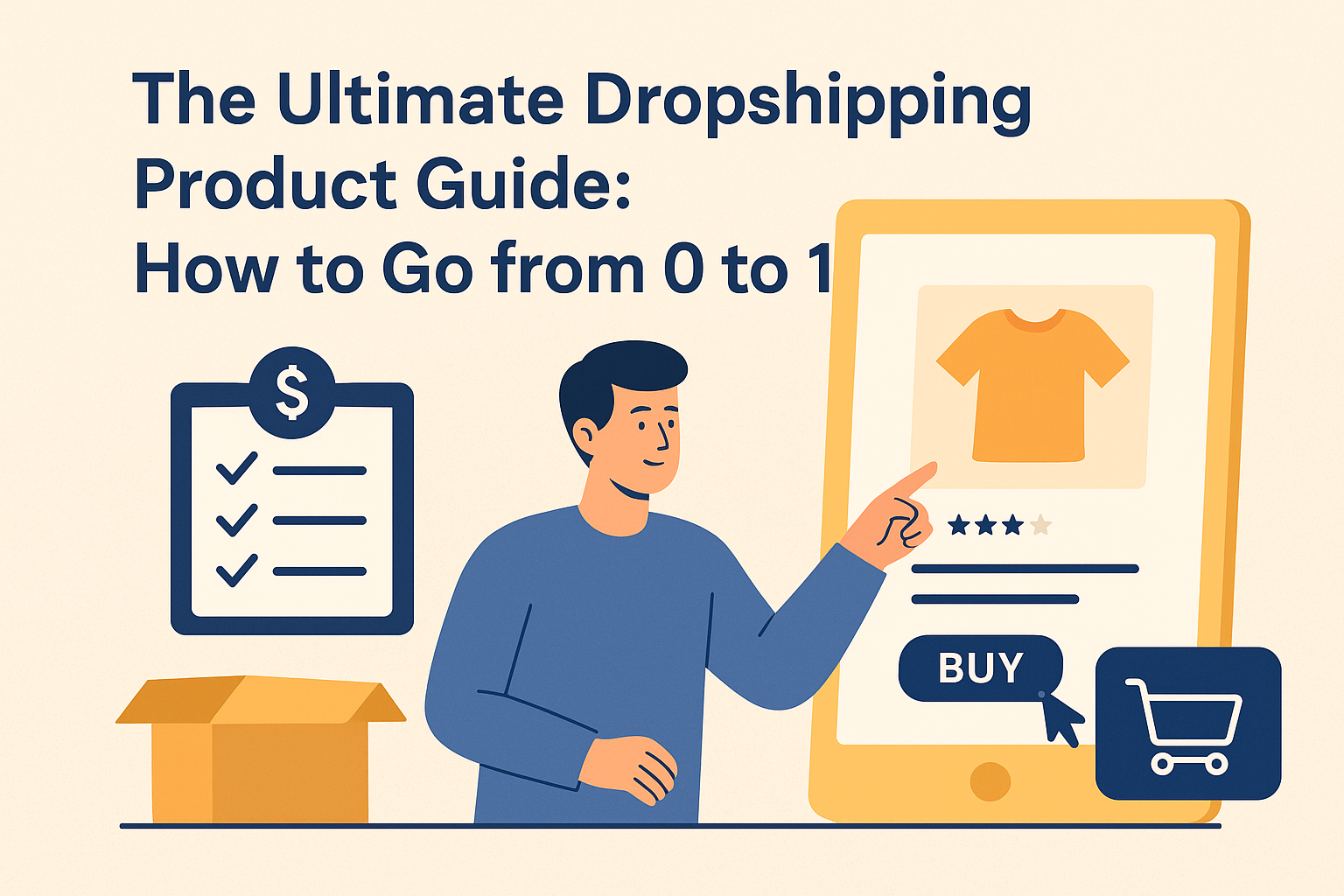
Dropshipping Product Selection Secrets: The Ultimate Guide to Going From 0 to 1 With a Winning Product
Finding a winning product is the single biggest turning point for every dropshipping entrepreneur. It doesn’t matter how polished your store looks, how great your ads are, or how optimized your checkout funnel might be—if your product doesn’t sell, nothing else matters. Conversely, once you do find a product that converts, everything becomes easier: ads scale faster, revenue rises predictably, and you can build a long-term brand instead of constantly hunting for the next trend.
This guide is your complete, step-by-step blueprint for selecting products that sell. You’ll learn why certain items go viral, how to analyze a product’s true potential, which data sources matter, how to avoid beginner traps, and how to go from “I have no idea what to sell” to “I found a product that can do $10,000 in a week.”
Let’s dive deep into the psychology, data, methodology, and real-world examples behind winning product selection.
1. Why Product Selection Matters More Than Anything Else
Many beginners approach dropshipping backward:
They pick a niche → build a store → brainstorm products → start running ads.
Successful sellers flip this upside down:
They discover strong demand → validate purchase intent → choose a product → build a store around it → launch ads that match real-world behavior.
The product makes or breaks the business because:
1. Not all products can scale
Some items can only sell a handful per day because the audience is too narrow.
2. Only a small percentage of products trigger impulse buys
For dropshipping, impulse buying is crucial because shoppers do not know your brand.
3. Ad platforms reward product-market fit
If the product doesn’t resonate, CPM rises, CTR falls, and CPA skyrockets.
4. A winning product lowers customer acquisition cost
The better the product–audience match, the cheaper the ads become.
5. A strong product enables long-term branding
Once you validate demand, you can negotiate custom packaging, white-label the item, or turn it into a brand.
A product is the heart of everything. Without the right one, nothing else matters.
2. The 7 Characteristics of a True Winning Product
After analyzing thousands of successful dropshipping stores, winning ads, and high-growth brands, these are the consistent traits shared by top-performing products:
(1) Solves a Real Problem
People pay most readily to eliminate pain and inconvenience.
Examples:
-
Back pain relief belt
-
Anti-snore device
-
Door gap sealing tape
-
Pet grooming vacuum
Problem-solving = high conversion.
(2) High Wow Factor
Products that visually impress grab attention on short-form platforms like TikTok and Instagram.
Examples:
-
Color-changing LED shower head
-
Self-stirring mug
-
Electric baby nail trimmer
If it makes people think “WOW, I want that!”, it’s a winner.
(3) Trigger Impulse Purchases
Winning dropshipping products don’t require research or long decision-making.
Examples:
-
Home gadgets
-
Beauty tools
-
Kitchen accessories
-
Car organizers
Impulse purchases = low hesitation = high conversion.
(4) Low Competition or Untapped Angle
It’s not about selling something no one sells—it’s about selling it differently.
You can win by:
-
targeting a new demographic
-
changing the marketing angle
-
adding a unique value proposition
(5) High Perceived Value with Decent Margin
Products costing $8–$20 wholesale should retail for $25–$59.
Ideal profit margins:
-
3× markup
-
$15–$30 profit per order
-
20%+ after-ad margin
(6) Safe, Lightweight, and Easy to Ship
Avoid legal risk and logistics risk.
Better items:
-
Non-food
-
Non-medical
-
Non-hazardous
-
No lithium batteries (unless using reliable suppliers)
(7) Evergreen or Trending at the Right Time
-
Evergreen = year-round demand
-
Trend = rapid growth, high viral potential
Many winning products combine both.
3. Where to Find Winning Product Ideas (17 Proven Sources)
You never lack product ideas—the problem is knowing where to look. Use these powerful sources:
(1) TikTok Creative Center
Search by:
-
“Hot products”
-
“Breakout ads”
-
7-day CTR ranking
-
Industry → E-commerce
(2) Facebook Ads Library
Look for:
-
Ads running 30+ days
-
High engagement (100+ comments)
-
Multiple ad creatives for single product
(3) Amazon Best Sellers
Especially in categories like:
-
Home
-
Kitchen
-
Pet
-
Tools
Amazon = real customer demand.
(4) Temu & AliExpress “Hot” List
Look for consistent sales + low price + strong reviews.
(5) Google Trends
A spike indicates increasing demand.
(6) TikTok organic viral videos
Check for:
-
1M+ views
-
Comments asking “Where to buy??”
(7) Etsy Trending Products
Great for:
-
Personalized items
-
Niche gifts
-
Home decor
(8) Reddit Communities
Subreddits often reveal real pain points:
-
r/buya
-
r/homegym
-
r/dogs
-
r/lifehacks
(9) Competitor Spy Tools
Tools like Minea, PiPiAds, AdSpy help verify scalability.
(10) Local offline stores
Sometimes what sells locally has online potential.
(11) Shopify’s “Trending products”
Updated regularly.
(12) YouTube reviews
Search for “Best gadgets 2024”.
(13) AliExpress Orders Ranking
(14) Wish / SHEIN Trends
(15) Kickstarter & Indiegogo
High innovation product ideas.
(16) Influencer recommendation videos
(17) Seasonal calendars
Valentine’s, Christmas, summer, back-to-school…
Seasonal timing = explosive sales.
Use multiple sources; never rely on just one.

4. The Ultimate 10-Step Product Validation Checklist
Even if a product looks promising, data must confirm its potential.
Step 1 — Demand Check
-
Google Trends
-
Amazon reviews
-
TikTok popularity
Step 2 — Pricing & Margin Feasibility
Wholesale price × 3 rule.
If no margin → do not test.
Step 3 — Supplier Availability
Check:
-
AliExpress
-
1688
-
CJdropshipping
-
Zendrop
Step 4 — Competition Analysis
Search on:
-
Facebook Ads
-
TikTok Ads
-
Google Shopping
Avoid oversaturated angles.
Step 5 — Video Potential
Ask yourself:
-
“Can this product become a viral TikTok video?”
If visual appeal = low, ad performance = weak.
Step 6 — Target Audience Clarity
If you can’t define the audience → product will not scale.
Step 7 — Easy Shipping
Avoid:
-
Batteries
-
Glass
-
Sharp objects
Step 8 — Review Quality
Look for:
-
4.3+ rating
-
50+ real reviews
Step 9 — Upsell Potential
Can you sell related items?
-
Bundles
-
Accessories
-
Higher-ticket upsells
Step 10 — Long-Term Branding Potential
If it can’t be branded, scaling is limited.
5. Real Example: Step-by-Step Breakdown of a Winning Product
Here’s a real framework using a product example (fictional but realistic):
Product Example: Pet Hair Remover Roller
Why it works
-
Solves a daily problem
-
Pets = evergreen niche
-
Viral on TikTok
-
Cheap to source
-
High margin potential
Validation Results
| Metric | Result |
|---|---|
| Google Trends | Rising 3 years straight |
| TikTok | 15+ viral videos |
| Amazon | 20k+ reviews |
| Wholesale price | $3 |
| Selling price | $19.99 |
| Profit | $14+ |
Target audience
-
Pet owners
-
Home organization enthusiasts
-
Cat & dog lovers
Marketing angles
-
“The last pet hair cleaner you’ll ever need”
-
“Stop wasting money on sticky sheets”
-
“Works on carpets, sofas, car seats”
Scaling Strategy
-
UGC videos
-
TikTok Spark Ads
-
Pet niche influencers
This step-by-step validation process is how you turn an idea into a winner.
6. Building Your Store Around the Product
Once you have a validated product, build your store to match:
Option A: One-Product Store
Best for:
-
High-potential product
-
Trend items
-
Scaling fast
Pros:
-
High conversion
-
Strong branding
Option B: Niche Store
Best for:
-
Specific interest groups (pets, fitness, beauty)
Pros:
-
Easier upsells
-
More long-term potential
Option C: General Store
Best for beginners testing multiple items.
Pros:
-
Fast product testing
-
No niche restrictions

7. How to Create High-Converting Product Pages
Every winning product page includes:
-
Strong hero image
-
Social proof (reviews, UGC)
-
Clear value proposition
-
Pain → solution copywriting
-
Comparison chart
-
FAQ
-
Trust badges
-
Strong call-to-action
Never use generic AliExpress descriptions.
Rewrite, brand, and improve everything.
8. Advertising: Turn Your Product Into a Best-Seller
Use the platform that matches your product:
TikTok Ads — Best for WOW factor items
Use:
-
UGC videos
-
Before/after clips
-
Problem-solving angles
Facebook Ads — Best for problem-solvers
Use:
-
Broad audiences
-
Retargeting
-
Lookalikes
Google Shopping — Best for high-intent buyers
Use:
-
Search keywords
-
Feed optimization
Influencer Marketing
Micro-influencers have the highest ROI for new stores.
9. Scaling a Winning Product to $10K, $50K, and $100K Months
Once a product works, you scale using:
-
Multiple creatives
-
Multiple audiences
-
Multiple countries
-
Multiple platforms
-
New upsells and cross-sells
-
Increasing AOV
Your goal is not a one-week viral spike—it‘s building a system that consistently prints profit.
10. Final Advice: The Mindset Behind Successful Product Selection
Great product selection is not luck.
It is a skill.
It can be learned, and once mastered, it becomes your superpower.
Remember:
-
Test fast
-
Fail fast
-
Don’t get emotionally attached
-
Follow the data
-
Always improve your angles
-
Keep testing new items
If you keep learning and refining your product research process, it’s only a matter of time before you find a true winner.