Starting an online business has never been more accessible—but it has also never been more competitive. In 2026, aspiring entrepreneurs face a critical early decision that can shape their entire journey: Should you build a niche store focused on a specific audience or product category, or launch a general store offering a wide range of items? At first glance, a general store may seem like the safer, more flexible option. After all, more products mean more opportunities to sell, right? On the other hand, niche stores promise stronger branding, targeted marketing, and loyal customers—but with a narrower focus. The truth is, both models can succeed. The real question is: which one is right for you, especially as a beginner? This in-depth guide breaks down the differences, advantages, disadvantages, and strategic considerations of each model—helping you make an informed decision and build a sustainable online business. Understanding the Two Models Before comparing them, let’s define what each model looks like in practice. What Is a Niche Store? A niche store focuses on a specific audience, problem, or product category. Examples include: A store dedicated to ergonomic office products A pet store focused only on cats A fitness store specializing in resistance bands The goal is to serve a clearly defined group with targeted offerings. What Is a General Store? A general store sells a wide variety of products across multiple categories, often without a single defined audience. Examples include: A store selling home goods, electronics, and fashion items A dropshipping site testing trending products across categories The goal is flexibility and broad appeal. The Core Difference: Focus vs. Flexibility At its core, the decision comes down to: Niche Store = Focus, […]

April 14, 2026

If you’re still choosing products based on gut feeling, you’re leaving money on the table. In today’s hyper-competitive eCommerce landscape, success isn’t about luck—it’s about data. The difference between a winning product and a dead listing often comes down to how well you understand your competitors. What are they selling? How are they pricing? Where is their traffic coming from? Which ads are converting? This is where competitor intelligence tools come in. These tools don’t just give you data—they give you clarity. They help you identify trends early, validate product ideas, analyze competitors’ strategies, and make smarter decisions with confidence. In this comprehensive guide, we’ll take a deep dive into five of the most powerful competitor research tools available today. We’ll break down their features, strengths, weaknesses, pricing, and best use cases so you can choose the right one for your business. Why You Need Competitor Intelligence Tools Before we dive into the tools, let’s address the bigger question: why are they essential? 1. Eliminate Guesswork Instead of relying on intuition, you can base decisions on real market data—what’s selling, what’s trending, and what’s declining. 2. Discover Winning Products Faster Spot high-demand, low-competition products before they become saturated. 3. Analyze Competitor Strategies Understand how top sellers structure their listings, pricing, ads, and funnels. 4. Optimize Marketing Efforts Identify which channels and creatives are driving traffic and conversions. 5. Stay Ahead of Trends Catch emerging trends early and position your store ahead of the curve. Tool #1: Ad Intelligence Powerhouse – AdSpy Overview AdSpy is one of the largest searchable databases of social media ads, particularly focused on platforms like Facebook and Instagram. It allows you to see exactly what ads […]

April 10, 2026

In today’s digital marketplace, product trends no longer start in boardrooms or retail chains—they start on phones. A single TikTok video filmed in a bedroom can transform an unknown product into a global sensation overnight. What used to take years of advertising can now happen in days through social media momentum. For online store owners, entrepreneurs, and dropshippers, this shift has changed everything. Success is no longer about guessing what customers want months in advance. Instead, it’s about identifying rising social signals early and converting attention into sales before the trend peaks. But viral success isn’t luck. Behind every breakout product is a repeatable process: trend discovery, validation, positioning, and rapid execution. This guide explains how to move strategically from TikTok hype to a profitable online store product—using methods professionals rely on to consistently identify winning items. Why TikTok Has Become the Ultimate Product Discovery Engine TikTok isn’t just a social platform; it functions as a real-time consumer behavior laboratory. Unlike traditional social media, TikTok’s algorithm prioritizes content performance over follower size. That means: Unknown creators can reach millions overnight. New products gain exposure quickly. Consumer reactions appear instantly through comments and shares. Buying intent becomes visible in real time. When users repeatedly comment things like: “Where can I buy this?” “I need this immediately.” “Link please!” “Take my money.” you are witnessing raw market demand. TikTok compresses the product lifecycle—from discovery to purchase—into a matter of days. Understanding the Anatomy of a Viral Product Not every viral video creates a successful product. Professionals analyze specific characteristics before committing resources. 1. Instant Visual Understanding The product must be understandable within three seconds. Examples include: Cleaning tools showing dramatic results Smart […]

April 9, 2026

Finding winning products is one of the hardest parts of running an online business. Many sellers spend months testing items blindly, investing in inventory or advertising without clear signals of demand. Meanwhile, successful brands appear to launch products that immediately gain traction. The difference often comes down to research — not guesswork. One of the most powerful yet underused tools available today is the Facebook Ads Library. Originally created for advertising transparency, this free platform provides a real-time window into active advertisements running across Facebook and Instagram worldwide. For entrepreneurs, dropshippers, marketers, and product researchers, the Ads Library offers something extremely valuable: live evidence of what companies are currently spending money to promote. And where sustained ad spending exists, strong product performance usually follows. This guide explains how to systematically analyze Ads Library data to uncover the traits shared by high-converting products — and how to apply those insights to your own product research strategy. What Is the Facebook Ads Library? The Facebook Ads Library is a public database maintained by Meta Platforms that displays active advertisements running across its platforms. Anyone can search and view: Active ads from brands worldwide Creative formats (video, image, carousel) Ad copy and messaging Landing page destinations Duration of ad activity Unlike traditional competitor research tools, this platform shows real advertising behavior, not speculation. Why Ads Reveal Winning Products Advertising costs money. Businesses rarely continue running ads that lose money over long periods. If a brand keeps an ad active for weeks or months, it typically indicates: Consistent sales performance Profitable customer acquisition Strong audience response Scalable demand In short, active advertising often signals validated products. The Core Concept: Reverse Engineering Instead of Guessing […]

April 7, 2026

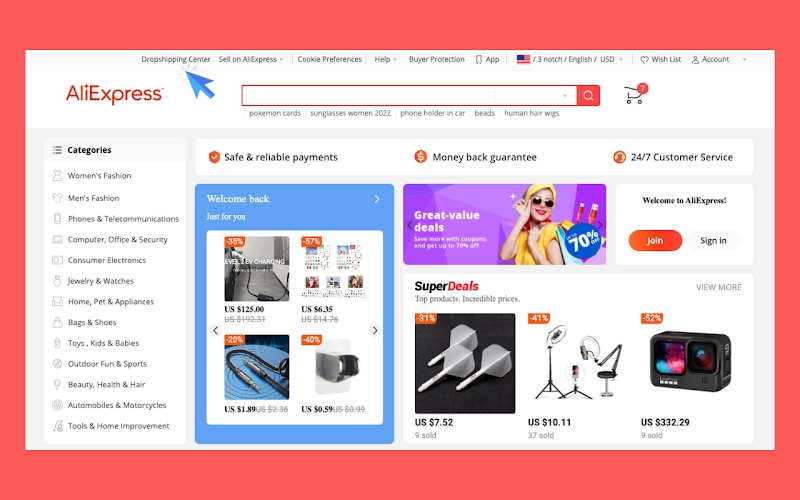
In the world of eCommerce and dropshipping, few platforms provide as much publicly visible market data as AliExpress. Every day, millions of buyers interact with products, leave feedback, generate sales history, and create behavioral signals that sellers can analyze. For many beginners, product research starts and ends with one number: order volume. A listing showing 10,000 orders feels safe. A product with only 50 orders feels risky. The assumption seems logical — more orders must mean a better product. Yet experienced sellers know that raw order numbers rarely tell the full story. Behind every order count lies a deeper set of signals about demand stability, competition intensity, lifecycle timing, and profit potential. Sellers who learn to interpret these signals correctly gain a significant advantage when selecting products. This article explores three core metrics derived from AliExpress data that reveal what order volume actually means — and how to identify real opportunities hidden behind the numbers. Why Order Volume Alone Is Misleading Order volume is attractive because it simplifies decision-making. It appears objective and easy to compare. However, it suffers from several limitations: Orders accumulate over time rather than reflecting current demand. Viral products inflate numbers temporarily. Mature products may show large totals despite declining interest. High sales often attract intense competition. A product with 20,000 historical orders may actually be slowing down, while a product with 300 recent orders could be rapidly emerging. Understanding context is more important than reading totals. The Data Advantage of AliExpress Unlike many wholesale platforms, AliExpress exposes multiple layers of buyer interaction data: Total orders Reviews and ratings Store history Pricing trends Shipping activity Variation performance When analyzed together, these signals reveal market dynamics normally […]

April 1, 2026

Introduction: The Hidden Truth Behind Successful Product Selection Many businesses believe product selection begins with trends, pricing opportunities, or supplier catalogs. Entrepreneurs scroll through marketplaces, analyze competitors, and chase what appears to be selling fastest. Yet the most durable brands in modern commerce follow a completely different principle: Product selection is actually people selection. Every successful product implicitly answers one question: Who is this for — and what kind of person becomes loyal to it? When brands fail to define identity first, they often experience familiar problems: Inconsistent product catalogs Weak customer loyalty High return rates Price competition instead of value competition Marketing that feels scattered or ineffective On the other hand, brands that begin with a clearly defined identity rarely struggle with product decisions. Their products feel coherent, intentional, and naturally aligned with customer expectations. This article explores a practical framework for reversing the traditional process — starting from Brand Identity and working backward to determine exactly which products belong in your lineup and which should never be added. Part 1: What Brand Identity Really Means (Beyond Logos and Colors) Many entrepreneurs misunderstand brand identity as visual design elements: Logo Typography Packaging aesthetics Website colors While these matter, they are only surface expressions. True brand identity is a behavioral promise. It answers five deeper questions: What problem philosophy do you believe in? What type of customer do you prioritize? What emotional outcome do customers experience? What standards will you never compromise? What kind of lifestyle does your brand represent? Think of brand identity as a personality system rather than a visual system. Identity vs. Image Image = what customers see. Identity = what decisions you consistently make. Customers trust […]

March 31, 2026
DropSure is Your Best Partner
22 Years Experience
Affiliate Rebates
100% Quality Guarantee
Top-Up Rewards
10+ Global Warehouses
Custom Branding Support
Smart inventory System
24/7 Customer Support
Get a Quote in 24 Hours
Start Sourcing for Free