En
En
 14 min read
For years, marketers relied on a simple idea to measure performance: give 100% of the credit for a conversion to the final touchpoint before purchase.
A customer clicks a paid search ad and buys a product? Paid search gets all the credit.
A prospect opens an email and signs up? Email wins.
This system, known as the “last-click attribution model,” dominated digital marketing for more than a decade because it was easy to understand, easy to measure, and easy to report.
But modern consumer behavior has changed dramatically.
Today’s buyers move across multiple devices, channels, platforms, and touchpoints before making decisions. They might discover a brand on social media, read reviews on Google, watch YouTube videos, join an email list, compare competitors for weeks, and finally convert through a branded search ad.
In that journey, the final click is often just the last step—not the reason the customer converted.
That’s why more companies are moving away from last-click attribution and adopting more advanced attribution models that better reflect how modern marketing actually works.
This article explores:
- What attribution models are
- How last-click attribution became popular
- Why it’s now outdated
- The biggest flaws in last-click measurement
- Modern alternatives to last-click attribution
- Data-driven attribution strategies
- Multi-touch attribution frameworks
- Privacy-related attribution challenges
- How businesses should measure marketing performance today
If your company still relies heavily on last-click reporting, this deep dive may completely change how you evaluate marketing success.
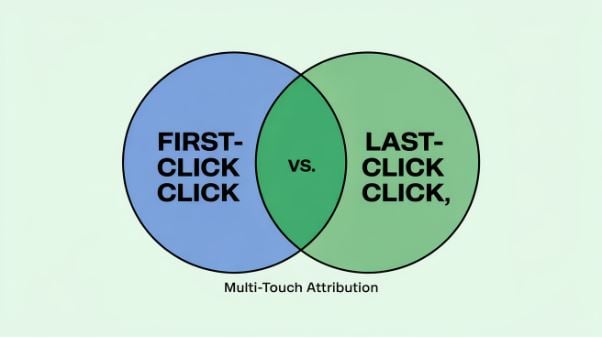
What Is an Attribution Model?
An attribution model is a framework that determines how credit for conversions is assigned across marketing touchpoints.
In simple terms, attribution answers this question:
Which marketing channels contributed to a sale or conversion?
For example, imagine this customer journey:
- User sees a TikTok ad
- User visits website
- User leaves
- User later clicks a Google search result
- User joins email list
- User receives retargeting ad
- User purchases product
Which channel deserves credit?
- TikTok?
- Google Search?
- Email?
- Retargeting ads?
- All of them?
Different attribution models answer this question differently.
Why Attribution Matters So Much
Marketing budgets depend on attribution.
If a channel appears to generate strong conversions, businesses invest more money into it. If a channel appears weak, budgets often get reduced.
Poor attribution creates dangerous decision-making problems:
- Underfunding awareness campaigns
- Overvaluing bottom-funnel channels
- Misjudging customer behavior
- Cutting high-impact channels prematurely
- Inflating performance metrics
- Distorting return on ad spend calculations
Inaccurate attribution doesn’t just affect reporting—it affects the entire marketing strategy.
The Rise of Last-Click Attribution
Last-click attribution became dominant during the early growth of digital advertising.
Why?
Because it was simple.
Under last-click attribution:
- The final interaction receives 100% of conversion credit
- Every earlier touchpoint receives 0%
For example:
Customer journey:
- Facebook ad
- Blog article
- Email campaign
- Google search ad
- Purchase
Under last-click attribution:
- Google search ad gets 100% credit
Everything else gets ignored.
Early analytics platforms made this model extremely popular because it was computationally simple and easy to explain to executives.
For years, many advertising platforms reinforced this mindset.
Why Last Click Worked in the Past
To understand why last click became outdated, we first need to understand why it worked reasonably well before.
Simpler Customer Journeys
Ten or fifteen years ago:
- Fewer channels existed
- Mobile usage was lower
- Social media ecosystems were smaller
- Consumers interacted with fewer touchpoints
Buying journeys were shorter and more linear.
Limited Data Infrastructure
Early analytics systems lacked:
- Cross-device tracking
- Advanced behavioral analysis
- Machine learning attribution
- Unified customer identity resolution
Last click was easier to implement with limited technology.
Search-Dominated Conversion Paths
In earlier digital ecosystems, search engines often genuinely represented high-intent conversion moments.
Consumers:
- Searched
- Clicked
- Purchased
The path was shorter and easier to track.
The Modern Customer Journey Is No Longer Linear
Today’s customer journeys are messy.
Consumers move across:
- Smartphones
- Tablets
- Desktop computers
- Social platforms
- Messaging apps
- Video platforms
- Podcasts
- Marketplaces
- Physical stores
They may interact with a brand dozens of times before converting.
A single “last click” cannot accurately represent this complexity.
The Biggest Problem With Last-Click Attribution
Last-click attribution overvalues bottom-funnel activity while undervaluing awareness and consideration efforts.
This creates a distorted view of reality.
For example:
A consumer:
- Watches multiple YouTube reviews
- Reads blog comparisons
- Follows the brand on Instagram
- Receives several email campaigns
- Finally searches the brand name on Google
Under last click:
- Branded search gets all credit
But without earlier touchpoints, the search may never have happened.
This is the core flaw.
How Last Click Destroys Upper-Funnel Marketing
Upper-funnel marketing builds:
- Awareness
- Trust
- Familiarity
- Interest
- Brand recall
But upper-funnel channels rarely receive final-click conversions.
As a result:
- Social campaigns appear weak
- Content marketing looks ineffective
- Video advertising seems unprofitable
- Influencer partnerships appear difficult to justify
Companies relying only on last-click data often underinvest in brand growth.
Why Branded Search Often Gets Too Much Credit
One of the biggest distortions in last-click attribution involves branded search campaigns.
Imagine someone already wants to buy from your company.
They:
- Heard about your brand elsewhere
- Remembered your name
- Googled your company
- Clicked a paid search ad
- Purchased
Last-click attribution gives the search ad full credit.
But the ad may not have created demand—it simply captured existing demand.
This distinction matters enormously.
The “Conversion Capture” Illusion
Many bottom-funnel channels specialize in conversion capture rather than demand generation.
Examples include:
- Retargeting ads
- Branded paid search
- Coupon websites
- Affiliate closing partners
These channels often intercept users who are already highly likely to convert.
Last-click attribution inflates their perceived impact.
Why Multi-Touch Attribution Became Necessary
As marketing ecosystems evolved, businesses realized they needed models that reflected the entire customer journey.
This led to multi-touch attribution.
Multi-touch attribution distributes conversion credit across multiple interactions instead of assigning all credit to a single touchpoint.
This creates a more balanced understanding of marketing influence.
Common Attribution Models Explained
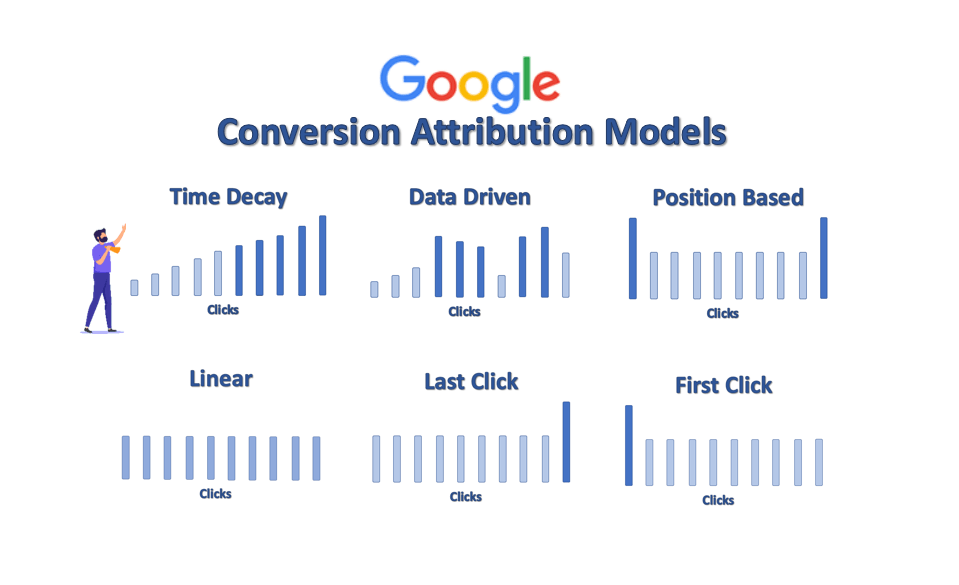
1. Last-Click Attribution
100% credit goes to final touchpoint.
Strengths
- Simple
- Easy reporting
- Clear conversion source
Weaknesses
- Ignores earlier interactions
- Overvalues bottom-funnel channels
- Distorts optimization
2. First-Click Attribution
100% credit goes to first interaction.
Benefits
- Highlights discovery channels
- Measures awareness generation
Problems
- Ignores nurturing and conversion stages
3. Linear Attribution
Credit is distributed equally across all touchpoints.
Example:
- Five touchpoints
- Each receives 20%
Advantages
- More balanced
- Recognizes entire journey
Drawbacks
- Assumes all interactions matter equally
4. Time-Decay Attribution
Later interactions receive more credit.
The closer a touchpoint is to conversion, the more weight it receives.
Useful For
- Long buying cycles
- B2B sales funnels
5. Position-Based Attribution
Often called the “U-shaped model.”
Typically:
- 40% to first interaction
- 40% to last interaction
- 20% distributed among middle interactions
This balances awareness and conversion influence.
6. Data-Driven Attribution
Machine learning models evaluate actual behavioral patterns to assign credit dynamically.
This is increasingly becoming the preferred modern approach.
Why Data-Driven Attribution Is Growing Rapidly
Modern analytics platforms now use:
- Machine learning
- Behavioral modeling
- Probabilistic analysis
- Statistical weighting
- Cross-channel interaction analysis
Instead of relying on fixed rules, data-driven attribution studies how touchpoints actually influence conversion probability.
This creates more realistic measurement.
The Impact of Privacy Changes on Attribution
Modern attribution faces major challenges due to privacy regulation and platform restrictions.
Key developments include:
- Cookie limitations
- iOS privacy updates
- Browser tracking restrictions
- Consent requirements
- Cross-device tracking loss
These changes make perfect attribution increasingly difficult.
Why Perfect Attribution Is Impossible
Many marketers chase perfect measurement.
But attribution will never be perfectly accurate because:
- Human behavior is unpredictable
- Offline influence matters
- Word-of-mouth cannot always be tracked
- Multiple devices create identity gaps
- Platform silos block data sharing
Attribution is fundamentally probabilistic—not absolute truth.
The Problem With Platform Self-Attribution
Advertising platforms often claim credit for conversions independently.
For example:
- Meta claims conversion influence
- Google claims conversion influence
- TikTok claims conversion influence
Each platform measures performance within its own ecosystem.
This creates overlapping attribution claims.
One conversion may appear multiple times across different dashboards.
Why Marketing Teams Misinterpret Attribution Data
Attribution data often creates false certainty.
Common mistakes include:
- Treating attribution as exact truth
- Comparing incompatible models
- Ignoring incrementality
- Overfocusing on direct response
- Undervaluing brand awareness
Attribution should guide decisions—not dictate them blindly.
Attribution vs Incrementality: A Critical Difference
Attribution measures correlation.
Incrementality measures causation.
This distinction is extremely important.
Example:
A retargeting ad receives conversion credit.
But would the customer have purchased anyway?
If yes, the ad may have little incremental value despite strong attribution metrics.
Incrementality testing helps answer this question.
What Is Incrementality Testing?
Incrementality testing measures whether marketing activity truly changes outcomes.
Common methods include:
- Holdout testing
- Geographic experiments
- Audience exclusions
- Lift studies
These methods isolate causal impact more effectively than attribution alone.
Why Smart Marketers Combine Multiple Measurement Methods
The best companies rarely rely on a single attribution model.
Instead, they combine:
- Attribution modeling
- Media mix modeling
- Incrementality testing
- Customer journey analysis
- Cohort analysis
- Brand lift studies
Modern measurement requires a layered approach.
The Decline of Cookie-Based Tracking
Third-party cookies once powered much of digital attribution.
Now, they are disappearing.
Browsers increasingly block:
- Cross-site tracking
- Persistent identifiers
- Behavioral tracking scripts
This shift forces marketers toward:
- First-party data
- Server-side tracking
- Modeled conversions
- Privacy-safe analytics
First-Party Data Is Becoming Essential
Companies increasingly rely on their own customer data.
Examples include:
- Email subscribers
- CRM systems
- Purchase histories
- Loyalty programs
- User accounts
First-party data improves measurement reliability in privacy-focused environments.
Why Customer Journeys Keep Getting Longer
Modern consumers conduct extensive research before purchasing.
They:
- Compare competitors
- Read reviews
- Watch videos
- Consult communities
- Check Reddit discussions
- Follow creators
- Analyze pricing
This expands the number of touchpoints involved in conversions.
Longer journeys make simplistic attribution models less useful.
Attribution Challenges in B2B Marketing
B2B attribution is especially complex because:
- Buying cycles are long
- Multiple stakeholders influence decisions
- Offline meetings matter
- Sales teams interact directly with leads
A single conversion may involve months of interactions.
Last-click attribution becomes particularly misleading in these environments.
Why Content Marketing Suffers Under Last Click
Content marketing often influences customers early in the journey.
Examples:
- Educational blogs
- Tutorials
- Industry reports
- Webinars
- Comparison guides
These assets build trust and authority over time.
But they rarely receive final-click credit.
Companies relying heavily on last click often undervalue content investment.
Social Media Attribution Is Increasingly Difficult
Social influence often happens invisibly.
Consumers may:
- See content
- Remember the brand
- Return later directly
No click occurs initially.
This phenomenon is sometimes called “dark social” influence.
Traditional attribution struggles to measure it accurately.
The Rise of Marketing Mix Modeling
Marketing Mix Modeling (MMM) is regaining popularity.
MMM uses statistical analysis to estimate channel contribution based on aggregated performance data rather than user-level tracking.
Benefits include:
- Privacy resilience
- Cross-channel analysis
- Offline integration
- Long-term trend measurement
Large brands increasingly use MMM alongside attribution systems.
Why Modern Marketing Requires Contextual Measurement
Attribution alone lacks context.
For example:
- Economic shifts affect performance
- Seasonality changes demand
- Competitor actions influence conversion rates
- Consumer sentiment fluctuates
Smart analysis combines attribution with broader business intelligence.
How AI Is Changing Attribution Modeling
Artificial intelligence now helps:
- Predict conversion likelihood
- Model missing data
- Detect behavioral patterns
- Estimate channel contribution
- Forecast campaign outcomes
AI-driven attribution systems are becoming increasingly sophisticated.
However, they still rely on assumptions and statistical modeling rather than perfect certainty.
The Danger of Optimizing Only for Measurable Channels
Last-click attribution encourages companies to invest only in channels with direct measurable conversions.
This creates short-term optimization traps.
Brands may:
- Cut awareness spending
- Reduce creative experimentation
- Ignore long-term brand building
- Focus excessively on retargeting
Eventually, demand generation weakens.
Brand Marketing vs Performance Marketing
Modern attribution debates often center around:
- Brand marketing
- Performance marketing
Performance marketing:
- Easier to measure
- Often conversion-focused
Brand marketing:
- Harder to quantify
- Influences future demand
Strong companies balance both.
Last-click attribution tends to favor performance channels disproportionately.
What Modern Attribution Should Actually Do
A good attribution system should:
- Reflect customer complexity
- Reduce bias
- Support strategic decisions
- Identify incremental impact
- Balance short-term and long-term growth
- Improve budget allocation
It should not simply reward the final interaction.
How Businesses Should Move Beyond Last Click
Step 1: Audit Existing Attribution
Understand:
- Current reporting models
- Platform discrepancies
- Channel biases
Step 2: Compare Multiple Models
Analyze:
- First click
- Linear
- Time decay
- Data-driven attribution
Compare how channel performance changes.
Step 3: Use Incrementality Testing
Measure actual causal impact.
Step 4: Strengthen First-Party Data
Build:
- CRM infrastructure
- Customer databases
- Consent-based analytics
Step 5: Focus on Full-Funnel Measurement
Evaluate:
- Awareness
- Engagement
- Consideration
- Conversion
- Retention
Not just final sales.
The Future of Attribution
The future of attribution will likely involve:
- Probabilistic modeling
- AI-driven analysis
- Privacy-safe measurement
- Aggregated data analysis
- Cross-channel forecasting
- First-party identity systems
Perfect visibility into customer behavior may never return.
Instead, marketers must adapt to partial data environments while improving strategic interpretation.
Final Thoughts
Last-click attribution helped shape the early era of digital marketing, but modern customer behavior has outgrown its limitations.
Today’s buyers interact with brands across countless channels, devices, and moments before converting. Assigning all conversion credit to the final interaction ignores the complexity of real-world decision-making and creates dangerous optimization biases.
Modern marketing requires a broader perspective—one that values awareness, trust-building, education, engagement, and long-term customer relationships alongside direct-response performance.
That’s why businesses increasingly embrace:
- Multi-touch attribution
- Data-driven modeling
- Incrementality testing
- Marketing mix modeling
- First-party data strategies
No attribution model is perfect. Every framework contains assumptions, blind spots, and tradeoffs. But relying solely on last-click attribution in today’s environment is like trying to navigate a modern city using a map from twenty years ago.
The marketing landscape has evolved.
Measurement strategies must evolve with it.