En
En
 9 min read
In 2026, global e-commerce competition is no longer about whether you should expand overseas—it’s about how efficiently you can acquire customers in increasingly expensive ad environments. Platforms have become more automated, audiences more fragmented, and customer acquisition costs more volatile than ever.
For cross-border sellers, especially those targeting the U.S., Europe, and high-income Southeast Asian markets, two advertising approaches dominate the conversation:
- Standard Shopping Ads (Google Shopping / product listing ads in structured campaigns)
- Performance Max (PMax), Google’s AI-driven, multi-channel automated campaign system
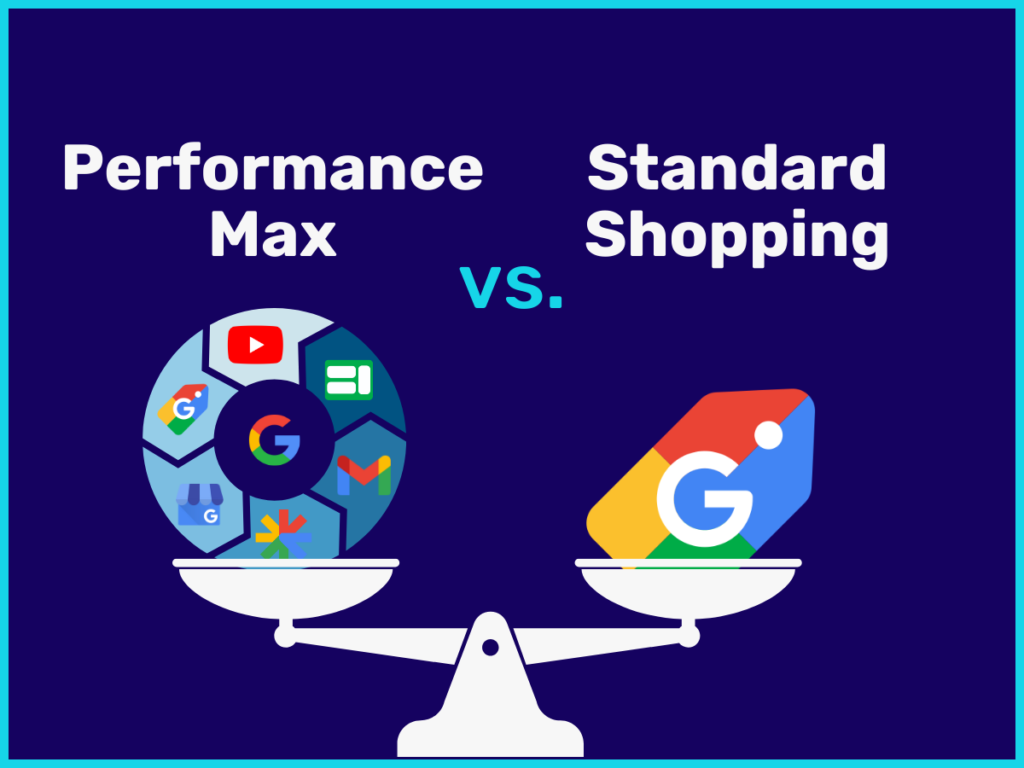
On the surface, both seem similar—they show products, use product feeds, and rely on Google’s ecosystem. But under the hood, they behave very differently. And more importantly, they impact different average order value (AOV) strategies in very different ways.
This article breaks down how each system works, where each one excels, and—most importantly—how to decide which is better aligned with your product pricing and profitability structure.
1. Understanding the Core Difference: Control vs Automation
Before comparing performance, you need to understand the philosophical difference between these two ad types.
Standard Shopping Ads: Structured Control System
Standard Shopping Ads are built on a relatively simple logic:
- You upload a product feed
- You organize products into campaigns or ad groups
- You define bidding strategies
- You control keywords indirectly through product data optimization
This system gives advertisers granular control over:
- Product segmentation
- Budget allocation
- Search query targeting (indirectly)
- Geographic targeting
- Bid adjustments by product group
Think of it as a manual transmission vehicle. You decide how fast to go, when to shift, and where to allocate fuel.
Performance Max (PMax): AI-Driven Distribution Engine
Performance Max works very differently. Instead of focusing only on Shopping placements, it distributes ads across:
- Google Search
- YouTube
- Display Network
- Gmail
- Discover feed
- Maps (in some cases)
You provide:
- Product feed
- Creative assets (images, videos, headlines)
- Conversion goals
Then the system uses machine learning to decide:
- Where your ads appear
- Who sees them
- How much to bid per impression or click
This is more like a self-driving system. You set the destination (conversion goals), but the system decides the route.
2. Why Average Order Value (AOV) Matters More Than Ever in 2026
In 2026, advertising efficiency is no longer measured just by cost per click or even conversion rate. The real profitability driver is average order value (AOV).
Why?
Because platform automation has increased bidding competition. That means:
- Low-margin products struggle to survive
- Conversion costs fluctuate heavily
- Upselling and bundling become essential
Your AOV determines:
- How much you can afford per click
- Whether automation systems can scale profitably
- Whether multi-channel exposure helps or hurts ROI
This is why choosing between Shopping Ads and PMax is not just tactical—it’s structural.
3. Standard Shopping Ads: Best for Precision and High-Intent Optimization
Standard Shopping campaigns are often underestimated in modern automated advertising environments, but they remain extremely powerful for specific business models.
Strengths of Standard Shopping Ads
1. High Intent Traffic Control
Shopping Ads primarily appear in search-based environments, meaning:
- Users are actively searching for products
- Purchase intent is already formed
- Funnel is short
This makes them ideal for:
- High-conversion efficiency products
- Clear demand categories
- Price-competitive niches
2. Granular Product Segmentation
You can separate campaigns by:
- High AOV vs low AOV products
- Margin tiers
- Inventory levels
- Seasonal products
This allows precise control over profitability.
3. Better Data Transparency
Unlike PMax, Shopping campaigns provide:
- Clear search term insights
- Stronger product-level performance breakdown
- Easier ROI attribution
This is crucial for scaling intelligently rather than blindly trusting automation.
Weaknesses of Standard Shopping Ads
1. Limited Reach
You only appear in shopping/search environments, meaning:
- No YouTube discovery traffic
- No display remarketing expansion
- No algorithmic audience expansion
2. Scaling Ceiling
Once you saturate high-intent demand, growth slows.
This makes it less suitable for:
- Brand expansion
- Impulse-driven categories
- Lifestyle products
3. Manual Optimization Required
You must actively manage:
- Negative keywords
- Product segmentation
- Bid strategies
- Feed optimization
It is powerful—but operationally heavier.
4. Performance Max: AI-Driven Scale for Broad Revenue Expansion
Performance Max is designed for one primary purpose: maximum conversion volume across all Google inventory.
But volume does not always mean efficiency.
Strengths of Performance Max
1. Massive Reach Expansion
PMax distributes products across:
- Search
- YouTube discovery
- Display ads
- Gmail promotions
- Google Discover feed
This creates exposure at multiple stages of the funnel.
2. Strong for Discovery-Based Products
PMax excels when users don’t yet know what they want.
This includes:
- Lifestyle products
- Home decor
- Fashion
- Gifts
- Trending gadgets
3. Automated Optimization at Scale
The system dynamically adjusts:
- Bidding strategies
- Audience targeting
- Placement selection
- Conversion routing
This reduces manual workload significantly.
Weaknesses of Performance Max
1. Limited Transparency
One of the biggest frustrations:
- You cannot fully see search terms
- You cannot fully control placements
- You cannot isolate performance by channel easily
2. Budget Cannibalization Risk
PMax often reallocates budget toward:
- Low-cost conversions
- Easy wins (low AOV users)
- Broad audiences
This can reduce profitability for premium products.
3. AOV Dilution Problem
This is critical:
PMax tends to optimize toward conversion volume, not necessarily order value quality.
So if you sell:
- $20–$50 products → works well
- $200–$800 products → needs careful tuning
- $1,000+ products → often unstable without strict controls
5. The Real Question: Which One Fits Your AOV Strategy?
Now we arrive at the most important part.
Instead of asking:
“Which platform is better?”
You should ask:
“Which system aligns with my product pricing structure?”
Scenario 1: Low AOV Products ($10–$50)
Examples:
- Accessories
- Consumables
- Small electronics
- Impulse-buy items
Best choice: Performance Max
Why:
- Requires volume scaling
- Benefits from broad exposure
- Conversion cycles are short
- Algorithm can find cheap traffic pockets
Shopping Ads alone may not generate enough reach.
Scenario 2: Mid AOV Products ($50–$300)
Examples:
- Home gadgets
- Mid-range fashion
- Fitness equipment
- Beauty devices
Best strategy: Hybrid system
Use:
- Shopping Ads for high-intent efficiency
- PMax for discovery and scaling
This combination balances:
- Profit stability
- Traffic expansion
- Funnel diversification
Scenario 3: High AOV Products ($300–$1,500+)
Examples:
- Premium electronics
- Furniture
- Specialized tools
- Luxury goods
Best choice: Standard Shopping Ads (primary)
Why:
- Requires controlled targeting
- Needs high purchase intent traffic
- Sensitive to wasted impressions
- Requires strict ROI tracking
PMax can be used cautiously for remarketing, but not as the core driver.
Scenario 4: Luxury / Ultra High AOV ($1,500+)
Examples:
- High-end furniture
- Designer goods
- Professional equipment
Best choice: Controlled Shopping + remarketing layers
In this case:
- Shopping Ads generate qualified leads
- PMax is only used for retargeting and brand reinforcement
Automation alone is too unpredictable.
6. Funnel Behavior: How Each System Treats the Same Customer
Understanding user journey differences is essential.
Standard Shopping Ads Funnel
- User searches product
- Sees product listing
- Compares price and rating
- Clicks
- Purchases
This is a short, intent-driven funnel.
PMax Funnel
- User sees product on YouTube, Display, or Discover
- Becomes aware of product category
- Later searches or revisits
- Converts after multiple exposures
This is a multi-touch, delayed conversion funnel.
7. Profitability Impact: The Hidden Difference
Many advertisers focus only on conversion volume, but profitability depends on:
- Cost per acquisition (CPA)
- Average order value (AOV)
- Return rate
- Margins per SKU
Standard Shopping Ads Profit Profile
- More predictable CPA
- Higher intent traffic
- Strong margin control
- Easier optimization
PMax Profit Profile
- Higher variability
- Strong scaling potential
- Risk of low-value conversions
- Requires careful feed optimization
8. Feed Optimization: The Hidden Weapon in Both Systems
Regardless of campaign type, your product feed determines performance.
A strong feed includes:
- Clear product titles (with keywords users actually search)
- High-quality images
- Structured product categories
- Accurate pricing and availability
- Variant segmentation
In 2026, feed quality is often more important than campaign type itself.
9. Common Mistakes Sellers Make
Mistake 1: Using PMax for Everything
Many sellers assume automation equals efficiency. In reality:
- It can dilute high-value traffic
- It often over-optimizes for cheap conversions
Mistake 2: Running Shopping Ads Without Segmentation
Without separating:
- High-margin vs low-margin products
- Bestsellers vs slow movers
You lose optimization potential.
Mistake 3: Ignoring AOV in Bidding Strategy
If your AOV is $40, but your CPA is $25, scaling is dangerous.
If your AOV is $400, a $25 CPA is extremely efficient.
Everything depends on structure.
10. The Strategic Framework for 2026
Instead of choosing one system, think in layers:
Layer 1: Standard Shopping Ads
- High intent traffic
- Core revenue engine
- Profit stabilization
Layer 2: Performance Max
- Discovery traffic
- Brand expansion
- Retargeting amplification
Layer 3: Feed Optimization System
- Product positioning
- AOV segmentation
- Margin protection
Final Conclusion: It’s Not About the Tool—It’s About the AOV Strategy
In 2026, the debate between Standard Shopping Ads and Performance Max is no longer about which is “better.”
It is about alignment.
- If your business depends on precision, margin control, and high-intent buyers, Standard Shopping Ads are the foundation.
- If your business depends on scale, discovery, and broad market penetration, Performance Max becomes powerful.
- If your business sits in the middle, a hybrid approach delivers the most stability.
Ultimately, your average order value is not just a number—it is the blueprint that determines how your entire advertising system should be structured.
And the brands that win in cross-border e-commerce are not the ones who pick the most advanced tool, but the ones who match the right system to the right product economics.