En
En
 24 min read
In the world of e-commerce, getting a customer to place a first order is only the beginning. The real opportunity lies in what happens after that purchase.
A customer who buys once may generate revenue, but a customer who returns regularly, purchases additional products, recommends your brand to friends, and remains engaged with your business over time can become one of your most valuable assets.
This is where customer lifetime value (LTV) becomes critical.
For direct-to-consumer brands and independent online stores, increasing LTV is not simply about selling more products. It is about creating a customer relationship strong enough that people have reasons to come back. And few channels are better suited to maintaining that relationship than social media.
Social platforms allow brands to communicate with customers before, during, and long after a transaction. They provide opportunities to educate customers, demonstrate products, build communities, collect feedback, encourage user-generated content, introduce new products, and create personalized reasons to purchase again.
However, simply posting every day will not automatically increase repeat purchases.
A successful social media strategy for customer retention requires a deliberate system that connects content, community, customer data, incentives, product education, and post-purchase experiences.
This guide explores practical strategies independent online stores can use to turn social media from a customer-acquisition channel into a powerful engine for higher LTV and repeat purchase rates.
What Is Customer Lifetime Value and Why Does It Matter?
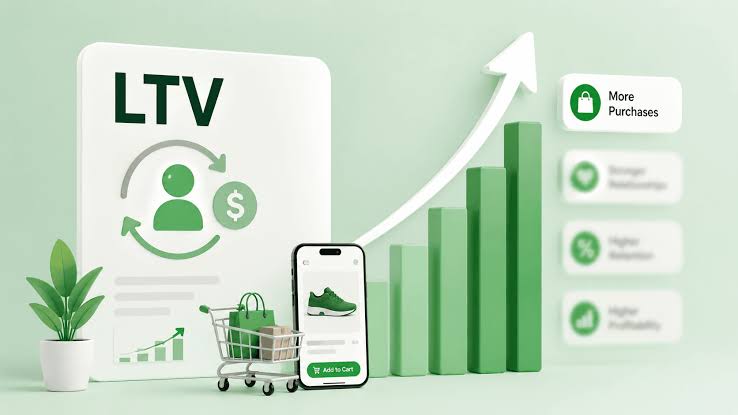
Customer lifetime value represents the total revenue or profit a business expects to generate from a customer throughout the relationship.
A simplified way to think about it is:
LTV = Average Order Value × Purchase Frequency × Customer Lifespan
For example, imagine an online store has an average order value of $60.
If a typical customer purchases only once, the revenue generated from that customer may be around $60.
But if the same customer purchases four times over two years, the revenue associated with that customer could reach approximately $240 before accounting for costs.
That difference changes the economics of the entire business.
Instead of constantly searching for new shoppers, the brand can grow by getting more value from customers it has already acquired.
Social media can play a major role because it gives brands repeated opportunities to remain visible between purchases.
A customer may discover your store through a social post, make a purchase several weeks later, follow your account, watch product demonstrations, see another customer’s experience, learn about a new product, and eventually return for another order.
The customer journey becomes continuous rather than ending at checkout.
Why Social Media Is So Important for Repeat Purchases
Traditional advertising often focuses heavily on acquiring customers.
Social media can do something different.
It can maintain the relationship.
Think about what happens after a customer receives an order.
Without ongoing communication, the relationship may gradually disappear. The customer gets the product, uses it, and eventually forgets about the brand.
With an effective social strategy, the brand can continue providing value.
You can show customers:
- How to use the product more effectively
- New ways to use an existing product
- Accessories that complement their purchase
- Customer stories
- Product care tips
- Frequently asked questions
- New product launches
- Seasonal recommendations
- Limited-edition collections
- Behind-the-scenes content
- Community discussions
- Exclusive offers
This ongoing interaction creates more opportunities for customers to remember the brand and consider another purchase.
The goal is not to turn every social post into an advertisement.
The goal is to make the brand useful enough that customers want to keep following it.
1. Stop Treating Social Media as a Pure Acquisition Channel
One of the biggest mistakes independent e-commerce brands make is measuring social media almost entirely by new customer acquisition.
If every post is designed to attract someone who has never purchased before, existing customers can become an afterthought.
Instead, divide your audience into different stages.
A practical structure might include:
New prospects
People who have discovered your brand but have never purchased.
First-time customers
People who have recently completed their first order.
Active repeat customers
People who have purchased multiple times.
High-value customers
Customers who spend significantly more than average.
At-risk customers
People who purchased previously but have not returned within the expected timeframe.
Each group needs different content.
A new prospect may need product education and social proof.
A first-time customer may need usage instructions and reassurance.
A repeat customer may want early access to new products.
An at-risk customer may need a reason to return.
This segmentation immediately makes social media more strategic.
2. Build a Post-Purchase Social Journey
The customer journey should not stop after the order confirmation email.
Social media can extend the post-purchase experience.
Imagine a customer buys a skincare product.
Instead of immediately trying to sell another product, the brand could publish content such as:
Day 1: How to use the product correctly.
Day 5: Common mistakes to avoid.
Day 10: Tips for getting better results.
Day 20: Customer transformation stories.
Day 30: Complementary products that work well with the original purchase.
This creates a natural progression.
The customer first learns how to get value from the product. Then the customer discovers additional possibilities.
That distinction is important.
If you aggressively promote another product immediately after checkout, the customer may feel that the original purchase was merely an entry point into a sales funnel.
If you first help the customer succeed with the product, you build trust.
Trust makes future purchases easier.
3. Create Content That Makes Customers Want to Use the Product Again
Repeat purchasing often depends on whether customers fully understand the value of what they bought.
A product may have ten possible use cases, but the customer may only know two.
Social media is an excellent place to expand that knowledge.
For example, a home organization brand could demonstrate:
- Small-space storage ideas
- Seasonal organization
- Before-and-after transformations
- Different room applications
- Cleaning and maintenance
- Organization routines
- Product combinations
A fashion brand could show:
- Multiple ways to style one item
- Seasonal outfits
- Work-to-weekend combinations
- Layering ideas
- Accessory pairings
- Travel outfits
A fitness equipment store could publish:
- Beginner workouts
- Advanced exercises
- Equipment maintenance
- Training plans
- Technique demonstrations
The more value customers discover in a product, the more likely they are to remain connected with the brand.
4. Use Customer Segmentation to Personalize Social Content
Not every customer has the same needs.
A customer who purchased a beginner product should not necessarily receive the same recommendations as someone who bought your premium collection.
Customer segmentation can be based on:
- Purchase history
- Product category
- Order value
- Purchase frequency
- Geographic market
- Customer interests
- Engagement behavior
- Time since last purchase
- Product preferences
Suppose an independent eyewear store sells sunglasses, prescription frames, and accessories.
A customer who purchased sunglasses might be interested in:
- New seasonal sunglasses
- Lens-care tips
- Travel accessories
- UV protection education
- Styling ideas
A customer who purchased prescription frames might respond better to:
- New frame designs
- Frame-care tips
- Styling recommendations
- Replacement accessories
- New arrivals
The same social account can serve different customer groups, but the content strategy should reflect those differences.
5. Turn User-Generated Content Into a Retention Engine
User-generated content is powerful because it combines social proof with community participation.
When customers post themselves using your products, they are not only creating promotional material for your brand. They are also reinforcing their own relationship with the brand.
Encourage customers to:
- Tag your account
- Share unboxing videos
- Post product photos
- Demonstrate how they use your product
- Share before-and-after results
- Participate in challenges
- Submit styling ideas
- Review products publicly
Then feature the best content on your own channels.
This creates a loop:
Purchase → Use product → Share experience → Get recognized → Feel connected → Purchase again
Recognition can be surprisingly effective.
A customer whose photo appears on a brand’s social account may feel like more than a transaction record. They become part of the brand community.
That emotional connection can contribute to long-term retention.
6. Build a Brand Community Instead of Just an Audience
An audience watches.
A community participates.
That difference matters.
A large follower count does not necessarily mean high customer value.
A smaller group of highly engaged customers can be far more valuable.
Community-building content could include:
- Customer questions
- Polls
- Product voting
- Live Q&A sessions
- Community challenges
- Customer spotlights
- Behind-the-scenes stories
- Product development discussions
- “Choose our next color” campaigns
- Feedback requests
For example, instead of announcing a new product and asking people to buy it, a brand could involve followers before launch.
“Which color should we produce next?”
“Which version would you choose?”
“Should we bring this design back?”
When customers participate in product decisions, they become emotionally invested in the outcome.
That investment can increase interest when the product eventually launches.
7. Use Exclusive Social Benefits to Reward Existing Customers
Discounts can encourage repeat purchases, but constantly offering discounts can damage margins and train customers to wait for promotions.
Instead, consider non-price benefits.
Examples include:
- Early access
- Limited releases
- Members-only content
- Private product previews
- Exclusive colors
- Special bundles
- Loyalty points
- Birthday rewards
- Community recognition
- Free educational content
- Early notification of restocks
The principle is simple:
Reward loyalty without always reducing price.
A customer may return because they do not want to miss early access, rather than because a product is 20% off.
This protects the perceived value of the brand.
8. Create Social Media Product Launches That Target Existing Customers
New products represent one of the strongest opportunities to increase LTV.
But many brands introduce new products primarily to attract new customers.
Existing customers should be a major part of the launch strategy.
Start teasing the product before launch.
Show:
- Close-up details
- Development footage
- Packaging
- Prototype testing
- Customer feedback
- Design decisions
- Short demonstrations
- Countdown content
Then provide existing customers with early access.
This creates a feeling of exclusivity.
A customer who already trusts your brand has less friction than a completely new shopper.
If the new product complements something they already own, the purchase becomes even more natural.
9. Develop Complementary Product Recommendations
Repeat purchases do not always require customers to buy the exact same product again.
Cross-selling can significantly increase customer value.
The key is relevance.
If a customer buys a product, ask:
What else makes this product more useful?
For example:
A camera store might recommend memory cards, bags, tripods, and cleaning kits.
A home décor store might recommend complementary pieces.
A beauty brand might recommend products designed to work together.
An outdoor brand might recommend accessories related to the customer’s original purchase.
Social media can demonstrate these relationships visually.
Instead of saying:
“Buy this accessory.”
Show:
“Here’s how customers are using these two products together.”
Demonstration is often more persuasive than a direct sales message.
10. Use Social Proof at Every Stage of the Customer Journey
Customers trust other customers.
That makes social proof one of the most valuable forms of content for both conversion and retention.
Useful formats include:
- Customer reviews
- Video testimonials
- Product demonstrations
- Customer photos
- Unboxing videos
- Case studies
- Frequently asked questions
- Comparisons
- Customer success stories
For repeat purchases, social proof can introduce products customers may not have considered.
A customer might ignore a product announcement but pay attention when another customer says:
“I bought this after using the original product for six months, and it completely changed my routine.”
Authentic experiences can make new products feel less risky.
11. Create a Content Series Instead of Random Posts
Random content makes it difficult to build a recognizable customer experience.
A repeatable content system is much more effective.
For example, an independent fashion store could create:
Monday: Styling Monday
One product styled three different ways.
Tuesday: Customer Spotlight
Feature a customer.
Wednesday: Product Education
Explain a product feature.
Thursday: Behind the Brand
Show the people and processes behind the business.
Friday: New Product Friday
Highlight a new or upcoming product.
Weekend: Community Content
Polls, questions, contests, or customer submissions.
The exact schedule does not matter as much as consistency.
Customers should know what kind of value they can expect from following the brand.
12. Use Short-Form Video to Demonstrate Value Quickly
Short-form video is especially useful for products that benefit from demonstration.
A strong product video can answer questions that product photography cannot.
Instead of simply showing a product, demonstrate:
- How it works
- How it looks in real life
- How quickly it can be used
- How it compares with alternatives
- Common mistakes
- Unexpected applications
- Customer reactions
- Before-and-after results
The first few seconds should establish why the viewer should continue watching.
For example:
“Three ways to use the product you already own.”
“Don’t make this mistake when using your new frame.”
“Here’s why customers keep buying this accessory.”
“One product, five different applications.”
These formats naturally encourage existing customers to reconsider products they already own or discover complementary items.
13. Turn Customer Questions Into Future Sales Content
Customer questions are valuable content ideas.
If one customer asks:
“Can I use this outdoors?”
Hundreds of other customers may have the same question.
Turn that question into a social post.
If customers frequently ask about sizing, create sizing content.
If they ask about maintenance, create maintenance content.
If they ask which product is right for beginners, create a comparison.
This approach provides two benefits.
First, it improves the customer experience.
Second, it reduces uncertainty around future purchases.
The more questions your content answers, the easier it becomes for customers to make confident buying decisions.
14. Create Reorder Reminders Based on Product Usage
For products that naturally require replenishment, timing is extremely important.
A customer may want to repurchase but simply forget.
Social content can serve as a reminder.
For example:
“Running low?”
“Is it time to refresh your supply?”
“Your monthly essentials checklist.”
“Three signs it’s time to replace your current product.”
However, the message should feel helpful rather than intrusive.
A reminder works best when it is connected to real product usage.
If the average customer consumes a product within approximately 60 days, your communication strategy should begin preparing the customer for another purchase before that period ends.
15. Build a Win-Back Strategy for Inactive Customers
Not every customer will continue purchasing automatically.
Some customers become inactive.
That does not necessarily mean they have permanently rejected your brand.
They may have:
- Forgotten about your store
- Found another product
- Become less interested
- Missed a new product launch
- Had a poor experience
- Simply stopped seeing your content
Social media can help reactivate these customers.
Content for inactive customers could include:
“What’s new since your last order?”
“Five products our community has loved recently.”
“You asked, and we brought it back.”
“New arrivals you might have missed.”
“Here’s what we’ve improved.”
The objective is not always to offer a discount.
Sometimes the best win-back message is simply a reminder that the brand has evolved.
16. Make Loyalty Visible
People like to feel recognized.
A loyalty program can become much more powerful when social media makes participation visible.
For example, brands can recognize:
- Top customers
- Community contributors
- Product reviewers
- Referral champions
- Long-term members
- Challenge participants
You can create recurring community features such as:
“Customer of the Month”
“Community Pick of the Week”
“Top Styling Idea”
“Member Spotlight”
This transforms loyalty from a hidden transaction history into a social identity.
Customers are more likely to remain engaged when they feel that their participation matters.
17. Use Social Media to Collect Feedback Before Making Inventory Decisions
Social platforms can also help reduce product risk.
Before investing heavily in a new product, ask your community what they actually want.
You can test:
- Colors
- Sizes
- Designs
- Features
- Packaging
- Bundles
- Product categories
For example:
“Which color should we launch next?”
“Would you rather have option A or option B?”
“Which feature matters most to you?”
These simple questions can generate useful customer insights.
More importantly, customers who vote on a product may become highly interested in the final launch.
They helped create it.
That creates psychological ownership.
18. Use Referral Programs to Turn Loyal Customers Into Growth Partners
The highest-value customers may not only purchase repeatedly.
They may also introduce new customers.
A referral program can connect LTV and acquisition.
Give existing customers a meaningful reason to recommend the brand.
Possible rewards include:
- Store credit
- Loyalty points
- Exclusive products
- Early access
- Referral bonuses
- Special bundles
Social media can amplify the program by showing customers how referrals work.
But avoid making the experience feel overly transactional.
The strongest referral programs make customers feel that they are sharing something genuinely useful.
19. Measure More Than Likes and Followers
If your goal is higher LTV, vanity metrics are not enough.
Track metrics that connect social activity with customer behavior.
Important measurements include:
Repeat purchase rate
What percentage of customers make another purchase?
Purchase frequency
How often do customers return?
Average order value
How much does the typical order generate?
Customer lifetime value
How much revenue or profit does a customer generate over the relationship?
Time between purchases
How long does it take customers to return?
Retention rate
How many customers remain active over time?
Social engagement from existing customers
Are previous buyers interacting with your content?
Revenue from returning customers
How much revenue comes from people who have already purchased?
These measurements help reveal whether social media is actually strengthening customer relationships.
20. Connect Social Media With Your Other Customer Channels
Social media should not operate in isolation.
Your strongest retention strategy connects social platforms with:
- SMS
- Loyalty programs
- Customer service
- Product pages
- Reviews
- Referral programs
- Retargeting campaigns
- Post-purchase communication
For example, someone might discover your product through social media, purchase through your website, receive educational content by email, join your loyalty program, and later discover a new product through social video.
Each channel supports the others.
The result is a connected customer journey rather than a collection of disconnected marketing activities.
21. Avoid Turning Every Social Post Into a Sales Pitch
One of the fastest ways to reduce engagement is to constantly ask customers to buy.
If every post says:
“Shop now.”
“Buy today.”
“Limited offer.”
“20% off.”
Customers may eventually tune out.
A better content balance could include:
- Educational content
- Inspirational content
- Community content
- Entertainment
- Product demonstrations
- Customer stories
- Behind-the-scenes content
- Product announcements
- Promotional content
Promotions should be part of the relationship, not the entire relationship.
When customers consistently receive useful content, promotional posts become more effective because the audience has not been trained to ignore everything.
22. Create Content Around the Customer’s Entire Product Lifecycle
Think beyond the purchase.
Ask what customers need at every stage.
Before purchase
Customers need education, comparisons, reviews, and reassurance.
Immediately after purchase
They need confirmation, setup instructions, and usage guidance.
After initial use
They need tips, inspiration, and problem-solving content.
After successful use
They may be ready for accessories, upgrades, or complementary products.
Before repurchase
They need reminders, new options, or replenishment prompts.
After repeat purchase
They should receive recognition and deeper community opportunities.
This lifecycle approach makes social media more valuable because every piece of content has a purpose.
23. Build a Customer Retention Funnel
A practical retention funnel might look like this:
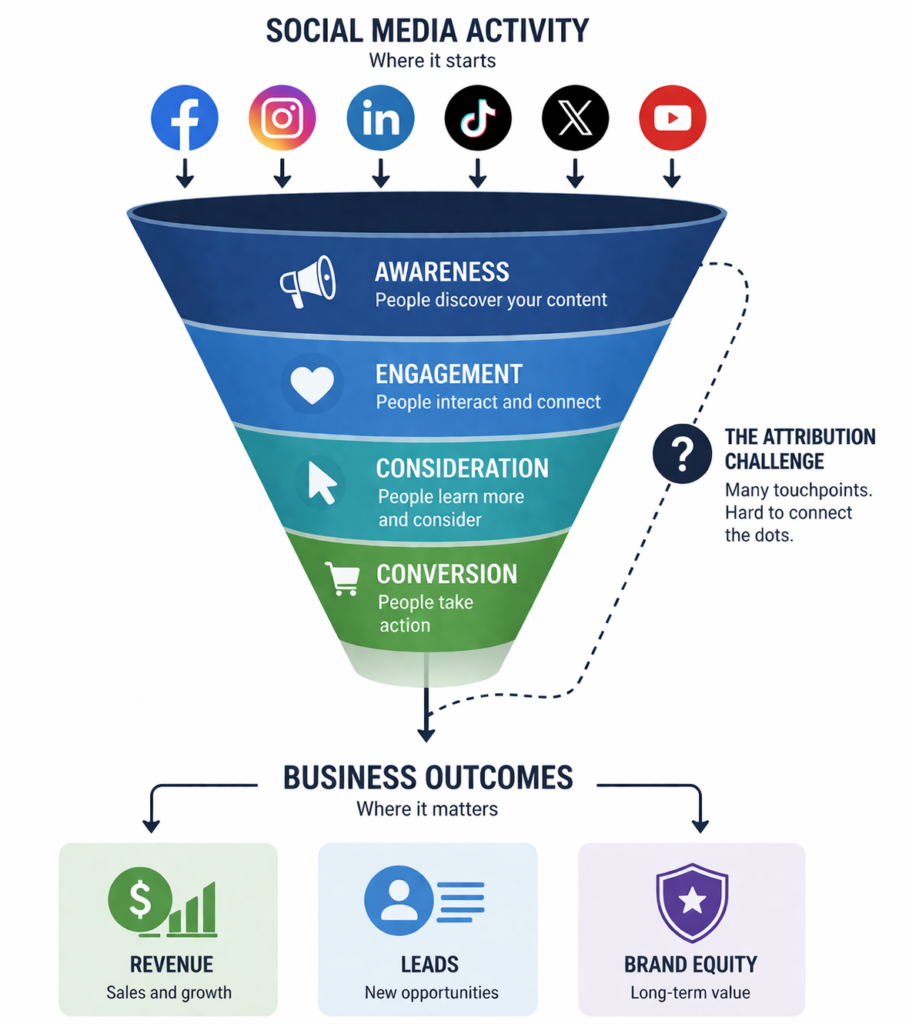
Follow
The customer begins seeing your content.
↓
Engage
They comment, save, share, or watch videos.
↓
Purchase
They place an order.
↓
Experience
They use the product successfully.
↓
Participate
They interact with your community.
↓
Repeat
They make another purchase.
↓
Advocate
They recommend your brand to others.
The ultimate objective is to move customers upward through this funnel.
A follower is valuable.
A buyer is more valuable.
A repeat customer is even more valuable.
An enthusiastic customer who repeatedly purchases and recommends your brand can become one of your strongest long-term growth assets.
24. Develop a 90-Day Social Retention Plan
If your store currently has no structured retention strategy, start small.
Days 1–30: Build the foundation
Identify your major customer groups.
Analyze previous purchases.
Identify your most frequently purchased products.
List common customer questions.
Create post-purchase educational content.
Start collecting customer-generated content.
Define your core social content categories.
Days 31–60: Increase engagement
Launch customer spotlights.
Introduce polls and questions.
Create product-use tutorials.
Start highlighting complementary products.
Test short-form video.
Encourage customers to tag your brand.
Introduce early-access opportunities for existing customers.
Days 61–90: Optimize for repeat purchases
Identify customers approaching their expected repurchase window.
Create win-back content.
Launch a complementary-product campaign.
Test a loyalty incentive.
Promote customer referrals.
Compare repeat purchase behavior among engaged and non-engaged customers.
The objective is not to create a complicated system overnight.
It is to build a repeatable process.
25. The Most Important Principle: Give Customers a Reason to Stay
The biggest mistake brands make with social retention is focusing too heavily on tactics.
They ask:
“Should we post more videos?”
“Should we run more giveaways?”
“Should we offer a bigger discount?”
Those questions are secondary.
The more important question is:
Why should a customer continue paying attention to us after buying from us?
The answer should be more substantial than discounts.
Maybe your brand provides excellent education.
Maybe your community is inspiring.
Maybe your product demonstrations are genuinely useful.
Maybe customers enjoy seeing new designs.
Maybe they want early access.
Maybe they appreciate being recognized.
Maybe your content helps them get more value from products they already own.
That reason is the foundation of retention.
Common Mistakes That Can Reduce LTV
Even well-intentioned social strategies can hurt customer relationships.
Mistake 1: Over-discounting
Constant discounts can reduce margins and weaken perceived product value.
Mistake 2: Ignoring existing customers
Focusing entirely on new customers leaves significant revenue potential untapped.
Mistake 3: Posting without segmentation
Different customers have different needs.
Mistake 4: Selling immediately after every purchase
Give customers time to experience and appreciate the product.
Mistake 5: Ignoring negative feedback
Complaints can reveal problems that prevent future purchases.
Mistake 6: Measuring followers instead of revenue
A growing audience does not automatically mean a healthier business.
Mistake 7: Copying competitors
Your customers need a reason to choose your brand specifically.
Mistake 8: Publishing content without a strategy
Consistency matters, but strategic consistency matters more.
How to Turn Social Media Into a Long-Term Revenue Asset
The strongest independent e-commerce brands understand that social media is not simply a traffic source.
It is a relationship channel.
The customer may discover your brand through a video, but the relationship develops through dozens of small interactions.
They see your product being used.
They learn something useful.
They recognize another customer.
They comment on a new design.
They participate in a poll.
They see a new product.
They receive early access.
They purchase again.
They recommend the brand.
This process may not happen overnight.
But over months and years, these interactions can dramatically change the value of a customer.
The most successful retention strategy therefore combines three things:
Value + Relevance + Relationship
Value gives customers a reason to follow you.
Relevance gives them a reason to pay attention.
Relationship gives them a reason to stay.
When these three elements work together, social media can help reduce customer churn, increase repeat purchase frequency, raise average customer value, and strengthen brand loyalty.
Final Thoughts
Increasing customer lifetime value does not require an independent online store to become larger overnight.
In many cases, the biggest opportunity is already sitting inside the existing customer base.
Customers who have already purchased understand your brand. They have experienced your products. They have fewer barriers to buying again than completely new shoppers.
Social media gives you a powerful way to stay connected with them.
Instead of treating every post as an opportunity to make an immediate sale, build a system that helps customers succeed, discover new possibilities, participate in a community, and feel recognized.
Use educational content to increase product value.
Use customer-generated content to build trust.
Use segmentation to improve relevance.
Use loyalty programs to reward engagement.
Use product launches to create excitement.
Use complementary recommendations to increase basket size.
Use win-back campaigns to reconnect with inactive customers.
And most importantly, measure whether these activities lead to stronger customer retention and more repeat purchases.
The goal is not simply to have more followers.
The goal is to create more customers who stay.
A customer who buys once gives you revenue.
A customer who buys repeatedly gives you stability.
A customer who repeatedly buys, engages with your brand, and recommends you to others can become a long-term growth engine.
That is the real power of using social media to increase customer lifetime value and repeat purchase rates for an independent e-commerce store.