En
En
 8 min read
Finding winning products is one of the hardest parts of running an online business. Many sellers spend months testing items blindly, investing in inventory or advertising without clear signals of demand. Meanwhile, successful brands appear to launch products that immediately gain traction.
The difference often comes down to research — not guesswork.
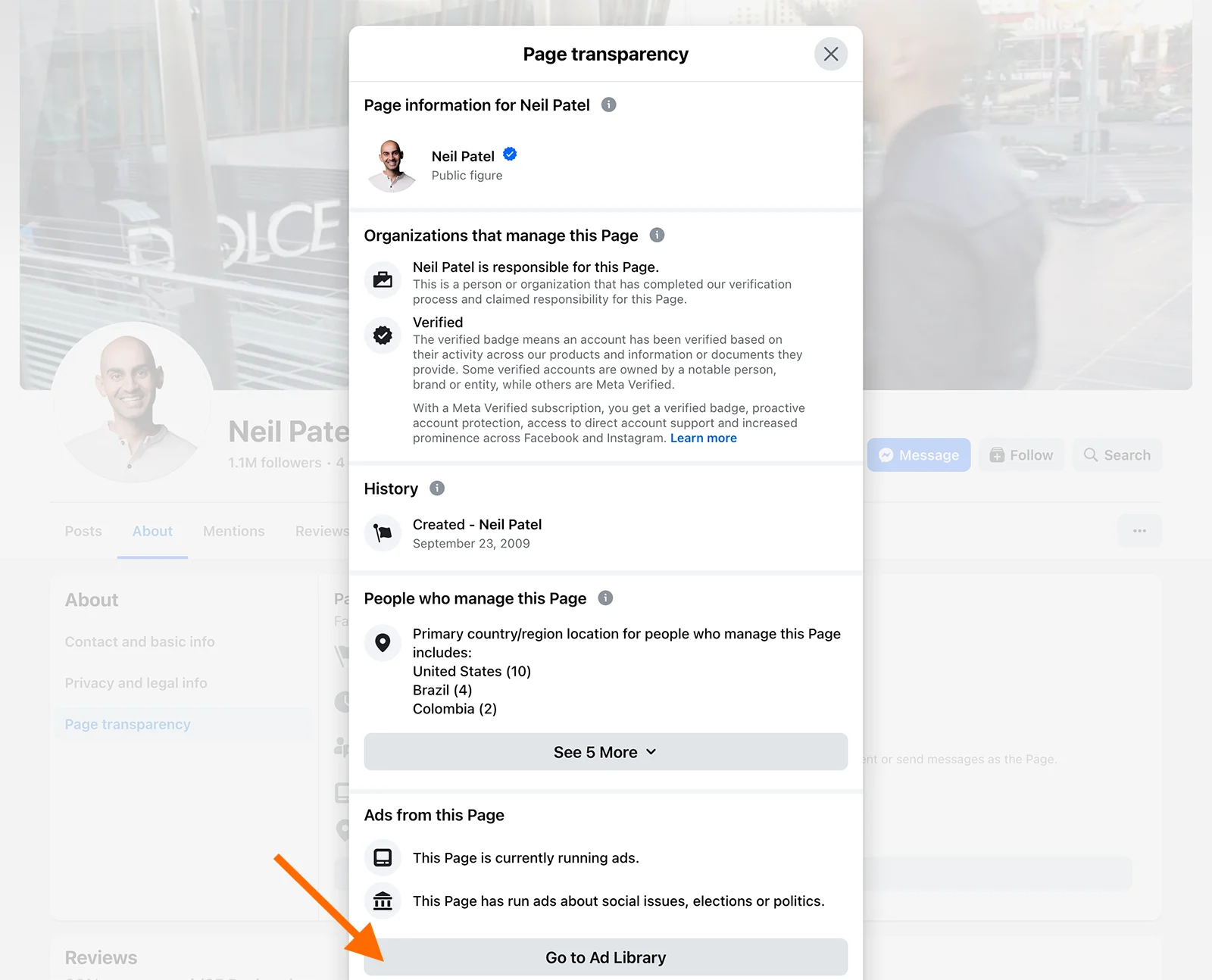
One of the most powerful yet underused tools available today is the Facebook Ads Library. Originally created for advertising transparency, this free platform provides a real-time window into active advertisements running across Facebook and Instagram worldwide.
For entrepreneurs, dropshippers, marketers, and product researchers, the Ads Library offers something extremely valuable: live evidence of what companies are currently spending money to promote. And where sustained ad spending exists, strong product performance usually follows.
This guide explains how to systematically analyze Ads Library data to uncover the traits shared by high-converting products — and how to apply those insights to your own product research strategy.
What Is the Facebook Ads Library?
The Facebook Ads Library is a public database maintained by Meta Platforms that displays active advertisements running across its platforms.
Anyone can search and view:
- Active ads from brands worldwide
- Creative formats (video, image, carousel)
- Ad copy and messaging
- Landing page destinations
- Duration of ad activity
Unlike traditional competitor research tools, this platform shows real advertising behavior, not speculation.
Why Ads Reveal Winning Products
Advertising costs money. Businesses rarely continue running ads that lose money over long periods.
If a brand keeps an ad active for weeks or months, it typically indicates:
- Consistent sales performance
- Profitable customer acquisition
- Strong audience response
- Scalable demand
In short, active advertising often signals validated products.
The Core Concept: Reverse Engineering Instead of Guessing
Traditional product research asks:
“What product should I sell?”
Reverse engineering asks:
“What products are already proving profitable — and why?”
By studying successful ads, you identify repeatable patterns instead of relying on intuition.
Step 1: Accessing the Ads Library Effectively
Visit the Ads Library and choose:
- Country or region
- Ad category (usually “All Ads”)
- Keyword or brand search
Avoid searching generic words initially. Instead, focus on niches:
Examples:
- “portable fan”
- “pet grooming”
- “solar light”
- “posture corrector”
This narrows results to commercially active markets.
Step 2: Identifying High-Signal Advertisers
Not every advertiser indicates success. You must filter intelligently.
Strong Signals
Look for brands with:
- Multiple active ads
- Similar product messaging
- Consistent branding
- Video-heavy creatives
- Ads running longer than 30 days
These often indicate scaling campaigns.
Weak Signals
Avoid focusing on:
- Single ads with poor visuals
- Newly launched pages
- Random low-quality creatives
Longevity matters more than novelty.
Step 3: Measuring Ad Longevity (The Hidden Metric)
The Ads Library shows when an ad started running.
This is one of the most powerful indicators available.
Why Longevity Matters
Ad timeline often correlates with performance:
- 1–7 days → Testing phase
- 2–4 weeks → Promising results
- 1–3 months → Strong conversions
- 3+ months → Proven winner
Brands rarely keep unprofitable ads active long-term.
Step 4: Analyze Creative Structure
Winning products often follow recognizable creative patterns.
Common High-Converting Ad Formats
Problem → Solution Video
Structure:
- Show frustration or pain point
- Introduce product
- Demonstrate transformation
- Provide proof
This format dominates consumer products.
Demonstration-First Ads
Successful ads often show the product working within the first three seconds.
Why?
Social media users decide quickly whether to keep watching.
Before-and-After Visuals
Especially effective for:
- Cleaning tools
- Beauty products
- Home improvement items
- Organization products
Transformation creates emotional impact.
Step 5: Decode Product Characteristics
After analyzing dozens of ads, patterns emerge.
High-converting products often share these traits:
1. Immediate Visual Understanding
Users should understand the product instantly without explanation.
If viewers need instructions to understand value, conversion drops.
Examples:
- Automatic tools
- Cleaning gadgets
- Space-saving organizers
2. Demonstrable Results
Winning products show outcomes visually:
- Dirt removed
- Space saved
- Time reduced
- Comfort improved
Visible results outperform abstract benefits.
3. Broad Audience Appeal
Top-performing products solve universal problems rather than niche interests.
Good examples:
- Home convenience
- Personal comfort
- Pet care
- Outdoor solutions
4. Low Learning Curve
Products requiring minimal setup convert better in impulse environments.
5. Emotional Satisfaction
Ads that trigger reactions like:
- Relief
- Surprise
- Satisfaction
- Curiosity
tend to scale effectively.
Step 6: Study Ad Copy Psychology
Beyond visuals, wording reveals strong conversion triggers.
Look for repeated themes:
Benefit-Focused Headlines
Instead of features, winning ads highlight outcomes:
- “Clean in seconds”
- “No tools required”
- “Works instantly”
Simple Language
High-performing ads rarely use technical jargon.
They speak conversationally.
Micro-Objection Handling
Effective ads answer concerns before customers ask:
- Easy returns
- Fast setup
- Safe materials
- Compatibility
Step 7: Analyze Offer Structure
Winning products are rarely sold alone.
Common offer frameworks include:
- Buy One Get One deals
- Bundle discounts
- Limited-time offers
- Free shipping thresholds
Offers reduce purchase hesitation.
Step 8: Reverse Engineer the Landing Page
Click through to advertiser websites.
Evaluate:
- Page layout simplicity
- Product demonstration videos
- Customer reviews placement
- Pricing psychology
- Call-to-action positioning
Consistency between ad and landing page is critical.
Step 9: Spot Scaling Behavior
Scaling advertisers reveal themselves through patterns.
Indicators include:
- Multiple variations of same ad
- Different hooks using identical product
- Localization across countries
- New creatives weekly
This suggests ongoing optimization backed by results.
Step 10: Build a Product Pattern Database
Instead of tracking single products, track patterns.
Create a spreadsheet recording:
- Product category
- Ad style
- Hook type
- Emotional trigger
- Offer structure
- Creative format
Over time, recurring success traits become obvious.
Advanced Strategy: Cross-Niche Pattern Recognition
Many winning product ideas transfer across industries.
Example pattern:
“Problem solved visually in under 5 seconds”
Appears in:
- Kitchen tools
- Pet accessories
- Automotive gadgets
- Outdoor lighting
The pattern matters more than the niche.
Common Beginner Mistakes
Copying Products Directly
Success comes from understanding principles, not cloning items.
Ignoring Creative Execution
Sometimes ads succeed because of storytelling, not the product itself.
Chasing Trends Too Late
If hundreds of sellers already advertise identical products, margins shrink quickly.
Overanalyzing Single Ads
Look for trends across many advertisers.
Ethical Competitive Research
Using Ads Library data is ethical because:
- Information is public
- Transparency is intentional
- Analysis focuses on patterns, not copying branding
Innovation comes from interpretation.
Turning Insights Into Product Ideas
After identifying patterns, ask:
- Can this problem be solved better?
- Can packaging improve?
- Can positioning change audience perception?
- Can bundles increase value?
You’re not copying success — you’re learning from it.
Daily Research Workflow (30 Minutes)
A simple routine:
- Search three niches.
- Open 10 advertisers.
- Note long-running ads.
- Analyze creative hooks.
- Save examples.
- Record patterns.
Consistency produces insights faster than marathon research sessions.
Why Ads Library Beats Guesswork
Traditional research methods rely on:
- Trends after popularity peaks
- Marketplace rankings
- Social hype cycles
Ads Library shows active investment, which often appears earlier in product lifecycles.
Future-Proofing Your Product Research Skills
Platforms evolve, algorithms change, and trends shift — but one principle remains constant:
Businesses invest money where results exist.
Learning to interpret advertising behavior creates a durable competitive advantage.
Frequently Asked Questions
Is the Ads Library free?
Yes, access is completely free.
Can beginners use it effectively?
Absolutely. Pattern recognition improves quickly with practice.
Does every active ad mean profitability?
No, but long-running campaigns strongly suggest positive results.
How many ads should I analyze?
Aim for at least 50–100 examples per niche to identify reliable patterns.
Final Thoughts
The Facebook Ads Library transforms product research from speculation into observation. Instead of wondering which products might succeed, you can analyze what businesses are already scaling in real time.
By studying ad longevity, creative structure, messaging psychology, and offer strategies, you begin to see predictable characteristics shared by high-converting products across industries.
Success rarely comes from discovering something completely unknown. More often, it comes from recognizing patterns others overlook and applying those lessons creatively.
Open the Ads Library regularly. Observe carefully. Record patterns consistently.
Over time, you’ll stop chasing trends — and start recognizing winners before they become obvious to everyone else.