En
En
 7 min read
Ever wondered, “What is a 3PL? What is a 4PL?” These terms might sound like jargon, but understanding them is essential for businesses aiming to optimize logistics and supply chain management. Whether you’re a small e-commerce seller or a global manufacturer, the right logistics partner can make or break your operations. Let’s dive into what 3PL and 4PL mean, their differences, and how to choose the best solution for your business.
What Is a 3PL?
A 3PL (Third-Party Logistics) provider is a company that handles specific logistics functions for your business. Think of it as outsourcing transportation, warehousing, or distribution tasks to a specialist.
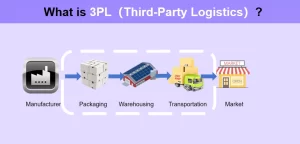
For example, if you run an e-commerce store, a 3PL can store your products in their warehouse, pick and pack orders, and ship them to your customers. Their expertise and infrastructure streamline logistics, allowing you to focus on growing your business.
Now, imagine a small business selling home decor online. Partnering with a 3PL means their products are stored in a central warehouse. When a customer places an order, the 3PL picks, packs, and ships it. The result? Faster deliveries and happier customers without the hassle of managing inventory and shipping.
What Is a 4PL?
A 4PL (Fourth-Party Logistics) provider takes logistics management to the next level. Unlike a 3PL, which focuses on execution, a 4PL acts as a strategic partner overseeing your entire supply chain.
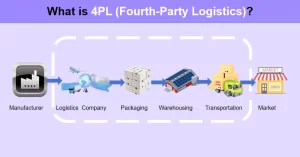
Unlike 3PL, which primarily provides businesses with tangible and specific logistics operations, 4PL acts more like a “commander,” leveraging extensive logistics management experience, information technology, and available resources to deliver optimized and integrated supply chain solutions, ultimately reducing business costs.
4PLs integrate multiple 3PLs, manage vendors, and provide end-to-end visibility. They ensure that every aspect of the supply chain—sourcing, transportation, warehousing, and distribution—is optimized and aligned with your business goals.
Let’s say you’re a global electronics brand sourcing components from Asia, manufacturing in Europe, and distributing to North America. A 4PL coordinates multiple 3PLs across these regions, ensuring raw materials arrive on time, production schedules stay on track, and finished products reach customers efficiently.
By providing centralized oversight and advanced analytics, a 4PL helps reduce costs, mitigate risks, and improve supply chain agility.
Difference Between 3PL and 4PL
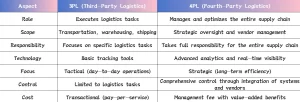
While both 3PL and 4PL aim to streamline logistics and improve supply chain efficiency, they differ significantly in their scope, responsibilities, and level of involvement in your business. 3PL focuses on executing specific logistics tasks, while 4PL takes on the broader responsibility of managing and optimizing the entire supply chain, offering more comprehensive strategic support and technology integration.
The following table highlights the key differences between 3PL and 4PL in terms of roles, responsibilities, technology, cost helping you understand which solution might be the best fit for your needs.
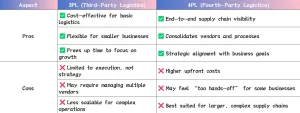
Key Takeaways:
1.If you need support with specific logistics tasks like transportation or warehousing, go for a 3PL.
2.If you require full supply chain management and strategic oversight, a 4PL is the better choice.
3.As your business grows and logistics complexity increases, you may start with a 3PL and transition to a 4PL for enhanced coordination and efficiency.
Choosing the Right Solution for Your Business
Choosing between 3PL and 4PL is not a one-size-fits-all decision. The best option depends on the specific needs of your business, including its size, complexity, and long-term goals. Let’s break this down to help you make the right choice:
1. Business Size and Scale
• Small Businesses and Startups:
If you’re just starting out or running a small operation, a 3PL provider might be your ideal choice. It offers exactly what you need: transportation, warehousing, and shipping services. You won’t have to invest heavily in logistics infrastructure, and you can focus on growing your business while leaving the execution to experts.
• Medium to Large Businesses:
As your business grows and your supply chain becomes more complex, a 4PL might be the better fit. A 4PL takes on a strategic role, coordinating multiple 3PLs, optimizing processes, and managing vendors. This allows your team to focus on core operations while the 4PL ensures your entire supply chain runs smoothly.
2. Operational Complexity
• Low Complexity Operations:
If your logistics requirements are straightforward, such as shipping from a single warehouse to customers, a 3PL is sufficient. They’ll handle the daily operations efficiently, ensuring orders are fulfilled on time.
• High Complexity Operations:
For businesses with multi-region supply chains, cross-border shipping, or high variability in demand, a 4PL is essential. They can streamline processes, use data analytics for decision-making, and ensure you stay competitive in a global market.
3. Long-Term Business Goals
• Short-Term Cost Control:
A 3PL is ideal for businesses prioritizing cost efficiency in the short term. By outsourcing warehousing and transportation, you eliminate upfront investment in infrastructure while still meeting customer expectations.
• Strategic Growth and Optimization:
If you’re aiming for long-term growth, a 4PL helps align your logistics strategy with your business objectives. They provide end-to-end visibility, optimize the supply chain, and implement scalable solutions that grow with your business.
4. Cost vs. Value
• 3PL Costs:
A 3PL typically charges for specific services like storage, shipping, and handling. While these costs are straightforward, you may need to manage additional logistics vendors if your business grows.
• 4PL Costs:
A 4PL might seem more expensive upfront due to their broader responsibilities. However, they bring added value by reducing inefficiencies, consolidating vendors, and leveraging technology for cost savings over time.
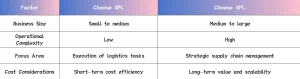
The following table summarizes key factors to consider when choosing between 3PL and 4PL based on business size, operational complexity, focus area, and cost considerations.
Transition to DropSure: Simplify Your Logistics
Still feeling overwhelmed by logistics? Imagine having a partner that not only handles fulfillment but also optimizes your entire supply chain. That’s where DropSure comes in.
DropSure offers a seamless solution for businesses, combining efficient dropshipping services with advanced logistics management. Whether you need a reliable 3PL or the strategic insights of a 4PL, DropSure has you covered.
Why Choose DropSure?
• Simplified operations with integrated tools
• Faster delivery with a global network of partners
• Transparent pricing to reduce costs
Ready to streamline your logistics? Sign up for DropSure today and experience smarter supply chain solutions tailored to your business needs.