En
En
 12 min read
Confused about whether you should pursue dropshipping or traditional ecommerce? Don’t worry, you’re never alone, we have got your back with you step by step! Long Descrition In this article, we’ll break down the essentials of each so that you can decide which is best for your own goals! Things like operations management, customer service, inventory, and logistics will look slightly different, depending on which model you go with.
Let’s get started to find the best for you! This guide elaborates on the core features to help you come to a decision that is right for your business.
What is Dropshipping?
Dropshipping is a super easy way to operate an online store without having to think about holding stock, filling boxes or sending products. When someone orders from your store, you forward the order to your supplier, who sends the product directly to the customer. That’s it! You never even have to touch the product.
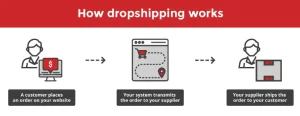
Source: Red Stag Fulfillment
As seller, your job is to promote the products and care for your customers—answer any questions, resolve any issues, and ensure they’re happy. The supplier handles everything else: they manage the inventory, pack the order, and ship it directly to your customer. It means that you can concentrate on simply growing your business while they manage the logistics.
What is Traditional Ecommerce?
Traditional ecommerce is the business model most people are accustomed to. In this model, you maintain your own inventory of goods, and take care of all facets of your business. You oversee everything from inventory management to packaging and shipping.
You are basically the perfect “store owner.” You’re responsible for creating and managing product listings, making sure you have enough inventory to meet demand, packaging the products, and shipping them to customers. You also have to keep your customers happy, so respond to any complaints and manage returns or exchanges.
In brief, you have total control over the entire process with traditional ecommerce. You decide what products to sell, how to price them, and what kind of experience to create for customers. But with this comes a huge responsibility — and a higher way of participation. You’re not just the face of your brand — you’re managing every aspect of your business, from the smallest customer inquiry to the largest inventory purchase.
Dropshipping VS Traditional Ecommerce: Pros and Cons
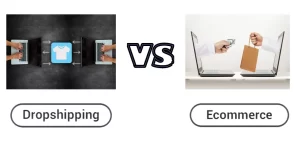
Dropshipping
The biggest benefit of dropshipping is that you can kick off your own business with very low overhead. As you only purchase stock after you have already sold it as is the case with dropshipping online, this is also very easy to get off the ground and requires very little investment initially.. That also gives you more of a range in product choice. Instead, you list wide range of things to sell, you never have to stock, store, or risk perishables. If you’re still in learning mode and not ready to invest in inventory, this is so ideal.
Another benefit is that you have no inventory to deal with. And as the supplier handles all of that, you can focus on other aspects of your business, like marketing or improving customer service. And you don’t need to stock products, allowing you location independence to run your business wherever you choose. So whether you’re working from your living room in Boston, or a cafe in Sao Paulo, your dropshipping business can travel with you.
Also, dropshipping offers you flexible profit marging. You have your price when you make retail, so you can increase them according to the supplier chargeings, so you can play for a profits margin.
However, they also add to the several challenges. For instance, the supplier is very much needed in such a place. If they sell out, delay shipments or botch an order, you’re stuck with the aftermath. It also means losing control over product quality and the customer experience. If the supplier drops the ball or there’s a poor quality product, that’s your problem to deal with even though you did not create the shall we say “situation”.
And although dropshipping might be a precious thing, there’s a huge handle branding and differences. Since dropshipping doesn’t require much in terms of creating or sourcing the product, it can be difficult to create separation for your brand. You’re essentially offering the same products as hundreds or thousands of other online stores. Which means standing out in a crowded marketplace is no easy task.
Traditional Ecommerce
On the contrary, ecommerce provides a more end-to-end journey. This way you have more control over the customer experience. You own 100% of the process from when a customer visits your site to when they receive the order. This way, you can control product quality, manage shipping time, and provide personalized services that make customers feel like home. You can also create a solid brand identity. Unlike dropshipping, where you’re usually selling the same products as everyone else, with traditional ecommerce, you can build your own product line, brand image, and customer base.
In addition, complete control over your store enables you to collect valuable customer data for targeted marketing and greater sales. By knowing what customers want, you can tailor your products and services and increase customer retention.
But these advantages have their downsides. One of the biggest obstacles is high startup costs. You have to spend on stock, storage, and other logistics before you even make your first sale. This presents a significant challenge for first-time founders who don’t have much capital to begin with. And ecommerce is a crowded space, so competition in the market is strong. We need a solid marketing strategy and a unique selling products from the beginning to stand out — and some time to work on these.
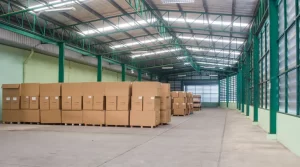
And we have inventory and shipping responsibilities, too. Whereas in dropshipping the supplier handles the logistics, in ecommerce, it’s all on you. You’re in charge of keeping track of stock levels, packaging them and making sure orders go out on time. This can be long-winded and expensive — especially when your business is growing. To avoid stockouts or overstocking and to handle shipping delays or returns can get real tricky, you’ll need an efficient system in place.
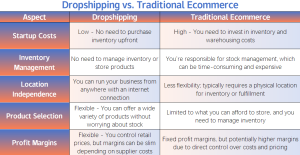
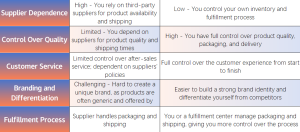
Here’s a table that summarizes the key pros and cons of dropshipping and traditional ecommerce:
Which One Should I Choose?
So now, having learned the key differences between dropshipping and traditional ecommerce, you might be wondering, what is the million dollar question — which one is better for you?
It really depends on a few things, to be honest. So if you’re at the early stages of your entrepreneurial journey, have a tight budget and want to test the ecommerce waters without claiming a real investment, dropshipping might be the best option for you. You can do it with a small up front outlay and scale quickly. And because you don’t need to manage any inventory, it’s a low-risk way to test the market and find out what hits before committing deeper.

But if you do want to build a brand, control the customer experience, and are willing to take the plunge on inventory, traditional ecommerce might be more attractive. It might require a little more effort — i.e., time and energy to get it off the ground, and yes, you will have to invest in inventory — but it also gives you the opportunity to crack your own identity, deliver better service and, ultimately, develop more lasting relationships with your customers. Played the long way, this model will yield more stable profits and
Conclusion
Dropshipping or Traditional Ecommerce? Pros and cons Let us review the pros and cons of each model Ultimately, whether you choose dropshipping or traditional ecommerce model, it’s a mixed bag. The trick to it, is finding what works best for you. If you are new and cannot invest substantial money to give it a try, this is truly the way to go! If you can boot strap this and have experience it can be much more profitable growing and scaling your brand than traditional ecommerce.
In the end, making the right selection adds exponential value to your success! So don’t be afraid to decide and take a first step. Whether you choose dropshipping or a more traditional route, either path can still result in a successful ecommerce business.
So if you’re planning on dropshipping but want to do it with the least amount of risk, then check out DropSure. It is a service that aims to assist dropshippers in optimizing their operation, minimizing supplier-related risk, and improving the customer journey. DropSure is here to help you do all the benefit by the dropshipping model without the complication of third-party suppliers. If you want to scale your dropshipping business, it’s worth checking it out!
Dropshipping FAQ
How does dropshipping work?
You take orders on your ecommerce store, you send the orders to your supplier and they ship the product directly to the customer. When a sale is made, you only pay for the product, and you determine the retail price. Your supplier does the rest: packaging, shipping, and inventory.
Do I have to buy stock in advance?
It is not, this is the whole point of dropshipping! You do not have to pre-spend money on inventory. You buy the product from the supplier only after your customer pays an order. This means that dropshipping could be a low-risk venture for new business owners.
How you reduce supplier risks in drop shipping?
Supplier problems are a common challenge in dropshipping, from delays and low-quality products to shipping errors. If you want to minimize these threats, use DropSure. By streamlining the supplier management process, reducing reliance on unreliable suppliers and providing tools to further control product quality and shipping times, it helps dropshipping businesses run with fewer hiccups overall. You have enough to worry about when it comes to growing your business, let DropSure provide you with additional peace of mind.
Read this article: How To Choose A Good Dropshipping Supplier?
The success of your dropshipping business depends on choosing a reliable supplier. You should also research if they have good reviews, reliable in delivering on time, and have good customer service. You’ll usually find these on platforms such as AliExpress, Alibaba, or SaleHoo, but it’s always a good idea to conduct a thorough vet of suppliers. A service like DropSure also helps you get connected with good and trusted suppliers so you can avoid products that are not to your satisfaction or delays in shipment.
Is dropshipping legal?
Yes, dropshipping is legal as long as you’re following the laws in your country or the country you’re selling to. Make sure you’re transparent about your business practices, provide quality customer service, and comply with any import/export regulations that may apply.
How to drive sales to your dropshipping store?
The way you promote your dropshipping business is by social media, paid ads (Facebook Ads, Google Ads, etc), content marketing, influencers and email marketing. If you want any success at all, you have to invest in your online presence and deliver something to your customers worth paying for.