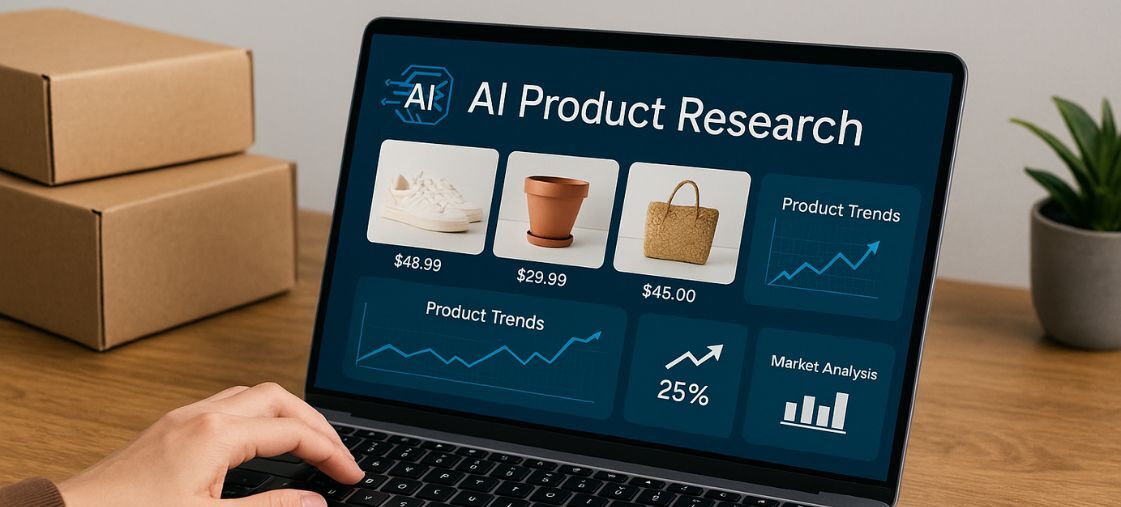
Most sellers don’t miss winning products because they lack skill. They miss them because they see them too late. By the time a product shows up on: Bestseller lists “Trending now” pages Social media feeds The opportunity window is already shrinking. Competition piles in.Ad costs rise.Margins compress. The real advantage doesn’t belong to the fastest fingers—it belongs to sellers who let systems watch the market for them. That’s where automated product research comes in. Why Manual Product Research Is Quietly Holding You Back Scrolling marketplaces, refreshing dashboards, checking rankings manually—it feels productive. But it has limits. Manual research is: Time-consuming Reactive Emotion-driven Easy to miss early signals Humans are good at judgment.They’re terrible at monitoring thousands of data points at once. Automation doesn’t replace decision-making.It replaces waiting. What “Automated Product Research” Actually Means Automated product research isn’t a magic button. It’s a system where: Tools monitor markets continuously Rules define what “interesting” looks like Alerts notify you when conditions are met Instead of asking: “What should I sell today?” You ask: “What signals tell me a product might be worth attention?” That shift changes everything. Why Timing Matters More Than Product Quality (At First) Many products aren’t “bad.” They’re just: Entered too late Launched after saturation Caught during price wars Early-stage products allow you to: Test with lower ad costs Build listing authority Establish pricing power Collect early reviews Automation helps you spot momentum, not popularity. Step 1: Define What a “Winning Signal” Looks Like Before setting any alert, you need clarity. Automated tools only work if you tell them what to look for. Common winning signals include: Sudden increase in sales velocity Rapid growth in search volume New listings […]

February 9, 2026

Low-ticket products are easy to sell. High-ticket products are hard to replace. That difference is why experienced sellers eventually shift their focus from chasing volume to building margin. If you’ve ever felt that: You’re selling more, but earning less Ad costs keep rising, but profit stays flat One bad week wipes out a month of gains You’re not alone. The solution isn’t always better ads or cheaper suppliers.Often, it’s better product selection—specifically, high-ticket products with real profit depth. This guide breaks down a practical, data-driven approach to finding products with $50+ profit per unit, using professional research tools instead of guesswork. Why High-Ticket Products Change the Game High-ticket doesn’t just mean “expensive.” It means: Higher perceived value Wider margin buffer Fewer units needed to hit revenue goals More room for ads, logistics, and service Selling a $20 product with $5 profit requires scale.Selling a $300 product with $80 profit requires precision. And precision starts with smarter product research. The Biggest Myth About High-Ticket Products Many sellers assume high-ticket products are: Too competitive Too risky Too complex to manage In reality, low-ticket categories are often more competitive because: Entry barriers are low Products are easy to copy Price wars happen fast High-ticket products usually: Require more explanation Demand trust Attract fewer but more serious buyers That creates opportunity—for sellers willing to do the research properly. What “$50+ Profit” Really Means Before using any tools, define profit correctly. True per-unit profit includes: Product cost Shipping and fulfillment Platform fees Payment processing Advertising Returns and support A product priced at $200 doesn’t matter if only $20 remains. When we say “$50+ profit,” we mean net profit, not markup. This mindset filters out 80% […]

February 9, 2026

In today’s hyper-competitive ecommerce landscape, success rarely comes from selling what everyone else is selling. The era of “general stores” and copy-paste winning products is over. Ad costs are rising, marketplaces are crowded, and consumers are more selective than ever. If you’re entering a market late—or without differentiation—you’re fighting an uphill battle from day one. That’s why the smartest sellers, brands, and product teams are shifting their focus to niche markets. But niche doesn’t mean small.And it definitely doesn’t mean guessing. This article breaks down how to use product research tools to systematically identify the five least competitive vertical markets, using data—not hype, not intuition, and not luck. What Is a Niche Market (Really)? Let’s clear up a common misconception. A niche market is not: A low-volume product A weird or novelty item A product with no competition A one-time trend A true niche market is: A specific group of users With a clearly defined problem Actively searching for solutions Underserved by existing products or brands Competition doesn’t disappear in niches—it becomes inefficient. And inefficiency is where opportunity lives. Why Most Sellers Fail at Niche Market Research Before we talk about tools, we need to talk about mistakes. Most sellers fail at niche research because they: Start with products instead of problems Rely on surface-level metrics (volume only) Confuse low competition with low demand Use tools passively instead of strategically Look for “proof” instead of probability Niche discovery is not about finding something perfect.It’s about finding something unbalanced—where demand outpaces supply quality. Why Product Research Tools Matter More Than Ever Manual research can only take you so far. Modern product research tools allow you to: Scan millions of data points […]

February 5, 2026

Every year, sellers ask the same question: “What products will be hot next summer?” And every year, most people ask it far too late. By the time a product is labeled “trending,” it’s already being copied, undercut, and oversold. Margins shrink. Competition explodes. And sellers are left chasing yesterday’s demand. The sellers who consistently win don’t predict trends by instinct or luck.They model them—using data. In this article, we’ll break down how data-driven teams use big data tools to forecast Summer 2026 product trends, months (or even years) before they hit the mainstream. This is not about guessing colors or viral items.It’s about understanding how trends are born, validated, and scaled—using signals hidden in plain sight. Why Intuition-Based Product Selection Is Failing Traditional product selection often relies on: Personal experience Social media hype “Winning product” lists Gut feeling Copying competitors The problem?Human intuition is reactive, not predictive. By the time your intuition notices a trend: Data has already confirmed it Early adopters have already entered Platforms have already adjusted algorithms Costs have already gone up Big data doesn’t eliminate uncertainty—but it moves the clock forward. What “Data-Driven” Really Means (And What It Doesn’t) Let’s clarify a common misunderstanding. Data-driven product selection does not mean: Blindly trusting dashboards Letting software choose products for you Chasing every upward graph Treating numbers as truth without context Data-driven means: Using multiple data sources Identifying directional signals Understanding behavior before demand peaks Making probabilistic decisions—not guarantees Data doesn’t replace thinking.It augments it. Why Summer 2026 Trends Can Be Predicted Now Trends don’t appear overnight. They move through stages: Emergence – early niche adoption Acceleration – growing visibility and usage Mainstream adoption – mass-market demand Saturation […]

February 5, 2026

When you get them right, they can generate explosive sales in a short period of time, boost cash flow, and bring in waves of new customers.When you get them wrong, you’re left with dead inventory, rushed discounts, and the sinking feeling that you were this close—but still too late. Most sellers don’t fail at seasonal products because they choose the wrong items.They fail because they start too late. In this guide, we’ll break down how experienced sellers use product research tools to plan seasonal winners three months ahead, avoid common traps, and turn predictable calendar events into repeatable revenue. This is not about guessing trends.It’s about building a system. Why Seasonal Products Feel So Risky (and Why They Don’t Have to Be) Ask most eCommerce sellers about seasonal products and you’ll hear the same fears: “What if demand doesn’t materialize?” “What if I miss the peak?” “What if everyone else sells the same thing?” “What if I’m stuck with inventory?” These fears are valid—but they’re also symptoms of poor timing, not bad strategy. Seasonal demand is actually one of the most predictable forces in eCommerce. Holidays don’t move. School seasons repeat. Weather patterns follow cycles. Gift-buying behavior is surprisingly consistent year after year. The real challenge isn’t uncertainty.It’s preparation. And preparation starts earlier than most sellers think. The 3-Month Rule: Why Timing Is Everything One of the biggest misconceptions about seasonal selling is when the “season” actually begins. Let’s take a common example: Christmas. Most new sellers think: “Christmas products sell in December.” Experienced sellers know: Research starts in September Listings and creatives are ready by October Ads and traffic warm up in early November Peak sales often happen before […]

February 4, 2026

If you’ve been in eCommerce, dropshipping, Amazon FBA, or private-label selling for more than five minutes, you’ve probably heard this promise before: “Use this product research tool and find winning products in minutes.” Yet here you are—subscribed to one (or three), staring at dashboards full of charts, scores, and trend lines…and still struggling to find products that actually sell. So what’s going on? Is the tool broken?Is the data fake?Or are you just “bad at product selection”? The uncomfortable truth is this:Most product research tools do exactly what they’re designed to do.The real problem is how sellers use them—and more importantly, how they think about product selection. In this article, we’ll break down three of the most common product selection mistakes that cause tools to “fail,” and how to avoid them. If you’ve ever felt like product research just doesn’t work for you, this might be the reset you need. The Illusion of the “Perfect Tool” Before we get into the mistakes, let’s clear up one misconception. There is no such thing as a magic product research tool. Every tool—whether it’s for Amazon, Shopify, TikTok Shop, Etsy, or wholesale sourcing—is built on historical data. That data can tell you what already happened, but it cannot guarantee what will happen next. Tools don’t find winning products.People do—using tools correctly. When sellers fail, it’s rarely because they chose the “wrong” software. It’s because they rely on the tool to think for them instead of with them. And that leads us straight to Mistake #1. Mistake #1: Chasing “Hot” Products Instead of Understanding Demand The Trap of Trend-Chasing Most product research tools highlight the same things: Best sellers Rapidly growing products High sales […]

February 4, 2026
1 2 3 4 37
DropSure is Your Best Partner
22 Years Experience
Affiliate Rebates
100% Quality Guarantee
Top-Up Rewards
10+ Global Warehouses
Custom Branding Support
Smart inventory System
24/7 Customer Support
Get a Quote in 24 Hours
Start Sourcing for Free