En
En
 25 min read
For many brands, social media marketing often feels like a choice between two very different strategies.
On one side, there is organic traffic.
You create content, publish posts, engage with followers, build a community, answer questions, share useful information, and gradually earn attention without directly paying for every impression.
On the other side, there are paid ads.
You invest money to put your products, services, videos, or offers in front of carefully selected audiences and attempt to generate clicks, leads, sales, or other measurable actions.
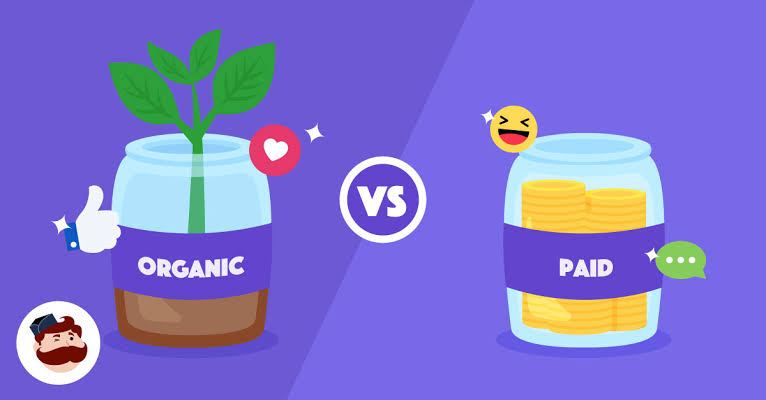
Because these strategies operate differently, businesses sometimes treat them as competitors.
They ask:
Should we focus on organic social media or paid advertising?
In many cases, that is the wrong question.
The stronger question is:
How can organic content and paid advertising work together to produce better results than either strategy could achieve alone?
When properly integrated, organic traffic and paid ads can create a powerful growth loop.
Organic content can attract attention, establish credibility, reveal what audiences care about, and generate valuable behavioral data.
Paid advertising can then amplify the strongest messages, reach specific audiences, accelerate traffic, support product launches, and retarget people who have already interacted with the brand.
At the same time, advertising data can reveal which products, messages, audiences, and creative concepts deserve more organic content.
This creates a continuous cycle:
Create → Test → Learn → Amplify → Retarget → Convert → Improve → Create Again
The goal is not to choose between organic and paid social media.
The goal is to make them work as one connected system.
What Is Organic Social Media Traffic?
Organic social media traffic refers to visits, engagement, followers, leads, or sales generated through unpaid social media activity.
Examples include:
- Instagram posts
- Facebook posts
- TikTok videos
- YouTube content
- LinkedIn posts
- Pinterest content
- Social media stories
- Community discussions
- User-generated content
- Shares and reposts
- Comments and conversations
- Influencer mentions that are not directly paid advertising
Organic traffic is often built gradually.
A brand publishes useful or entertaining content, attracts attention, develops an audience, and encourages people to visit its website or online store.
The biggest advantage is that organic content can continue producing value after publication.
A useful tutorial may continue generating views.
An entertaining video may continue receiving shares.
A product demonstration may answer customer questions for months.
A strong social media presence can therefore become a long-term brand asset.
What Are Paid Social Media Ads?
Paid advertising involves purchasing media exposure on social platforms.
Instead of waiting for an algorithm to distribute content organically, businesses pay to place specific content in front of selected audiences.
Paid social campaigns can target users according to factors such as:
- Interests
- Demographics
- Geographic areas
- Online behavior
- Previous website visits
- Engagement history
- Customer lists
- Lookalike audiences
- Shopping activity
- Content interactions
Depending on the platform and campaign objective, advertisers may optimize for:
- Website traffic
- Video views
- Engagement
- Leads
- App installations
- Purchases
- Sales value
- Conversions
Paid advertising offers speed and control.
A brand can launch a campaign today and potentially begin reaching thousands of people within a short period.
But speed alone does not guarantee success.
The creative message, audience, offer, landing page, tracking, and campaign structure all influence the final result.
Why Organic and Paid Should Not Be Treated as Enemies
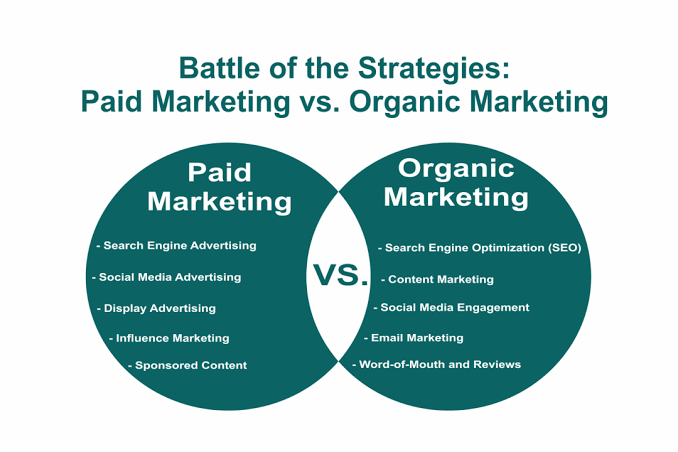
Organic content and paid advertising serve different functions.
Organic social media is particularly useful for:
- Brand building
- Community development
- Education
- Trust
- Storytelling
- Customer relationships
- Long-term visibility
Paid advertising is particularly useful for:
- Rapid reach
- Audience targeting
- Product promotion
- Lead generation
- Retargeting
- Scaling successful messages
- Supporting time-sensitive campaigns
When combined, they can cover different stages of the customer journey.
Organic content can introduce the brand.
Paid advertising can accelerate discovery.
Organic content can answer questions.
Paid ads can deliver a product offer.
Organic engagement can build trust.
Retargeting can bring interested users back.
The two channels become complementary rather than competing.
The Social Media Growth Funnel
A useful way to understand this relationship is through the customer journey.
A potential customer may move through several stages:
Awareness
They discover your content.
Interest
They watch your videos, read your posts, or visit your profile.
Consideration
They research your products and compare alternatives.
Intent
They visit your website, product page, or contact form.
Conversion
They purchase or submit an inquiry.
Retention
They return, follow the brand, leave a review, or make another purchase.
Organic and paid strategies can participate at every stage.
However, they may play different roles.
Stage One: Use Organic Content to Discover What People Care About
One of the biggest advantages of organic social media is experimentation.
You can publish different types of content and observe what audiences naturally respond to.
For example, an online eyewear brand might publish:
- Frame styling tips
- Face-shape guides
- Sunglasses trends
- Customer photos
- Product close-ups
- Outfit inspiration
- Lens education
- Behind-the-scenes manufacturing content
Suppose one video about “How to Choose Glasses for a Round Face” dramatically outperforms other posts.
That is useful information.
The brand now has evidence that its audience is interested in this topic.
Instead of guessing what an advertising audience might respond to, the company can turn that successful organic topic into a paid campaign.
This is one of the most powerful connections between organic content and paid advertising.
Organic Content as a Testing Laboratory
Before spending a significant advertising budget, brands can use organic content to test creative ideas.
Consider three potential advertising messages:
- Save money with our new collection.
- Find a frame that fits your face shape.
- Upgrade your everyday style with lightweight frames.
Instead of immediately spending thousands of dollars testing all three, the brand can create organic posts around each theme.
Then compare:
- Views
- Watch time
- Saves
- Shares
- Comments
- Profile visits
- Website clicks
- Direct messages
The strongest organic response can provide a useful signal for future paid campaigns.
Organic social media therefore becomes a creative testing environment.
But Organic Engagement Does Not Always Equal Sales
There is an important distinction.
A post can receive thousands of likes and generate very few purchases.
Another post may receive relatively modest engagement but generate strong website traffic and conversions.
This is why businesses should not judge content exclusively by likes or follower growth.
The real question is:
Does the content attract the right people and move them toward a meaningful business action?
Engagement is valuable, but it is not the final objective for most commercial brands.
A highly shareable educational post may generate awareness.
A product demonstration may generate fewer views but more purchases.
Both can be valuable for different reasons.
Use Paid Ads to Amplify Proven Content
Once organic content demonstrates strong audience response, paid advertising can amplify it.
This is often more efficient than creating completely separate advertising creative from scratch.
Suppose an organic video receives:
- Strong watch time
- High engagement
- Significant sharing
- Many profile visits
- Positive comments
The brand can turn that concept into a paid campaign.
The advantage is that the creative has already received some audience feedback.
You are no longer starting from zero.
This approach can reduce creative guesswork.
The “Boost What Works” Principle
A simple framework is:
Organic first → Paid second
Start by publishing content organically.
Identify strong performers.
Analyze why they worked.
Then use paid distribution to reach a larger or more targeted audience.
However, do not blindly promote every high-performing post.
A viral post may have generated attention because it was funny, controversial, or highly relatable.
That does not mean it will generate purchases.
Before investing advertising budget, evaluate whether the content aligns with your business objective.
Paid Ads Can Also Create Organic Momentum
The relationship works in the opposite direction too.
Paid advertising can introduce your content to people who would not otherwise discover your brand.
Some of those users may:
- Follow your account
- Visit your profile
- Share your content
- Comment
- Save a post
- Visit your website
- Subscribe to your email list
- Become repeat customers
This can create additional organic exposure.
A successful paid campaign can therefore increase the size of the audience available for future organic content.
Retargeting: Where Organic and Paid Become Especially Powerful
Retargeting is one of the clearest examples of organic and paid strategies working together.
Imagine someone watches your product video.
They do not purchase.
Later, they visit your website.
They still do not purchase.
Instead of allowing that potential customer to disappear, you can use a retargeting campaign, where available and appropriately configured, to reconnect with people who previously interacted with your brand.
The sequence might look like:
Organic video → Website visit → No purchase → Retargeting ad → Product page → Purchase
This is much more efficient than treating every user as a completely new prospect.
Build Audience Segments Based on Engagement
Not every social media user has the same level of interest.
You can think of audiences in layers.
Cold Audience
People who have never interacted with your brand.
Warm Audience
People who have watched your videos, engaged with posts, visited your profile, or interacted with your content.
Hot Audience
People who visited product pages, added products to a cart, requested information, or otherwise demonstrated strong purchase intent.
Different messages should be used for different levels of awareness.
A cold audience may need education.
A warm audience may need product proof.
A hot audience may need reassurance, an offer, shipping information, reviews, or a clear reason to complete the purchase.
Organic Content Is Excellent for Education
Many products require explanation before customers are comfortable buying.
This is especially true for:
- Technical products
- Beauty products
- Electronics
- Outdoor equipment
- Furniture
- Health-related consumer products
- Professional services
- Premium products
Organic content can answer questions before the customer speaks to a salesperson.
For example:
“How does this product work?”
“What is the difference between these two models?”
“How should I choose the right size?”
“How long does it last?”
“How do I install it?”
“What materials are used?”
“What problems does it solve?”
Educational content reduces uncertainty.
Paid ads can then direct interested users toward that educational content or toward the relevant product page.
Use Paid Advertising to Distribute Educational Content
Not every paid campaign needs to be a direct sales pitch.
Sometimes the best advertisement is educational.
For example, a company selling specialized outdoor equipment could promote a short guide explaining how to choose equipment for different weather conditions.
Users who engage with the guide can later receive product-focused campaigns.
This creates a more natural customer journey.
Instead of:
Advertisement → Buy Now
the journey becomes:
Useful information → Interest → Trust → Product discovery → Purchase
This can be particularly effective for higher-consideration products.
Organic Content Builds Trust
Consumers increasingly want to know who is behind a brand.
They want to see:
- Real products
- Real people
- Customer experiences
- Manufacturing processes
- Product demonstrations
- Reviews
- Frequently asked questions
- Company values
- Behind-the-scenes content
Organic social media is particularly well suited to this type of communication.
Paid ads can tell people that your product exists.
Organic content can help them understand why they should trust you.
User-Generated Content Can Connect Both Channels
User-generated content is another powerful bridge.
A customer posts a video using your product.
Your brand shares it organically.
The post performs well.
You obtain appropriate permission and use the content in an advertising campaign.
Now one piece of customer-created content serves multiple purposes.
It can function as:
- Social proof
- Organic content
- Paid creative
- Product demonstration
- Testimonial
- Brand storytelling
This is why brands should develop systems for identifying and organizing high-performing customer content.
Influencer Content Can Become Paid Creative
The same concept applies to creator collaborations.
A creator may produce a product review or demonstration that performs well organically.
Instead of ending the campaign after the initial post, brands can evaluate whether the content can be repurposed into paid advertising, subject to the appropriate rights and platform requirements.
This creates a powerful combination:
Creator credibility + organic distribution + paid amplification
The creator provides authentic communication.
Organic distribution provides initial audience feedback.
Paid advertising provides scale.
Paid Ads Provide Valuable Audience Data
Organic content can tell you what people like.
Paid advertising can provide more structured information about what drives specific actions.
Depending on your tracking setup and platform capabilities, you may learn:
- Which audiences click
- Which creatives convert
- Which products attract attention
- Which messages produce leads
- Which landing pages perform best
- Which demographics respond differently
- Which placements generate stronger results
This data should not remain inside the advertising account.
It should influence your broader content strategy.
Turn Advertising Insights Into Organic Content
Suppose paid campaigns show that customers respond strongly to the message:
“Easy installation without specialized tools.”
That insight can become:
- A tutorial video
- An Instagram carousel
- A blog article
- A customer FAQ
- A product demonstration
- A comparison post
- A short-form video
Advertising data becomes content intelligence.
This creates a feedback loop.
Paid campaign → Data → Content idea → Organic post → Engagement → New audience → Paid campaign
The more frequently this cycle operates, the smarter the content strategy becomes.
Create a Shared Content Calendar
Organic and paid teams should not operate in separate worlds.
Create a unified content calendar that includes:
- Organic posts
- Paid campaigns
- Product launches
- Promotions
- Seasonal campaigns
- Creator content
- Educational content
- Retargeting campaigns
- Major company announcements
This allows the brand to tell one consistent story.
For example, if a new product launches on Friday:
Monday: Educational teaser
Tuesday: Product problem/solution content
Wednesday: Creator demonstration
Thursday: Product details
Friday: Launch announcement + paid campaign
Weekend: Customer reactions and retargeting
The organic and paid channels reinforce one another.
Use Different Creative for Different Funnel Stages
One mistake is showing the same advertisement to everyone.
A person who has never heard of your brand should not necessarily see the same message as someone who visited your product page yesterday.
A better approach is to create different creative for different stages.
Awareness Creative
Focus on:
- Problems
- Trends
- Education
- Entertainment
- Brand introduction
Consideration Creative
Focus on:
- Product benefits
- Demonstrations
- Comparisons
- Reviews
- Features
Conversion Creative
Focus on:
- Offers
- Guarantees
- Shipping
- Availability
- Social proof
- Strong calls to action
Retention Creative
Focus on:
- New products
- Accessories
- Tutorials
- Loyalty
- Cross-selling
- Community
This structure helps avoid message fatigue.
Do Not Let Paid Ads Replace Organic Presence
A brand that relies entirely on advertising can encounter a serious problem.
When advertising stops, visibility can drop dramatically.
A strong organic presence creates an additional layer of brand equity.
If a potential customer discovers your company through an advertisement and then visits your social profile, what do they see?
If the profile contains:
- Useful information
- Recent activity
- Customer reviews
- Product demonstrations
- Consistent branding
- Helpful answers
the customer may become more confident.
If the profile is empty or inactive, the opposite can happen.
Organic presence therefore supports paid acquisition.
Do Not Expect Organic Traffic to Do Everything
The opposite mistake is also common.
Some businesses expect organic content to generate all their sales.
But organic reach can fluctuate.
Platform algorithms change.
Audience behavior changes.
Competition changes.
A brand may produce excellent content but still struggle to reach enough new people.
Paid advertising can provide additional distribution and predictable access to specific audiences.
The two channels should therefore compensate for each other’s limitations.
Measure the Right Metrics
To understand whether organic and paid efforts are working together, measure more than follower counts.
Important organic metrics may include:
- Reach
- Video views
- Watch time
- Saves
- Shares
- Comments
- Profile visits
- Website clicks
- Leads
- Assisted conversions
Paid campaign metrics may include:
- Impressions
- Click-through rate
- Cost per click
- Cost per lead
- Conversion rate
- Cost per acquisition
- Return on ad spend
- Revenue
- Frequency
The most valuable measurement is often the relationship between these metrics.
For example:
Organic post → Profile visit → Website visit → Purchase
or:
Paid video → Social engagement → Profile visit → Organic content consumption → Conversion
Customer journeys are rarely perfectly linear.
Measure Assisted Conversions
A customer may interact with your brand multiple times before buying.
They may:
- See an organic post.
- Watch a paid video.
- Visit your website.
- Leave.
- See a retargeting ad.
- Return through a search result.
- Purchase.
Which channel deserves credit?
The answer is not always simple.
That is why businesses should consider the broader customer journey rather than assigning all value to the final click.
Create a Content Performance Database
As your social media presence grows, collect information about your content.
Record:
- Topic
- Format
- Hook
- Product
- Audience
- Platform
- Views
- Engagement
- Clicks
- Leads
- Sales
- Advertising performance
After several months, patterns begin to emerge.
You may discover that:
- Tutorials consistently outperform product photos.
- Customer stories generate strong conversion rates.
- Comparison videos attract high-intent users.
- Certain product benefits generate more clicks.
- Certain hooks work better for cold audiences.
- Certain topics perform especially well in retargeting campaigns.
This turns content creation into a more informed process.
The Importance of Strong Hooks
Whether content is organic or paid, the first few seconds matter.
A strong hook can address:
- A problem
- A question
- A surprising fact
- A common mistake
- A desired result
- A controversial assumption
- A practical tip
For example:
“Your glasses may look great but still be the wrong size.”
or:
“Three mistakes that can make a small room look even smaller.”
or:
“Before buying a new outdoor chair, check these five things.”
These hooks create curiosity.
Once a hook proves successful organically, it may become a candidate for paid advertising.
Repurpose Winning Content
One strong idea can become many pieces of content.
For example, a successful video can become:
- A short-form video
- A carousel
- A blog article
- An email topic
- A product-page section
- A paid advertisement
- A customer FAQ
- A Pinterest graphic
- A YouTube Short
This increases the value of content production.
Instead of constantly inventing new ideas, identify proven concepts and adapt them to different formats.
Organic and Paid Content Should Feel Consistent
Customers should recognize the same brand whether they encounter it through:
- An organic post
- A paid advertisement
- A creator video
- A website
- An email
- A product page
Consistency does not mean every piece of content should look identical.
Instead, maintain consistency in:
- Brand voice
- Visual identity
- Product positioning
- Core benefits
- Messaging
- Customer promise
This builds familiarity.
Use Organic Content to Build Remarketing Pools
When users interact with your social media content, some platforms may provide advertising audience options based on those interactions, subject to platform rules and available targeting capabilities.
These audiences can become valuable remarketing segments.
For example, you might distinguish between people who:
- Watched a video
- Engaged with a post
- Visited your profile
- Visited your website
- Viewed a product
- Added a product to a cart
Each group represents a different level of interest.
The more relevant your message becomes, the more useful your advertising can be.
Don’t Over-Retarget
Retargeting is powerful, but excessive repetition can annoy customers.
If someone sees the same product advertisement dozens of times, the campaign may become counterproductive.
Monitor:
- Frequency
- Engagement decline
- Conversion trends
- Audience size
- Ad fatigue
Rotate creative when necessary.
Organic content can help here by providing fresh messages to people who already know the brand.
Paid Advertising Can Help New Content Get Initial Exposure
New accounts often face a classic problem.
They need engagement to build visibility, but they need visibility to generate engagement.
Paid advertising can help break this cycle.
A brand can use a modest advertising budget to introduce its best content to carefully selected audiences.
Those users may then follow the account and become part of the organic community.
This can be particularly helpful during:
- New product launches
- Brand launches
- Seasonal campaigns
- Market expansion
- New geographic targeting
- New audience development
The Best Strategy Is Usually a Portfolio
Rather than allocating the entire marketing budget to one channel, think in terms of a portfolio.
Organic content builds the foundation.
Paid advertising provides acceleration.
Retargeting captures existing interest.
Creator partnerships provide credibility.
Email and other owned channels support retention.
The exact allocation will vary by business, product, audience, and growth stage.
The important point is that each channel should have a clear role.
A Practical 30-Day Organic + Paid Strategy
Here is a simple framework for building coordination over one month.
Week 1: Research and Content Testing
Publish multiple content themes.
Test different hooks, formats, and product angles.
Track engagement and audience behavior.
Week 2: Identify Winners
Review the strongest-performing content.
Look beyond views.
Identify posts that generated meaningful actions.
Week 3: Launch Paid Campaigns
Select proven creative concepts.
Create targeted campaigns.
Test multiple audiences and messages.
Week 4: Analyze and Expand
Identify the best-performing combinations.
Increase investment in strong performers when appropriate.
Turn advertising insights into new organic content.
Then begin the next cycle.
A Stronger Weekly Workflow
A more advanced workflow might look like this:
Monday: Research customer questions.
Tuesday: Create educational content.
Wednesday: Publish product-focused content.
Thursday: Share customer or creator content.
Friday: Analyze performance.
Weekend: Test or promote selected content.
At the same time, paid campaigns continuously collect performance data.
This creates a feedback loop between creativity and measurement.
How Small Businesses Can Start
You do not need a huge advertising budget.
Small businesses can start with a focused strategy.
Choose:
- One or two major social platforms
- Three to five content themes
- One primary customer segment
- One main conversion goal
- A small paid testing budget
Publish consistently.
Identify what works.
Promote the strongest concepts.
Measure the results.
Then reinvest intelligently.
The objective is not to spend more.
The objective is to learn faster.
How E-Commerce Brands Can Use the Model
For e-commerce businesses, the organic-plus-paid model can be particularly effective.
A typical journey might look like:
Organic product video
↓
Social engagement
↓
Profile visit
↓
Website visit
↓
Product browsing
↓
Retargeting ad
↓
Purchase
↓
Customer review
↓
User-generated content
↓
New organic content
This creates a circular growth system.
Customers are not just the endpoint.
They can become part of the next cycle of content creation.
Product Reviews Can Become Advertising Assets
Customer reviews are especially valuable because they provide social proof.
A review can become:
- An organic post
- A video testimonial
- A product-page quote
- A paid advertisement
- An email campaign
- A comparison graphic
The key is authenticity.
Customers want evidence that real people use and appreciate the product.
The Role of Landing Pages
Social media strategy does not end when someone clicks an advertisement.
The landing page matters.
A great ad followed by a confusing website creates a broken customer journey.
The landing page should match the promise made in the content.
If the advertisement says:
“Discover lightweight frames for everyday wear.”
the landing page should immediately help users explore lightweight frame options.
Consistency between ad, content, and landing page can improve the overall customer experience.
Why Creative Quality Often Matters More Than Complexity
You do not necessarily need expensive production.
A simple smartphone video can outperform a highly polished commercial if it communicates the right message.
Customers often respond to:
- Authentic demonstrations
- Real people
- Clear explanations
- Before-and-after examples
- Practical tips
- Product comparisons
- Honest reviews
The important question is not:
“How expensive does this content look?”
It is:
“Does this content communicate something valuable to the right audience?”
Avoid Creating Separate Organic and Paid Worlds
One of the biggest organizational mistakes is allowing organic and paid teams to operate independently.
The organic team says:
“We are building the community.”
The advertising team says:
“We are driving conversions.”
But neither team shares insights.
A better structure encourages both teams to exchange information.
The organic team can provide:
- Creative ideas
- Audience reactions
- Content winners
- Customer questions
The paid team can provide:
- Audience insights
- Conversion data
- Creative performance
- Product performance
- Campaign learnings
Together, they become much more effective.
The Future of Social Media Growth
Social media platforms continue to evolve.
Algorithms change.
Advertising systems become more automated.
Content formats shift.
Consumer attention becomes more fragmented.
But one principle remains valuable:
Brands need both attention and distribution.
Organic content is powerful for earning attention and building relationships.
Paid advertising is powerful for buying distribution and accelerating reach.
The strongest brands understand that these are not opposing strategies.
They are two parts of a larger system.
Final Takeaway
Organic social media and paid advertising should not be viewed as an either-or decision.
Organic content provides the foundation.
It helps brands build credibility, understand audiences, test ideas, answer questions, create community, and establish a recognizable identity.
Paid advertising provides acceleration.
It allows businesses to reach carefully selected audiences, amplify successful content, retarget interested users, support product launches, and scale messages that have demonstrated potential.
The real advantage appears when the two systems communicate with each other.
Use organic content to test ideas.
Use paid advertising to amplify proven concepts.
Use advertising data to discover new content opportunities.
Use organic engagement to build valuable audiences.
Use retargeting to reconnect with interested users.
Use customer content to create new social proof.
Then feed everything you learn back into the next content cycle.
The result is more than a collection of social media posts and advertising campaigns.
It becomes a connected growth engine.
The process can be summarized simply:
Organic content attracts.
Paid advertising amplifies.
Data explains.
Retargeting reconnects.
Customers validate.
New content starts the cycle again.
That is how brands can turn social media from a collection of disconnected marketing activities into a coordinated system for building awareness, trust, traffic, and long-term customer relationships.