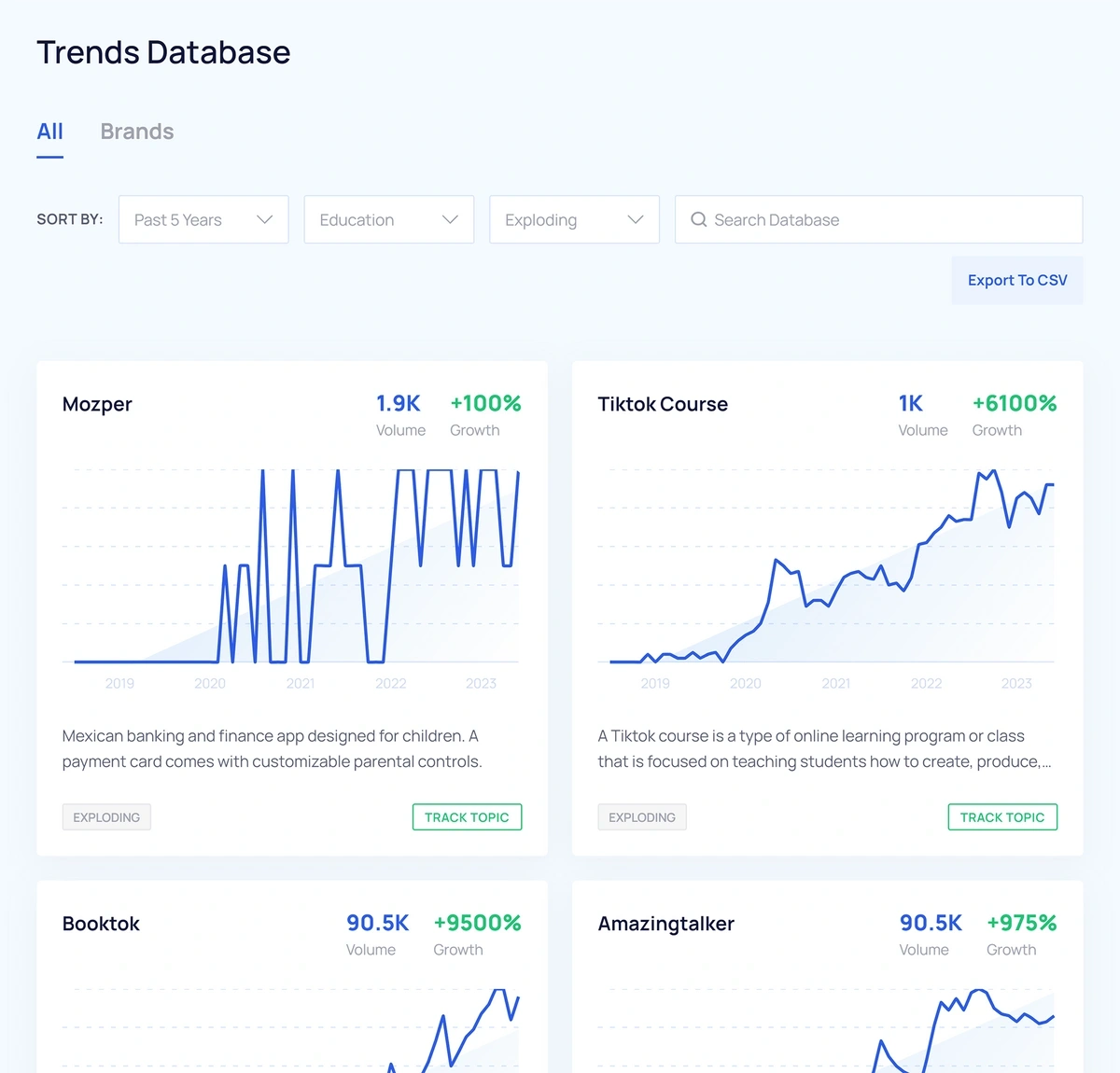
Trend graphs look objective. Clean lines. Time on the X-axis. Demand on the Y-axis. It feels scientific. Yet every year, thousands of sellers confidently jump into products that look promising—only to discover they entered too late, misjudged demand, or mistook noise for growth. This article will teach you how to actually read trend charts inside product research tools—so you can tell the difference between: Real demand vs temporary hype Sustainable growth vs seasonal spikes Opportunity vs saturation Once you understand these patterns, you don’t just pick better products—you avoid expensive mistakes. 1. Why Trend Charts Are More Dangerous Than They Look 1.1 Trend Charts Feel Like “Proof” Trend graphs create a false sense of certainty: “The line is going up” “Search volume is growing” “Everyone is buying this” But charts don’t show: Who is buying Why demand exists Whether demand will last A rising line is a question, not an answer. 1.2 The Most Common Trend Chart Mistake The biggest mistake sellers make is asking: “Is this trending up?” Instead, you should ask: “Why is this trending—and for how long?” Without context, trend charts can mislead even experienced sellers. 2. Understanding What a Trend Chart Really Measures 2.1 What Most Trend Charts Actually Show Depending on the tool, trend charts usually reflect: Search volume over time Sales estimates over time Engagement or interest signals Important: Most charts are proxies, not exact sales numbers. They show behavior, not revenue. 2.2 Absolute Numbers vs Relative Change A common trap: Small niche product grows 300% Seller assumes massive opportunity But: 300% of almost nothing is still small Relative growth can hide low absolute demand Always read: The scale The baseline The actual numbers […]

January 30, 2026

Behind every “overnight success” product is usually a boring—but repeatable—workflow built on data, tools, and disciplined decision-making. Product research tools don’t magically tell you what to sell. What they do is help you eliminate bad ideas faster and validate good ones with confidence. This guide will walk you through the entire product research process, step by step: From keyword discovery To demand validation To competitor analysis To final product decision-making No hype. No shortcuts. Just a clear, practical system you can apply immediately. 1. Why Product Research Tools Matter (and Why Most People Use Them Wrong) 1.1 Tools Don’t Find Products—People Do A common beginner mistake is expecting a tool to say: “Sell this product. You will make money.” That never happens. Tools provide signals, not answers: Search demand Market saturation Price ranges Competitor behavior Your job is to interpret those signals logically. 1.2 The Real Goal of Product Research The goal is not to find: The cheapest product The trendiest product The most “cool” product The real goal is to find a product with: Clear demand Manageable competition Room for differentiation Healthy margins Every step in this guide supports one of those four criteria. 2. Step One: Start With Keywords, Not Products 2.1 Why Keywords Come First Many beginners start by browsing: Supplier websites TikTok trends “Winning product” videos That’s backwards. Keywords represent real buyer intent. If people are searching for something consistently, demand already exists. 2.2 What Makes a “Good” Product Keyword? A strong product keyword usually: Describes a specific use case Is not overly generic Signals buying intent Examples: ❌ “lamp” ✅ “portable camping lantern” The second keyword tells you: Who the user is Where it’s used […]

January 30, 2026

In eCommerce, especially in dropshipping, Amazon, and independent store businesses, failure rarely comes from lack of effort. Most sellers fail because they choose the wrong products—products that look profitable on the surface but are already overcrowded, exhausted, and fighting brutal price wars underneath. The painful truth is this: Many sellers don’t fail because they don’t use product research tools.They fail because they use them the wrong way. This article will walk you through how to use product research tools to avoid saturated products, identify early warning signals, and develop the judgment needed to tell the difference between a hot opportunity and a dead battlefield. 1. What Does “Saturated” Really Mean? Before we talk tools, we need to clarify one misconception. 1.1 Saturation Is Not About “Too Many Sellers” A product is not saturated just because: There are many listings Many ads appear on TikTok or Facebook Multiple sellers offer similar items True saturation happens when: Differentiation no longer matters Price becomes the only competitive weapon Margins collapse faster than volume grows In short: A saturated product is one where new sellers have no realistic path to profit. 1.2 Why “Popular” and “Saturated” Are Not the Same Many beginners confuse: “This product is selling well” with “This product is a good opportunity” A product can sell thousands of units per day and still be a terrible choice for new sellers. Why? Because the profits are already taken. 2. The Biggest Mistake: Chasing What Tools Tell You Is “Hot” Most product research tools highlight: Rising sales High order volume Exploding keywords Trending ads But here’s the problem: By the time a product is labeled “hot,” it’s often already late. Tools don’t show […]

January 29, 2026

For many Amazon sellers, FBM feels like a double-edged sword. On one hand, you gain: More control over inventory Lower long-term storage risk Flexibility in sourcing and fulfillment Less dependency on Amazon’s ever-changing FBA fees On the other hand, FBM only works if your product selection is right. If you compete head-on with FBA sellers on fast-moving, low-margin items, FBM becomes painful. But when you choose the right products, FBM can quietly become one of the most profitable models on Amazon. This guide breaks down three advanced product research “black-tech” strategies—not surface-level tips—that experienced FBM sellers use to lock in high margins, low competition, and stable demand. 1. Why Product Selection Matters More for FBM Than FBA Before diving into tactics, let’s address a core truth. 1.1 FBM Is Not FBA with a Different Fulfillment Method FBM sellers operate under different realities: Shipping speed matters more Price wars hurt more Operational efficiency determines survival Margins must be healthier to absorb logistics costs That means: FBM success starts with smarter product selection—not better ads. 1.2 The FBM Sweet Spot The ideal FBM product usually has: Moderate but consistent demand Higher average selling price Low fragility and manageable size Fewer FBA-heavy competitors Clear differentiation potential Finding these products requires thinking differently than most sellers. 2. “Black Tech” #1: Mining FBM-Only Demand Gaps with Delivery-Time Filtering 2.1 The Hidden Opportunity Most Sellers Ignore Most sellers look at: Total sales volume Keyword search numbers Top-ranking listings But they ignore one crucial factor: Delivery expectations vs. actual delivery options. Many categories have customers who are: Willing to wait longer Prioritizing customization, bundles, or quality Less price-sensitive than FBA shoppers This is where FBM shines. 2.2 […]

January 29, 2026

If TikTok interest is real, you’ll often see: A delayed sales spike Rapid review accumulation New listings appearing No sales signal = high risk. 7.2 Search Trend Confirmation TikTok trends eventually spill into search. I look for: Rising branded and non-branded queries “Does this really work?” type searches Comparison-based keywords This confirms that curiosity is turning into purchase intent. 8. Using Ad Libraries to Decode Trend Timing Ad libraries are not just for copying ads—they’re for timing decisions. 8.1 What Early-Stage TikTok Ads Look Like Early trend ads often: Use UGC-style creatives Focus on problem awareness Avoid heavy discounts Test multiple hooks quickly Late-stage ads: Push urgency hard Stack discounts Look repetitive Have dozens of clones Tools help you spot this transition. 9. The 5 Signals That Tell Me a Trend Is Worth Testing Before testing any TikTok product, I look for these signals: Multiple creators posting organically One or two aggressive trend merchants testing ads Comment sections full of purchase questions Early marketplace sales growth Low brand dominance If at least 4 out of 5 are present, the product is test-worthy. 10. Filtering Out “Fake Trends” Not everything viral should be sold. 10.1 Red Flags Tools Help You Catch Avoid products with: One-hit wonder creators No repeat posting Zero marketplace footprint Extreme return complaints Complex usage explanation If the product needs a tutorial longer than the video—it won’t scale. 11. Timing: The Most Underrated Skill on TikTok You don’t need to be first. You just can’t be last. 11.1 The TikTok Product Lifecycle Discovery phase Early adoption Viral acceleration Market saturation Creative fatigue Tools help you identify phase 2, not phase 4. 12. Why Most Sellers Lose Money Chasing […]

January 28, 2026

That’s how long it took me to go from a complete beginner—no ecommerce background, no prior sales—to launching my first winning product and seeing consistent daily orders. I didn’t have insider connections.I didn’t have a huge budget.And I definitely didn’t rely on luck. What I did have was a clear process, the right product research tools, and the discipline to trust data over emotion. In this article, I’ll walk you through exactly how I did it, step by step. No hype. No “overnight success” nonsense. Just a realistic breakdown of how beginners can use modern selection tools to dramatically shorten the learning curve—and avoid the costly mistakes I nearly made along the way. 1. Where I Started: Zero Experience, Maximum Confusion When I first entered ecommerce, I was overwhelmed. Everywhere I looked, people were saying: “Just follow your passion” “Pick what you like” “Copy what’s trending on TikTok” None of that helped. I spent my first few days doing what most beginners do: scrolling endlessly through product catalogs, convinced that a “winning product” would somehow jump out at me. It didn’t. What I saw instead were: Overcrowded markets Identical products everywhere No clear way to tell what actually sells That’s when I realized something important: The biggest enemy of beginners isn’t competition—it’s randomness. 2. The Turning Point: Stop Guessing, Start Measuring Around day five, I made a decision that changed everything: I stopped trying to feel my way to a product and started measuring demand instead. That meant learning how to use product research tools—not as magic buttons, but as decision filters. My new rule became simple: If I can’t prove demand with data, I don’t touch the product. This […]

January 28, 2026
1 2 3 4 36
DropSure is Your Best Partner
22 Years Experience
Affiliate Rebates
100% Quality Guarantee
Top-Up Rewards
10+ Global Warehouses
Custom Branding Support
Smart inventory System
24/7 Customer Support
Get a Quote in 24 Hours
Start Sourcing for Free