En
En
 13 min read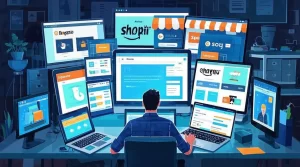
Can you operate multiple Dropshipping Stores?
Of course you can! The answer is simple: yes, you can. As an entrepreneur, you can absolutely run more than one online retail store. While it’s a little easier to run a direct sales store compared to the traditional retail model, it’s really challenging to expand to multiple stores. It’s like throwing and catching multiple balls; the more balls you throw (aka stores), the more likely you are to drop one.
Multiple stores mean more sales channels, which may lead to more revenue and profits. It should be noted, however, that running multiple businesses does take quite a bit of time, money and effort to manage different vendors, do store promotions, and deal with rapid changes in the marketplace.
However, with the right approach, a clear plan, and the use of good e-commerce tools, managing multiple direct sales outlets is entirely feasible and can lead to considerable profit potential.
Benefits of operating multiple Dropshipping Stores
Access to multiple market segments
Running multiple direct sales stores means that you can tap into different market segments, with each store being able to focus on meeting the needs of a specific group of people. For example, you could open a store that focuses on fashion trends, another that focuses on health and fitness products, or even one that focuses on household goods. Each store is able to attract customers interested in that area by offering highly targeted products. This multi-faceted market layout can effectively expand your customer base and fulfill the needs of more customers, thus boosting sales.
Examples:
● If you’re doing direct sales of home décor and beauty products, the target customer groups will be very different. Beauty customers may be more concerned with personalization, fashion, and innovation, while home décor customers are more focused on quality, functionality, and home ambiance. Running two different stores allows you to focus on different market needs, create a personalized shopping experience, and maximize the potential of each store.
Diversify your income
By operating multiple stores, you can diversify your income by spreading your risk across different markets. When one market fluctuates, revenue from other stores may be able to make up for the loss. For example, if one store experiences a decline in sales during the off-season, another product category may generate a steady stream of revenue during the peak season. The biggest advantage of revenue diversification is that it helps you maintain overall revenue stability and reduce dependence on a single market.
Examples:
● If you run a store that focuses on summer travel products and another store that sells winter sports gear, when demand for summer travel decreases, the winter sports gear store may begin to increase sales, keeping the overall business running smoothly.
Brand differentiation
Multiple stores give you more opportunities for branding. Each store can have a unique brand positioning and style, using different branding strategies to cater to their respective target customers. This differentiation not only helps you carve out a unique market, but also enhances your brand by creating a more appealing brand image for different customer segments. For example, you can customize a different visual style, marketing language, and advertising strategy for each store to create a unique brand that fits a specific market.
Examples:
● If you have two stores, one that sells high-end luxury products and the other that sells affordable cost-effective merchandise, you can adapt the brand tone to the needs of the respective markets. For example, a luxury brand store might focus more on high-end fashion and lifestyle, while an approachable product store focuses on value-for-money and practicality.
Cross-market testing and learning
Running multiple stores allows you to test your pricing, marketing strategy and product mix in different markets. Each store may react differently to different pricing strategies, promotions and advertising channels when dealing with different consumers. By testing across markets, you can gather valuable feedback on which products, pricing or marketing tactics are most popular and apply these lessons to other stores to optimize your overall strategy and improve profitability.
Examples:
● You can test customer reaction by launching a discount promotion in one store, then run a similar campaign in other stores to see if you get similar results. Or you can test different product combinations to see which ones lead to more customer purchases.
The Challenges of Managing Multiple Dropshipping Stores
While running multiple direct sales outlets offers many potential benefits, it also comes with a host of challenges. The following are common challenges and strategies to address them.
Order fulfillment management
Order fulfillment is one of the biggest challenges in a multi-store operation, especially when multiple stores rely on different suppliers around the world. Each supplier may have different inventory, shipping methods, and timelines, which makes managing orders even more complex. Especially when orders from multiple stores are dispersed around the world, coordination of logistics and distribution becomes even more difficult.
Solution:
● Using an efficient print-on-demand (POD) platform, such as Gelato, can help simplify order fulfillment.POD services eliminate cumbersome inventory management through local production and a zero inventory model, and ensure smooth order processing regardless of the number of stores or locations. With such platforms, companies don’t have to worry about suppliers and logistics across the globe and can focus on customer experience and marketing strategies.
Time Management
Managing the operations of multiple stores simultaneously requires strong time management skills. Each store may have different marketing campaigns, promotional programs, customer needs, and product updates, which makes the management of each store complex and time-consuming.
Solution:
● Automating processes is key to improving efficiency. By automating day-to-day operations such as inventory management, order processing, customer communication and marketing campaigns, significant time savings can be realized. With automation tools such as Shopify, MailChimp, etc., you can focus on the core parts of your business, such as strategic planning, product selection, and customer interactions, without having to worry too much about repetitive, transactional tasks.
● Task prioritization is also essential to organize your daily tasks to ensure that each store’s operational needs are handled in a timely manner.
Store differentiation
Maintaining each store’s unique brand identity and ensuring its differentiation from other stores is a challenge. Each store requires a separate market positioning and branding strategy to meet the needs of its respective market segment. This requires you to conduct thorough market research to understand the needs of consumers in different market segments and adjust the style and strategy of each store accordingly.
Solution:
● Market research and customer analysis: Select different market segments for each store and conduct in-depth customer analysis. This helps to ensure that each store offers personalized products and shopping experiences for specific target groups.
● Brand personalization: Ensure that each store’s visual style, language and promotional activities are independent. Customize the brand identity, color palette and marketing communication strategy for each store to avoid confusion between different stores and enhance their market recognition.
Expanding Operations
As the number of stores grows, so does the difficulty of managing inventory, tracking orders and providing customer service. Multiple stores mean more inventory, a more complex supply chain, and more customer service needs. Without an efficient management system in place, this can lead to operational inefficiencies and a compromised customer experience.
Solution:
● Dedicated multi-store management tools: Use platforms such as Shopify, WooCommerce, and BigCommerce, which support the management of multiple stores and centralize inventory, orders, and analytics. With integrated tools and dashboards, merchants can manage inventory, product releases, customer orders, and marketing campaigns across multiple stores on a single platform, significantly improving operational efficiency.
● Integrated CRM (Customer Relationship Management) Systems: With CRM tools such as HubSpot, Salesforce, etc., merchants can better manage and optimize customer interactions and improve customer service quality. CRM systems can provide you with customer data for each store, enabling you to more accurately personalize service for your customers.
Strategies for Expanding to Multiple Dropshipping Stores
The idea of running multiple direct sales stores may sound daunting, but with the right strategy, expanding from a single store to multiple stores is completely achievable. Here are the specific steps to take:
Step 1: Revisit your business model
First, reassess your existing business model: is it sustainable? Is it generating enough profit? If the answer is yes, then you can continue to expand; if not, you may need to tweak your existing model first.
Step 2: Understand your market
Every direct sales store should target a specific market segment. Having a deep understanding of who your target customers are, their preferences and buying habits is critical to success.
Step 3: Adopt a customer-centric philosophy
Successful e-commerce businesses are customer-centric, putting customer needs at the center of their decision-making. This not only increases customer satisfaction, but also promotes repeat purchases.
Step 4: Diversify your product offerings
Diversifying your product offerings can attract different types of customers, increase sales opportunities, and reduce dependence on a single product or category. The key is to maintain relevance between products.
Step 5: Implement a multi-channel marketing strategy
Running multiple direct sales stores means you need to promote them separately on different channels. Multiple online channels such as social media and email marketing make it easy to reach your target customers.
Step 6: Utilize automation tools
Managing multiple stores can be very time-consuming. Automating repetitive tasks such as inventory management and customer communication can save you a lot of time and resources, allowing you to focus on more important business growth strategies.
Essential Tools for Managing Dropshipping Stores

Multi-Store Management Software
While the prospect of running and expanding multiple direct sales stores may seem daunting at first, the good news is that we’re in an era filled with all kinds of business tools and software that can greatly simplify your operational processes. Here are some of the must-have tools:
Inventory Management Tools
Tools such as Inventora, Stock Sync, and Oberlo can provide real-time updates on product inventory, low-stock alerts, and help prevent overselling. Alternatives:
While traditional inventory management relies heavily on forecasting product demand, with Gelato’s POD service, you only produce products as they are ordered. This eliminates the need to maintain physical inventory, reduces the risk burden, and frees up more resources.
E-commerce platforms
Platforms such as Shopify, WooCommerce and BigCommerce allow you to manage multiple stores from a single dashboard, offering features such as shared inventory, multi-channel selling and integrated data analytics that greatly simplify the management process.
Customer Relationship Management (CRM) Software
Having customer data at your fingertips is critical. With CRM tools like HubSpot, Zoho, or Salesforce, you can comprehensively manage customer relationships and improve customer service for your direct marketing business.
Automated Marketing Tools
Automation tools like MailChimp, Klaviyo or ActiveCampaign can help you streamline tasks like email marketing, social media posting and more, saving you tons of time and ensuring consistent messaging.
| Tool Category | Recommended Tools | Function Description |
|---|---|---|
| Inventory Management Tools | Inventora, Oberlo, Gelato (POD platform) | Efficiently manage inventory, update in real time, prevent overselling, and streamline order fulfillment. |
| E-commerce Platforms | Shopify, WooCommerce | Support multi-store management, simplify workflows, and provide features like shared inventory and multi-channel sales. |
| CRM Tools | HubSpot, Salesforce | Manage customer relationships, offer customer data analysis, and enhance customer service. |
| Automated Marketing Tools | MailChimp, Klaviyo | Simplify email marketing and social media posting tasks, saving time and improving efficiency. |
Cultivating Customer Loyalty
In order to grow your business in the long run, you have to find ways to retain customers who have already bought your products. Think about it, who doesn’t want a repeat customer? It’s easy to make your customers feel like they’re getting special care when they shop at your store.

For example, you can send a greeting and a small coupon on a customer’s birthday; or offer a point system to encourage customers to keep coming back. And, it’s also very important to collect customer feedback from time to time, too.
You can find out what they really need through surveys or by directly asking them how they feel about using it, so you can keep optimizing your products and keep them loyal to your store.
Leveraging the Advantages of the DropSure
To ensure the smooth operation and continued growth of multiple stores, the DropSure platform offers a wealth of resources to help simplify order management, inventory control, customer service, and more.
With DropSure, you can easily manage multiple direct-to-consumer stores and achieve long-term, stable profits.