














 En
En
 23 min read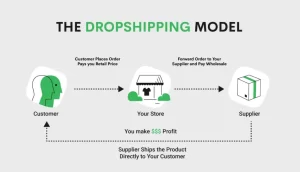
Dropshipping, as a low-barrier entrepreneurial model, has attracted an influx of countless people, but few have actually succeeded. Many people ask: “How long does it take to learn Dropshipping?”
The answer is not fixed – some people realize their first order within 1 month, some people are still losing money after half a year. The key is whether you understand the underlying logic and are willing to iterate consistently.
In this article, we’ll unveil the learning path and core strategies in the context of new industry trends for 2025.
The Four Stages to Learn Dropshipping

Stage 1: Basic Awareness (1-2 weeks)
Hey, if you’re just starting out in Dropshipping, don’t be fooled by those cases of “earning $100,000 per month”. Although it sounds attractive, most newbies often ignore the basic skills behind. Do not rush to think of a million dollars a month, first figure out how the e-commerce is the key.
First, you need to understand the core concept and characteristics of dropshipping. Dropshipping is a business model where you ship directly through your suppliers, which means you don’t need to buy inventory in advance and avoid the risk of inventory buildup. Your source of profit is primarily the difference between the selling price and the supplier’s purchase price. Sounds simple, but in practice, balancing advertising investment and profit is the most challenging part.
Having clarified the importance of market and product direction, we’ll then explore in detail how to pinpoint and optimize your product selection with specific strategies and steps.
1. Market Research: Utilize tools such as Google Trends, AliExpress, etc. to understand current hot products and future trends. Focus on your competitors and analyze their hot products.
2. Target Audience: Determine your target customer group and choose products that meet their needs. For example, young people may prefer fashion trends, while parents tend to buy children’s products.
3. Profit margin: Choose products with low cost and high profit. You can find reasonably priced suppliers on wholesale sites such as Alibaba.
4. Test small quantities: Choose a few different products to sell in small quantities, observe market feedback, and adjust the product line according to demand.
5. Product quality: Ensure that the product quality is excellent, to avoid customer dissatisfaction due to quality problems.
In short, when selecting products, consider market trends, target customers and profit margins, and conduct several tests to gradually optimize your product selection.
For more detailed information, check out our previous article, The 8 Tips to Know When Choosing Dropship Products.
You’ll want to find a less competitive field to give yourself some room to grow. For example, 2025 smart health devices, like AI massagers and environmentally friendly biodegradable packaging, are in high demand and have relatively little competition, making them a good choice for newbies to get into.
Once you’ve determined your direction, it’s time to find the right supplier. A good supplier can help you provide high-quality products and stable shipments, avoiding the impact of customer experience due to supply problems.
Next, you can get your hands on building your own e-commerce store. It’s recommended to start with a platform like Shopify + Oberlo, which is both simple and has enough support resources to help you step-by-step through the process of getting from zero to one. Always remember, don’t let the amount of information overload you! Many newbies will start out working on multiple selection tools at once and end up not learning anything. So, focus on mastering one or two platforms, build a good foundation, and take your time.
Stage 2: Practical Launch (3-4 weeks)
Now, let’s talk about how to turn theory into action, especially after you’ve just registered on Shopify. We’ll discuss how to build your store and optimize ad campaigns.
Shopify Basic Setup
Congratulations on choosing Shopify, one of the world’s most popular e-commerce platforms that is easy to use and powerful. After completing the registration, the first step is to build the store infrastructure to ensure that your customers have a good experience when they visit. Below are the specific steps:
Design the page
In an e-commerce platform, page design is crucial to customer appeal. Studies have shown that consumers usually decide within seconds whether to continue browsing a website or not, so a professional and appealing page is the key to success. You can use templates on Canva or Envato to help you design pages that match your brand image. Make sure the colors, fonts, and typographand convey a sense of professionalism and trust.
Your store needs to display smoothly on both mobile and desktop, as more and more consumers are shopping via mobile.Shopify offers responsive themes to ensure that the design adapts to different devices. It’s also important to design a simple, easy-to-use navigation bar to ensure that customers can easily find the products they need. Common categories such as “What’s New,” “Hot Deals,” and “Browse by Category” enhance the user experience.
Uploading Products
The presentation of product information is crucial and has a direct impact on a customer’s purchasing decision. Each product should display clear and detailed information to ensure that customers can quickly access the key information they need when browsing. Product titles should be concise and precise, containing keywords that are easily searchable by customers. Descriptions should highlight the product’s core selling points and usage scenarios, using clear and concise language.
Use high-quality, clear images and show the product from different angles, avoid blurry or low-resolution images. You can also add short videos to show how the product is used and enhance customer trust. Information such as the price, stock quantity and shipping cost of the product needs to be accurate, especially for items with limited stock, and the stock quantity should be updated in real time.
In addition, if your products come in different sizes, colors or styles, make sure to upload a separate item for each variant and add relevant descriptions, which will make it easier for customers to make their choices.
Setting up a Payment Gateway
Payment gateways are the bridge for customers to complete transactions, make sure you set up multiple payment methods to accommodate the payment habits of different consumers.Shopify supports a variety of payment methods such as PayPal, credit card payments (Visa, Mastercard, American Express, etc.), and Shopify Payments, make sure you set up payment methods that work for the international markets to minimize payment barriers.
Set up different currencies and payment options depending on the country or region you’re selling in, which will allow customers to see their home currency when paying and boost buying confidence. To ensure secure transactions, encrypt customer payment information with an SSL certificate, which Shopify provides for free on your store.
Logistics and Returns Policy
For C-Sites, clear logistics and return policies are important factors in customer trust and purchase decisions. Make sure these policies are clear, easy
to understand and publicly displayed. In terms of logistics and shipping, show your shipping policy, including estimated delivery time, shipping cost, delivery region, and whether or not you support international delivery. You can set up different shipping rates for different regions and utilize the plugin provided by Shopify to set up global delivery.
In addition, set up a variety of shipping methods (e.g. standard shipping, expedited shipping, free shipping, etc.) to meet the needs of different customers. Also, provide customers with a clear return policy. It is recommended to set up a separate page on the conditions, process, and time required for returns and exchanges to ensure that customers are aware of their options after making a purchase.
Customer service support is also an important part of the customer experience; set up clearly visible contact information and FAQ pages to help customers find answers quickly when they have questions. You can set up features like autoresponders and live chat to enhance the customer experience.
Additional Features and Optimization
After the foundation is built, consider the following additional features to improve user experience and sales conversions. Make sure every page is SEO optimized, including titles, descriptions, image alt tags, etc. This can help your store rank better in search engines.
Enable product reviews for customers to share their shopping experience. Build trust and increase the likelihood of purchase through reviews from other users. You can also connect your social media pages (e.g. Instagram, Facebook, etc.) to your store to increase brand exposure and attract more customers.
With these detailed steps, you’ll not only be able to successfully build a professional Shopify store, but also provide your customers with a seamless shopping experience, increase conversions and boost sales.
Ad Placement: Testing is Key
Advertising can be a real challenge for many newbies. In the beginning, you may find that the click-through rate is low, or that you’ve spent a lot of your advertising budget without seeing the expected returns. This is common, don’t get discouraged, the key to ad placement is to keep testing and adjusting to find the best strategy.
Ad testing: first small-scale trial
Take Facebook ads as an example, in the early stages of advertising, we recommend starting with a small budget test. You can choose to test different ad materials to see which format is most appealing to customers. For example, test two ads for the same product: one focuses on the price advantage, while the other emphasizes the quality of the product or user reviews. This is known as a quick-start and trial-and-error strategy. By testing on a small budget, you can quickly see which ad materials are most attractive to customers.
The key here is to start fast and try things out, rather than investing a large budget right from the start. After all, the effectiveness of an advertisement depends not only on the material, but also on the market demand for the product, the competition and other factors. Therefore, in the early stage, do not be too eager to invest a large amount of budget, first find the right direction and then make adjustments.
Data Analysis of Facebook Ads Manager
After advertising, data analysis is very important. In Facebook Ads Manager, you can see the click rate (CTR), conversion rate (CR) and other key indicators of each ad material. By comparing these data, you can quickly determine which ad materials are performing well and which are not.
Based on this data, you can quickly eliminate those underperforming clips and keep those with outstanding results. In this way, you can allocate your advertising budget more accurately, ensure that every penny is spent in a more valuable way, and ultimately maximize the return on investment (ROI).
Choose the right ad platform and ad type
In addition to Facebook Ads, there are many options for e-commerce ad placement platforms, such as Google Ads, Instagram Ads, Pinterest Ads, and TikTok Ads.Different platforms and ad types are suitable for different products and markets.
● Facebook & Instagram Ads: If your product is suitable for displaying images and short videos, Facebook and Instagram are great advertising platforms, especially for visually appealing products (e.g. fashion, home goods, beauty, etc.). You can showcase your products through a variety of ad formats, such as image ads, video ads, and rotating ads.
●Google Ads: If your products need to lead customers through keyword search (e.g. some specific electronic products or products with strong demand), search ads of Google Ads may be more suitable. You can adjust your budget based on the keyword’s click-through price (CPC) to make sure you’re not wasting too much advertising money.
● TikTok Ads: If you’re targeting millennials and your product can be noticed through creative content, TikTok Ads offer a powerful form of creative display and engagement advertising. Short video ads are especially good for grabbing attention and increasing engagement.
Budget Setting and Adjustment
Ad budgets should be set based on your ad platform and placement goals. Different ad platforms have different billing methods, such as CPC (cost per click) and CPM (cost per thousand impressions). In the ad testing stage, it is recommended to set the budget according to the platform’s fee structure, and then gradually make further adjustments according to the actual advertising situation.
For example, in Google Ads, the click price of certain keywords may be higher, especially in industries with fierce competition, and one click may be close to 10 dollars. Therefore, the test budget should not be too fixed, but adjusted accordingly to the click price of the product and the market situation.
Stage 3: Optimization and Iteration (1-3 months)
You’ve finally achieved your first sale, marking the transition from “extensive operations” to a new phase—refined operations. In this stage, attention to detail is crucial, so you need to focus on various aspects, including data analysis and optimization. Let’s discuss how to approach this step by step.
1. Analyzing user behavior: making precise optimizations
Google Analytics is your next indispensable tool to help you understand user behavior from data. For example, if you find that a product page has a bounce rate of 80%, this means that many potential customers come to the page but leave quickly. Why? It could be that the product images aren’t clear enough, or there aren’t enough descriptions to grab the customer’s attention.
● Optimize images: Make sure they are high-definition, show multiple angles of the product, and even consider adding a 360-degree display to give customers a more intuitive understanding.
● Add product videos: In 2025, consumers are increasingly demanding a visual experience. A product video can help customers better understand how to use the product, its quality and functionality, and increase buying confidence.
Through data analysis, you can identify problems and quickly adjust to improve these details, which can effectively reduce the bounce rate and increase the conversion rate.
2. Application of refined operation and automation tools
In the stage of refined operation, you can no longer rely on manual labor to deal with all the things, which makes the rational use of automation tools is particularly important. Through the use of these tools, you can greatly improve the efficiency of your work, so that you can focus more on strategy and innovation.
Ad copy assistance: our experience so far has shown that relying directly on AI to automatically generate ad copy often makes the content look too similar. Therefore, we suggest using AI as a support tool, mainly for brainstorming and organizing ideas, to help you generate the first draft of ideas. After that, you can adjust and optimize it according to your brand style and audience needs, so you can create more personalized ad copy.
Customer service automation: Customer service automation tools such as Zendesk can help you quickly respond to common customer questions, improving the customer experience while reducing the workload of manual customer service.
AI selection tools: by 2025, AI tools will be very mature. AI product selection tools like Dropship.io’s can use big data analytics to predict the next quarter’s likely breakout products, helping you plan your product stockpile and marketing strategy in advance. This kind of tool can provide data support for your product selection decisions and give you a head start in the fierce market competition.
3. Refined marketing strategy: improve conversion rate
Fine-tuning your operations is not only about product and ad optimization, but also the details of your marketing strategy. How to reach your target customers precisely? How to increase customers’ desire to buy?
● Email marketing: Email marketing is a very effective way, especially when you implement it through automation tools. By analyzing your customers’ purchase history, browsing behavior, and other information, you can send them personalized emails to boost the repurchase rate. For example, for customers who have browsed a certain product but didn’t make a purchase, you can automatically send emails containing coupons to incentivize them to complete their purchase. Email marketing can also be used for “abandoned cart” customers. You can automatically send reminder emails to those customers who added products but did not actually order, and may contain some additional offers to attract them back to the site to order, and improve the conversion rate.
● Personalized recommendations: By analyzing customers’ historical purchase data, you can recommend relevant products for them. For example, “you purchased this cream, try this matching cleanser”, this kind of personalized recommendation can increase the customer’s desire to buy.
● Social Proof: If you use customer reviews or user-generated content (UGC), which are customer shares and photos, in your ads, it will make your products more appealing. Customers love to see how others use your product, especially if they themselves can see other people’s real experiences in the comments section.
Stage 4: Scale Expansion (6 months+)
When you enter the scale-up stage, it means that you are no longer satisfied with that small, steady growth in the early days, but are ready to make the business go big and take a really big leap forward. At this stage, your goal is no longer just to increase your sales numbers, but to upgrade your brand and marketplace layout on all fronts, making your entire business more layered and impactful.
By 2025, the secret of the top sellers almost always comes down to “multi-channel + localization”. It’s not about going it alone, it’s about utilizing every channel of traffic and being truly ubiquitous. Imagine in the U.S. market, you can advertise on TikTok Shop and attract attention with creative short videos, while in Southeast Asia, you can partner with Lazada and utilize local warehousing services to achieve 3-day delivery and meet customer needs quickly. Such a two-pronged approach not only enhances brand exposure, but also provides a more attentive and speedy service according to the different habits of consumers around the world, so that people can’t stop buying.
Of course, the relationship with suppliers is also crucial. You can try to talk to them for exclusive rights, such as customized logo packaging or developing exclusive models of products. In this way, your products will appear unique, creating an insurmountable barrier to competition, making your brand more recognizable in a fierce market and making it easier to win consumers’ trust and loyalty. In the fourth stage of scale expansion, companies need to focus more on market expansion, improving operational efficiency, brand building and optimizing the supply chain. Here are some suggestions:
1. Enhance market expansion
●Regional market analysis: Understand the market demand and competition in each region, especially the potential high-growth markets, and formulate market expansion strategies accordingly.
● Localized marketing: Adjust marketing strategies, such as language, product preferences and promotional activities, according to the culture and consumption habits of the target market to ensure that the brand fits the local market.
● Brand promotion and word-of-mouth: Increase brand awareness and build word-of-mouth through advertising, social media marketing, and KOL cooperation.
2. Optimize supply chain management
● Strengthening supply chain partnerships: Build strong relationships with more suppliers and logistics companies to ensure a quick response in case of a surge in demand.
● Automation and technology upgrades: Consider investing in supply chain management software or technology platforms to improve efficiency in inventory management, order processing, and logistics tracking.
● Diversify inventory sources: Avoid single-supplier dependence to ensure stability of product supply and reduce the risk of supply chain disruption.
Core Challenges in the Process of Learning Dropshipping
1. Choosing the right product
Finding products that are in high demand and not highly competitive is not easy. Many newbies may choose products in popular but highly competitive categories, making it difficult to stand out.
Solution: Do a good market research and use tools like Google Trends and Alibaba to analyze product trends. At the same time, you can choose to segment the market to find niche but stable demand products.
2. Choose the right supplier
Choosing a reliable supplier is crucial, especially the supplier’s delivery time, product quality and whether they provide good after-sales service. Finding the right supplier may take time and multiple tests.
Solution: Select highly rated suppliers through platforms (e.g. AliExpress, SaleHoo, etc.), check reviews from other sellers, and ask suppliers to provide samples to test product quality.
3. Inventory Management and Shipping
Because the Dropshipping business model is dependent on supplier shipments, controlling inventory and timely shipments becomes more difficult. In case a supplier runs out of stock, orders may be delayed, resulting in a degraded customer experience.
Solution: Choose multiple suppliers to work with to ensure that if one party runs out of stock, it can be shipped through the other suppliers. Meanwhile, automatically synchronize inventory and orders through Dropshipping platforms (e.g. Oberlo, Spocket) to reduce manual errors.
4. Pricing and profit control
Ensuring that the product is profitable enough is a challenge due to the need to consider competitors’ pricing, advertising costs, and platform fees. Sometimes the price is too high which may affect the sales and too low which may not cover the cost.
Solution: Consider the combined costs (product cost, shipping costs, advertising costs, etc.) when pricing, while using pricing strategies (e.g., discounts, bundling) to attract customers.
5. Handling customer service issues
In Dropshipping, sellers have no direct control over the quality and logistics of their goods, which can lead to customer complaints about shipping delays, damaged goods, and other issues.
Solution: Provide clear after-sales policies and return and exchange processes to ensure that customers know how to deal with problems. At the same time, maintain good communication with customers and resolve problems as they arise.
6. Marketing and Traffic Acquisition
In a competitive market, it is a huge challenge to attract enough traffic. Without enough traffic, products will not be seen and sales cannot be realized.
Solution: Learn and practice different marketing methods, such as Facebook ads, Instagram marketing, SEO optimization, and so on. Initially, you can reduce advertising waste by precise targeting of customer groups and gradually increase brand exposure.
Unlock the Secret in Dropshipping — Register for DropSure Now!
With DropSure, you can enjoy lower product costs than other platforms, helping you maximize your profits. Free Tracking Service
DropSure provides you with free order tracking service to track the real-time location of each package and ensure smooth delivery of each order.
DropSure provides you with more affordable logistics and warehousing solutions to ensure that your goods reach your customers quickly and accurately. No inventory management required.
With DropSure‘s drop shipment services, you don’t need to worry about inventory management, avoiding high warehousing costs and improving operational flexibility. Sign up today and start enjoying these exclusive benefits!
? Click here to sign up for DropSure and start an easy e-commerce journey!