En
En
 10 min read
As a globally leading logistics company, DHL enjoys widespread recognition for its domestic and international delivery services. Whether through DHL eCommerce or DHL Express, the company’s precise and reliable delivery timelines have earned the trust of countless businesses and consumers alike. This article will guide you through the unique features of DHL’s various services and explore the key factors that influence parcel delivery times.
DHL E-Commerce and Express Services: Precision in Global Logistics
DHL’s E-Commerce Logistics Solutions
DHL has distinguished itself in the e-commerce sector through its exceptional logistics capabilities. As online transactions boom, businesses demand faster and more reliable delivery solutions. DHL’s e-commerce services leverage state-of-the-art sorting systems and a globally extensive logistics network to offer an end-to-end logistics solution, ensuring every package reaches customers safely and on schedule.
Within its e-commerce framework, DHL implements meticulous management and real-time monitoring at every stage—from receiving parcels to sorting, warehousing, and final dispatch. By integrating advanced information technology (IT) and data analytics, the company dynamically adjusts transportation plans to manage order surges, unexpected disruptions, and seasonal peaks. Strategically located regional distribution hubs further optimize delivery routes, reducing both distance and transit time.
DHL Express: Uncompromising Speed and Accuracy
For customers prioritizing delivery speed, DHL Express delivers unmatched precision. It offers time-sensitive services with customizable delivery windows, such as guaranteed morning (9:00 AM), mid-morning (10:30 AM), or midday (12:00 PM) arrivals, ensuring parcels arrive exactly when needed. Whether transporting routine small packages or urgent high-value items like documents or perishables, DHL Express leverages its mature global network and streamlined operational processes to achieve the fastest possible delivery.
The table below provides a detailed comparison of DHL e-commerce services and DHL Express services in terms of key features, applicable scenarios, and major advantages.
| Service Category | Key Features | Use Cases | Key Advantages |
|---|---|---|---|
| DHL E-Commerce Services | – Global sorting systems – Efficient delivery logistics – Real-time monitoring |
– Online retail – Cross-border e-commerce – Bulk order fulfillment |
– Customizable logistics solutions – Consistent delivery timelines – Global network coverage |
| DHL Express Services | – Precise delivery timing – Flexible time-slot options – Multi-node rapid delivery |
– Time-sensitive shipments – Critical document delivery – Urgent order fulfillment |
– Strict time management – Rapid response capability – Precision time-slot delivery |
International DHL Delivery Times and Services

International DHL delivery times and services not only continue the efficiency and precision of domestic services but also demonstrate outstanding comprehensive strength in the field of international logistics. No matter whether your package’s destination is Europe, Asia, or America, DHL can provide you with a complete set of international express solutions covering all links through its global network and advanced information technology.
In the process of international transportation, DHL utilizes logistics nodes and distribution centers around the world to ensure that every package can quickly integrate into the global supply chain. By closely cooperating with customs and local transportation departments in various countries, DHL precisely masters the customs clearance processes of each country, anticipates potential delays, and takes corresponding countermeasures to greatly improve the timeliness and security of cross-border transportation.
In addition, DHL’s international services pay special attention to the last-mile delivery link. In cross-border transportation, the last mile is often the key to affecting the overall delivery efficiency. DHL uses various transportation tools and local delivery partners to ensure that packages can be quickly sorted and delivered to customers after arriving in the destination country. With real-time monitoring and dynamic scheduling systems, customers can always understand the specific location and transportation progress of their packages, enjoying a transparent and traceable logistics experience.
DHL Delivery Times: Basic Knowledge
The delivery times for DHL are not fixed and can vary based on a number of factors. Understanding these factors can help you better plan your logistics and enhance business efficiency.
Factors Affecting DHL Delivery Times
Delivery Address
The final destination of the package is an important factor in determining delivery timeliness. There is a significant difference in transportation time between urban areas and remote areas.
Type of Shipping Service
DHL offers different levels of service according to customer needs, such as express, standard, or economy services. Each type of service has different processing and transportation speeds.
The following table summarizes DHL’s eight common types of shipping services
| Serial Number | Service Type | Description |
|---|---|---|
| 1 | DHL Express Worldwide | Provides fast international express delivery services, suitable for urgent and important shipments. |
| 2 | DHL Express 12:00 | Commits to deliver to specific countries and regions before 12:00 noon the next day. |
| 3 | DHL Express 9:00 | Offers delivery services before 9:00 AM the next day for shipments requiring faster delivery (only available to certain destinations). |
| 4 | DHL Express Easy | Provides economical services for small parcels, suitable for personal and non-commercial shipments. |
| 5 | DHL Parcel and Commerce | Focuses on the B2C market, specifically handling international transportation of e-commerce parcels and small cargo. |
| 6 | DHL Global Forwarding | Primarily targets the international transportation of large-volume cargo, offering air, sea, and land transport services, including global cargo tracking and management services. |
| 7 | DHL Freight | Provides road transport services in Europe and certain international regions, including Less Than Truckload (LTL) and Full Truckload (FTL) services. |
| 8 | DHL Supply Chain | Offers integrated logistics and supply chain management services, including warehousing, distribution, and value-added services. |
Packaging Dimensions and Weight
The volume and weight of a parcel directly impact logistics handling processes. Larger or heavier packages may require additional handling and transportation arrangements (e.g., specialized equipment, reinforced vehicles), which can extend delivery timelines due to increased operational complexity.
Shipment Volume and Weather Conditions
Peak periods (e.g., holidays, promotional sales) and adverse weather conditions (e.g., storms, heavy rain) can disrupt delivery efficiency. Sudden spikes in shipment volume or environmental challenges may delay logistics operations. DHL implements adaptive strategies, such as resource reallocation and route optimization, to maintain overall transportation efficiency under these circumstances.
Ways to Track DHL Packages
Tracking parcels through the official DHL website
Enter the DHL global official website (www.dhl.com) and select the site of the corresponding country/region (e.g. China Zone, USA Zone, etc.) to ensure accurate information. Enter tracking information:
Click the “Track Your Shipment” button at the top of the page to enter the tracking page. Enter the 10-12 digit tracking number (e.g. “942811230123”) or a reference number (e.g. the order number provided at the time of shipping). How to get the tracking number: Usually provided by the sender via email or SMS, you can also find it in the shipping documents or DHL confirmation email.
Use the official DHL mobile app (mobile tracking)
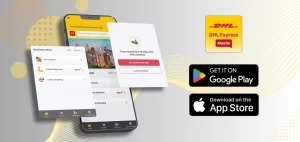
Search for “DHL” in your mobile app store and download the official app (available for iOS and Android). Some countries/regions may need to download according to the local site (e.g. DHL Express). Core Functions: Real-time Tracking: After entering the tracking number, you can view the real-time location of the package, the progress of the shipment and the estimated delivery time.
DHL Shipments via Email Notifications
To receive automatic updates for your DHL package via email, it is essential to provide a valid email address during the shipping process. This can be done either through the DHL online booking page when placing your shipment order or by manually entering the email address on the physical shipping label. Once provided, DHL’s system will use this address to send real-time notifications about your package’s status. It is critical to ensure the email address is correctly entered and not flagged as spam by your email provider, as this could delay or block important updates.
Contact DHL Call Center (manual assistance)

Telephone inquiries: Globally harmonized number: dial +49 69 9333 3333 (Germany headquarters, international call charges apply).
Local Customer Service: Select the corresponding phone number according to the destination country (e.g. China Customer Service: 400-861-5555).
Live Chat: Visit the DHL website and click on the “Live Chat” icon at the bottom of the page for real-time online consultation.
Email Support: Send an email containing the tracking number and a description of the problem to DHL’s official customer service email address (e.g. China: customerservice_china@dhl.com).
FAQ
Q: Which countries and regions does DHL serve?
A: DHL’s international air express delivery services cover over 220 countries and regions globally. Specific coverage may vary, so please visit the DHL website or contact your local customer service center for the latest information.
Q: What special services does DHL offer?
A: DHL provides specialized services such as temperature-controlled transportation, hazardous materials transportation, and secure handling of confidential documents and valuables. Customized logistics solutions are also available for goods with specific requirements.
Q: What is the delivery timeframe for DHL shipments?
A: Delivery times depend on the service type and destination. For example:
- DHL Express Worldwide offers fast international express delivery.
- DHL Express 12:00 guarantees delivery by 12:00 PM the next day for certain destinations.
Check the DHL website or consult your local customer service center for precise timelines.
Q: How are DHL shipping costs calculated?
A: Shipping costs are typically based on the parcel’s weight, dimensions, destination, and selected service type. Use DHL’s online shipping cost calculator for an estimate, or contact your local customer service center for a detailed quote.
Q: What are the considerations and limitations of DHL?
A: Not all services are available in all regions, and the specific scope and availability of services may vary by country/region. In addition, certain shipments may require special handling or compliance with specific shipping regulations. It is recommended that you consult your local Customer Service Center for considerations and restrictions before shipping.