














 En
En
 8 min read
In today’s digital advertising landscape, attention is the most valuable currency. Users scroll fast, compare faster, and decide in seconds whether to engage or move on. In this environment, carousel ads have become one of the most powerful formats for guiding user behavior—especially when the goal is to lead someone from awareness to purchase.
Unlike static ads, carousel ads allow multiple images, messages, or product cards to exist in a single interactive unit. When designed strategically, they don’t just display products—they tell a story, remove hesitation, and guide users step by step toward a purchase decision.
This article breaks down how carousel ad layout influences user psychology, how to structure cards effectively, and how brands can use visual sequencing to increase conversions.
What Are Carousel Ads and Why They Matter
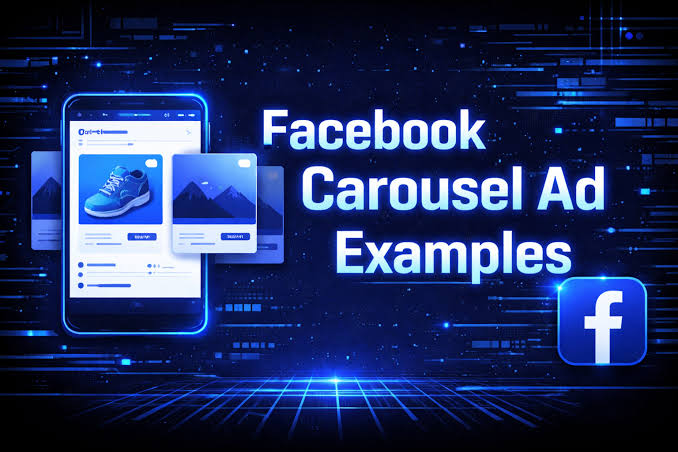
Carousel ads are interactive ad formats that allow multiple cards within a single ad unit. Each card can contain:
- An image or video
- A headline
- A description
- A link or call-to-action
Users can swipe or click through each card, making the experience more engaging than a single static creative.
Platforms such as Meta, Google, and TikTok have widely adopted carousel formats across social and display advertising ecosystems.
The real strength of carousel ads lies in their ability to:
- Break down complex product information
- Guide sequential storytelling
- Showcase multiple products or features
- Reduce decision friction
But effectiveness depends heavily on layout strategy.
Why Layout Matters More Than You Think
Many advertisers assume carousel success depends on visuals alone. In reality, layout structure is what determines whether users:
- Stop scrolling
- Engage with multiple cards
- Click through to purchase
- Abandon the ad early
Carousel ads function like a mini sales funnel. Each card plays a role in moving the user closer to conversion.
Think of it as a structured journey:
- Capture attention
- Build interest
- Create desire
- Reduce objections
- Trigger action
If any step is missing or poorly designed, conversions drop significantly.
The Psychology Behind Carousel Engagement
To understand how to design effective carousels, we need to understand user psychology.
1. The Curiosity Loop
Users naturally want to know “what’s next.” Carousel ads leverage this by encouraging swiping behavior.
2. Progressive Disclosure
Instead of overwhelming users with information, carousels reveal content step by step, reducing cognitive overload.
3. Pattern Completion Bias
When users start viewing a sequence, they often feel compelled to complete it.
4. Visual Comparison Behavior
Carousels allow users to compare products side by side, which helps decision-making.
The Ideal Carousel Structure: A Conversion-Oriented Framework
A high-performing carousel is not random—it follows a structured narrative.
Card 1: The Hook (Attention Capture)
This is the most important card.
Its job is to stop scrolling.
Effective hooks include:
- Bold visual contrast
- Emotional triggers
- Problem statements
- Strong product positioning
Example:
“Still dealing with slow charging?”
The goal is not to sell immediately—it’s to earn the next swipe.
Card 2: The Problem Amplifier
Once attention is captured, the second card deepens the pain point.
It should:
- Highlight frustration
- Show consequences
- Build urgency
Example:
“Traditional chargers waste 40% more energy and time.”
This creates emotional momentum.
Card 3: The Solution Introduction
Now the product enters the story.
Instead of pushing a hard sale, this card introduces relief.
It should:
- Present the product clearly
- Show it in context
- Start shifting emotion from problem to solution
Card 4: Feature Breakdown
This is where logic takes over.
Highlight:
- Key features
- Unique advantages
- Technical benefits
Keep it simple and visual.
Card 5: Social Proof
Trust is essential before purchase.
Include:
- Customer reviews
- Ratings
- User testimonials
- Real-world usage images
Social proof reduces hesitation dramatically.
Card 6: Comparison Advantage
Show why your product is better.
This can include:
- Before vs after
- Competitor comparison
- Time/cost savings
Card 7: Call to Action
The final card should be clear and direct:
- “Shop Now”
- “Get Yours Today”
- “Limited Offer Available”
At this stage, users are emotionally and logically primed.
Layout Strategy: How Design Influences Behavior
Beyond structure, visual layout determines effectiveness.
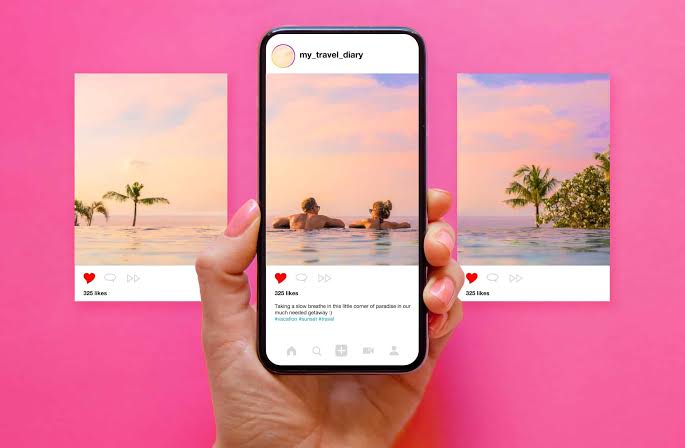
1. Consistent Visual Flow
Each card should feel like part of a single story, not isolated ads.
2. Directional Cues
Use arrows, gaze direction, or composition to guide users toward the next card.
3. Color Psychology
- Red: urgency, action
- Blue: trust, reliability
- Green: success, savings
- Black: premium positioning
4. Typography Hierarchy
- Headlines must dominate
- Subtext should support, not overwhelm
- CTA must stand out clearly
Product-Focused vs Story-Focused Carousels
There are two main carousel types:
Product-Focused Carousel
Used for e-commerce platforms like Amazon or retail brands.
Structure:
- Each card shows a different product
- Focus on variety and selection
- Direct purchase intent
Best for:
- Fashion
- Electronics
- Home goods
Story-Focused Carousel
Used for brand storytelling and higher-value products.
Structure:
- Sequential narrative
- Emotional engagement
- Problem-solution flow
Best for:
- SaaS products
- High-ticket items
- Services
How to Guide Users Toward Purchase Intentionally
A successful carousel doesn’t just show information—it controls pacing.
Step 1: Control Attention
Use strong visuals in card 1.
Step 2: Build Emotional Investment
Cards 2–3 should deepen engagement.
Step 3: Establish Rational Justification
Cards 4–6 provide logical reasons.
Step 4: Remove Friction
The final card eliminates hesitation with:
- Discounts
- Guarantees
- Clear CTAs
Common Mistakes in Carousel Ad Design
1. Starting with Product Instead of Hook
If you lead with the product too early, users may scroll away.
2. Overloading Text
Too much information reduces swipe completion rates.
3. Weak Story Flow
Disconnected cards confuse users.
4. No Clear CTA
Without a strong final action, conversions drop.
5. Ignoring Mobile Experience
Most carousel engagement happens on mobile devices.
Advanced Strategy: Behavioral Sequencing
High-performing advertisers use sequencing techniques such as:
Emotional Escalation
- Curiosity → frustration → relief → trust → action
Logical Reinforcement
- Feature → benefit → proof → comparison → offer
Visual Continuity
- Consistent design language across all cards
A/B Testing Carousel Layouts
Optimization is essential.
Test variables such as:
- Card order
- Hook messaging
- CTA placement
- Image style
- Number of cards
Even small changes in sequence can significantly impact conversion rates.
Industry Applications of Carousel Ads
E-Commerce
Used to showcase multiple products and drive direct sales.
Technology Companies
Used to explain features and benefits.
Travel Industry
Used to display destinations and experiences.
Real Estate
Used to show property listings and details.
Why Carousel Ads Are So Effective in Modern Advertising
Carousel ads outperform many static formats because they:
- Encourage interaction
- Extend engagement time
- Allow storytelling
- Support decision-making
- Reduce cognitive overload
They transform advertising from a single message into a guided experience.
Future Trends in Carousel Advertising
1. AI-Generated Dynamic Carousels
Ads will automatically adapt based on user behavior.
2. Personalized Card Sequencing
Different users will see different card orders.
3. Video-First Carousel Units
More motion-based storytelling within cards.
4. Integrated Shopping Experiences
Users will complete purchases without leaving the carousel.
Conclusion: Layout Is the Hidden Engine of Conversion
Carousel ads are not just a format—they are a structured persuasion system.
When designed properly, each card works like a step in a guided journey:
- Capture attention
- Build emotion
- Provide logic
- Establish trust
- Trigger action
The difference between a low-performing carousel and a high-converting one is not just creative quality—it is intentional layout design.
In the end, successful carousel advertising is not about showing more. It is about showing in the right order, at the right moment, with the right psychological flow.
That is how users are guided from curiosity to confidence—and finally, to purchase.