














< Blogs

Amazon FBA vs. Dropshipping | What Are Their Differences?

admin
Created on October 18, 2024 – Last updated on February 6, 20254 min read
Written by: admin

Are you considering entering the world of eCommerce but unsure whether to choose Dropshipping or Amazon FBA? These are two of the most popular and successful fulfillment options available. The question is, which one is better suited for your business?
Amazon FBA vs. Dropshipping

In this article, we will break down the key differences between these two methods, comparing their pros and cons to help you make an informed decision. Whether you’re looking for low-risk startup solutions or more automation, this guide will provide valuable insights for growing your online business.

What is Dropshipping?
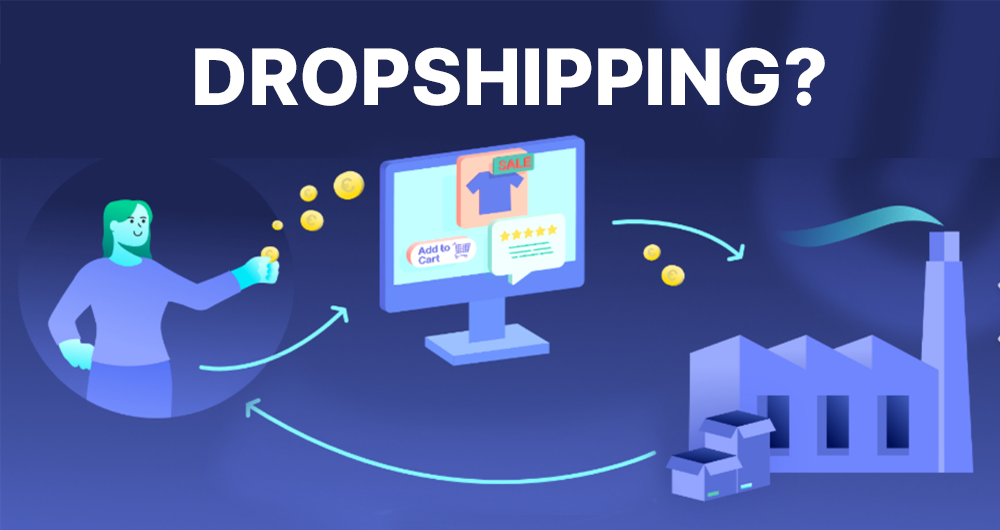
what is dropshipping

Dropshipping is a business model where you don’t hold any inventory. As a seller, you list products in your store, and when a customer places an order, the supplier ships the product directly to them. For those looking to start selling with minimal costs and lower risks, dropshipping is a great choice. You don’t need a warehouse or worry about logistics. You only pay after a sale is made. However, dropshipping requires careful management of suppliers and effective marketing to bring traffic to your store.

What is Amazon FBA?
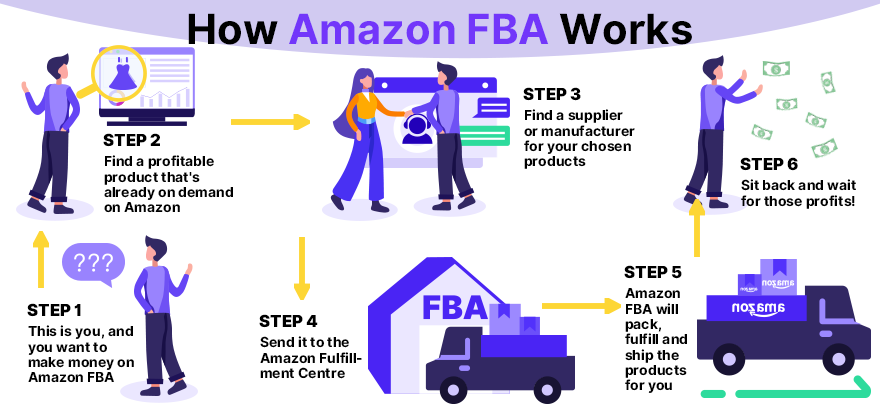
How Amazon FBA works

Amazon FBA (Fulfillment by Amazon) is a service that allows you to send your products to Amazon’s warehouse, and they handle storage, packing, and shipping when an order is placed. You won’t need to manage packaging or logistics, as Amazon will also take care of returns and customer service.  Commonly, you can say it is an automated dropshipping Amazon service.

FBA is ideal for sellers who want to leverage Amazon’s vast customer base and logistics network. Products become eligible for Amazon Prime shipping (Amazon Dropshipping), attracting more buyers. However, FBA requires upfront inventory investment and fees for storage, shipping, and fulfillment.

Dropshipping vs. Amazon FBA: Key Differences
dropsure vs. amazon fba

To make it easier for you to understand, We’ve prepared a comparison table that highlights the key differences and similarities between Dropshipping and Amazon FBA.

Here’s a table you can learn about Amazon FBA vs Dropshipping. We hope this will help you decide which option is better suited for your business.

Feature Amazon FBA Dropshipping
Upfront Investment ❌ High startup cost, inventory needed ✔ No upfront investment, pay as you go
Inventory Management ❌ Requires pre-purchased inventory ✔ No inventory needed, ship as you sell
Order Fulfillment ✔ Amazon handles fulfillment ❌ Manual handling, but can use automation
Advertising ✔ Built-in Amazon advertising ✔ Flexible, use any platform (e.g., Meta ads)
Profit Margins ✔ Discounts for bulk orders, but high fees ❌ Higher product costs but no fees
Customer Contact ❌ No direct contact with customers ✔ Full control over customer interaction
Customer Base ✔ Access to Amazon’s customer base ❌ Need to find your own customers
Control ❌ Limited control, Amazon handles everything ✔ Full control over your business
Scalability ❌ High costs to scale, limited flexibility ✔ Easy to scale, especially for new businesses
Risk ❌ High risk with inventory investment ✔ Low risk, no inventory holding

While both Dropshipping and Amazon FBA are effective ways to sell products online, they each have their own unique advantages and challenges.

Choosing between Dropshipping and Amazon FBA depends on your business goals. If you’re just starting out and want low-cost, low-risk options, Dropshipping is a flexible choice. It offers no upfront investment and more freedom to scale. If you have the budget and want to leverage Amazon’s strong infrastructure, Amazon FBA might be the better option. Both methods provide great opportunities for building a successful eCommerce business—so choose the one that best fits your needs.

If you prefer automation and don’t want to handle inventory, Dropsure could be your best choice. (Want to learn more about Dropsure’s platform and features? Please read What is Dropsure for more details.) It combines the flexibility of dropshipping with the automation benefits of FBA, offering a low-risk, no-inventory solution.

 

DropSure is Your Best Partner
22 Years Experience
Affiliate Rebates
100% Quality Guarantee
Top-Up Rewards
10+ Global Warehouses
Custom Branding Support
Smart inventory System
24/7 Customer Support
Get a Quote in 24 Hours
Start Sourcing for Free

Keep Learning

You’ve probably heard the saying: “Price = Cost × 2.” Sounds nice, doesn’t it?But anyone who’s done dropshipping knows — if you really follow that, you’ll basically end up eating dirt. This article will walk you through, step by step: where your profits actually go, and how to calculate a realistic pricing strategy to avoid the nightmare of “the more you sell, the more you lose.” The Cost Components of Dropshipping  Don’t fool yourself into thinking the cost is just what you pay on 1688, AliExpress, or Temu. The real cost = product price + shipping + fees + marketing expenses + returns/customer service + taxes + your own salary/profit expectations. Let’s break it down: Cost Item Example Data (Selling One T-shirt) Product Cost ¥20 (AliExpress cost) International Shipping ¥15 (ePacket or Yanwen small package) Platform Fees ¥5 (e.g., PayPal + Shopify transaction fees) Marketing Cost ¥30 (Facebook ad spend) Returns/After-sales Allocation ¥3 (average 1 return per 10 orders) Other Expenses ¥2 (Shopify subscription, domain, customer service, etc.) Total Cost ¥75 Note: This doesn’t include your profit expectations yet. How to Calculate Your “Bottom-Line Price”   Many people set prices on a whim: “The product cost is ¥30, so I’ll sell it for ¥60. That should be enough to make a profit.” But in dropshipping, this kind of pricing is basically suicidal. Your costs are much more than just the product price — you have shipping, advertising, platform fees, after-sales costs, and more. If you don’t calculate these clearly, you might think you’re making money on a sale, but in reality, you’re losing. So let’s get clear on a crucial concept — the bottom-line price. What is the bottom-line price?The […]

In China, dropshipping has become a significant trend in the e-commerce industry. According to statistics, in 2023, the total value of China’s cross-border e-commerce imports and exports reached 2.2 trillion RMB, with a large portion of this trade driven by the dropshipping model. Platforms like Alibaba and AliExpress allow Chinese suppliers to directly ship products to global sellers, significantly reducing their operational costs. Compared to traditional inventory models, dropshipping eliminates the need for holding stock, allowing sellers to enter the market with lower startup capital. For example, sellers can access products directly from Chinese suppliers without having to purchase large quantities upfront, making it possible to sell globally. Furthermore, China’s advantages in product cost, manufacturing capabilities, and logistics have made it a central hub for global dropshipping. What is Dropshipping? Dropshipping is a business model where you don’t need to hold inventory. When a customer places an order, you simply forward the order to the supplier, and the supplier ships the product directly to the customer. No warehouse, no inventory management, and no shipping hassles. Platforms like Dropsure make it easy by streamlining the process, so you can focus on marketing and sales, leaving the rest to us. To learn more about dropshipping, check out our What is Dropshipping & How to Start article. How to Dropship from China? Success in dropshipping is no accident. Follow these steps to get your business started: Step 1: Choose Reliable Suppliers Choosing unreliable suppliers means delays, refunds, and unhappy customers. That’s why finding a trustworthy supplier with a good track record is crucial. Using a platform like Dropsure helps you easily find verified Chinese suppliers. Step 2: Pick Hot-Selling Products Stop second-guessing your product choices. Use market analysis […]

Business Trend In today’s rapidly evolving e-commerce landscape, Print on Demand (POD) has become a popular business model for entrepreneurs and creators looking to sell custom-designed products without having to worry about inventory, manufacturing, or shipping logistics. But what exactly is Print on Demand, and why is it gaining so much traction? Let’s break it down. What Is Print on Demand? Print on Demand is a business model where products are only printed and manufactured when a customer places an order. This is in contrast to traditional retail models, where businesses need to produce large quantities of inventory in advance. With POD, you can create custom designs for items like t-shirts, mugs, phone cases, posters, and more, and only produce them when someone purchases the product. This means you don’t need to invest in bulk stock, deal with warehousing, or manage shipping. Instead, POD services handle the printing, packing, and shipping directly to the customer, and you receive a percentage of the sale. How Print on Demand Goes in Business? Print on Demand (POD) has quickly become a powerful business model that benefits various stakeholders, from consumers to suppliers and even artists. It bridges the gap between creativity and commerce, offering flexible, low-risk opportunities for both entrepreneurs and consumers. Let’s explore how POD satisfies consumer demands, creates economic benefits for suppliers, and provides invaluable support for creators.   Who Can Benefit from Print on Demand? 1. Entrepreneurs and Small Business Owners POD offers a unique opportunity for budding entrepreneurs to start a business with minimal upfront investment. Traditional retail models require purchasing inventory in bulk, which can be financially risky. In contrast, POD allows business owners to sell customized products […]

Recommended for you