< Blogs

Dropshipping vs Print on Demand – Complete Guide for 2025

Vivan Z.
Created on November 26, 2024 – Last updated on February 6, 20253 min read
Written by: Vivan Z.

In 2025, the e-commerce industry continues to grow rapidly, and Dropshipping and Print on Demand (POD) are two of the most popular business models. Many entrepreneurs often find themselves torn between the two when deciding which type of e-commerce store to start. So, what are the key differences? Which model is better for you? In this article, we will thoroughly compare these two business models, discuss their pros and cons, and help you make a well-informed decision.

What is Dropshipping?

Dropshipping is an e-commerce business model. The retailer doesn’t keep inventory. Instead, they team up with a supplier. When an order comes in, the supplier ships the products straight to the customers. In this model, the retailer focuses on sales and marketing while the supplier takes care of product manufacturing, inventory management, and shipping.

For more details on dropshipping, check out our previous article on What is Dropshipping & How to Start.
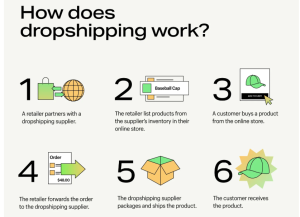
how does dropshipping work

What is Print on Demand?

Print on Demand (POD) is a custom e-commerce model where the retailer does not need to purchase large amounts of inventory upfront. Instead, products are printed and produced only when a customer places an order. This model is often used for custom items like T-shirts, mugs, posters, and more. It allows retailers to offer unique and personalized products without the need for upfront inventory investment.

For more detailed information on Print on Demand, refer to our earlier article on What is Print on Demand? A Beginner’s Guide to the Growing?.

Dropshipping vs Print on Demand: A Comparative Analysis
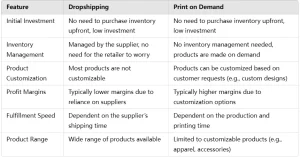
feature Dropshipping

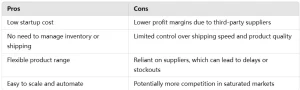
Dropshipping Pros & Cons
Dropshipping Pros&Cons

Print on Demand Pros & Cons


Dropshipping vs Print on Demand: A Comparative Analysis

Which One Should I Choose?

Instead of choosing between dropshipping and print on demand, the goal of this article is to help you gain a deeper understanding of both business models. By reading this guide, you should be able to make an informed decision about which industry or service is the best fit for you. Both models have their unique advantages, and your decision should be based on your business goals, target market, and product offerings.

Conclusion

As we discussed in the Dropshipping Pros section, services like DropSure can help streamline and enhance the dropshipping process. We encourage you to explore your options carefully and choose the model that aligns with your business vision and resources.


Buttom

DropSure is Your Best Partner
22 Years Experience
Affiliate Rebates
100% Quality Guarantee
Top-Up Rewards
10+ Global Warehouses
Custom Branding Support
Smart inventory System
24/7 Customer Support
Get a Quote in 24 Hours
Start Sourcing for Free

Keep Learning

What is Dropshipping? Dropshipping is a way to sell products online without keeping any stock. When a customer buys something, you send their order and payment to the supplier, who ships the product directly to them. This method is popular because it reduces your workload. You don’t need to rent storage space or worry about unsold items. Instead, you can spend your time and money on things like marketing. How Does Dropshipping Work? Here’s how dropshipping works in simple steps: Find a Supplier: Look for a supplier who sells the products you want to offer. After you partner with them, they will handle storing, packing, and shipping. You can pick suppliers in your niche or use apps to access products from different suppliers. Set Up Your Online Store: Build your online store using platforms like Shopify or WooCommerce. Add products from your supplier and set your prices. Many apps can update your listings automatically and send orders to suppliers for you. Customer Places an Order: When a customer buys something from your store, the payment is processed, and they receive an order confirmation. Send the Order to Your Supplier: After the payment goes through, you pass the order details to your supplier. If you use an app, this happens automatically. Supplier Ships the Product: The supplier prepares the order and ships it to your customer. Some suppliers even offer branded invoices or special packaging. Customer Gets the Product: The customer receives their order. You handle any questions or issues they might have. Why Choose Free Dropshipping Suppliers in the USA? Choosing free dropshipping suppliers in the USA can save you money and make starting your business easier. Save Money: Free […]

If TikTok interest is real, you’ll often see: A delayed sales spike Rapid review accumulation New listings appearing No sales signal = high risk. 7.2 Search Trend Confirmation TikTok trends eventually spill into search. I look for: Rising branded and non-branded queries “Does this really work?” type searches Comparison-based keywords This confirms that curiosity is turning into purchase intent. 8. Using Ad Libraries to Decode Trend Timing Ad libraries are not just for copying ads—they’re for timing decisions. 8.1 What Early-Stage TikTok Ads Look Like Early trend ads often: Use UGC-style creatives Focus on problem awareness Avoid heavy discounts Test multiple hooks quickly Late-stage ads: Push urgency hard Stack discounts Look repetitive Have dozens of clones Tools help you spot this transition. 9. The 5 Signals That Tell Me a Trend Is Worth Testing Before testing any TikTok product, I look for these signals: Multiple creators posting organically One or two aggressive trend merchants testing ads Comment sections full of purchase questions Early marketplace sales growth Low brand dominance If at least 4 out of 5 are present, the product is test-worthy. 10. Filtering Out “Fake Trends” Not everything viral should be sold. 10.1 Red Flags Tools Help You Catch Avoid products with: One-hit wonder creators No repeat posting Zero marketplace footprint Extreme return complaints Complex usage explanation If the product needs a tutorial longer than the video—it won’t scale. 11. Timing: The Most Underrated Skill on TikTok You don’t need to be first. You just can’t be last. 11.1 The TikTok Product Lifecycle Discovery phase Early adoption Viral acceleration Market saturation Creative fatigue Tools help you identify phase 2, not phase 4. 12. Why Most Sellers Lose Money Chasing […]

Cross-border e-commerce sellers know that choosing an overseas warehouse is a critical step, yet even a small misstep can affect shipping efficiency or lead to significant losses. Lost goods, low listing rates, delayed shipments, skyrocketing storage fees… these are common pain points. So, how can you find the right overseas warehouse to truly boost operational efficiency? Five years of cross-border experience have distilled five key points to help sellers avoid pitfalls. Systematization ability  Overseas warehouse, you may first look at the warehouse area is not big, more or less labor, but the real impact on efficiency, is it in the end “smart or not”. How to judge the systematization ability of overseas warehouse? Look at these three points System docking ability If your overseas warehouse still relies on Excel to manually enter orders, then you really need to consider changing. A good overseas warehouse should be docked to your store with one click, so that the order data is automatically synchronized, eliminating the trouble of manual import. You can just ask: ● What platforms are supported? Now the mainstream cross-border platforms are TikTok, Temu, Shein, Amazon, eBay, can your overseas warehouse directly dock? ● Can you choose the logistics? Are they bound to only one courier, or can they integrate UPS, FedEx, DHL, USPS, etc. to help you intelligently match the optimal program? ● Is it easy to manage orders? Can you manage all the orders in one system instead of spreading the forms around? Reality Case: You have 1000 orders, one click to synchronize and the warehouse starts processing immediately. Compare that to manually entering 1,000 orders, which you can do until dark just by entering them. Intelligent inventory […]

Recommended for you