< Blogs

24-Year-Old Makes $12M from E-Commerce and Semi-Retires in Bali

Vivan Z.
Created on February 14, 2025 – Last updated on March 14, 202510 min read
Written by: Vivan Z.

12M

Enterprise Steven Guo
Brand Name Medjool Days
Business Model Dropshipping
Founded 2020
Revenue $12 million

While most of his peers are still stressing over their first job, 24-year-old Steven Guo has already built 15 e-commerce businesses, generating $12 million in revenue. He didn’t come from a wealthy family, didn’t graduate from a top university, and wasn’t even a standout student in college.

At this point, you might be wondering: In a world where Temu and SHEIN dominate global markets, how did an ordinary young entrepreneur carve out a space in dropshipping? While countless sellers are trapped in brutal price wars, how did he uncover hidden, high-profit niche markets?

Today, we take a closer look at Steven’s entrepreneurial journey—diving into how he scaled multiple businesses to seven figures, his secrets to finding million-dollar products, and the biggest challenges newcomers face in e-commerce.

The Path to Wealth: From Fidget Spinners to a Million-Dollar Empire  

 

Medjool Days

High School Beginnings 

Steven’s entrepreneurial journey began in high school. At the time, he recognized the booming trend of fidget spinners, sparking an idea to earn pocket money by selling small toys online. He chose Reddit as his promotion platform, tirelessly spamming various subforums. Eventually, the “ding” on his Shopify platform signaled his first order. This small success made him realize the immense potential in e-commerce and fueled his passion to explore further.

University Expansion 

In his first year of university, Steven boldly entered a new market: selling anime figurines dressed in Nike sneakers. These creative collectibles quickly gained traction, even attracting celebrity buyers like Justin Bieber. Despite facing copyright issues, he managed to generate substantial income. Over time, he launched multiple brands—some thrived, while others faded—but his total e-commerce revenue has now surpassed $12 million.

Diversified Business Ventures 

Today, Steven operates several unique companies. Medjool Days, an online store selling dates directly to consumers; K-pop Jewelry and Fashion, catering to K-pop fans with trendy accessories; and an auto parts brand, whose upcoming products are still under wraps but rumored to be impressive.
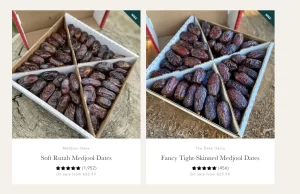
medool dates

Secrets to Success: Finding the Right Direction, Prioritizing Experience, and Managing Finances Wisely 

Choosing the Right Direction and Prioritizing Sustainability

According to Steven, the key to success in e-commerce is not necessarily about the amount of work put in but rather about choosing the right direction. The internet is now flooded with various so-called “mentors” claiming that selling TikTok trending products can make money easily. However, in reality, the probability of true success is extremely low, especially with the rise of Chinese companies like Pinduoduo in the e-commerce market, making success even more challenging. Steven emphasizes that the real path to success lies in finding a way to sell unique products—items that immediately catch people’s attention, something that ordinary AliExpress products can hardly achieve.

Additionally, providing high-quality customer experience is also a crucial aspect. Products cannot simply rely on flashy gimmicks; only by doing so can they earn customers’ trust and encourage repeat purchases. Although dropshipping is an effective model to test product viability, to build a truly sustainable business, it is essential to establish a system that ensures long-term customer retention.

Furthermore, managing finances wisely is essential. Steven scoffs at those internet “mentors” who flaunt Lamborghinis and extravagant spending in restaurants, believing that this lifestyle lacks sustainability. Since every business goes through ups and downs, the real reason these people aggressively showcase their luxurious possessions may have ulterior motives.

medool dates

Focusing on Niche Markets: Big Wealth in Small Spaces

Among Steven’s keys to success, focusing on niche markets is a critical factor. He firmly believes in the idea that wealth lies in niche markets and keenly recognizes the endless business opportunities hidden in underdeveloped fields. He is skilled at observing the interests and hobbies of people around him to identify large potential markets. For example, before venturing into the date fruit business, he knew nothing about this field. However, by thoroughly researching consumer demand, he accurately identified this unique business opportunity.

Steven points out that the core of success lies in deeply understanding target customers, accurately identifying their needs and pain points, and providing targeted solutions. Different target audiences require different marketing strategies. If the target group consists of older consumers, then advertising on Facebook would be a wise choice; if the goal is to attract younger people, then TikTok would be the more effective channel.

Taking his date fruit company as an example, the primary customers are women aged 73 and above. The thousands of five-star reviews from these grandmothers on the company website serve as strong proof of its success.

Here is the table format for the information:

Target Audience Content Strategy Channel Mix Conversion Path
Gen Z UGC creation challenges TikTok + Discord Influencer promotions → Online store
Seniors Nostalgic storytelling videos Facebook + Email Live streaming → Phone orders
Car Enthusiasts Technical teardown videos YouTube + Reddit Review articles → Shopify

Facing Challenges: The Dual Test of Logistics and Management

Despite Steven’s remarkable achievements, his entrepreneurial journey has not been smooth sailing. Logistics management has become one of the biggest challenges he faces while running multiple businesses. Take his date fruit business as an example—seasonal fluctuations in fruit quality and supply require him to adjust business operations flexibly. Meanwhile, in the K-pop jewelry and fashion sector, managing thousands of SKUs (stock-keeping units) presents another major obstacle. Accurately predicting demand, optimizing inventory management, and ensuring timely delivery are all critical challenges that test his business expertise.

Additionally, due to the high level of customization in some products, establishing an efficient business management system is essential. Steven’s daily routine typically begins with checking Slack channels to stay updated on ad campaigns, video content, and internal discussions on email marketing, followed by carefully planning the marketing calendar. To boost product sales, his team has built a well-structured influencer marketing system, collaborating with numerous content creators by offering free products in exchange for promotional content. Some viral content pieces have significantly contributed to further product promotion.

Starting Over: The Appeal of Jewelry and Automotive Products

When asked what he would do if he had to start over from scratch, Steven responded without hesitation that he would re-enter the jewelry market. If not jewelry, automotive-related products would be his next choice. He has observed that both of these niches have been trending in Facebook ads recently. Steven believes that launching a branded dropshipping business does not require a large upfront inventory investment, and a startup budget of $3,000 to $5,000 would be a solid foundation. Currently, across all his brands, he aims for a minimum net profit margin of 30%.

Competing with Chinese E-Commerce: Two Paths to Profitability

As the e-commerce market continues to grow rapidly, Steven has a clear understanding of future challenges, particularly the intense competition facing traditional dropshipping models. He recognizes that with Pinduoduo and other Chinese companies expanding their influence, market competition will become even fiercer, and rising ad costs will further squeeze profit margins.

In this challenging landscape, Steven believes there are only two viable paths to profitability. The first is to increase customer lifetime value (LTV) by ensuring that customers continue to repurchase products, fostering long-term loyalty. The second is to focus on selling high-ticket products, targeting an average order value (AOV) of at least $80 to offset rising ad costs on platforms like Facebook and TikTok.

By focusing on these strategies, he aims to maintain profitability and long-term success in an increasingly competitive market.


How to Find Hidden Goldmines in a Saturated Market?  


Marketing Plan


Uncovering Hidden Opportunities in Saturated Markets


Steven Guo’s niche market selection strategy is like a precision business prospecting tool—he has a knack for uncovering hidden opportunities in seemingly oversaturated markets. By analyzing the underlying logic of his 15 successful projects, several key dimensions of his methodology emerge.

Steven approaches niche market selection with a keen commercial instinct, using a strategy that functions like a finely tuned detection system. He consistently identifies gaps within crowded industries. One of his biggest strengths is tapping into subcultures and micro-communities.

DropSure Branding

 Unlocking the Potential of K-pop Jewelry


For instance, when launching his K-pop jewelry business, he didn’t blindly chase mainstream trends. Instead, he closely observed discussions in the kpopfashion subreddit on Reddit, where fans frequently shared insights on idol-inspired jewelry. He noticed that demand for replica idol accessories far exceeded market supply. By continuously monitoring the subreddit’s 2,000+ daily active posts and combining this with data from Google Trends, which showed a 217% annual growth in searches for “K-pop jewelry,” he was able to accurately identify this high-potential niche.

Similarly, in the silver economy sector, Steven took an unconventional approach. While most e-commerce businesses focus on younger demographics, he paid attention to family gatherings, where he noticed elderly relatives discussing healthy food choices. This led him to discover a major gap in awareness of date fruit among seniors.

DropSure 

Tailoring the Product Experience for Seniors


Targeting women aged 73 and above, he designed easy-to-chew, small-packaged dates and optimized his website for an older audience by enlarging font sizes and simplifying the checkout process. The result? Tens of thousands of five-star reviews from senior consumers. This level of deep adaptation to a specific audience’s needs allowed Medjool Days to carve out a unique space in the highly competitive fresh food market.

DropSure Warehouse

The Secret to  Market Validation: Small Steps, Fast Iterations


In his business operations, Steven follows a “small steps, rapid iteration” model to test new markets. Before entering any niche, he invests $500 in dropshipping ads and observes the conversion rate and customer inquiries over a three-day period.

This low-cost trial-and-error approach allows him to avoid the lag of traditional market research while capturing real-time consumer demand. As he once summarized while remotely managing his business from Bali:

“True market demand often hides in the things that customers ask for, but you don’t yet offer.”

While most people chase obvious opportunities, Steven has proven that the next multi-million dollar market might just be in the overlooked niche needs of consumers.

Buttom

DropSure is Your Best Partner
22 Years Experience
Affiliate Rebates
100% Quality Guarantee
Top-Up Rewards
10+ Global Warehouses
Custom Branding Support
Smart inventory System
24/7 Customer Support
Get a Quote in 24 Hours
Start Sourcing for Free

Keep Learning

Business Trend In today’s rapidly evolving e-commerce landscape, Print on Demand (POD) has become a popular business model for entrepreneurs and creators looking to sell custom-designed products without having to worry about inventory, manufacturing, or shipping logistics. But what exactly is Print on Demand, and why is it gaining so much traction? Let’s break it down. What Is Print on Demand? Print on Demand is a business model where products are only printed and manufactured when a customer places an order. This is in contrast to traditional retail models, where businesses need to produce large quantities of inventory in advance. With POD, you can create custom designs for items like t-shirts, mugs, phone cases, posters, and more, and only produce them when someone purchases the product. This means you don’t need to invest in bulk stock, deal with warehousing, or manage shipping. Instead, POD services handle the printing, packing, and shipping directly to the customer, and you receive a percentage of the sale. How Print on Demand Goes in Business? Print on Demand (POD) has quickly become a powerful business model that benefits various stakeholders, from consumers to suppliers and even artists. It bridges the gap between creativity and commerce, offering flexible, low-risk opportunities for both entrepreneurs and consumers. Let’s explore how POD satisfies consumer demands, creates economic benefits for suppliers, and provides invaluable support for creators.   Who Can Benefit from Print on Demand? 1. Entrepreneurs and Small Business Owners POD offers a unique opportunity for budding entrepreneurs to start a business with minimal upfront investment. Traditional retail models require purchasing inventory in bulk, which can be financially risky. In contrast, POD allows business owners to sell customized products […]

Introduction: Why Clicks Alone Do Not Tell the Full Story For many businesses running Facebook advertising campaigns, clicks are often the first number they look at. A campaign receives thousands of impressions. Hundreds of users click the advertisement. The click-through rate appears promising. The marketing team feels encouraged. But then an important question appears: Did those clicks actually create business value? In today’s competitive digital advertising environment, measuring success by clicks alone is no longer enough. A high click volume does not always mean strong customer interest, better brand awareness, or increased revenue. Some clicks come from curiosity. Some users visit a website but leave immediately. Others may engage with content but never become customers. Meanwhile, a campaign with fewer clicks may generate higher-quality leads, stronger customer relationships, and better long-term returns. This is why modern Facebook advertising requires a deeper approach. Successful advertisers analyze the complete customer journey: Who sees the advertisement? Who engages with it? Who takes meaningful actions? Which audience segments respond best? Which creative elements drive conversions? Where does advertising spend create the highest value? By using deeper data analysis, businesses can move beyond surface-level metrics and make smarter decisions that improve campaign performance. The Problem With Focusing Only on Clicks Clicks are easy to understand. They provide a simple measurement: “Someone saw the ad and clicked.” However, this action represents only one small part of the customer journey. Clicks Do Not Measure Intent A click indicates interest, but it does not reveal the strength of that interest. Consider two different scenarios: Campaign A 10,000 impressions 800 clicks 5 purchases Campaign B 10,000 impressions 300 clicks 40 purchases If a business only looks at clicks, Campaign […]

In today’s fast-moving digital world, attention has become one of the most valuable resources. Every day, consumers scroll through countless advertisements, social media posts, videos, and promotional messages. Most content receives only a few seconds of attention before users decide whether to stop or continue scrolling. For businesses and marketers, this creates a major challenge: How do you create advertising content that makes people pause, pay attention, and take action? A low click-through rate is often a sign that an advertisement is not connecting with its audience effectively. It does not always mean the product is wrong or the offer is unattractive. Sometimes, the problem is the way the message is presented. A successful advertisement needs more than beautiful images or clever wording. It needs to capture attention quickly, communicate value clearly, and create an emotional reason for users to respond. The best-performing ad creatives usually share several characteristics: They immediately attract attention They understand the audience’s needs They create curiosity They communicate benefits instead of only features They encourage action without feeling forced This article explores five creative advertising concepts that can help transform ordinary ads into content people cannot easily ignore. Why Do Some Ads Get Clicks While Others Get Ignored? Before exploring creative ideas, it is important to understand why many advertisements fail. A low click-through rate often comes from one or more of the following problems. 1. The Ad Does Not Capture Attention Quickly Enough People make fast decisions online. When users scroll through social media feeds or browse websites, they are not actively searching for advertisements. They are looking for information, entertainment, inspiration, or solutions. Your advertisement must interrupt their existing behavior. If the first […]

Recommended for you