< Blogs

Best Dropshipping Suppliers You Should Know!

Vivan Z.
Created on October 23, 2024 – Last updated on February 6, 20255 min read
Written by: Vivan Z.

You’ve likely heard of Dropshipping and Amazon FBA. Both are popular e-commerce models with their own pros and cons. But did you know Dropsure combines the strengths of both while fixing their common problems? In this article, we’ll dive into Dropsure and show how it offers a more flexible and efficient solution for sellers.

What is DropSure?

Dropsure isn’t just a basic logistics platform. It provides full support for e-commerce sellers, allowing you to scale your business without upfront inventory costs. You can easily manage your product supply chain, ship orders from 10 global warehouses, and offer fast delivery to customers. Essentially, Dropsure brings together the benefits of Amazon FBA and traditional dropshipping, while removing many of the challenges.
what is dropsure?

How does DropSure work?

Using Dropsure is simple, especially if you want to manage your brand while keeping logistics costs down. No need for pre-purchased inventory, so you won’t worry about unsold stock or high storage fees. With Dropsure, orders are quickly shipped from warehouses to customers worldwide.

You also get custom branding options, so you can add your logo to packaging, boosting brand recognition. Our smart stocking solutions help you avoid common supply chain risks, ensuring products are shipped on time when customers need them.
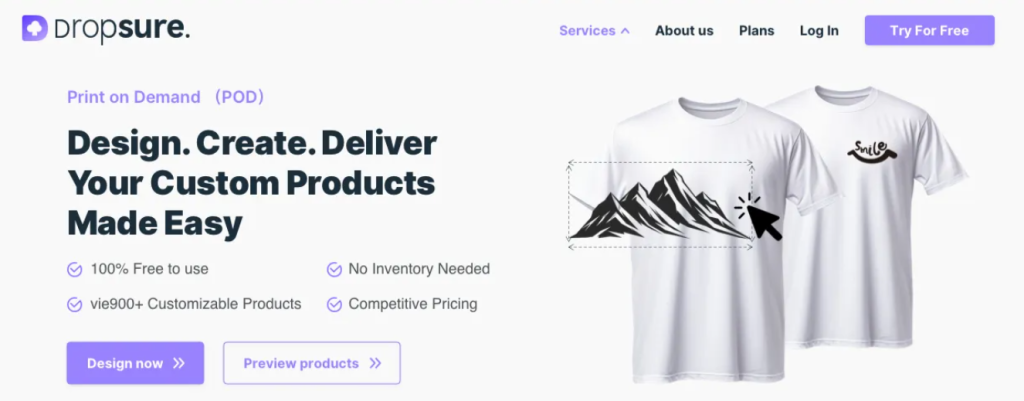
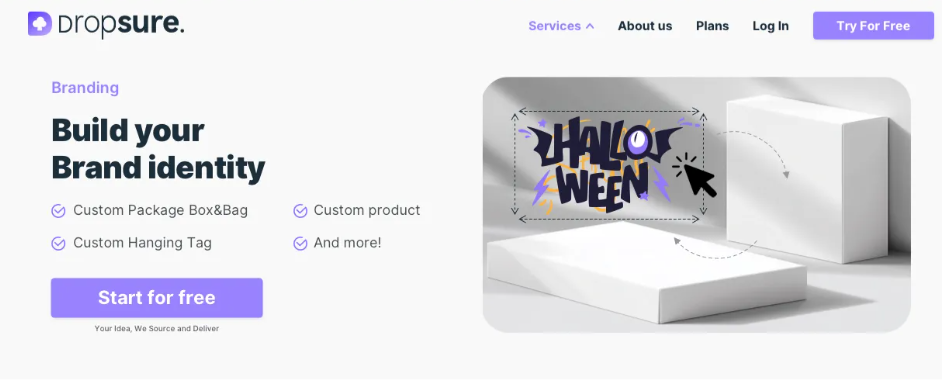
how does dropsure work?
how does dropsure work -2

To help you better understand, check out the comparison chart below, which highlights the key differences between Dropsure, Amazon FBA, and traditional dropshipping.

Feature Amazon FBA Dropshipping DropSure
Upfront Investment ❌ High startup cost, inventory needed ✔ No upfront investment, pay as you go ✔ No upfront cost, inventory managed by suppliers
Inventory Management ❌ Requires pre-purchased inventory ✔ No inventory needed, ship as you sell ✔ Suppliers handle inventory, ensuring fast delivery
Order Fulfillment ✔ Amazon handles fulfillment ❌ Manual handling, but can use automation ✔ Efficient fulfillment, suppliers handle shipping
Advertising ✔ Built-in Amazon advertising ✔ Flexible, use any platform (e.g., Meta ads) ✔ Multi-channel marketing, customizable ad solutions
Profit Margins ✔ Discounts for bulk orders, but high fees ❌ Higher product costs but no fees ✔ Optimized pricing, lower overall costs
Customer Contact ❌ No direct contact with customers ✔ Full control over customer interaction ✔ Direct customer engagement and brand loyalty
Customer Base ✔ Access to Amazon’s customer base ❌ Need to find your own customers ✔ Integrated customer database, helps grow your base
Control ❌ Limited control, Amazon handles everything ✔ Full control over your business ✔ Full control with added support for scaling
Scalability ❌ High costs to scale, limited flexibility ✔ Easy to scale, especially for new businesses ✔ Seamless scaling with global warehouse network
Risk ❌ High risk with inventory investment ✔ Low risk, no inventory holding ✔ Low risk, no upfront inventory costs, flexible supply

By reviewing this, you’ll see how Dropsure combines the best of both worlds—offering lower costs, flexibility, and control, all while helping you expand your business.

Is DropSure Legit?

A common question is whether Dropsure is trustworthy. The answer is yes. We understand the struggles sellers face with supply chain management. Dropsure ensures your products meet customer expectations through strict quality checks and reliable suppliers. You can focus on growing your business without worrying about shipping issues or inventory.

Is DropSure Really Free to Use?

Yes, Dropsure is completely free. Unlike other platforms that charge monthly fees or startup costs, Dropsure offers its services at zero cost. This makes it perfect for new sellers who want to start or scale with minimal risk. You can use more of your budget for marketing and building your brand.

DropSure Shipping Service

Dropsure has 10 global warehouses, strategically located in China, the US, UK, Germany, Australia, and Brazil. This network ensures quick shipping times. In most cases, products arrive in 2-3 business days within those regions. Even in distant areas, delivery takes less than two weeks. Our efficient logistics not only improve customer satisfaction but also reduce shipping errors and delays.

DropSure Compensation Policy

If an order is delayed or lost, Dropsure offers compensation based on the order value. This gives you peace of mind, knowing your interests are protected. You can confidently focus on growing your business while Dropsure handles the logistics.

Whether you’re just starting or an established e-commerce seller, Dropsure provides a low-cost, high-efficiency solution. Amazon FBA might give access to a huge customer base, but its high fees and strict rules limit flexibility. Dropsure combines the flexibility of dropshipping with the brand-building potential of FBA, without the complications.

If you’re looking for a platform that helps you grow your brand while keeping costs low and logistics smooth, Dropsure is your best choice.

Ready to grow your business with Dropsure?

Sign up now and see how our platform can simplify your supply chain and boost your profits!
 

DropSure is Your Best Partner
22 Years Experience
Affiliate Rebates
100% Quality Guarantee
Top-Up Rewards
10+ Global Warehouses
Custom Branding Support
Smart inventory System
24/7 Customer Support
Get a Quote in 24 Hours
Start Sourcing for Free

Keep Learning

The increasing internal competition and the sharp decline in seller traffic have led many to seek new growth opportunities and channels. Recently, the American e-commerce platform Chewy announced that it is opening its doors to Chinese sellers, offering three cooperation models for sellers to choose from: Dropship, Procurement , and Import. Among these, the Dropship model is similar to Temu’s semi-managed model, where sellers are required to maintain inventory in the U.S., while Chewy sets the prices and handles logistics, with sellers only needing to supply the goods. Over the course of its development, the cross-border e-commerce industry has given rise to a variety of outbound models: from the initial policy regulation model, to later fully-managed platforms, independent sites/DTC, industrial cluster collaborations, and even comprehensive ecological outbound expansion. The approaches have become increasingly diverse as the market environment evolves. In response to the various outbound models prevalent in today’s cross-border e-commerce industry, we will compare and analyze the different models. Platform E-commerce Models For the majority of sellers, especially newcomers and beginners in the cross-border e-commerce industry, relying on third-party platforms such as Amazon, Temu, AliExpress, Shopee, and others is a common approach. These platforms provide essential traffic and infrastructure support. Let’s take Amazon and Temu as examples: Amazon Platform Model  To enhance the trustworthiness and visibility of your products, you can apply for A+ Content certification or establish a dedicated Brand Store. These features allow you to present your brand more professionally, potentially increasing conversion rates. However, these services are not free; you need to invest in them. Additionally, Amazon charges a referral fee, typically ranging from 6% to 15% of the product’s selling price, depending on the category. […]

Dropshipping has become a popular business model for entrepreneurs worldwide. With a small initial investment, you can sell products without handling inventory. This makes it an easy way to start a business. But how likely is it to succeed? And what separates successful dropshippers from those who struggle? In this blog, we’ll dive into the dropshipping success rate, why some businesses fail, inspiring success stories, and actionable steps you can take to ensure your own success. By the end, you’ll understand why platforms like DropSure can be game-changers for aspiring dropshippers. What’s the Success Rate for Dropshipping?   Lets start with the numbers. Research shows that the success rate for dropshipping ranges from 10% to 20%. In other words, only 1–2 out of 10 businesses achieve sustained profitability. While that number may seem low, it’s important to remember that success relies on the strategies and industries used. For example: Niche markets, such as eco-friendly products, personalized gifts, and pet accessories, often do better. They meet specific customer needs and trends. On the other hand, oversaturated markets like generic electronics face stiff competition, making it harder to stand out. Understanding these differences can help you make smarter choices about the products you sell and the audience you target. If you have access to data on successful products or niches, use it to guide your strategy. Why Do Dropshipping Businesses Fail?      Dropshipping offers flexibility and low upfront costs, but it’s not without its challenges. To avoid failure, you need to understand the common reasons businesses struggle in this model.   Ineffective Online Marketing Marketing is the backbone of dropshipping. Without strong advertising or a clear social media strategy, it’s hard to drive traffic to your […]

The digital advertising landscape is changing faster than ever. Brands are producing more creatives, testing more variations, targeting more audience segments, and launching campaigns across an increasing number of channels. Traditional creative workflows are struggling to keep up with the speed and scale modern marketing demands. At the center of this transformation is generative AI. From product visuals and ad copy to video scripts, banners, landing page assets, and social media graphics, generative AI tools are fundamentally reshaping how marketing teams create and optimize content. One of the most powerful developments in this space is the rise of the AI-powered Asset Studio — a centralized creative production environment designed to generate, organize, test, and scale high-performing marketing assets efficiently. For growth marketers, e-commerce brands, performance advertisers, agencies, and creative operations teams, Asset Studio is becoming more than a productivity tool. It is evolving into a full-scale creative experimentation engine capable of producing high-conversion campaigns at unprecedented speed. This article explores how generative AI Asset Studios work, why they matter, and how businesses can use them to scale creative production while improving advertising performance, workflow efficiency, and campaign profitability. The New Era of Creative Production Marketing teams used to focus on producing a limited number of polished campaigns each quarter. Today, the environment looks very different. Modern performance marketing requires: Continuous A/B testing Personalized messaging Platform-specific creatives Multi-language localization Dynamic ad generation Rapid iteration cycles Short-form video production User-generated-style content Omnichannel consistency In this environment, creative volume has become a competitive advantage. The brands that can test more creatives faster often gain: Lower customer acquisition costs Higher click-through rates Better engagement Increased conversion rates Faster optimization cycles Greater audience coverage However, […]

Recommended for you