














 En

 42 min read
Influencer marketing has changed the way brands attract customers, build trust, and launch products. In the past, businesses often relied on expensive television commercials, celebrity endorsements, and large advertising campaigns to reach millions of consumers. Today, a relatively small brand can generate enormous attention by partnering with the right creators, producing relatable content, and encouraging customers to participate in a conversation.
However, going viral is not simply a matter of sending free products to influencers and hoping for the best. Successful campaigns usually combine a clear audience insight, a compelling product story, an effective distribution strategy, and a reason for people to share the content.
Some brands have built entire businesses around micro-influencers. Others have turned a single TikTok trend into a cultural moment. Still others have transformed ordinary customers into their most valuable promoters.
In this article, we will break down 10 classic influencer marketing case studies, examining what each brand did, why the strategy worked, and how small businesses can apply the same principles without spending a fortune.
The central lesson is simple: You do not necessarily need the biggest influencer or the largest budget. You need the right combination of audience, message, creative idea, and customer motivation.

Why Small-Budget Influencer Marketing Can Work
Before examining the case studies, it is important to understand why some creator campaigns achieve results far beyond their initial investment.
Traditional advertising often requires a brand to pay repeatedly for exposure. Influencer marketing introduces another dynamic: creators already have relationships with audiences who trust their recommendations, enjoy their personalities, or share their interests.
When a campaign resonates, its reach can extend beyond the original audience. Followers create response videos, friends share posts, other creators imitate a format, and media outlets report on the trend.
This creates several opportunities for businesses working with limited budgets.
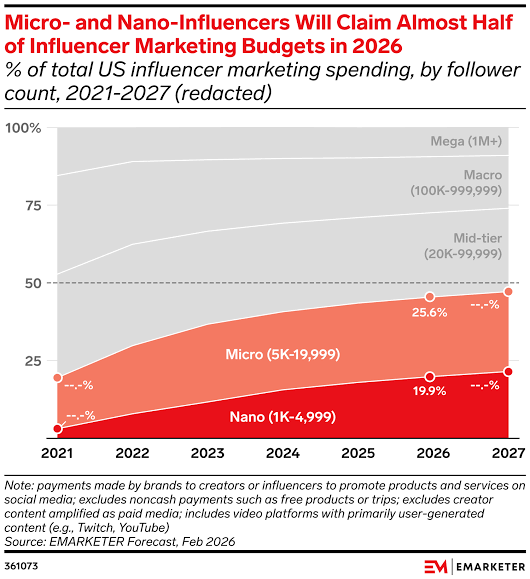
1. Trust can be more valuable than audience size
A creator with 8,000 highly engaged followers may generate more qualified customers than a celebrity with millions of followers who have little interest in the product.
Smaller creators often maintain closer relationships with their communities. Their recommendations may feel like practical advice from someone with similar tastes, needs, or financial constraints.
This does not mean micro-influencers always outperform larger creators. It means follower count alone is an inadequate measure of campaign potential.
2. One creative idea can generate many pieces of content
A traditional advertising campaign may depend on a single professionally produced commercial.
A creator-led campaign can produce dozens of different interpretations of the same product. One creator demonstrates how to use it, another compares it with an alternative, and a third explains how it solves a specific problem.
The brand gains access to multiple creative approaches without having to produce every asset internally.
3. User-generated content can extend a campaign’s life
Customers are more likely to participate when a campaign gives them something simple and enjoyable to do.
They might recreate a look, demonstrate a product, share a personal experience, or participate in a challenge.
When the participation format is easy to understand, the audience can help distribute the campaign organically.
4. Small campaigns can be tested before larger investments
A business does not need to commit its entire marketing budget to one creator.
It can begin with a small group of relevant creators, evaluate the quality of their content and the response from their audiences, and then increase investment in the strongest performers.
This approach reduces the risk of paying heavily for a campaign before learning whether the message resonates.
The following 10 examples demonstrate how these principles have worked across fashion, fitness, beauty, food, and consumer products.
Case Study 1: Daniel Wellington — Turning Micro-Influencers Into a Distribution Network
Industry: Watches and accessories
Core strategy: Product seeding, creator partnerships, discount codes, and consistent visual branding.
Daniel Wellington became one of the best-known examples of an ecommerce brand using Instagram creators to build awareness and drive sales.
Rather than relying exclusively on traditional retail distribution or expensive celebrity endorsements, the watch brand developed a recognizable social media presence through lifestyle photography and creator partnerships.
Its watches were relatively easy to feature in everyday content. A creator could wear one while traveling, getting coffee, attending an event, or sharing an outfit.
This made the product suitable for a broad range of fashion and lifestyle accounts.
What the brand did
Daniel Wellington worked with social media personalities who could incorporate its watches naturally into their content.
The brand’s visual style was consistent: clean photography, minimalist accessories, and lifestyle-oriented presentation.
Creators could show how the watch fit into their personal aesthetic instead of delivering a conventional product advertisement.
Discount codes and promotional offers also helped connect creator exposure with purchases.
The brand’s approach demonstrated how a company could distribute product visibility across many smaller accounts rather than relying entirely on one expensive partnership.
Why the strategy worked
First, the product was naturally suited to social content.
A watch is visually recognizable, relatively easy to photograph, and compatible with fashion, travel, and lifestyle posts.
Second, the brand maintained a consistent identity.
Although different creators produced the content, the product’s appearance and minimalist positioning remained recognizable.
Third, repeated exposure reinforced familiarity.
Consumers might encounter the watch on several accounts they followed. Seeing the same product in different settings could make it feel established and desirable.
Fourth, promotional codes gave customers a reason to act.
A discount could turn general interest into a measurable purchase opportunity.
Marketing case studies have documented the brand’s use of Instagram creators and user-generated content as central parts of its growth strategy. However, commonly repeated revenue and sales figures should be treated carefully unless their original sources and measurement periods can be verified.
How a small business can apply the strategy
Imagine that you operate an independent jewelry store.
Instead of paying one fashion influencer thousands of dollars for a single post, you could identify 15 smaller creators whose audiences match your target customers.
Offer a product sample, an affiliate commission, or a clearly defined paid collaboration. Give each creator a unique tracking link or discount code.
Ask creators to demonstrate the product in their own style rather than requiring identical scripts and images.
Measure the results using:
- Qualified website visits.
- Product-page engagement.
- Purchases attributed to each creator.
- New customer acquisition cost.
- Revenue and contribution margin.
- Reusable content quality.
Do not select creators solely because they charge less. A low-cost creator with an unrelated audience may produce little commercial value.
Key takeaway: A network of well-matched creators can provide broader coverage and more opportunities to learn than a single expensive endorsement.
Case Study 2: Gymshark — Building a Brand Around Fitness Communities
Industry: Fitness apparel
Core strategy: Athlete partnerships, community identity, and long-term creator relationships.
Gymshark’s growth is frequently discussed as an example of a fitness brand that developed its identity alongside online fitness communities.
Rather than positioning itself only as a clothing retailer, Gymshark connected its products with the ambitions, routines, and lifestyles of people who cared deeply about training.
Fitness creators were particularly valuable because clothing could be demonstrated during workouts, gym sessions, competitions, and progress updates.
What the brand did
Gymshark developed relationships with fitness personalities and athletes whose content appealed to its intended customers.
These creators were not simply displaying clothing. They were producing the kind of content that fitness enthusiasts already wanted to watch.
Workout demonstrations, training advice, physique progress, and gym culture gave the brand repeated opportunities to appear in relevant contexts.
Over time, creator partnerships became part of a broader community-building approach.
The brand also developed recognizable campaign formats and events that helped bring its online identity into the real world.
Why the strategy worked
The product and the content naturally belonged together.
Fitness apparel was relevant to the creators’ daily routines, so product placement could feel less intrusive than an unrelated sponsorship.
The creators represented aspirational identities.
Followers could see the clothing as part of a lifestyle they wanted to participate in, rather than simply another product to purchase.
Long-term relationships created continuity.
Repeated collaborations helped audiences become familiar with both the creators and the brand.
Community mattered beyond individual posts.
People who identify with a fitness community are often interested in its language, routines, events, and shared goals. A brand that participates authentically in that community can become more than a logo on a shirt.
Gymshark’s early growth is closely associated with fitness creator partnerships and community-focused marketing. Its development also involved product design, operations, customer experience, and broader business execution, so influencer activity should not be treated as the sole explanation for its success.
How a small business can apply the strategy
Suppose you sell resistance bands, workout accessories, or activewear.
Rather than searching only for the largest fitness accounts, identify creators who consistently publish useful content for a specific audience.
You might focus on:
- Beginners learning strength training.
- Busy professionals exercising at home.
- Runners working on mobility.
- Parents returning to fitness.
- Athletes following specialized training programs.
Offer products that genuinely support their routines. Give creators enough freedom to demonstrate how the products fit into their existing content.
A longer-term partnership can be more useful than a single sponsored post if the creator continues using the product and the audience sees a credible relationship develop.
A low-budget execution plan
Start with five to ten creators in one niche.
Provide a clear brief describing your product’s real benefits, the audience you want to reach, and any claims that must be avoided. Then let each creator develop an individual demonstration.
After the first round, identify which creators generate meaningful questions, saves, clicks, and sales.
Consider expanding relationships with those who perform well.
Key takeaway: Build relationships with people who already serve your target community instead of treating influencers as interchangeable advertising placements.
Case Study 3: Glossier — Turning Customers Into Brand Advocates
Industry: Beauty and skincare
Core strategy: Community participation, customer recommendations, and relatable beauty content.
Glossier is frequently cited for its community-oriented approach to beauty marketing.
Instead of relying entirely on conventional beauty advertising, the brand developed a relationship with consumers who wanted accessible product recommendations, practical routines, and a more personal connection with beauty products.
Its approach blurred the line between customer, content creator, and brand advocate.
What the brand did
Glossier developed its identity around direct relationships with consumers and a community that could influence how the brand communicated.
Customer feedback, product experiences, social content, and recommendations helped make the brand feel connected to its audience.
The company also developed ambassador and referral initiatives that encouraged customers and community members to introduce products to others.
Rather than requiring every message to come from a major beauty personality, the brand created opportunities for ordinary customers to participate.
Why the strategy worked
Customers could see people like themselves.
Beauty shoppers often want to understand how a product looks on different skin types, how it fits into a daily routine, and whether it addresses a specific concern.
Content from relatable customers can help answer these questions.
Recommendations were tied to real experiences.
A customer who genuinely uses a product can explain its texture, application, convenience, and limitations in ways that polished brand photography may not communicate.
The community generated a continuing stream of content.
Each review, tutorial, and routine offered another opportunity for prospective buyers to discover the brand.
The approach supported a feedback loop.
Customer conversations could also help the business understand product preferences, common concerns, and opportunities for improvement.
Glossier’s development is associated with community-driven marketing and the use of customers as advocates, although its overall growth also depended on product development, brand positioning, retail strategy, and business execution.
How a small business can apply the strategy
An independent skincare store does not need thousands of ambassadors to get started.
Invite existing customers to share honest reviews, routines, or product demonstrations.
You could create a monthly customer spotlight, a referral program, or a small group of community contributors who receive products to test.
The most important requirement is that participation should feel worthwhile.
Customers might appreciate early access, useful information, recognition, or a transparent referral reward.
Avoid asking every customer to publish identical promotional language. Authentic variation is one of the advantages of community-generated content.
An example for an ecommerce store
Imagine that you sell a moisturizer for dry skin.
Instead of relying only on professional product photos, invite customers to share:
- How the product fits into their morning routine.
- What the texture looks like during application.
- How they layer it with other products.
- What they like and dislike about the packaging.
- How it compares with products they have previously used.
Do not ask customers to make unsupported medical or skincare claims. Encourage honest experiences and disclose incentives when required.
Key takeaway: Your existing customers may be one of your most affordable sources of credible content. Treat them as participants in your brand, not merely as an audience to advertise to.
Case Study 4: e.l.f. Cosmetics — Making the Audience Part of the Campaign
Industry: Beauty and cosmetics
Core strategy: Original music, short-form video, and a simple participation format.
The e.l.f. Cosmetics #EyesLipsFace campaign became one of the most recognizable examples of brand-led TikTok participation.
Launched in 2019, the campaign used an original song and a straightforward creative prompt to encourage users to make videos centered on their eyes, lips, and faces.
The concept aligned with the brand’s name while giving people an easy way to participate without needing advanced production skills.
What the brand did
e.l.f. and its creative partners developed an original song and a campaign format designed for TikTok.
Rather than simply asking creators to explain why the cosmetics were good, the campaign encouraged users to make their own videos using the sound.
The format allowed people to showcase makeup, facial expressions, personal style, and creativity.
Influencers helped introduce the campaign, while the platform’s participation culture gave other users a way to contribute.
The campaign became much larger than a conventional sequence of sponsored posts.
Why the strategy worked
The concept was easy to understand.
The relationship between the song, the brand name, and the video prompt was straightforward.
Participation did not require expensive equipment.
Users could create a short video with a smartphone and their existing makeup.
The format allowed personal expression.
Different users could participate without producing identical videos.
The content was native to the platform.
Instead of forcing a traditional advertisement into a short-form video feed, the brand built an activity that suited how users already behaved.
According to The One Show’s published case information, the campaign generated more than 3.5 million user-created videos and 5.6 billion views. Other campaign summaries report different figures because of differences in reporting periods and measurement. These results describe a major campaign, not a guaranteed outcome for a small business.
How a small business can apply the strategy
You do not need an original hit song to create a participatory campaign.
A home decor store might invite customers to show a room before and after a simple change.
A fashion brand might encourage customers to create three outfits using the same item.
A kitchenware store might ask users to demonstrate their favorite five-minute meal.
The important element is a repeatable format that makes participation easy.
For example, a reusable water bottle brand could launch a campaign asking customers to show where their bottle goes during a typical day.
The format gives customers a reason to feature the product naturally, while the variety of responses makes the campaign more interesting.
Keep the participation barrier low
Before launching a challenge, ask:
- Can someone understand the task in five seconds?
- Can a typical customer participate without buying additional equipment?
- Does the activity make sense for the product?
- Is it interesting even to people who have never heard of the brand?
- Can the brand repost strong entries with appropriate permission?
If participation requires too much planning, complicated editing, or an expensive purchase, the campaign may struggle.
Key takeaway: Give people an easy, entertaining way to create content around your product instead of asking them simply to repeat your advertising message.
Case Study 5: Chipotle — Connecting a Social Challenge With a Real-World Offer
Industry: Fast-casual dining
Core strategy: A participatory challenge, a recognizable reward, and a limited-time opportunity.
Chipotle’s #GuacDance campaign illustrates how a brand can combine creator-led entertainment with a concrete customer action.
The campaign, launched in 2019 around National Avocado Day, encouraged TikTok users to participate in a dance challenge associated with guacamole.
The brand connected the social activity with an offer that gave customers a reason to visit or order from Chipotle.
What the brand did
The campaign used a recognizable theme, a dance format, and a relevant occasion.
Users could participate by creating their own videos, while the limited-time guacamole promotion linked the online conversation with a product customers could actually purchase.
This connection mattered because the campaign was not solely about accumulating video views.
It also gave consumers a clear next step.
Why the strategy worked
The offer matched the campaign.
Guacamole was central to both the social concept and the real-world promotion.
The timing created urgency.
A limited-time offer encouraged consumers to act while the campaign was active rather than postponing the decision.
The activity was easy to repeat.
Users could participate in the dance without needing specialized knowledge or expensive equipment.
The brand had a measurable business action.
The campaign could be evaluated through participation, offer redemption, sales, and customer response rather than awareness alone.
The Shorty Awards’ campaign materials report that #GuacDance generated more than 250,000 submitted videos and helped Chipotle record its largest guacamole sales day at that time, with more than 800,000 sides served on the promotional day.
How a small business can apply the strategy
Suppose you run an independent coffee shop.
You could ask local creators to show their favorite way to customize a drink, then invite customers to try the featured combination during a specific weekend.
A pet supply store might invite customers to share a short training trick and offer a small reward for participating in an in-store community event.
An online accessories brand could invite customers to show different ways to style one product and provide a limited-time offer to viewers.
The goal is to connect content with an action that matters to the business.
Avoid discounting without a plan
Discounts can encourage participation, but they can also attract customers who purchase only when prices are reduced.
Before launching an offer, calculate the effect of the discount on contribution margin.
Track how many customers redeem the promotion, how many are new customers, and whether they return after the offer ends.
Key takeaway: A viral challenge becomes more commercially useful when it connects entertainment with a relevant offer and a measurable customer action.
Case Study 6: Ocean Spray — Recognizing an Organic Viral Moment
Industry: Food and beverages
Core strategy: Responding quickly to a creator-led trend instead of trying to manufacture one.
Not every successful creator-related marketing moment begins with a paid partnership.
In 2020, a TikTok video featuring Nathan Apodaca, known online as Doggface, riding a skateboard while drinking Ocean Spray cranberry juice and listening to Fleetwood Mac’s “Dreams” spread widely across social media.
The video was casual and memorable. It combined a recognizable song, an everyday activity, a relaxed mood, and a bottle of Ocean Spray juice.
The brand did not need to create the original moment.
Its opportunity was to respond to it.
What the brand did
As the video gained attention, Ocean Spray responded positively and recognized the creator.
The brand’s chief executive later joined the trend in a video of his own, helping extend the story beyond the original post.
Ocean Spray also provided Apodaca with a new truck filled with its cranberry juice, turning a spontaneous social media moment into a memorable brand interaction.
The response attracted additional public attention and strengthened the association between the product and the original video.
Why the strategy worked
The original content felt natural.
The product appeared as part of an ordinary moment rather than as the center of a scripted commercial.
The brand responded instead of taking control.
Ocean Spray did not need to replace the original creator’s story with a polished advertising message.
The response was proportionate to the moment.
Recognizing the creator and participating in the trend helped the brand feel involved without making the interaction overly complicated.
The story was easy for other people to share.
The original video, the brand’s reaction, and the chief executive’s participation formed a continuing narrative.
This case demonstrates that some of the most valuable creator opportunities emerge unexpectedly.
How a small business can apply the strategy
Imagine that a customer posts a funny video featuring your product without tagging your brand.
If the content is positive, relevant, and appropriate to reuse, consider responding with a genuine comment.
You might thank the customer, ask permission to repost the content, or offer to feature the creator on your official account.
If a trend is already spreading, determine whether your product genuinely fits before participating.
Do not hijack a sensitive event, make a creator uncomfortable, or use someone’s content without appropriate permission.
Why timing matters
Organic trends can disappear quickly.
Create a simple internal process for monitoring brand mentions, identifying relevant posts, checking whether the content can be reused, and approving a timely response.
A small business does not need a large social media department to do this well. One person with clear guidelines and the authority to respond can often move faster than a complex approval chain.
Key takeaway: You cannot schedule every viral moment, but you can prepare your brand to recognize and respond to the right opportunities.
Case Study 7: Dunkin’ and Charli D’Amelio — Turning a Creator’s Preferences Into a Product Story
Industry: Coffee and quick-service food
Core strategy: A creator partnership connected to an existing audience habit.
Charli D’Amelio had a substantial TikTok audience before Dunkin’ introduced a drink associated with her name.
The collaboration worked with an existing behavior: her public association with Dunkin’ and her popularity among young social media users.
Instead of introducing an unrelated celebrity to the brand, Dunkin’ connected its product with a creator whose audience already understood the relationship.
What the brand did
Dunkin’ introduced “The Charli,” a cold brew drink associated with D’Amelio’s preferred order.
The partnership gave fans a simple way to participate in something connected to a creator they followed.
They could order the named drink, discuss it online, or create their own content around trying it.
The product itself became the connection between the creator, the audience, and the brand.
Why the strategy worked
The collaboration had an understandable story.
Fans did not need a lengthy explanation to understand why the drink was associated with D’Amelio.
The product was accessible.
Customers could participate by ordering an existing menu item rather than buying an expensive collectible.
The campaign created a natural conversation.
People could talk about the drink, share their orders, and compare their experiences.
The brand connected awareness with purchase.
Unlike a purely inspirational campaign, the collaboration gave interested consumers a specific product to order.
The campaign illustrates the value of linking a creator’s existing behavior and identity with a product that can be purchased easily. It is important to remember, however, that a creator with D’Amelio’s reach is not a low-cost option for most small businesses.
How a small business can apply the strategy
You do not need a celebrity partnership to use this idea.
Suppose you own an independent bakery and notice that a local food creator regularly visits your store.
You might work together to create a named pastry box, a seasonal drink, or a featured menu combination based on an authentic preference.
For an ecommerce brand, a creator could curate a bundle of products they genuinely use.
The partnership should have a logical connection between the person, the product, and the audience.
Keep the economics realistic
A named product can create excitement, but it also introduces operational considerations.
You need to estimate demand, calculate margins, plan inventory, and ensure the product can be delivered consistently.
If the product sells out too quickly, customers may become frustrated. If demand is weaker than expected, excess inventory may become expensive.
For a smaller brand, begin with a limited test rather than committing to a large production run.
Key takeaway: The strongest creator collaborations often build on a genuine, existing connection between the creator and the product.
Case Study 8: Pura Vida Bracelets — Making Customer Participation Part of the Business Model
Industry: Fashion accessories
Core strategy: Ambassador programs, social sharing, and community participation.
Pura Vida Bracelets grew around colorful bracelets and a lifestyle-oriented brand identity.
Its ambassador approach is frequently discussed as an example of how a product with a relatively accessible price point can benefit from community participation and personal recommendations.
The model is particularly relevant to smaller ecommerce brands because it shows how a company can develop a broad network of advocates rather than depending exclusively on a handful of high-profile creators.
What the brand did
Pura Vida developed a community and ambassador program that encouraged people to promote the brand through their own social networks.
Bracelets were easy to wear, photograph, collect, and share with friends.
The product’s visual nature made it suitable for lifestyle content, while the accessible price point made it easier for consumers to consider purchasing.
An ambassador could introduce the product to friends, feature it in an outfit, or discuss why the design appealed to them.
Why the strategy worked
The product was easy to integrate into everyday life.
A bracelet could appear naturally in outfit photos, vacation posts, and casual lifestyle content.
Participation could happen at different levels.
Some people might create frequent content, while others might simply recommend the brand to friends.
The product supported repeat engagement.
New colors, collections, and gift occasions created additional reasons for customers to return.
Personal recommendations extended reach.
An ambassador could introduce the brand to a community that the business might not reach through its own channels.
The exact economics of any ambassador program depend on its incentives, conversion rates, and operating costs. A large number of registered ambassadors does not automatically translate into profitable sales.
How a small business can apply the strategy
A jewelry, apparel, stationery, or accessory store could develop a small ambassador program for existing customers.
Start with people who already purchase repeatedly, leave useful reviews, or naturally share your products.
Offer a transparent reward structure, such as a referral commission or store credit for qualifying purchases.
Make participation easy by providing product information, approved assets, tracking links, and clear instructions.
Do not require every ambassador to publish the same content. Give participants room to explain the product in their own words.
Track actual contribution
An ambassador program can become expensive if the business rewards activity without measuring outcomes.
Monitor:
- Number of active ambassadors.
- Content quality and publishing frequency.
- Qualified referral traffic.
- New customers acquired.
- Commission and reward costs.
- Repeat purchases.
- Contribution margin after program costs.
A smaller group of active advocates may deliver more value than a large program in which most participants never generate meaningful engagement.
Key takeaway: Build a repeatable system for customer advocacy rather than treating every creator relationship as an isolated campaign.
Case Study 9: MVMT — Combining Lifestyle Content With a Clear Direct-to-Consumer Identity
Industry: Watches and accessories
Core strategy: Social-first branding, lifestyle imagery, and direct-to-consumer distribution.
MVMT is another frequently cited example of a consumer brand that used digital channels and lifestyle-focused marketing to build awareness.
Its watches and accessories were positioned for consumers who wanted a modern look at an accessible price point.
The company’s visual identity made the products easy to feature in aspirational but relatively simple content.
What the brand did
MVMT developed a recognizable social media presence through photography, lifestyle imagery, and creator-related content.
The product could appear in travel photos, outfit posts, and everyday situations.
This allowed the brand to communicate not only the physical attributes of a watch but also the style and identity associated with wearing it.
Its direct-to-consumer model provided another important element: interested consumers could move from discovering the product online to purchasing through the brand’s own store.
Why the strategy worked
The content communicated a lifestyle.
Rather than relying exclusively on technical product specifications, the brand showed how its accessories fit into a broader aesthetic.
The product was visually compatible with social platforms.
Watches could appear naturally in photos and videos without requiring a complicated demonstration.
The brand had a clear destination for interested customers.
A creator post could lead viewers to product pages where they could review pricing, features, and purchasing information.
The model connected brand building with ecommerce.
Social content supported discovery, while the online store provided a path to purchase.
MVMT’s growth cannot be attributed to creator content alone. Product positioning, pricing, supply chain, website performance, and business execution also played important roles.
How a small business can apply the strategy
Imagine that you sell bags, watches, or minimalist accessories.
Develop a consistent visual identity that customers can recognize across creator posts and your own social channels.
Work with several creators who represent different situations in which the product is useful.
For example, one creator could focus on professional outfits, another on weekend travel, and another on practical everyday styling.
Ensure that the product page answers the questions customers are likely to have after seeing the content.
A beautiful post may generate attention, but unclear sizing, weak product descriptions, high shipping costs, or a complicated checkout process can prevent that attention from becoming a sale.
A practical lesson for independent stores
Treat the creator post and the landing page as parts of one experience.
The product featured in the content should be easy to find. The offer should be clear. The page should load quickly and display properly on mobile devices.
Use a tracking link or campaign code to understand which creators attract qualified visitors.
Key takeaway: Creator content works best when the brand’s visual identity, product positioning, and purchasing experience reinforce one another.
Case Study 10: Fenty Beauty — Making Product Diversity Part of the Story
Industry: Beauty and cosmetics
Core strategy: Product-led storytelling, creator demonstrations, and representation across customer needs.
Fenty Beauty entered a competitive beauty market with a launch strategy that emphasized an extensive foundation shade range and the needs of consumers who had often struggled to find suitable matches.
The product proposition gave beauty creators something concrete to demonstrate and discuss.
Rather than relying exclusively on a general message about beauty, the brand could show how its products addressed a specific and recognizable shopping problem.
What the brand did
Fenty Beauty’s launch received substantial attention from beauty creators and consumers.
Creators could demonstrate foundation shades, compare matches, explain application techniques, and discuss how products looked on different complexions.
The product range itself helped generate content because different users could evaluate the same launch from their own perspectives.
The brand’s wider launch and publicity strategy also contributed to the attention it received. The campaign should therefore not be interpreted as a purely low-budget influencer effort.
Why the strategy worked
The product addressed a meaningful customer need.
Shade selection is an important concern for foundation shoppers. A broader range created a clear reason for consumers to pay attention.
The product was demonstrable.
Creators could show application, coverage, shade matching, and finished looks rather than relying solely on verbal claims.
Different creators provided different perspectives.
Consumers could look for demonstrations from people with similar skin tones and preferences.
The conversation connected inclusivity with a tangible product feature.
The brand’s positioning was supported by something customers could examine and evaluate.
How a small business can apply the strategy
The transferable lesson is not that every brand should copy Fenty Beauty’s launch budget or product range.
Instead, identify a specific customer problem that your product solves particularly well.
For example:
- A clothing store could provide detailed fit demonstrations across several body types.
- A haircare brand could show how a product works with different textures.
- A furniture company could demonstrate solutions for small apartments.
- A skincare store could explain how customers choose products for different routines.
Find creators who can demonstrate the relevant benefit credibly.
Avoid making unsupported claims or assuming that one creator’s experience applies to every customer.
Make the product the evidence
A creator partnership is most persuasive when the product itself supports the story.
Show the feature. Explain how to use it. Discuss limitations where appropriate. Let viewers judge whether the product suits their needs.
This approach is more useful than asking creators to repeat vague statements about quality or innovation.
Key takeaway: A strong product insight gives creators something meaningful to demonstrate, discuss, and share.
What These 10 Cases Have in Common
Although these brands operate in different industries, their approaches reveal several recurring principles.
| Principle | How successful campaigns use it | What a small brand can do |
|---|---|---|
| Audience fit | Connect the product with a relevant community | Choose creators whose followers resemble your target customers |
| Authenticity | Make the product relevant to the creator’s existing content | Work with people who genuinely understand the product |
| Simple participation | Give viewers an easy reason to create or share content | Develop a repeatable prompt, demonstration, or challenge |
| Product relevance | Make the product’s benefit clear | Focus on one specific customer problem |
| Distribution | Use creators, brand channels, and customer sharing together | Coordinate a small launch across several relevant accounts |
| Measurement | Connect content with business objectives | Track qualified visits, purchases, and contribution margin |
| Continuity | Build familiarity through repeated exposure | Develop longer-term relationships with strong performers |
These principles are useful because they are more transferable than the surface details of a particular campaign.
A small brand cannot necessarily recreate a celebrity partnership, a billion-view challenge, or a nationally recognized product launch.
It can, however, adopt the underlying logic: identify the right audience, make the product relevant, reduce friction, and give people a reason to participate.
How to Launch a Small-Budget Influencer Campaign in 30 Days
The following framework translates the case studies into a practical plan for an independent ecommerce store.
The objective is not to guarantee viral reach. It is to test whether a group of relevant creators can generate qualified attention and profitable customer acquisition.
Week 1: Define the goal and find suitable creators
Begin with one primary business objective.
For a new product, the goal might be qualified product-page visits. For an established store, it might be new customer purchases. For a product with a long buying cycle, it could be generating useful demonstrations and customer questions.
Avoid trying to optimize awareness, followers, clicks, and sales equally in the first test.
Next, identify creators whose content matches your product and audience.
Review their recent posts rather than relying only on their profile descriptions.
Look for evidence that their followers engage with relevant topics. Read comments, inspect how creators respond to questions, and evaluate whether sponsored content feels consistent with their normal style.
Create a shortlist of approximately 15–25 creators. You do not need to contact all of them immediately, but a broader shortlist gives you room to compare fit, pricing, and availability.
Week 2: Contact creators and agree on deliverables
Send personalized outreach explaining why you selected each creator.
Be specific about the product and the content opportunity.
For example, rather than writing, “We love your content and want to collaborate,” explain that a creator’s apartment organization videos align with your storage product and propose a practical demonstration.
Agree on the deliverables before shipping products or making payments.
Clarify:
- The number and type of posts.
- Publication dates.
- Compensation or product gifting.
- Whether affiliate commission is included.
- Content usage rights.
- Whether paid amplification is permitted.
- Disclosure requirements.
- Approval procedures and deadlines.
For a small test, prioritize a manageable number of creators over an overly complicated campaign.
Week 3: Publish and observe
Allow creators to develop content that suits their audiences while following your essential product and disclosure requirements.
Do not assume that the most polished video will perform best.
A simple demonstration may answer a question that viewers actually care about, while a highly produced lifestyle video may generate attention without much buying intent.
Monitor early signals such as watch time, saves, shares, meaningful comments, and qualified visits.
If a creator’s audience repeatedly asks about a product feature, use those questions to improve your product page or prepare follow-up content.
Do not judge the entire campaign based on the first few hours of performance. Some posts continue attracting views and clicks over time.
Week 4: Measure results and decide what to repeat
Compare creators using consistent definitions and reporting periods.
Calculate the cost of each collaboration, including product costs, shipping, creator fees, commissions, and any paid distribution.
Then evaluate the results against your original objective.
If the goal was customer acquisition, prioritize actual new customers and contribution margin rather than views alone.
If the goal was content production, evaluate the quality, usefulness, and permitted reuse of the assets.
Identify which messages, product demonstrations, and creator-audience combinations performed best.
Then use those findings to plan the next campaign.
The objective is to turn each test into better decisions, not to make every campaign go viral.
How Much Should a Small Business Spend?
There is no universal budget for influencer marketing. The appropriate amount depends on product margins, creator pricing, the market, and the value of acquiring a customer.
A small business can begin with a controlled test rather than committing to a large campaign.
For example, consider this illustrative budget:
| Expense | Example budget |
|---|---|
| Product samples | $150 |
| Shipping | $75 |
| Three paid micro-creator collaborations | $450 |
| Affiliate commissions or performance incentives | $125 |
| Content testing and miscellaneous costs | $100 |
| Total | $900 |
These amounts are hypothetical planning figures, not industry averages. Actual creator fees can be significantly higher or lower.
This budget is designed to test a small number of partnerships. It does not guarantee meaningful reach or profitable sales.
Some creators may accept product gifting, but many expect payment. Gifting should not be treated as an entitlement, and it does not eliminate disclosure obligations.
If your product is expensive to manufacture or ship, calculate the sample cost before deciding how many creators to approach.
How to determine whether the campaign was profitable
Suppose a campaign costs $900 and produces 30 new customers.
The acquisition cost is:
[
\frac{$900}{30}=$30
]
If the contribution margin from each new customer is $45 before campaign costs, the campaign generates $1,350 in contribution before the $900 marketing expense.
The resulting contribution after campaign costs is $450.
This simplified example assumes the $45 contribution figure already accounts for product costs, fulfillment, discounts, payment fees, and other relevant variable expenses.
If you use lifetime value to evaluate customers, distinguish actual observed repeat purchases from projections. A promising forecast is not the same as realized profit.
The important question is not whether the campaign attracted attention. It is whether the attention created value that justified the investment.
Five Mistakes That Can Waste Your Influencer Budget
1. Choosing creators only by follower count
A large audience is not necessarily a relevant audience.
A creator with a smaller but more engaged community may be better suited to a specialized product.
Review audience relevance, content quality, and previous commercial performance where reliable information is available.
2. Sending products without a clear objective
Free products can create goodwill, but they do not guarantee a post, reach, or sales.
If you need specific deliverables, negotiate an agreement rather than assuming a creator will publish content.
If you are gifting products without requiring coverage, treat the activity as product seeding and evaluate it accordingly.
3. Controlling every word of the content
A rigid script can make creator content sound like a conventional advertisement.
Provide accurate product information, key requirements, and prohibited claims, but allow creators to communicate naturally.
The best approach balances creative freedom with brand safety.
4. Measuring views instead of business outcomes
Views may be useful for awareness, but they do not automatically indicate purchase intent.
Track the metrics that match your objective.
For a sales campaign, that may include new customers, conversion rate, customer acquisition cost, and contribution margin.
For a content campaign, it may include qualified engagement and the usefulness of the resulting assets.
5. Ignoring disclosure and usage rights
Sponsored content, affiliate relationships, and gifted products may require clear disclosure depending on the arrangement and applicable rules.
In the United States, the Federal Trade Commission provides guidance on endorsements and influencer relationships.
You should also agree on whether your brand can repost, edit, or use a creator’s content in paid advertising. A public post does not automatically grant unlimited commercial usage rights.
Review the FTC’s official guidance at https://www.ftc.gov/business-guidance/advertising-marketing/endorsements-influencers-reviews.
Final Thoughts: Build a Repeatable System, Not a One-Time Viral Hit
The 10 case studies demonstrate different ways to turn creator relationships into business opportunities.
Daniel Wellington showed how repeated exposure across smaller accounts can support brand recognition. Gymshark connected creator partnerships with community identity. Glossier encouraged customers to become advocates. e.l.f. gave audiences a simple creative format, while Chipotle linked participation with a timely offer.
Ocean Spray demonstrated the value of responding to an organic trend. Dunkin’ connected a creator’s preferences with a purchasable product. Pura Vida developed an ambassador model, MVMT paired lifestyle content with a direct-to-consumer store, and Fenty Beauty gave creators a clear product story to demonstrate.
Their circumstances were different, and not every campaign began with a small budget. The transferable lesson is the strategy behind the attention, not the assumption that every brand can reproduce the same scale.
For a small ecommerce business, the most practical starting point is often modest: identify a specific customer group, select a few relevant creators, develop a clear content idea, and measure what happens.
Do not spend your entire budget trying to manufacture a viral moment.
Instead, test small partnerships, learn which creators attract the right audience, improve the purchasing experience, and invest more heavily only when the evidence supports it.
A successful influencer marketing program is not simply a collection of popular posts. It is a repeatable way to connect the right products with the right people through content they genuinely want to watch, discuss, and share.