














 En
En
 23 min read
Introduction: The New Rules of Brand Building
For modern brands, social media and a direct-to-consumer website are no longer two separate marketing channels.
Social media creates attention, conversation, trust, and demand. A brand website captures that demand, provides deeper information, converts visitors into customers, and creates an owned relationship that does not depend entirely on a third-party platform.
When these two systems are designed to work together, they can create something much more valuable than short-term sales: brand premium.
Consumers are often willing to pay more for products when they perceive meaningful differences in quality, identity, trust, experience, and emotional value. A strong omnichannel strategy helps communicate those differences consistently across every customer touchpoint.
The goal is not simply to post more content on Instagram, TikTok, Facebook, Pinterest, YouTube, or other social platforms. Nor is it simply to build a beautiful online store.
The real opportunity is to create a connected customer journey:
Discover → Engage → Explore → Trust → Purchase → Experience → Share → Return
Social media can generate discovery and emotional engagement. The DTC website can provide depth and conversion. Email, SMS, customer service, retargeting, community content, and post-purchase experiences can continue the relationship.
When all of these touchpoints tell the same brand story while serving different customer needs, a company can gradually move away from price competition and toward value-based purchasing.
This article explores how social media and independent websites can be deeply integrated and how an omnichannel marketing strategy can help brands build stronger customer relationships and higher perceived value.
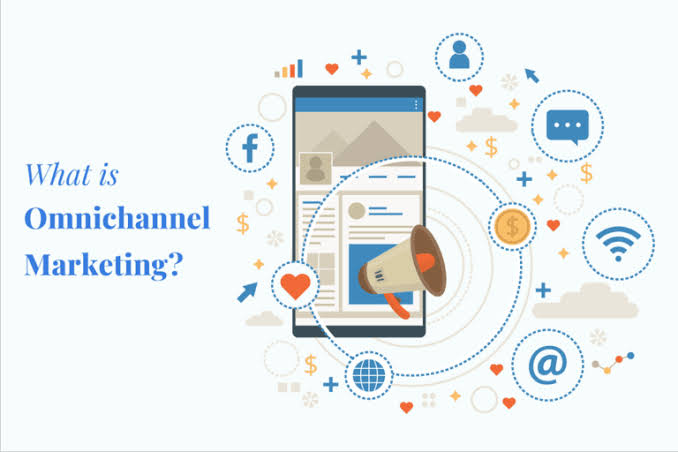
1. Social Media Creates Attention, but the Website Creates Depth
Social media is exceptionally good at capturing attention.
A short video can introduce a product in seconds. A creator can demonstrate how it works. A customer can share an authentic experience. A visually compelling image can communicate a lifestyle before the viewer even understands the product details.
But social platforms also have limitations.
Content moves quickly. Algorithms determine visibility. Posts compete with thousands of other pieces of content. Product information is often fragmented across videos, comments, profiles, and links.
A DTC website provides a different environment.
The website allows a brand to control:
- Product presentation
- Brand story
- Pricing
- Product education
- Customer reviews
- FAQs
- Comparison information
- Shipping details
- Return policies
- Product bundles
- Cross-selling
- Customer data collection
- Email subscriptions
- Checkout experience
This creates a powerful division of responsibilities.
Social media gets people interested. The website gives them reasons to buy.
A successful strategy does not force every channel to perform the same job.
Instead, each channel should contribute something unique to the overall customer journey.
2. Why Social Media and Independent Websites Should Be Connected
Imagine a consumer discovers a product through a TikTok video.
The video generates curiosity.
The consumer visits the brand’s profile and watches several additional videos.
Interest increases.
The consumer clicks through to the brand website.
There, the customer sees product specifications, reviews, use cases, comparison charts, FAQs, and detailed photography.
The customer subscribes to email updates.
Several days later, an educational email introduces another product benefit.
The customer returns to the website and purchases.
After receiving the product, the customer is encouraged to share a photo.
That customer-generated content then becomes social media material.
The cycle begins again.
This is much more powerful than treating social media as an advertising billboard.
The channels form a feedback loop:
Social content → Website traffic → Purchase → Customer experience → User-generated content → Social proof → More traffic
That loop can become one of the most valuable growth engines for a DTC brand.
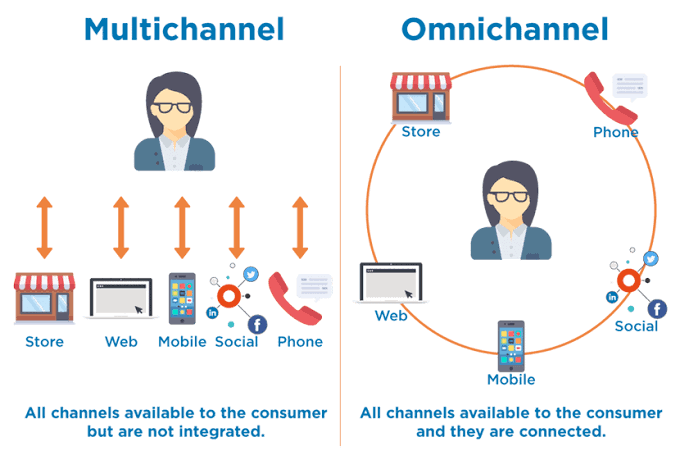
3. Omnichannel Marketing Is More Than Being Everywhere
A common misunderstanding is that omnichannel marketing simply means having accounts on every platform.
That is not enough.
A brand can have Instagram, TikTok, Facebook, YouTube, Pinterest, email, SMS, and a website and still deliver a disconnected customer experience.
True omnichannel marketing is about continuity.
Customers should feel that they are interacting with the same brand regardless of where they encounter it.
The visual identity should remain recognizable.
The tone of voice should remain consistent.
The product promise should remain consistent.
The customer experience should remain connected.
At the same time, content should be adapted to the characteristics of each channel.
For example:
- TikTok may emphasize short demonstrations.
- Instagram may emphasize visual storytelling and lifestyle content.
- YouTube may provide detailed education.
- Pinterest may focus on inspiration and discovery.
- Email may provide personalized offers and education.
- The website may provide comprehensive product information and conversion tools.
The message remains consistent, but the format changes.
That is the difference between multichannel presence and omnichannel integration.
4. Build a Single Brand Story Across Multiple Touchpoints
Premium brands rarely sell products alone.
They sell a combination of product quality, identity, lifestyle, expertise, convenience, and emotional value.
Therefore, every channel should reinforce a central brand narrative.
Before producing content, define several fundamental questions:
What does the brand stand for?
This is the company’s broader purpose and philosophy.
Who is the ideal customer?
Not simply age and location, but needs, aspirations, frustrations, and purchasing motivations.
Why does the product matter?
The answer should go beyond technical specifications.
What makes the brand different?
This could involve materials, craftsmanship, innovation, service, design, sustainability, expertise, or community.
Why should customers believe the claims?
Proof is critical.
The brand story should then appear consistently across social media and the website.
For example, if a company positions itself around premium craftsmanship, social content could show behind-the-scenes production, material selection, quality testing, and customer stories.
The website can expand that story through detailed product pages, manufacturing information, comparison content, and customer reviews.
The result is cumulative.
Every interaction strengthens the same perception.
5. Use Social Media to Sell the Problem Before Selling the Product
One of the biggest mistakes in social commerce is focusing too heavily on the product itself.
A product-centered post might say:
“Here is our new outdoor furniture collection.”
A customer-centered approach asks:
“What problem does the customer have?”
Perhaps the customer wants a beautiful outdoor space but worries about maintenance.
That creates an opportunity for educational content.
A brand could publish:
- Common outdoor furniture maintenance mistakes
- How to protect outdoor furniture
- How to choose materials for different climates
- How to create a low-maintenance outdoor space
- Before-and-after transformations
- Real customer experiences
The product naturally becomes part of the solution.
This approach builds authority rather than simply generating product impressions.
It also creates content that can be reused across multiple channels.
6. Turn the Website Into the Brand’s Knowledge Center
A DTC website should not function only as a digital catalog.
It should become a destination for useful information.
Consider creating dedicated resources such as:
- Buying guides
- Product comparisons
- Tutorials
- Maintenance guides
- Installation instructions
- Size guides
- Material explanations
- Frequently asked questions
- Case studies
- Customer stories
- Industry insights
This content gives social media somewhere meaningful to send interested customers.
For example, a short video might explain one common product-selection mistake.
The caption can direct interested viewers to a detailed buying guide on the website.
The social post creates curiosity.
The website provides the complete answer.
This creates a natural relationship between discovery content and deeper content.
7. Create a Content Funnel Instead of Random Posts
A strong social strategy should not be built around random daily posting.
Content should support different stages of the customer journey.
Awareness Content
The goal is to attract people who may not know the brand.
Examples include:
- Educational videos
- Trend-based content
- Inspirational images
- Problem-focused posts
- Industry insights
- Entertaining demonstrations
Consideration Content
These users already have interest.
Content can include:
- Product comparisons
- Tutorials
- Demonstrations
- Customer reviews
- Detailed features
- Frequently asked questions
Conversion Content
These customers are close to purchasing.
Examples include:
- Limited-time promotions
- Product bundles
- Testimonials
- Detailed demonstrations
- Warranty information
- Shipping information
- Risk-reduction messaging
Retention Content
Existing customers need different communication.
Examples include:
- Product care
- New product announcements
- Exclusive access
- Customer communities
- Advanced tutorials
- Loyalty benefits
This funnel allows social media and the website to work together rather than operating independently.
8. Make Product Pages Social-Friendly
A common weakness of DTC websites is that product pages are designed like traditional catalogs.
A modern product page should answer the questions a social media visitor naturally has.
If someone arrives after watching a 20-second video, they may immediately ask:
- Is this really as good as it looks?
- What does it feel like?
- What size should I choose?
- How does it compare with alternatives?
- What do real customers think?
- How long will it last?
- How does it work?
- What happens if I don’t like it?
The product page should answer these questions quickly.
Strong product pages can include:
- Short product videos
- Lifestyle images
- Detailed product photography
- Customer reviews
- User-generated content
- Demonstration videos
- Comparison charts
- FAQs
- Specifications
- Shipping information
- Return policies
- Related products
The goal is to reduce uncertainty.
The less uncertainty a customer feels, the easier it becomes to make a purchase decision.
9. User-Generated Content Is a Bridge Between Social Media and the Website
User-generated content can be one of the strongest assets for a growing brand.
Customers naturally trust other customers because their experiences often appear less scripted than traditional advertising.
A customer photograph, review, video demonstration, or testimonial can perform multiple jobs.
It can:
- Build trust
- Demonstrate product use
- Provide social proof
- Inspire new customers
- Strengthen community
- Create reusable marketing material
Brands should not limit this content to social media.
It can also appear directly on product pages.
Imagine a customer discovers a product through a creator video and then visits the website.
The product page includes photographs and videos from real customers.
The experience becomes much more credible.
This creates a powerful bridge:
Creator content → Social discovery → Website social proof → Purchase
10. Influencer Partnerships Should Drive More Than Awareness
Influencer marketing is often treated as a simple transaction:
Pay a creator → publish a post → generate impressions.
A stronger approach builds long-term relationships.
Instead of asking an influencer to produce one isolated advertisement, brands can create a content ecosystem.
A creator might produce:
- An introduction video.
- A product demonstration.
- A comparison.
- A long-term usage update.
- A customer Q&A.
- A lifestyle post.
- A review.
These assets can then be adapted for:
- Social media
- Product pages
- Email campaigns
- Paid advertising
- Landing pages
- Retargeting campaigns
This significantly increases the value of each collaboration.
The creator becomes part of the brand storytelling system rather than simply an advertising placement.
11. Build Dedicated Landing Pages for Social Campaigns
Sending every social visitor to the homepage is often inefficient.
Different campaigns attract different audiences.
A creator promoting a product may attract one type of customer.
An educational video may attract another.
A seasonal campaign may attract a third.
Dedicated landing pages can continue the exact story that started on social media.
For example:
Social post:
“Three mistakes people make when choosing outdoor furniture.”
Landing page:
A detailed guide explaining the three mistakes, followed by recommended products.
This creates message continuity.
The visitor does not have to figure out what to do next.
The landing page naturally continues the conversation.
12. Build a Strong Email Relationship After Social Acquisition
Social media is excellent for discovery, but customer relationships should not depend entirely on platform algorithms.
When appropriate and with proper consent, brands can encourage visitors to join their email community.
Instead of simply saying:
“Subscribe to our newsletter.”
Offer a clear reason.
Examples include:
- Exclusive product guides
- Early access
- Special offers
- Educational resources
- New product announcements
- Members-only content
- Product care tips
Once a customer joins the email list, communication can become more personalized.
A new visitor might receive educational content.
A product-viewing visitor might receive additional product information.
A customer might receive care instructions.
A repeat buyer might receive complementary product recommendations.
This creates a more connected customer journey.
13. Use Retargeting to Continue the Conversation
Not every social visitor will purchase immediately.
That is normal.
A customer may discover a product today and purchase several weeks later.
Retargeting can help maintain brand awareness during this decision-making period.
However, effective retargeting should not simply repeat the same product advertisement.
Different messages can address different barriers.
For example:
First Visit
“Discover the collection.”
Product View
“See how customers use it.”
Cart Abandonment
“Still considering it? Here’s what customers love.”
Repeat Visitor
“Compare the options.”
This makes the customer journey more relevant.
14. Premium Pricing Requires Premium Perception
The relationship between omnichannel marketing and brand premium is particularly important.
A company cannot simply increase prices and expect customers to accept them.
Higher prices require stronger perceived value.
That value can come from:
- Product quality
- Design
- Materials
- Craftsmanship
- Innovation
- Customer service
- Brand reputation
- Convenience
- Exclusivity
- Community
- Expertise
- Consistency
Social media helps communicate these qualities emotionally.
The website helps prove them rationally.
This combination is powerful.
Social media might show the craftsmanship behind a product.
The website can explain the materials, production process, testing standards, and warranty.
One creates desire.
The other provides justification.
15. Stop Competing Only on Price
Brands that rely heavily on discounts can accidentally train customers to wait for promotions.
Over time, this can weaken perceived value.
An omnichannel strategy creates another path.
Instead of constantly communicating:
“20% off today.”
Brands can communicate:
“Here is why this product is worth choosing.”
That requires stronger storytelling.
Show the materials.
Explain the design.
Demonstrate the process.
Introduce the people behind the product.
Show long-term customer experiences.
Explain the problem the product solves.
Demonstrate the difference between cheap and durable alternatives.
When customers understand the value, price becomes only one part of the decision.
16. Create a Consistent Premium Visual Identity
Visual consistency matters enormously in digital commerce.
Customers should recognize a brand before reading its name.
This requires consistency across:
- Website design
- Photography
- Video style
- Typography
- Packaging
- Social media graphics
- Product imagery
- Advertising
- Email design
Premium positioning does not necessarily mean minimalist black-and-white design.
It means intentional design.
The visual language should communicate the brand’s specific value proposition.
A technical brand might emphasize precision.
A luxury brand might emphasize craftsmanship.
An outdoor brand might emphasize natural environments and durability.
A modern lifestyle brand might emphasize simplicity and usability.
The key is consistency.
17. Turn Customers Into Brand Advocates
The strongest omnichannel systems eventually create a self-reinforcing community.
A satisfied customer buys.
The customer uses the product.
The customer shares the experience.
Another consumer discovers the content.
That person visits the website.
The website provides enough information to build confidence.
The new customer purchases.
The cycle continues.
Brands can actively encourage this process through:
- Referral programs
- Loyalty programs
- Review requests
- Social challenges
- Customer spotlights
- Community groups
- Product education
- Exclusive events
Advocacy can become more valuable than traditional advertising because customers become part of the brand’s communication system.
18. Make Customer Service Part of Marketing
Customer service is often separated from marketing.
That is a mistake.
Every customer interaction affects brand perception.
A fast, helpful response can strengthen trust.
A confusing return process can destroy it.
An unanswered question on social media can prevent a sale.
Therefore, customer service should be integrated across channels.
Customers may ask questions through:
- Instagram comments
- Direct messages
- Website chat
- TikTok
- Phone
- Review platforms
The answer should be consistent regardless of where the customer asks.
This is a fundamental part of omnichannel experience.
19. Connect Online Content With Offline Experiences
Omnichannel marketing does not have to stop online.
Physical experiences can reinforce digital relationships.
Examples include:
- QR codes on packaging
- Product registration
- Instructional videos
- Retail displays
- Events
- Pop-up stores
- Trade shows
- Printed product guides
A customer who receives a physical product can immediately enter another digital experience.
For example:
Package → QR code → Product tutorial → Community → Review → Referral
This extends the customer journey beyond checkout.
20. Use Data to Understand the Full Customer Journey
One of the biggest advantages of an integrated approach is that brands can better understand customer behavior across touchpoints.
Instead of asking:
“Which social post generated the most likes?”
Ask:
“Which content helped generate qualified customers?”
Instead of asking:
“How many people watched this video?”
Ask:
“Did this video influence website visits, product exploration, purchases, or repeat purchases?”
Important indicators can include:
- Qualified website traffic
- Product-page engagement
- Add-to-cart rate
- Conversion rate
- Average order value
- Repeat purchase rate
- Customer lifetime value
- Email engagement
- Referral activity
- Return rate
- Customer review volume
These metrics provide a much clearer picture of business performance than surface-level engagement alone.
21. Build a Content Repurposing System
Creating high-quality content requires resources.
The solution is not necessarily to produce more content.
It is to extract more value from each piece.
One long-form product demonstration could become:
- A YouTube video
- Three short videos
- Five social posts
- A product-page video
- An email
- A blog article
- A customer FAQ
- Several advertising creatives
One customer interview could become:
- A testimonial
- A short video
- A case study
- A social post
- A website quote
- An email feature
This content ecosystem dramatically improves efficiency.
The website becomes the long-form knowledge center.
Social media becomes the distribution engine.
Email becomes the relationship channel.
Paid advertising becomes the amplification mechanism.
22. Create a Unified Campaign Calendar
Integrated marketing requires coordination.
Instead of allowing every channel to publish independently, create campaign themes.
For example, a new product launch could follow this structure:
Week One: Curiosity
Social media introduces the problem.
Week Two: Education
Creators explain the product category.
Week Three: Product Reveal
The product becomes available on the website.
Week Four: Social Proof
Customer reviews and creator experiences become the focus.
Week Five: Conversion
Bundles, bonuses, or limited availability encourage action.
Week Six: Retention
Customers receive educational content and product care information.
Every channel supports the same campaign while playing a different role.
23. The Importance of Mobile-First Experience
Much of today’s social traffic originates from mobile devices.
Therefore, the transition from social platform to website must be seamless.
A mobile visitor should be able to:
- Understand the product quickly
- View images easily
- Watch videos without friction
- Read essential information
- Select options
- Add products to the cart
- Complete checkout
Slow-loading pages, complicated navigation, tiny text, excessive pop-ups, or confusing checkout processes can destroy the momentum created by social content.
A successful social campaign can therefore fail because of a poor website experience.
Marketing and website performance must be treated as one system.
24. Build Trust Before Asking for the Sale
Premium purchases often require more trust than low-cost impulse purchases.
A customer may want to know:
“Will this product really last?”
“Is this company legitimate?”
“Can I return it?”
“Will customer service help me?”
“Are these reviews real?”
“Does the product look like the photos?”
Omnichannel content should answer these questions before the customer has to ask.
Trust signals can include:
- Authentic reviews
- Customer photographs
- Detailed policies
- Transparent product information
- Demonstration videos
- Expert explanations
- Warranty details
- Secure checkout
- Responsive customer service
- Clear company information
Trust is not created by one page.
It is built through repeated consistent experiences.
25. Avoid the Biggest Omnichannel Mistakes
Even sophisticated brands can make integration mistakes.
Mistake 1: Treating Every Platform the Same
Copying identical content everywhere usually creates weak experiences.
Mistake 2: Sending All Traffic to the Homepage
Campaign-specific landing pages often provide a more relevant journey.
Mistake 3: Focusing Only on Follower Count
Audience quality matters more than vanity metrics.
Mistake 4: Overusing Discounts
Constant promotions can weaken premium positioning.
Mistake 5: Ignoring Existing Customers
Retention can be more valuable than constantly acquiring new buyers.
Mistake 6: Inconsistent Brand Messaging
Conflicting claims across platforms can reduce trust.
Mistake 7: Ignoring Customer Questions
Unanswered questions represent lost sales opportunities.
Mistake 8: Producing Content Without a Business Objective
Content should support awareness, consideration, conversion, retention, or advocacy.
26. A Practical Framework for Building an Omnichannel Brand
Brands can begin with a simple five-stage framework.
Stage 1: Define the Brand
Clarify positioning, target customer, value proposition, personality, and visual identity.
Stage 2: Build the Website
Create strong product pages, educational resources, reviews, comparison tools, and conversion paths.
Stage 3: Build the Social Engine
Develop platform-specific content that attracts and educates the target audience.
Stage 4: Connect the Channels
Create landing pages, creator partnerships, email flows, retargeting, user-generated content systems, and campaign calendars.
Stage 5: Optimize the Customer Journey
Use customer behavior and business results to improve content, website experience, offers, and retention.
This framework allows a small brand to start simply and become more sophisticated over time.
27. The Future of Social Commerce Is Integrated
The boundary between social media and online stores will continue to become less obvious.
Consumers may discover products through short-form video, research them through creator content, compare options on a website, ask questions through direct messages, purchase through a mobile device, receive post-purchase support through email, and share their experience back on social media.
The customer does not think in terms of “channels.”
They think in terms of one brand experience.
That means companies should also stop thinking in isolated channels.
The question is no longer:
“How do we improve our social media?”
or:
“How do we improve our website?”
The more important question is:
“How do we make every customer touchpoint strengthen the next one?”
That is the foundation of modern omnichannel marketing.
Conclusion: From Traffic Generation to Brand Value
Social media and DTC websites are most powerful when they stop competing for attention and start working as parts of the same customer journey.
Social platforms create discovery, emotion, conversation, community, and social proof.
The independent website provides depth, credibility, education, product information, conversion tools, and an environment where the brand can build a direct relationship with customers.
Email, customer service, user-generated content, creators, advertising, packaging, and post-purchase experiences then extend that relationship.
Together, these touchpoints can create a powerful cycle:
Attention → Trust → Experience → Purchase → Advocacy → Growth
For brands seeking higher perceived value, this approach is especially important.
Premium positioning is not created simply by raising prices or using sophisticated packaging. It is built through hundreds of small signals that tell customers the same story:
The product is thoughtfully designed.
The company understands its customers.
The quality is credible.
The experience is consistent.
The brand has expertise.
The customer can trust the purchase.
When social media and an independent website reinforce those signals at every stage of the customer journey, the brand becomes more than a product seller.
It becomes a recognizable identity with its own audience, reputation, community, and value system.
That is the real power of omnichannel marketing.
The ultimate objective is not simply to generate more clicks.
It is to build a brand that customers remember, trust, recommend, and willingly pay more for.