














 En
En
 20 min read
Many businesses experience the same frustrating problem: an advertising campaign starts strong, generates impressive clicks, drives conversions, and delivers excellent returns. Then, after several weeks or months, performance begins to decline.
The budget has not changed. The audience is still relevant. The product remains competitive. Yet the results are no longer what they used to be.
In many cases, the problem is not the advertising platform, targeting settings, or offer itself.
The real issue is creative fatigue.
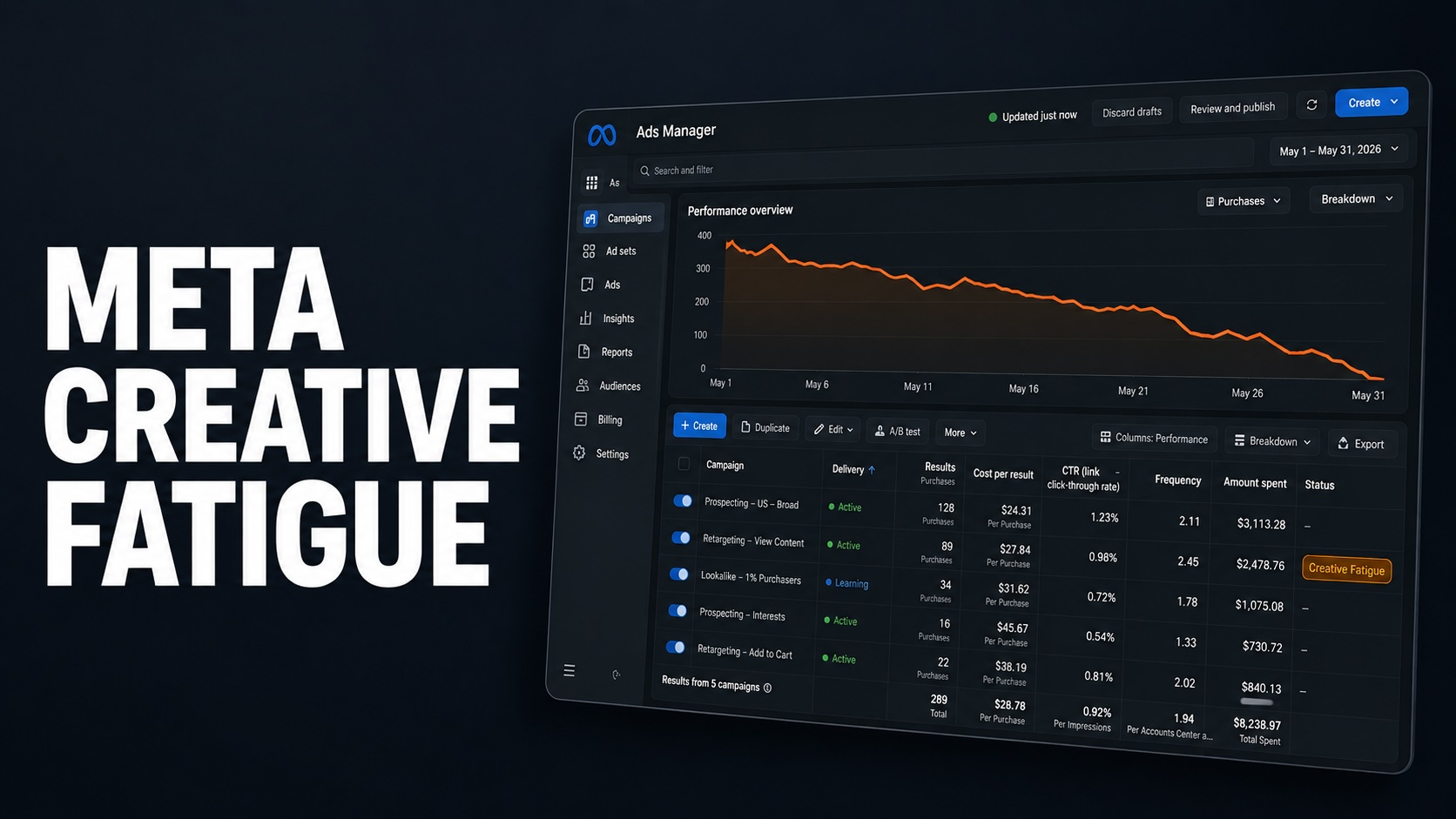
Creative fatigue happens when audiences see the same advertisement too many times and gradually lose interest. A message that once captured attention becomes familiar. An image that once stood out becomes invisible. A video that once generated curiosity becomes easy to ignore.
For modern advertisers, this is one of the biggest challenges affecting campaign performance.
Consumers are exposed to thousands of marketing messages every day. They quickly recognize repeated patterns, skip familiar content, and focus their attention on something new.
This means businesses cannot rely on a single winning advertisement forever.
The key to maintaining strong advertising performance is building an efficient ad creative rotation strategy that keeps content fresh, maintains audience interest, and continuously discovers new opportunities for growth.
1. Understanding Creative Fatigue: The Silent Performance Killer
Creative fatigue is not a sudden failure. It usually develops gradually.
At the beginning of a campaign, a new creative attracts attention because it provides something unfamiliar. The audience has not seen the message before, so curiosity and engagement are naturally higher.
Over time, repeated exposure reduces the impact.
People begin thinking:
- “I have seen this advertisement already.”
- “This brand keeps showing me the same thing.”
- “This product is not new anymore.”
- “I already know what this message says.”
As attention decreases, advertising performance often follows the same downward trend.
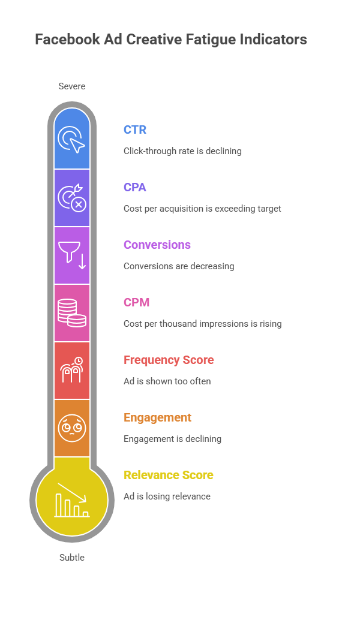
Common signs of creative fatigue include:
1.1 Declining Click-Through Rates
When users stop finding an advertisement interesting, fewer people click.
A declining click-through rate usually indicates that:
- The visual is no longer attractive
- The headline has lost its impact
- The audience has become less curious
- The creative needs refreshing
1.2 Increasing Advertising Costs
When engagement decreases, advertising platforms may consider the creative less relevant.
This can lead to:
- Higher cost per click
- Higher cost per acquisition
- Lower overall efficiency
Even if the audience targeting remains accurate, outdated creatives can reduce campaign profitability.
1.3 Lower Conversion Rates
Creative fatigue does not only affect clicks.
It can also influence purchasing decisions.
When advertisements fail to create excitement or urgency, users are less likely to:
- Visit a website
- Add products to cart
- Complete purchases
- Submit inquiries
1.4 Negative Audience Feedback
Repeated exposure can create advertising frustration.
Users may:
- Hide ads
- Report irrelevant content
- Ignore future messages from the brand
This can damage both short-term campaign results and long-term brand perception.
2. Why One Winning Creative Is Never Enough
Many companies make a common mistake: they discover an advertisement that performs well and continue using it for too long.
At first, this approach seems logical.
A successful creative means:
- Good engagement
- Strong conversion results
- Positive customer response
However, advertising success is not permanent.
Consumer preferences change. Market conditions change. Competitors introduce new messages. Platforms update their algorithms.
A creative that works today may become less effective tomorrow.
Successful advertisers understand that winning creatives have a lifecycle.
A typical creative lifecycle includes:
Stage 1: Launch
A new creative enters the market.
Performance is usually strong because:
- The message is fresh
- The audience is curious
- Competition is lower
Stage 2: Growth
The creative gains traction.
Metrics improve:
- Engagement increases
- Conversion volume grows
- Customer response becomes clearer
Stage 3: Saturation
More users have seen the advertisement.
Performance begins stabilizing.
Signs include:
- Slower growth
- Reduced engagement
- Increased frequency
Stage 4: Fatigue
The audience becomes tired of the creative.
Performance declines.
At this point, advertisers need new creative variations.
A strong creative rotation strategy helps brands replace declining ads before they negatively affect campaign results.
3. What Is an Effective Ad Creative Rotation Strategy?
An ad creative rotation strategy is a planned system for introducing, testing, analyzing, and replacing advertising materials.
Instead of randomly changing advertisements, successful marketers create a structured process.
A strong rotation strategy answers important questions:
- When should a creative be replaced?
- How many variations should be tested?
- Which elements should be changed?
- How can successful ideas be expanded?
- How can poor performers be identified quickly?
The goal is not simply creating more advertisements.
The goal is creating better advertisements at the right time.
An efficient rotation system usually includes five key elements:
- Creative planning
- Regular testing
- Performance analysis
- Strategic refreshing
- Continuous improvement
4. Build a Creative Testing Framework Before Rotating Ads
Many businesses fail because they change too many things at once.
For example, they replace:
- The image
- The headline
- The offer
- The audience
- The landing page
all at the same time.
When performance changes, they cannot determine what caused the improvement or decline.
A better approach is building a structured testing framework.
4.1 Test One Major Variable at a Time
Effective creative testing focuses on specific variables.
Common elements to test include:
Visual Style
Examples:
- Product photography
- Lifestyle images
- Customer-generated content
- Demonstration videos
- Animation
Messaging Angle
Different customers respond to different motivations.
Examples:
- Saving money
- Improving efficiency
- Solving problems
- Achieving better results
- Receiving exclusive benefits
Opening Hook
The first few seconds determine whether users continue watching.
Strong hooks may include:
- A surprising statement
- A customer problem
- A product demonstration
- A unique benefit
Call-to-Action
Small wording changes can influence user behavior.
Examples:
- Shop Now
- Learn More
- Get Started
- Request a Quote
- Discover Solutions
5. Create a Creative Rotation Calendar
Successful advertising teams do not wait until performance collapses before creating new content.
They plan creative updates in advance.
A creative rotation calendar helps businesses maintain consistency.
A typical schedule might include:
Weekly Activities
- Review campaign performance
- Identify declining creatives
- Monitor audience feedback
- Analyze engagement trends
Monthly Activities
- Launch new creative concepts
- Test different messaging approaches
- Refresh visual elements
- Expand successful ideas
Quarterly Activities
- Review overall creative strategy
- Analyze customer behavior changes
- Update brand messaging
- Develop larger campaign concepts
6. How Often Should You Rotate Ad Creatives?
One of the most common questions advertisers ask is: How frequently should ad creatives be changed?
There is no universal answer because creative fatigue depends on many factors, including:
- Audience size
- Advertising budget
- Campaign objective
- Industry competition
- Platform type
- Content format
- Frequency of exposure
A small business targeting a narrow audience may experience creative fatigue within a few days, while a large brand with a broad audience may run the same creative successfully for several weeks.
The key is not changing creatives based on a fixed schedule alone. The key is monitoring performance signals and understanding audience behavior.
6.1 Monitor Frequency and Audience Exposure
Ad frequency refers to how many times an average person sees your advertisement during a specific period.
When frequency increases too much, audiences may become less responsive.
High frequency combined with declining engagement is often a strong warning sign.
For example:
A campaign may initially achieve excellent results because users see an advertisement once or twice. However, after repeated exposure, the same users may stop paying attention.
Signs that frequency may be causing fatigue include:
- Rising costs
- Lower engagement rates
- Declining conversion volume
- Increasing negative feedback
When these signals appear, introducing fresh creative variations can restore audience interest.
6.2 Rotate Concepts, Not Just Designs
A common mistake is making very small changes and assuming the creative is new.
Changing only:
- Background color
- Font style
- Button placement
may not be enough.
Audiences respond to meaningful differences.
A stronger rotation strategy changes the underlying concept.
For example:
Original Creative:
“Save 30% on our premium product.”
New Creative Angle:
“See how professionals save hours every week using this solution.”
The product remains the same, but the psychological appeal changes.
Different creative angles can attract different customer motivations.
7. Develop a Creative Rotation Matrix
A creative rotation matrix helps marketing teams organize and manage multiple advertising variations.
Instead of creating random content, advertisers can build a structured testing system.
A simple matrix can include four major categories:
| Category | Examples |
|---|---|
| Visual Format | Images, videos, animations, carousels |
| Customer Motivation | Price, convenience, quality, trust |
| Content Style | Educational, emotional, promotional |
| Audience Stage | Awareness, consideration, purchase |
This approach allows businesses to create a balanced creative portfolio.
For example:
A skincare brand may develop:
Awareness Creative
Focus:
“Why your skin barrier needs protection.”
Consideration Creative
Focus:
“Before-and-after customer experiences.”
Purchase Creative
Focus:
“Limited-time offer with product benefits.”
Each creative serves a different customer mindset.
8. Use Different Creative Formats to Maintain Engagement
Modern audiences consume content in different ways.
A successful rotation strategy should not depend on only one format.
Different formats provide different advantages.
8.1 Static Image Ads
Static images remain effective because they communicate quickly.
They work well for:
- Product highlights
- Promotional offers
- Simple messages
- Brand awareness
Strong image ads usually include:
- Clear subject focus
- Strong contrast
- Simple messaging
- Obvious value proposition
8.2 Short-Form Video Ads
Video has become one of the most powerful advertising formats.
Short videos can demonstrate:
- Product usage
- Customer experiences
- Behind-the-scenes processes
- Problem-solving scenarios
A successful video often follows this structure:
First Seconds:
Capture attention immediately.
Middle Section:
Show the problem and solution.
Final Section:
Provide a clear next step.
8.3 User-Generated Content
Consumers increasingly trust authentic experiences.
User-generated content can feel more natural than traditional advertising.
Examples include:
- Customer reviews
- Product demonstrations
- Testimonials
- Real-life usage scenarios
These formats reduce the feeling of direct selling and often create stronger connections.
8.4 Carousel Ads
Carousel advertisements allow brands to tell a story across multiple cards.
They are useful for:
- Showing multiple products
- Explaining features step by step
- Comparing solutions
- Presenting customer journeys
A strong carousel structure might include:
Card 1:
The problem
Card 2:
Why it happens
Card 3:
The solution
Card 4:
Benefits
Card 5:
Call to action
9. Use Data to Guide Creative Decisions
Creative decisions should not depend only on opinions or personal preferences.
The strongest advertising teams combine creativity with data analysis.
Important performance indicators include:
9.1 Engagement Metrics
These show whether audiences find the content interesting.
Examples:
- Clicks
- Likes
- Comments
- Shares
- Video views
High engagement often indicates strong audience connection.
9.2 Conversion Metrics
Engagement alone does not guarantee business results.
A creative must also generate meaningful actions.
Important conversion measurements include:
- Purchases
- Lead submissions
- Quote requests
- Sign-ups
- Downloads
9.3 Cost Efficiency
Advertising success depends on profitability.
Monitor:
- Cost per acquisition
- Return on advertising investment
- Customer lifetime value
A creative with fewer clicks may still be valuable if it generates higher-quality customers.
10. Build a Creative Learning System
The biggest advantage of professional advertisers is not simply creating more ads.
It is learning faster.
Every campaign provides valuable information.
A strong creative learning system records:
- Which messages worked
- Which visuals attracted attention
- Which audiences responded best
- Which formats produced conversions
Over time, these insights create a powerful creative knowledge base.
10.1 Create a Creative Performance Library
Store successful and unsuccessful creatives.
Document:
- Campaign objective
- Target audience
- Creative concept
- Performance results
- Key lessons
This prevents teams from repeating mistakes and helps identify patterns.
10.2 Analyze Why Creatives Win
When a creative performs well, do not simply copy it.
Understand why it succeeded.
Ask:
- Was the headline stronger?
- Did the visual create curiosity?
- Did it solve a specific customer problem?
- Did it match the audience’s buying motivation?
Understanding the reason behind success creates repeatable growth.
11. Common Creative Rotation Mistakes to Avoid
Even experienced advertisers can make mistakes when managing creative cycles.
Here are several common problems.
11.1 Waiting Until Performance Collapses
Many businesses continue using a creative until results become extremely poor.
By then, recovery may take longer.
A proactive approach replaces creatives before severe fatigue appears.
11.2 Creating Too Many Random Variations
More creatives do not automatically mean better results.
Producing dozens of random advertisements can waste:
- Time
- Budget
- Creative resources
Quality and strategic testing matter more than quantity.
11.3 Ignoring Customer Psychology
Some advertisers focus too much on design and forget the customer.
A beautiful advertisement is ineffective if it does not answer:
- Why should customers care?
- What problem does it solve?
- Why should they act now?
Strong creatives connect with customer needs.
11.4 Copying Competitors Without Strategy
Competitor research can provide inspiration, but direct copying rarely creates long-term advantages.
Brands should develop their own:
- Messaging style
- Customer understanding
- Creative identity
12. How AI and Automation Are Changing Creative Rotation Strategies
Technology is transforming how companies create and manage advertisements.
Modern tools help marketers:
- Generate creative ideas
- Produce multiple variations
- Analyze performance patterns
- Identify fatigue signals
AI can accelerate the creative process, but human strategy remains essential.
The best results come from combining:
- Data analysis
- Customer insights
- Creative thinking
- Automated testing
Technology helps teams move faster, but understanding customers creates meaningful advertising.
13. Building a Complete Ad Creative Rotation Workflow
A successful creative rotation strategy is not based on constantly replacing advertisements. It is a continuous process that combines planning, testing, optimization, and improvement.
The most effective advertising teams build a repeatable workflow that allows them to maintain performance while discovering new growth opportunities.
A complete creative rotation workflow usually includes six important steps:
- Research customer behavior
- Develop creative concepts
- Launch controlled tests
- Analyze performance data
- Scale successful ideas
- Refresh declining creatives
Each step supports the next stage of improvement.
Step 1: Research Your Audience Before Creating New Ads
Many creative problems begin before the design process even starts.
If advertisers do not understand their audience, they may create attractive advertisements that fail to generate results.
Before producing new creatives, businesses should study:
- Customer challenges
- Buying motivations
- Common objections
- Competitor messaging
- Market trends
- Customer feedback
For example, a software company may discover that customers are not primarily interested in “advanced features.” Instead, they care more about saving time and reducing daily workload.
This insight changes the advertising message.
Instead of saying:
“Advanced automation technology for businesses.”
The creative may become:
“Reduce repetitive tasks and give your team more time for important work.”
The product remains the same, but the customer-focused message becomes stronger.
Step 2: Create Multiple Creative Angles
A powerful creative strategy does not depend on one idea.
Instead, brands should develop multiple angles based on different customer motivations.
Common advertising angles include:
Problem-Solution Angle
This approach highlights a customer pain point and presents the product as the solution.
Example:
“Still spending hours managing manual reports?”
Benefit-Focused Angle
This focuses on the final result customers want.
Example:
“Complete your daily workflow faster with smarter tools.”
Social Proof Angle
This uses trust signals.
Examples:
- Customer reviews
- Case studies
- Industry recognition
- User experiences
Comparison Angle
This helps customers understand differences between options.
Examples:
- Traditional method vs modern solution
- Manual process vs automated process
- Old product vs improved version
Educational Angle
This approach builds trust by providing valuable information.
Examples:
- Tips
- Guides
- Industry insights
- How-to content
Using multiple angles prevents creative repetition and helps identify what truly connects with customers.
Step 3: Design a Testing Structure
Creative testing should be organized rather than random.
A strong testing system separates different variables.
For example:
Test Group A: Visual Changes
Keep the message the same while changing:
- Images
- Videos
- Layouts
- Colors
- Product presentation
Goal:
Discover which visual style attracts attention.
Test Group B: Message Changes
Keep the design consistent while testing:
- Headlines
- Benefits
- Emotional triggers
- Offers
Goal:
Discover which message drives action.
Test Group C: Format Changes
Compare:
- Static images
- Short videos
- Carousel ads
- Interactive formats
Goal:
Understand which content format matches audience behavior.
This structured approach creates valuable insights instead of confusing results.
Step 4: Establish Creative Performance Rules
To manage a large number of advertisements, businesses need clear decision rules.
For example:
A creative may be considered successful when it achieves:
- Strong engagement
- Competitive acquisition cost
- Stable conversion performance
- Positive audience response
A creative may require replacement when:
- Costs continue increasing
- Engagement consistently declines
- Conversion volume drops
- Audience frequency becomes excessive
Having clear rules prevents emotional decision-making.
Step 5: Scale Winning Creatives
When a creative performs well, the next step is not simply running it forever.
Instead, advertisers should expand the idea.
A successful creative can become:
- A new video version
- A different headline variation
- A customer testimonial format
- A longer educational piece
- A different audience adaptation
For example:
A product demonstration video performs well.
The brand can create additional versions:
Version 1:
“How the product works.”
Version 2:
“Three common mistakes customers make.”
Version 3:
“A customer explains the results.”
The original idea becomes a creative family.
14. The Role of Brand Consistency in Creative Rotation
Some businesses worry that constantly changing advertisements may confuse customers.
However, effective creative rotation does not mean changing the entire brand identity.
The goal is:
Fresh content with consistent brand recognition.
Strong brands maintain consistency through:
- Visual identity
- Tone of voice
- Core values
- Customer promise
While individual advertisements change, customers should still recognize the brand.
For example:
A luxury brand may test different creative concepts, but all advertisements maintain:
- Premium visual quality
- Elegant messaging
- Consistent emotional positioning
Creative variety and brand consistency can exist together.
15. Creative Rotation Strategies for Different Advertising Goals
Different campaign objectives require different approaches.
Brand Awareness Campaigns
The goal is increasing recognition.
Effective creative strategies include:
- Storytelling
- Emotional content
- Brand personality
- Memorable visuals
Rotation should focus on maintaining attention and expanding reach.
Lead Generation Campaigns
The goal is collecting customer information.
Effective creatives often include:
- Clear benefits
- Strong offers
- Educational content
- Trust-building elements
Rotation should focus on improving lead quality.
E-Commerce Sales Campaigns
The goal is direct purchases.
Effective creatives include:
- Product demonstrations
- Customer reviews
- Limited-time promotions
- Before-and-after examples
Rotation should focus on maintaining purchase motivation.
16. The Future of Advertising Creative Rotation
The advertising industry continues moving toward faster testing, smarter automation, and deeper personalization.
Future creative strategies will likely focus on:
Personalized Advertising Experiences
Instead of showing the same advertisement to everyone, brands will increasingly create messages based on:
- Customer interests
- Previous interactions
- Buying behavior
- Location
- Customer journey stage
Faster Creative Production
Businesses will need the ability to produce and test more ideas quickly.
Creative teams will increasingly use:
- Automation tools
- Data insights
- AI-assisted workflows
- Modular content systems
Real-Time Optimization
Future campaigns will rely more heavily on systems that identify:
- Which creatives are losing effectiveness
- Which audiences respond best
- Which messages create stronger engagement
This allows businesses to adjust faster.
17. Final Checklist for Building an Efficient Creative Rotation Strategy
Before launching your next advertising campaign, ask:
Audience Understanding
✔ Do we know our customers’ biggest problems?
✔ Are we addressing real motivations?
Creative Variety
✔ Are we testing different concepts?
✔ Are we using multiple formats?
Performance Tracking
✔ Are we measuring meaningful results?
✔ Do we know when a creative is declining?
Optimization Process
✔ Are successful ideas being expanded?
✔ Are weak creatives replaced quickly?
Brand Strategy
✔ Does every creative support the brand identity?
✔ Are customers receiving consistent messages?
Conclusion: Fresh Creativity Is the Foundation of Sustainable Advertising Growth
Advertising success is not created by finding one perfect advertisement and running it forever.
Markets change. Customers change. Attention changes.
The brands that continue growing are those that understand creative fatigue and build systems to overcome it.
An effective ad creative rotation strategy allows companies to:
- Maintain audience interest
- Reduce performance decline
- Discover new winning ideas
- Improve advertising efficiency
- Build stronger customer connections
Creative rotation is not simply about replacing old advertisements.
It is about creating a continuous cycle of learning, testing, and improvement.
When businesses treat advertising creativity as an ongoing process rather than a one-time project, they can achieve more stable performance and long-term growth in an increasingly competitive digital marketplace.