En
En
 22 min read
For years, digital advertisers relied heavily on interest targeting to find potential customers. If you were selling fitness equipment, you targeted people interested in health and exercise. If you sold fashion accessories, you reached users who followed clothing brands or style influencers.
While this approach still has value, the digital advertising landscape has changed dramatically.
Consumer behavior has become more complex, privacy regulations have evolved, and advertising platforms now use more advanced machine learning than ever before. As a result, simply targeting interests often isn’t enough to deliver consistent, profitable growth.
Today’s most successful advertisers understand an important principle:
The best future customers often look more like your existing customers than they do a list of predefined interests.
This is exactly where Lookalike Audiences become one of the most powerful tools for scaling campaigns.
Whether you’re running an eCommerce business, generating B2B leads, promoting a SaaS platform, or growing a local brand, learning how to use Lookalike Audiences effectively can significantly improve campaign performance while reducing wasted ad spend.
In this guide, we’ll explain what Lookalike Audiences are, why they outperform traditional interest targeting in many situations, and how to build a scalable customer acquisition strategy using data instead of guesswork.
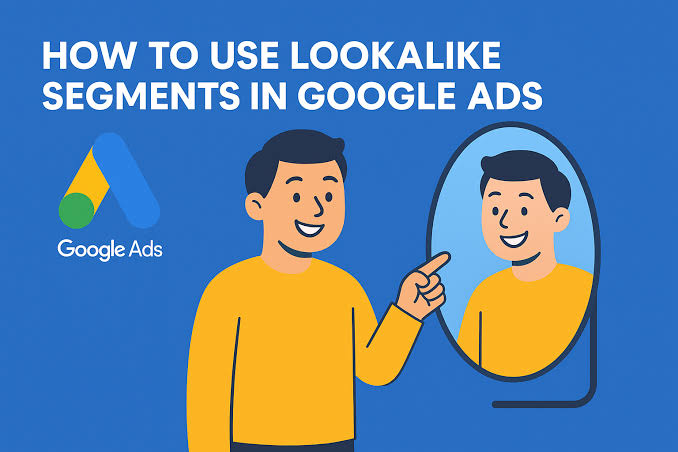
What Is a Lookalike Audience?
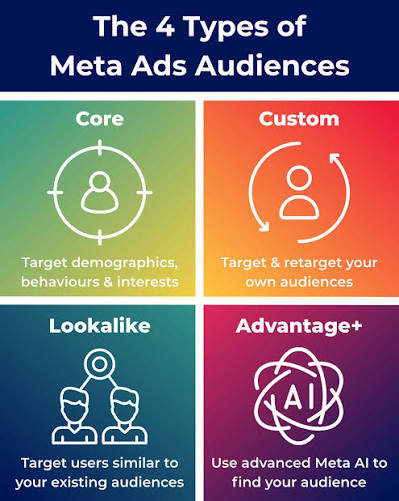
A Lookalike Audience is a group of new people who share similar characteristics and behaviors with an existing audience that you already know is valuable.
Instead of asking an advertising platform to find people who “like running” or “follow fashion pages,” you’re asking it to identify users who behave similarly to your best customers.
Advertising algorithms analyze thousands of anonymous signals, including behavioral patterns, purchasing tendencies, engagement habits, and demographic similarities.
The result is a completely new audience with a higher probability of becoming customers.
Think of it this way.
Imagine you own a coffee shop.
Interest targeting is like standing outside a bookstore because readers often enjoy coffee.
A Lookalike Audience is like asking someone to find hundreds of people who behave similarly to your most loyal customers.
The second approach is usually much more precise.
Why Interest Targeting Has Become Less Reliable
Interest targeting remains useful for introducing products to broad audiences, but it has several limitations.
Interests Don’t Always Reflect Purchase Intent
Someone may follow luxury fashion brands simply because they enjoy browsing beautiful designs.
That doesn’t necessarily mean they’re ready to purchase.
Likewise, a person interested in home fitness might already own all the equipment they need.
Interests often describe curiosity—not buying behavior.
People Have Multiple Interests
Modern consumers rarely fit neatly into one category.
A software engineer might enjoy:
- Hiking
- Luxury watches
- Organic food
- Video games
- Photography
- Financial investing
Trying to define that person using only interests quickly becomes difficult.
Machine learning performs far better when analyzing actual customer behavior than manually selecting dozens of interest categories.
Manual Targeting Can Become Too Narrow
Many advertisers continue stacking multiple interests together.
For example:
Fitness AND Yoga AND Healthy Eating AND Running AND Organic Food
Although this seems highly targeted, it often creates an audience that is too small while excluding many qualified prospects.
This limits campaign scalability.
Privacy Changes Have Shifted Platform Optimization
Recent privacy updates have reduced the amount of user-level tracking available to advertisers.
To compensate, advertising platforms have invested heavily in artificial intelligence and predictive modeling.
Modern algorithms perform better when advertisers provide high-quality customer data rather than overly restrictive targeting rules.
Why Lookalike Audiences Often Deliver Better Results
Lookalike Audiences begin with one critical advantage:
They are built using people who have already demonstrated value to your business.
Instead of guessing who might buy, you’re allowing algorithms to identify similar users based on real-world customer behavior.
That creates several benefits.
Higher Conversion Potential
If your source audience consists of recent purchasers, subscribers, or loyal customers, similar users are naturally more likely to convert.
This often improves:
- Conversion rate
- Return on ad spend
- Cost per acquisition
- Customer quality
Better Campaign Scalability
Interest audiences eventually reach saturation.
After repeated exposure, performance often declines.
Lookalike Audiences provide a practical way to expand into new groups while maintaining audience quality.
This makes scaling campaigns much easier.
Less Manual Guesswork
Instead of spending hours researching dozens of interests, advertisers can focus on improving creative, landing pages, and customer experience.
The algorithm handles much of the audience discovery automatically.
Everything Starts with Your Source Audience
One of the biggest misconceptions about Lookalike Audiences is that simply creating one guarantees success.
It doesn’t.
The quality of your Lookalike Audience depends entirely on the quality of the original data.
Garbage in produces garbage out.
Excellent source audiences include:
- Recent purchasers
- Repeat customers
- High-value customers
- Email subscribers
- Qualified leads
- Membership customers
- Trial users who converted
- Loyal app users
These audiences provide strong behavioral signals for advertising platforms.
Which Source Audience Should You Choose?
Different business goals require different seed audiences.
Customer Purchase Lists
For eCommerce brands, recent purchasers often provide one of the strongest foundations.
People who recently completed a purchase share valuable characteristics that algorithms can replicate.
High Lifetime Value Customers
Sometimes your highest-spending customers differ significantly from average buyers.
Creating Lookalike Audiences from high lifetime value customers often improves long-term profitability.
Quality frequently matters more than quantity.
Newsletter Subscribers
Email subscribers who actively engage with your content demonstrate interest in your brand.
For businesses with longer sales cycles, these audiences can perform exceptionally well.
Qualified Leads
B2B advertisers frequently create Lookalike Audiences from:
- Sales-qualified leads
- Demo requests
- Consultation bookings
- Closed opportunities
This helps attract prospects who resemble successful business customers rather than casual website visitors.
Website Visitors
Website traffic can also serve as a seed audience.
However, not all visitors are equal.
Someone who spends five minutes exploring product pages provides stronger behavioral signals than someone who leaves after ten seconds.
Segmenting visitors based on engagement often produces better results.
Audience Quality Is More Important Than Audience Size
Many advertisers believe they need massive customer lists before creating Lookalike Audiences.
While larger datasets generally improve algorithm performance, audience quality remains the most important factor.
For example:
A list of 1,500 loyal repeat customers may outperform a list of 50,000 low-quality website visitors.
Every data point teaches the algorithm what success looks like.
The better the examples, the better the future audience.
Common Mistakes Beginners Make
Many advertisers reduce Lookalike performance by making avoidable mistakes.
Examples include:
- Using outdated customer data
- Building audiences from unqualified website traffic
- Including accidental clicks
- Mixing buyers with non-buyers
- Failing to update customer lists regularly
Clean, relevant, and recent data almost always performs better than large but outdated datasets.
Lookalike Audiences Are About Patterns—Not Individual Users
It’s important to understand that Lookalike Audiences don’t identify or copy specific individuals.
Instead, advertising platforms analyze aggregated behavioral patterns and use machine learning to find other users who exhibit similar characteristics.
This allows businesses to reach highly relevant audiences while relying on statistical similarity rather than manually selected interests.
Looking Ahead
Interest targeting still has its place, especially for awareness campaigns and testing new markets. However, businesses aiming for sustainable growth increasingly rely on data-driven audience expansion rather than assumptions.
Advanced Strategies for Building High-Performing Lookalike Audiences
Creating a Lookalike Audience is easy. Creating one that consistently delivers profitable results requires a deeper understanding of data quality, audience structure, and campaign strategy.
Many advertisers make the mistake of treating Lookalike Audiences as a simple button they can activate and forget. In reality, successful audience expansion depends on several important decisions:
- What data should you use?
- How large should your audience be?
- How should you segment customers?
- How do you balance precision and scale?
- How do you avoid wasting budget?
The difference between an average campaign and a highly efficient growth system often comes down to how intelligently you build and manage your Lookalike Audiences.
Start With the Right Customer Data Strategy
The foundation of every successful Lookalike Audience is your customer data.
Advertising platforms can only identify valuable patterns if you provide meaningful signals.
A common mistake is uploading every available contact and assuming more data automatically means better results.
However, not every customer represents the type of person you want more of.
For example:
Imagine an online clothing store.
Your customer list includes:
- First-time buyers
- Discount hunters
- High-spending customers
- Returning customers
- Customers who purchased once years ago
- People who requested refunds
These groups have very different behaviors.
Creating one Lookalike Audience from all of them may reduce accuracy.
A better approach is separating audiences based on business value.
Segment Your Data for Better Results
Segmentation is one of the most powerful ways to improve Lookalike performance.
Instead of creating one broad audience, consider building multiple customer groups.
High-Value Customer Lookalikes
These audiences are built from customers who generate the most revenue.
Examples:
- Top 10% of spenders
- Repeat purchasers
- Premium subscription members
- Long-term customers
These audiences help find people who are more likely to become valuable customers rather than one-time buyers.
Recent Customer Lookalikes
Recent behavior often provides stronger signals.
Someone who purchased last month may better represent current market demand than someone who purchased five years ago.
Recent customer data helps advertising systems understand today’s buyer patterns.
Product-Specific Lookalikes
If your business sells multiple product categories, consider creating separate audiences.
For example:
A beauty company might create:
- Skincare buyer Lookalike
- Makeup buyer Lookalike
- Haircare buyer Lookalike
The people interested in each category may have different behaviors and motivations.
Engagement-Based Lookalikes
Not every valuable customer has purchased yet.
You can also create audiences from users who show strong interest.
Examples:
- Video viewers
- App users
- Newsletter readers
- Product page visitors
- Social media engagers
These audiences can be useful when your customer database is still growing.
Choosing the Right Lookalike Percentage
Most advertising platforms allow advertisers to choose how closely the new audience should match the original audience.
This creates an important decision:
Should you prioritize similarity or reach?
The answer depends on your campaign goal.
Smaller Lookalikes: More Similar, Less Volume
A smaller percentage audience usually contains people who are more closely matched to your source audience.
Advantages:
- Higher similarity
- Potentially stronger conversion rates
- Better for testing
Disadvantages:
- Smaller audience size
- Limited scalability
- Faster saturation
These audiences are often ideal when you have a limited budget or want to find your strongest potential customers first.
Larger Lookalikes: More Scale, More Testing Required
A broader Lookalike Audience reaches more people.
Advantages:
- Greater reach
- More opportunities for growth
- Better for large campaigns
Disadvantages:
- Less similarity
- Requires stronger creative testing
- May need more optimization data
Large businesses often use broader audiences because their algorithms have enough conversion data to optimize effectively.
A Practical Testing Approach
Instead of choosing one audience size forever, test multiple versions.
For example:
Campaign A:
- Small Lookalike
- Focus on accuracy
Campaign B:
- Medium Lookalike
- Balance quality and scale
Campaign C:
- Large Lookalike
- Focus on expansion
Then compare:
- Cost per purchase
- Conversion rate
- Customer quality
- Revenue generated
The best audience is not always the one with the lowest initial cost. Long-term customer value matters more.
Combine Lookalike Audiences With Strong Creative
Even the best audience cannot fix weak advertising.
A common mistake is focusing entirely on targeting while ignoring the message.
The audience determines who sees your advertisement.
The creative determines whether they care.
Successful campaigns combine:
Relevant Visuals
Your images or videos should immediately communicate:
- What you offer
- Why it matters
- Who it is for
Clear Benefits
Consumers respond better to specific value.
Instead of saying:
“High-quality products.”
Explain:
“Designed for all-day comfort with lightweight materials.”
Specific benefits create stronger connections.
Strong Brand Positioning
Lookalike audiences contain people who resemble your customers, but they still need a reason to choose your brand.
Your advertisement should answer:
- Why you?
- Why now?
- What makes your solution different?
Avoid Audience Overlap
As advertisers create multiple Lookalike Audiences, another problem appears:
Audience overlap.
For example:
You create:
- 1% customer Lookalike
- 2% customer Lookalike
- Website visitor Lookalike
- Email subscriber Lookalike
Some users may exist in multiple audiences.
This can create competition between your own campaigns.
Potential problems include:
- Higher advertising costs
- Confusing optimization signals
- Reduced campaign efficiency
How to Manage Audience Overlap
Use Clear Campaign Structures
Avoid creating too many campaigns targeting nearly identical audiences.
Simplify where possible.
Test Audiences Separately
During testing, keep audiences separated so you can understand performance.
Once you identify winning combinations, consolidate strategically.
Monitor Performance Regularly
Watch for:
- Rising acquisition costs
- Declining conversion rates
- Audience fatigue
These may indicate that your audiences are competing or becoming saturated.
The Role of First-Party Data in Modern Growth
As privacy changes continue affecting digital advertising, first-party data has become increasingly valuable.
First-party data includes information collected directly from your business relationships.
Examples:
- Customer emails
- Purchase history
- Membership information
- Website interactions
- App activity
This data is powerful because it comes from real customer relationships rather than third-party assumptions.
Lookalike Audiences become much stronger when built from accurate first-party information.
How Small Businesses Can Use Lookalike Audiences
Many small businesses believe advanced audience strategies are only for large companies.
That is no longer true.
Small businesses can successfully use Lookalike Audiences by focusing on quality.
Examples:
Local Service Businesses
A local company can create audiences from:
- Existing customers
- Appointment bookings
- Contact form submissions
Then find similar potential customers nearby.
Online Stores
Small eCommerce brands can use:
- Purchase history
- Repeat buyers
- Email subscribers
to discover new shoppers.
Content Creators
Creators can build audiences from:
- Engaged followers
- Video viewers
- Newsletter readers
and attract people with similar interests.
Why Lookalike Audiences Support Long-Term Growth
The biggest advantage of Lookalike Audiences is not just immediate sales.
They help businesses create a repeatable customer acquisition system.
Instead of constantly guessing where new customers might come from, companies can continuously analyze their best customers and find more people like them.
This creates a growth cycle:
- Acquire valuable customers.
- Analyze customer patterns.
- Build similar audiences.
- Reach new prospects.
- Improve data quality.
- Repeat the process.
Over time, this becomes more efficient and predictable.
Common Advanced Mistakes to Avoid
Even experienced marketers can make mistakes.
Mistake 1: Updating Audiences Too Rarely
Customer behavior changes.
Refresh your data regularly to keep audiences relevant.
Mistake 2: Optimizing Only for Cheap Results
A low-cost click or lead does not always create business value.
Focus on meaningful outcomes:
- Revenue
- Repeat purchases
- Customer lifetime value
Mistake 3: Using Too Many Audience Layers
Overcomplicated targeting can restrict algorithm learning.
Modern advertising systems often perform better with enough room to explore.
The Future of Audience Growth
The future of digital advertising is moving away from manual audience guessing and toward intelligent data-driven discovery.
Businesses that understand how to collect, organize, and activate customer data will have a significant advantage.
Lookalike Audiences represent this shift perfectly.
They transform existing customer relationships into opportunities for discovering new customers.
Turning Lookalike Audiences Into a Sustainable Growth Engine
By now, we’ve explored what Lookalike Audiences are, why they often outperform traditional interest targeting, and how to build high-quality audience segments using first-party data. The final step is understanding how to integrate Lookalike Audiences into a complete marketing strategy that supports long-term business growth.
Successful advertisers don’t rely on Lookalike Audiences as a standalone solution. Instead, they combine them with compelling creative, optimized landing pages, effective retargeting, and continuous performance analysis. When all of these elements work together, Lookalike Audiences become a reliable source of scalable customer acquisition.
Build a Full-Funnel Marketing Strategy
One of the most common mistakes businesses make is expecting a single campaign to achieve every objective.
A more effective approach is to design campaigns around the customer journey.
Top of the Funnel: Introduce Your Brand
At this stage, your goal is awareness rather than immediate sales.
Lookalike Audiences are highly effective because they help you reach people who resemble your existing customers but may not know your brand yet.
Content at this stage should focus on:
- Solving common problems
- Educating potential customers
- Demonstrating product value
- Building trust
- Creating curiosity
Avoid overly aggressive sales messages. Instead, give people a reason to learn more.
Middle of the Funnel: Build Interest
Once potential customers have interacted with your content, the objective shifts to consideration.
Use educational resources such as:
- Product demonstrations
- Customer testimonials
- Case studies
- Buying guides
- Frequently asked questions
This stage helps prospects understand why your solution is worth considering.
Bottom of the Funnel: Drive Conversions
At this point, your audience already recognizes your brand.
Your messaging should emphasize:
- Competitive advantages
- Product quality
- Customer support
- Limited-time offers
- Clear calls to action
Since these users have already engaged with your business, they are generally more likely to convert than completely new audiences.
Combine Lookalike Audiences with Retargeting
Lookalike Audiences are excellent for finding new prospects, while retargeting helps reconnect with people who have already shown interest.
Together, they create a highly effective acquisition strategy.
For example:
Step 1:
Reach new potential customers using a high-quality Lookalike Audience.
Step 2:
Encourage them to visit your website or product page.
Step 3:
Retarget visitors who viewed products but didn’t complete a purchase.
Step 4:
Provide additional information, customer reviews, or special offers to encourage conversion.
Rather than replacing each other, Lookalike Audiences and retargeting work best as complementary strategies.
Measure the Metrics That Matter
One of the biggest mistakes advertisers make is focusing only on clicks.
High click-through rates may look impressive, but they don’t always translate into business growth.
Instead, evaluate metrics that reflect real outcomes.
Conversion Rate
This measures the percentage of users who complete your desired action.
Examples include:
- Purchases
- Form submissions
- Newsletter sign-ups
- Demo requests
Higher conversion rates often indicate stronger audience quality.
Cost Per Acquisition (CPA)
CPA shows how much it costs to acquire one customer.
Monitoring CPA helps you understand whether your campaigns remain financially sustainable as they scale.
Return on Ad Spend (ROAS)
ROAS compares advertising revenue with advertising costs.
A campaign with a higher ROAS generally delivers stronger financial performance, although businesses should also consider profit margins and customer lifetime value.
Customer Lifetime Value (CLV)
Not all customers generate the same long-term value.
Some purchase once, while others become loyal customers who return repeatedly.
When evaluating Lookalike Audiences, consider not only how many customers you acquire but also how valuable those customers become over time.
Test Continuously
No audience remains perfect forever.
Consumer behavior changes, markets evolve, and competitors adjust their strategies.
Continuous testing helps maintain strong performance.
Areas worth testing include:
- Different source audiences
- Multiple Lookalike percentages
- Various creative formats
- Headlines
- Calls to action
- Landing pages
- Promotional offers
Small improvements across multiple areas can produce significant long-term gains.
Don’t Ignore Creative Quality
Even the most sophisticated targeting cannot compensate for weak creative.
Your advertisements should communicate value immediately.
Strong creative usually includes:
Clear Visuals
Use high-quality images or videos that highlight your product or service naturally.
Avoid cluttered designs that distract from your message.
Customer-Focused Messaging
Instead of describing product features alone, explain the benefits.
Rather than saying:
“Made with premium materials.”
Try:
“Designed for all-day comfort and long-lasting durability.”
Benefits resonate more effectively than specifications.
Strong Calls to Action
Guide users toward the next step.
Examples include:
- Learn More
- Explore the Collection
- Schedule a Demo
- Request a Quote
- Shop Now
A clear call to action reduces uncertainty and encourages engagement.
Common Challenges and How to Solve Them
Challenge: Performance Declines Over Time
Possible solutions:
- Refresh creative assets.
- Update your source audience.
- Test new Lookalike percentages.
- Expand into additional markets.
Challenge: High Costs
Possible solutions:
- Improve landing page conversion rates.
- Refine campaign objectives.
- Optimize creative.
- Focus on higher-value customer segments instead of broader audiences.
Challenge: Limited Customer Data
If your customer list is still relatively small, begin by collecting high-quality first-party data through:
- Email newsletters
- Loyalty programs
- Free resources
- Webinar registrations
- Product inquiries
As your database grows, your Lookalike Audiences generally become more effective.
Real-World Examples
Example 1: E-commerce Brand
An online eyewear retailer builds a Lookalike Audience from customers who purchased premium frames in the past six months.
Instead of targeting general fashion interests, the platform identifies users with purchasing behaviors similar to these customers.
The campaign attracts new shoppers who are more likely to appreciate premium products, resulting in higher average order values and improved customer quality.
Example 2: SaaS Company
A software company creates a Lookalike Audience based on customers who upgraded from a free trial to a paid subscription.
Rather than optimizing for trial sign-ups alone, the company focuses on finding prospects with characteristics similar to long-term subscribers.
This improves lead quality and reduces customer acquisition costs.
Example 3: Professional Services Firm
A consulting agency uploads a list of clients who have completed successful projects.
The advertising platform identifies similar businesses with comparable characteristics.
As a result, the agency generates more qualified inquiries instead of attracting large volumes of unqualified leads.
The Future of Audience Targeting
Digital advertising continues to evolve toward automation and machine learning.
Instead of relying exclusively on manually selected interests, successful businesses increasingly combine:
- First-party customer data
- AI-powered audience modeling
- High-quality creative
- Continuous testing
- Conversion optimization
Lookalike Audiences fit naturally into this future because they allow advertising platforms to learn from actual customer behavior rather than assumptions.
As algorithms become more sophisticated, the quality of your customer data will become an even greater competitive advantage.
Final Thoughts
Interest targeting remains a useful tool for introducing products to broad audiences and exploring new markets. However, businesses seeking sustainable, scalable growth should look beyond interests alone.
Lookalike Audiences enable advertisers to reach new people who share meaningful similarities with their best customers, making audience expansion more data-driven and efficient. When combined with accurate first-party data, compelling creative, optimized landing pages, and thoughtful performance analysis, they become a powerful foundation for long-term customer acquisition.
The key is to remember that Lookalike Audiences are not a shortcut or a guarantee of success. They perform best when supported by high-quality customer data, continuous testing, and a well-structured marketing strategy.
Rather than asking, “Who might be interested in my product?” successful marketers ask a better question:
“Who is most similar to the customers who already trust my business?”
That shift in thinking can make all the difference in building campaigns that are not only more efficient but also more profitable over time.