














 En
En
 13 min read
In today’s competitive digital marketplace, businesses are constantly searching for better ways to attract attention, build trust, and encourage customers to take action. Whether you are selling products, offering professional services, promoting an online course, or growing a brand, one challenge remains the same: how do you turn visitors into customers?
Many companies invest heavily in advertising, website design, and product improvements, yet their results remain disappointing. The reason is often simple: they focus too much on what they want to say and not enough on what their audience needs to hear.
Effective marketing communication begins with understanding human emotions. People rarely make purchasing decisions based only on facts and features. Instead, they are influenced by their problems, frustrations, desires, fears, and hopes for improvement.
This is where the PAS framework becomes one of the most powerful tools in persuasive writing.
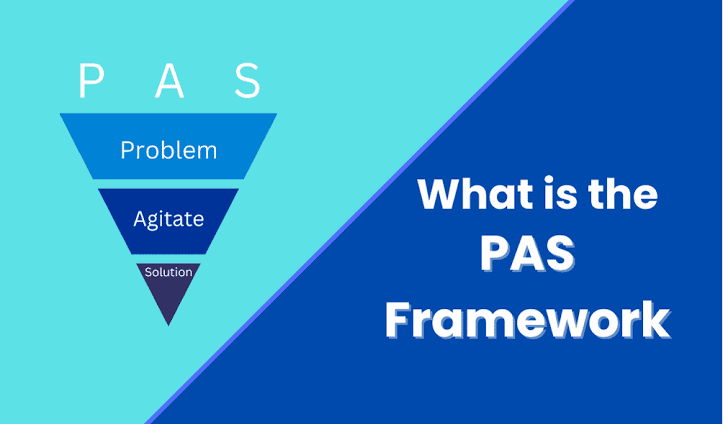
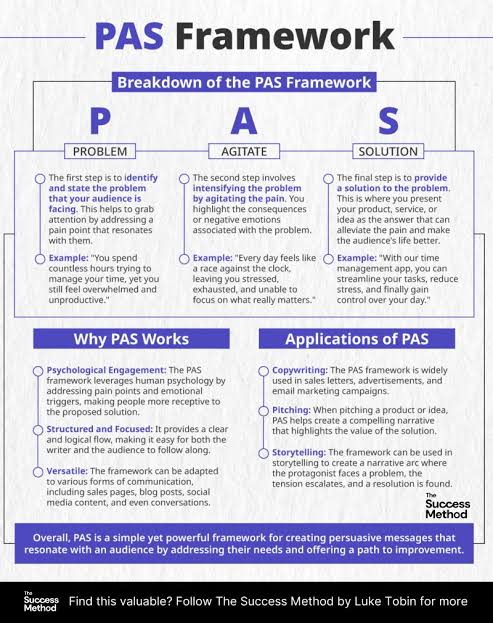
PAS stands for:
- Problem – Identify the customer’s pain point.
- Agitation – Highlight the emotional impact and consequences of that problem.
- Solution – Present your product or service as the answer.
This simple three-step structure works because it follows the natural decision-making process of the human mind. It first creates recognition, then builds urgency, and finally offers relief.
When used correctly, PAS can transform ordinary marketing messages into compelling conversations that motivate customers to act.
What Is the PAS Framework?
The PAS framework is a copywriting formula designed to connect with customers on an emotional level. Instead of immediately presenting a product or making a sales pitch, PAS begins by showing customers that you understand their struggles.
A traditional sales message might say:
“Our software helps businesses manage projects more efficiently.”
While this statement explains a benefit, it does not create an emotional connection.
A PAS-based message might say:
“Still wasting hours searching through scattered files, missed emails, and confusing spreadsheets? Every day without an organized system creates more delays, more stress, and more missed opportunities. Our project management platform brings everything together in one simple workspace.”
The second version is more powerful because it begins with the customer’s reality.
People pay attention when they feel understood.
The PAS framework works because it answers three important psychological questions:
- What problem am I experiencing?
- Why should I solve it now?
- How can I fix it?
A strong answer to these questions can significantly improve customer engagement and increase conversions.
Step One: Problem — Identify the Customer’s Pain Point
Why the Problem Stage Matters
The first step of PAS is identifying the problem your audience is facing.
A common mistake businesses make is starting with their product. They immediately talk about features, prices, and advantages without explaining why customers should care.
However, customers are not looking for products simply because products exist. They are looking for solutions because they have problems.
A customer buying a fitness program is not just buying exercise videos. They may be trying to overcome:
- Lack of confidence
- Difficulty losing weight
- Low energy levels
- Frustration with previous failures
Someone purchasing a productivity tool is not just buying software. They may be trying to solve:
- Missed deadlines
- Too much administrative work
- Poor team communication
- Stress caused by disorganization
The best marketing messages identify the deeper problem behind the purchase.
How to Find Your Audience’s Real Problems
To create effective PAS copy, you need to understand your customers beyond basic demographics.
Knowing that your audience is “women between 25 and 40” or “small business owners” is not enough.
You need to understand:
- What frustrates them?
- What challenges do they experience every day?
- What have they already tried?
- What are they afraid will happen if nothing changes?
- What result are they hoping to achieve?
Customer research can come from many sources:
Customer Reviews
Reviews often reveal emotional language customers naturally use.
For example:
A customer review for a skincare product might say:
“I have tried countless products, but my skin always looks tired and uneven.”
The hidden problem is not simply skincare. The deeper issue is disappointment and lack of confidence.
Customer Support Conversations
Questions and complaints from customers provide valuable insights.
If customers repeatedly ask:
“Is this easy enough for beginners?”
The real concern may be:
“I am worried I will waste money on something I cannot use.”
Social Media Discussions
Online conversations reveal what people care about, complain about, and desire.
Pay attention to repeated phrases and emotional reactions.
The language customers use should influence the language in your copy.
Creating a Strong Problem Statement
A powerful problem statement should be:
Specific
Weak:
“Managing your business is difficult.”
Strong:
“Spending hours every week organizing invoices, tracking payments, and searching for missing financial records?”
Specific problems feel more personal.
Relevant
The problem must match your audience’s actual experience.
A message about saving time will not resonate with someone who is more concerned about quality or reliability.
Immediate
People respond more strongly to problems affecting them now.
Compare:
“One day you may experience business challenges.”
versus:
“Every week you lose valuable time because your current system creates unnecessary manual work.”
The second statement creates stronger awareness.
Step Two: Agitation — Make the Problem Feel Important
Why Agitation Is the Most Powerful Part of PAS
Many businesses understand the importance of identifying problems, but they fail at the second step: agitation.
Agitation does not mean exaggerating or manipulating customers.
Instead, it means helping people fully recognize the impact of their current situation.
Many customers delay decisions because they underestimate the cost of their problems.
They think:
“It is annoying, but I can deal with it.”
Effective copy helps them understand why the issue deserves attention.
How Agitation Works in Consumer Psychology
People are naturally motivated to avoid loss and discomfort.
For example:
A homeowner may ignore a small roof leak because it seems manageable.
But when they understand that continued water damage could lead to expensive repairs, mold problems, and structural issues, the urgency increases.
The same principle applies to marketing.
A business owner may tolerate inefficient processes until they realize:
- Employees are wasting hours every month
- Customers are receiving slower service
- Revenue opportunities are being missed
The problem becomes more meaningful.
Techniques for Effective Agitation
1. Describe the Daily Frustration
Help customers visualize their current experience.
Example:
“Every morning starts with checking multiple systems, searching through endless messages, and trying to figure out what needs attention first.”
This creates recognition.
2. Explain the Hidden Cost
Many problems have consequences customers do not immediately see.
Example:
“Without an organized customer management system, you are not only losing time—you may also be losing potential sales because important follow-ups are forgotten.”
3. Highlight Emotional Impact
Purchasing decisions are often emotional.
Common emotional triggers include:
- Stress
- Fear
- Frustration
- Disappointment
- Desire for confidence
- Desire for convenience
A message becomes stronger when it connects with feelings.
Example:
“Stop feeling overwhelmed every time you open your task list.”
This speaks directly to emotion.
Avoid Overdoing the Agitation Stage
Although agitation is powerful, it must be used responsibly.
Poor copy often creates unnecessary fear.
For example:
“Your business will fail if you do not buy this product today.”
This approach damages trust.
A better approach is:
“Without a more efficient process, growing businesses often struggle with increasing workloads and unnecessary delays.”
The goal is awareness, not panic.
Step Three: Solution — Present Your Offer as the Answer
Why the Solution Stage Matters
After identifying the problem and increasing awareness, the final step is presenting the solution.
However, many marketers introduce their solution too early.
If customers do not fully understand the problem, they will not appreciate the value of the solution.
The Solution stage works because customers are now ready to hear how their situation can improve.
How to Create a Strong Solution Message
A strong solution should explain:
How It Solves the Problem
Do not only describe features.
Explain benefits.
Feature:
“Our software includes automated reporting.”
Benefit:
“Generate accurate reports instantly without spending hours manually organizing data.”
Customers care about outcomes.
Why Your Solution Is Different
Customers often have many options.
Explain what makes your offer valuable.
Examples:
- Easier to use
- Faster results
- Better support
- Higher quality
- More affordable
- Designed specifically for a certain audience
Show the Desired Future
Help customers imagine life after solving the problem.
Before:
“Your team spends hours every week fixing communication problems.”
After:
“With one centralized platform, everyone knows what needs to be done, when it needs to happen, and who is responsible.”
People are attracted to transformation.
PAS Framework Examples Across Different Industries
Example 1: E-commerce Product
Problem:
“Finding comfortable shoes that look stylish can feel impossible.”
Agitation:
“Many shoes look great online but cause discomfort after only a few hours. Constant foot pain can affect your daily activities and confidence.”
Solution:
“Our ergonomic footwear combines modern design with all-day comfort, helping you stay stylish without sacrificing support.”
Example 2: Online Education
Problem:
“Learning a new skill while working full-time is challenging.”
Agitation:
“Busy schedules often prevent people from making progress, leaving valuable career opportunities behind.”
Solution:
“Our flexible learning program allows you to study at your own pace with practical lessons designed for real-world success.”
Example 3: Business Services
Problem:
“Many small businesses struggle to create consistent marketing content.”
Agitation:
“Without regular communication, brands become easier to forget, and potential customers may choose competitors instead.”
Solution:
“Our content service helps businesses maintain a professional presence with strategic, engaging materials created consistently.”
Common PAS Copywriting Mistakes
Mistake 1: Focusing Only on Features
Customers do not buy features. They buy improvements.
Instead of:
“Our camera has advanced image technology.”
Say:
“Capture clear, professional-quality photos even in challenging lighting conditions.”
Mistake 2: Being Too General
Generic messages are easy to ignore.
Avoid:
“We help businesses grow.”
Try:
“We help small business owners reduce administrative work and spend more time focusing on growth.”
Mistake 3: Creating Problems Customers Do Not Care About
A problem must be meaningful.
If customers do not feel the pain, they will not take action.
Research is essential.
Mistake 4: Weak Calls to Action
Even excellent copy needs a clear next step.
Examples:
- Start your free trial today
- Get your personalized consultation
- Explore the complete collection
- Request your free guide
The action should feel natural after presenting the solution.
How PAS Improves Conversion Rates
The PAS framework improves conversions because it aligns with customer psychology.
It Builds Connection
Customers feel understood when brands recognize their challenges.
It Creates Motivation
Agitation helps customers understand why change matters.
It Reduces Decision Friction
A clear solution makes the buying process easier.
It Improves Message Clarity
Instead of random marketing statements, PAS creates a logical flow.
Combining PAS With Storytelling
One of the most effective ways to use PAS is through storytelling.
Stories naturally follow the PAS structure:
- A character experiences a problem.
- The problem creates challenges.
- A solution changes the situation.
For example:
“Sarah spent years struggling with complicated accounting tasks. Every month, she stayed late organizing documents and checking numbers. The stress affected her business decisions. After switching to an automated accounting system, she finally gained control of her finances and more time to focus on customers.”
Stories make marketing messages memorable.
Practical PAS Template for Your Next Marketing Campaign
Use this simple structure:
Problem:
“Are you struggling with __________?”
Agitation:
“Without solving this problem, you may continue experiencing __________, which can lead to __________.”
Solution:
“Our __________ helps you achieve __________ by providing __________.”
Example:
“Are you tired of spending hours creating social media content? Without a consistent strategy, your brand may lose visibility and miss opportunities to connect with customers. Our content planning service helps you create engaging posts efficiently with professional strategies designed for your audience.”
Final Thoughts: Turning Problems Into Opportunities Through Better Copy
The PAS framework remains one of the most effective approaches for creating persuasive marketing messages because it focuses on what matters most: the customer.
People do not simply buy products. They buy solutions to problems. They buy convenience, confidence, improvement, and a better future.
By identifying real challenges, showing why they matter, and presenting a valuable solution, businesses can create stronger connections and encourage more customers to take action.
Great copywriting is not about pushing people to buy. It is about understanding their needs and showing them a clear path forward.
When your message speaks directly to customer problems and offers meaningful solutions, your marketing becomes more powerful, more relevant, and more effective.
Start applying the PAS framework to your landing pages, advertisements, emails, product descriptions, and brand messages. A simple change in how you communicate can create a significant difference in how customers respond.