En
En
 9 min read
Getting an ad rejected on Meta’s platforms can feel confusing, frustrating, and sometimes even unfair—especially for beginners. You carefully design your visuals, write compelling copy, choose your audience, and submit your campaign, only to see the dreaded “Not Approved” status appear minutes later.
The truth is that Meta’s advertising ecosystem is not just a marketing platform—it is a highly regulated, automated enforcement system powered by artificial intelligence, policy classifiers, and risk scoring models. Understanding how this system works is the difference between repeatedly getting rejected and building stable, scalable ad campaigns.
This guide breaks down why ads get rejected, how Meta’s compliance system actually evaluates content, and how beginners can avoid the most common risk control traps that silently block or limit campaigns.
Why Meta Ads Get Rejected: It’s Not Random
Many advertisers assume rejection is arbitrary. In reality, most rejections fall into predictable categories tied to Meta’s advertising policies and automated review systems.
Meta evaluates ads across three layers:
- Automated AI policy detection
- Behavioral and account risk scoring
- Manual or secondary human review (in some cases)
The system is designed to protect users from misleading content, unsafe products, and low-quality advertising experiences.
But it is also extremely strict—sometimes overly sensitive—especially for new accounts.
The Core Policy System Behind Meta Ads
To understand rejection, you need to understand the framework Meta uses.
Meta’s advertising ecosystem (including Facebook and Instagram) is governed by a set of policies that apply to:
- Ad creative (images, videos, text)
- Landing pages
- Business accounts
- Historical advertiser behavior
- User feedback signals
The system continuously evaluates compliance with rules such as:
- Prohibited content policies
- Restricted content categories
- Misleading claims guidelines
- Personal attribute targeting restrictions
- Landing page quality requirements
Even small violations or “gray area” phrasing can trigger rejection.
The Most Common Reasons Ads Get Rejected
Let’s break down the real-world causes behind most rejection cases.
1. Misleading or Exaggerated Claims
One of the most common triggers is overly aggressive marketing language.
Phrases like:
- “Guaranteed results”
- “Lose weight fast with no effort”
- “Make $10,000 in a week”
- “Instant transformation”
These are flagged because they imply unrealistic outcomes.
Meta’s system is especially sensitive to financial and health-related claims due to historical abuse in these categories.
2. Personal Attribute Targeting Violations
Meta strictly prohibits ads that imply knowledge of personal traits.
For example, ads cannot say:
- “Are you struggling with debt?”
- “Do you have acne problems?”
- “People with diabetes should try this”
Even indirect wording like “You may be experiencing…” can sometimes be flagged.
This policy exists to protect user privacy and prevent sensitive profiling.
3. Before-and-After Images
Visual comparisons are a major risk area.
Commonly rejected examples include:
- Weight loss transformations
- Skin improvement comparisons
- Financial “before success / after success” visuals
Even when legitimate, these visuals are often flagged because they imply unrealistic or manipulated outcomes.
4. Landing Page Mismatch
Meta doesn’t just review your ad—it also reviews where it sends users.
If your landing page:
- Loads slowly
- Has misleading claims
- Doesn’t match ad content
- Lacks clear product/service information
- Contains aggressive pop-ups or forced redirects
Your ad may be rejected even if the creative itself is compliant.
5. Restricted Products or Services
Certain categories are heavily restricted or require authorization.
These include:
- Financial services
- Health supplements
- Cryptocurrency-related offers
- Weight loss products
- MLM-style business opportunities
Even if allowed, these categories require stricter compliance and disclaimers.
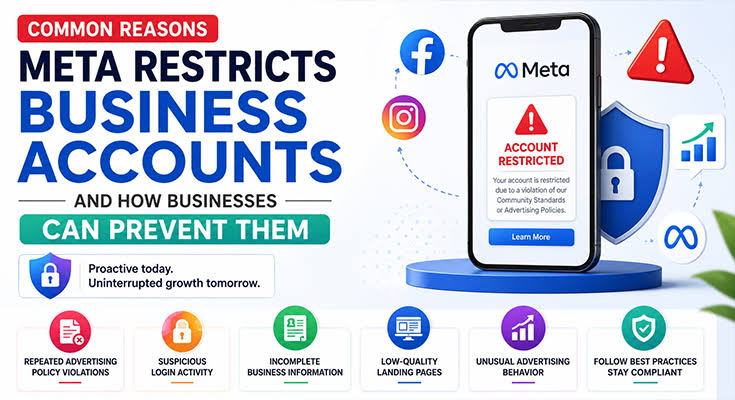
6. Poor Account Reputation (Risk Scoring)
Every advertising account has a hidden “trust score.”
New accounts or accounts with previous violations often experience:
- Higher rejection rates
- Slower approvals
- Reduced delivery
- Account restrictions
This is part of Meta’s risk control system designed to prevent spam and abuse.
Understanding Meta’s Risk Control System
Meta doesn’t only check individual ads—it evaluates patterns.
This system is often referred to as “risk control,” which includes:
- Account history
- Payment behavior
- Domain reputation
- Ad engagement quality
- User reports and feedback
Even compliant ads can be rejected if the account is considered high risk.
The Hidden Factor: AI-Based Content Interpretation
Modern ad review is heavily automated.
Meta uses machine learning models to interpret:
- Text meaning (not just keywords)
- Image recognition
- Video scene analysis
- Landing page scanning
This means even indirect or implied messages can trigger rejection.
For example:
- A harmless phrase like “get results fast” may be flagged if paired with certain visuals.
- A normal product image may be rejected if the system misinterprets context.
This is why experienced advertisers focus on “safe language patterns” rather than just avoiding banned words.
Beginner Mistake #1: Editing Without Understanding the Real Issue
One of the most common mistakes is repeatedly resubmitting ads with minor edits.
For example:
- Changing a word or two
- Slightly adjusting an image
- Re-submitting without fixing the core issue
If the underlying problem remains, the system will continue rejecting the ad—and may lower your account trust score.
Beginner Mistake #2: Ignoring Landing Page Quality
Many advertisers focus only on ad creatives.
But Meta increasingly evaluates the full user experience.
A compliant ad with a poor landing page is still likely to be rejected.
Landing page issues include:
- Missing business information
- Overpromising claims
- Broken links
- Lack of privacy policy
- Suspicious redirects
Beginner Mistake #3: Using Overly Aggressive Copywriting
Direct-response marketing often encourages urgency and emotional triggers.
But Meta’s system penalizes:
- Excessive urgency (“Act now!!!”)
- Pressure tactics (“Only today!” used excessively)
- Fear-based messaging
- Unrealistic promises
A more neutral tone often performs better in approval systems.
Beginner Mistake #4: Launching Too Many Ads Too Fast
Rapid ad creation can trigger risk flags.
This includes:
- Multiple ads from a new account in a short time
- Repetitive creatives across campaigns
- Frequent edits after publishing
The system may interpret this as spam-like behavior.
How to Build a Compliance-Safe Ad Structure
To reduce rejection risk, structure your campaigns with stability in mind.
1. Use Clear, Factual Messaging
Stick to:
- What the product is
- What it does
- Who it is for
Avoid exaggerated claims.
2. Keep Visuals Clean and Honest
Use:
- Real product images
- Neutral backgrounds
- No exaggerated transformation visuals
3. Align Ad and Landing Page
Ensure:
- Messaging consistency
- Matching promises
- Transparent pricing and details
4. Build Account Trust Gradually
Start with:
- Small budgets
- Simple campaigns
- Low-risk categories
Then scale gradually.
5. Avoid Sensitive Language Patterns
Even if not explicitly banned, avoid:
- Direct personal targeting
- Emotional manipulation
- Medical or financial promises
How to Respond When an Ad Is Rejected
If your ad is rejected, follow a structured process:
Step 1: Read the Policy Reason Carefully
Meta usually provides a category like:
- Misleading content
- Personal attributes
- Landing page issue
This is your primary clue.
Step 2: Identify the Real Trigger
Often the visible reason is not the full story.
Check:
- Image text overlays
- Landing page content
- Hidden claims in descriptions
Step 3: Fix the Root Cause, Not the Surface
Avoid cosmetic edits.
Instead:
- Rewrite messaging
- Adjust visuals
- Improve landing page transparency
Step 4: Resubmit Once Clean
After corrections, resubmit with a clear, simplified version.
Building Long-Term Stability in Ad Accounts
Successful advertisers don’t just “fix rejections”—they build systems that avoid them.
Long-term stability comes from:
- Consistent compliance behavior
- Gradual scaling
- Clean creative libraries
- Transparent landing pages
- Careful copywriting discipline
Over time, accounts that maintain clean histories experience:
- Faster approvals
- Higher delivery consistency
- Lower cost per result
- Fewer interruptions
The Future of Meta Ad Review Systems
Meta’s ad ecosystem is becoming increasingly automated.
Future trends include:
- More advanced AI content interpretation
- Real-time compliance scoring
- Deeper landing page analysis
- Stronger account-level risk modeling
- Reduced tolerance for borderline content
This means advertisers will need to prioritize compliance-first creative strategies rather than aggressive testing approaches that rely on pushing boundaries.
Final Thoughts
Ad rejection is not just a technical issue—it is a system behavior issue.
Meta’s advertising platform is designed to protect users, maintain platform trust, and enforce consistent content standards at scale. While this creates challenges for advertisers, especially beginners, it also rewards those who understand the rules and build within them.
The key takeaway is simple:
Successful advertising on Meta is not about pushing harder—it is about aligning smarter.
By focusing on clarity, transparency, compliance, and account health, advertisers can significantly reduce rejection rates and build stable, scalable campaigns that perform reliably over time.