En
En
 8 min read
Facebook advertising (now operating under the Meta Ads ecosystem, including Instagram, Messenger, and the Audience Network) continues to be one of the most powerful performance marketing channels in 2026. Despite rising costs, increased competition, and constant algorithm updates, businesses that understand funnel-based advertising still consistently outperform those relying on single-campaign, “cold traffic direct sale” strategies.
The key difference between struggling advertisers and high-performing ones is simple:
They don’t run ads—they build systems.
At the center of those systems is a structured, high-conversion funnel model designed to guide users from first contact to purchase, and then into long-term customer value.
This guide breaks down exactly how to build a Facebook advertising funnel in 2026 that maximizes conversion rates, reduces acquisition costs, and scales sustainably.
Why Funnel Thinking Matters More Than Ever in 2026
In earlier years of Facebook advertising, it was possible to run simple campaigns like:
- One interest-based ad → product page → purchase
That approach is far less effective today.
Modern users:
- Need more trust before buying
- Are exposed to more competing ads
- Are more sensitive to ad fatigue
- Expect personalized messaging
- Require multiple touchpoints before conversion
Meanwhile, Meta’s algorithm has evolved to optimize for:
- Engagement quality
- Conversion probability
- Event tracking accuracy (Pixel + Conversion API)
- Account-level learning signals
This means advertisers must stop thinking in “ads” and start thinking in customer journeys.
The Core Structure of a High-Converting Facebook Funnel
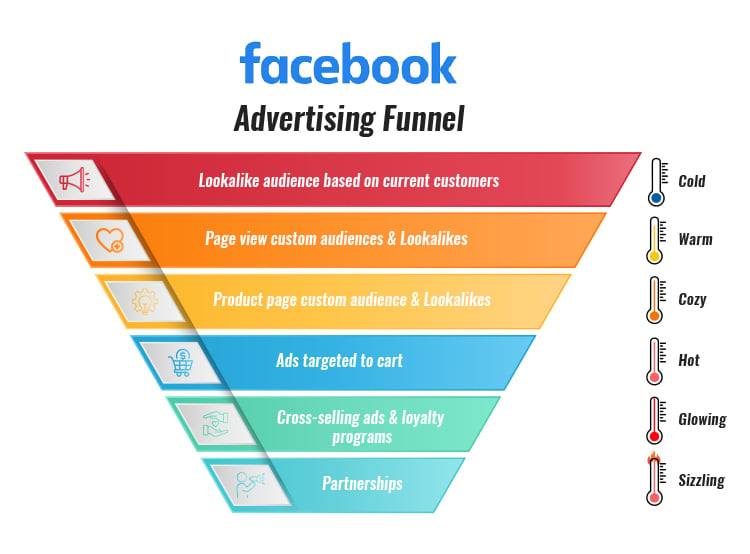
A modern Facebook advertising funnel in 2026 typically consists of four layers:
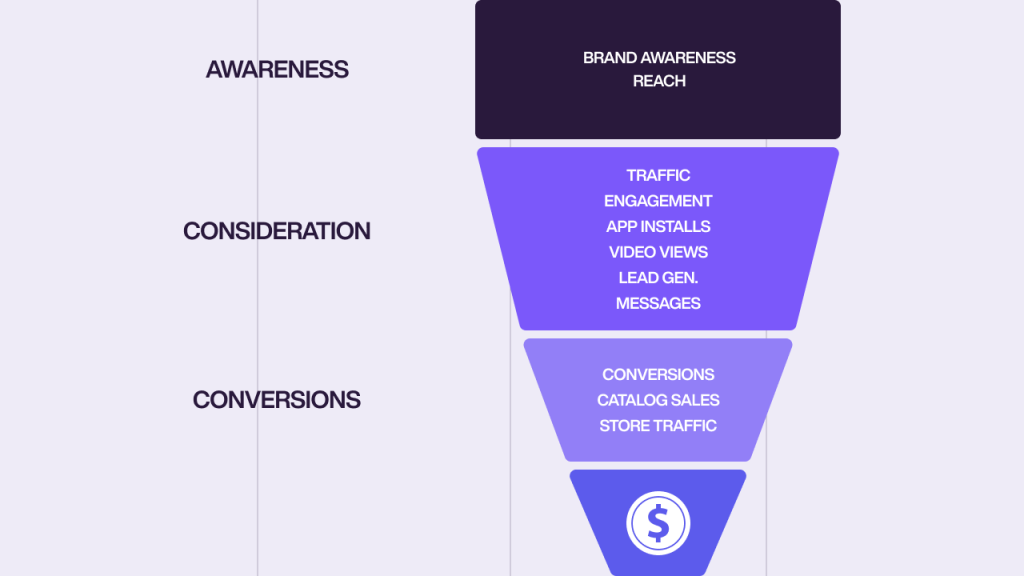
- Awareness (Cold Traffic)
- Engagement (Warm-up)
- Conversion (Sales Push)
- Retention (Repeat Revenue & LTV Expansion)
Each stage has a specific role. Skipping any stage weakens overall performance.
Stage 1: Awareness – Capturing Cold Traffic Efficiently
The top of the funnel is where you introduce your brand to people who don’t know you yet.
Objective:
Generate attention and identify potential buyers at low cost.
Best-performing ad formats in 2026:
- Short-form vertical video (Reels-style ads)
- UGC (User-generated content style creatives)
- Problem-solution hooks within first 3 seconds
- Story-based micro content
Winning creative formula:
Hook → Problem → Relatable pain → Quick solution tease
Example structure:
- “Still struggling with slow skin results?”
- “Most people waste money on skincare that doesn’t work…”
- “Here’s what actually changed things for me…”
Targeting strategy:
In 2026, targeting is less about manual precision and more about:
- Broad targeting with algorithm optimization
- Advantage+ campaigns
- Lookalike audiences (1%–5%)
- Interest stacking only for testing phases
Key metrics:
- CPM (cost per 1,000 impressions)
- Hook rate (3-second video views)
- CTR (click-through rate)
Stage 2: Engagement – Building Trust Before Selling
This is the most overlooked stage—but also one of the most important.
Cold traffic rarely converts immediately. Instead, they need reinforcement.
Objective:
Turn awareness into familiarity and trust.
Types of engagement ads:
- Educational content
- Testimonials and reviews
- Before/after case studies
- Product explanation videos
- Founder or brand story content
Psychological principle:
People buy when they feel:
- Safe
- Informed
- Understood
- Reassured
Engagement ads are where you build those emotions.
Retargeting audiences:
- Video viewers (25%, 50%, 75%)
- Website visitors
- Social engagers (Instagram + Facebook)
- Add-to-cart but no purchase users
Content strategy:
Instead of pushing for sale, focus on:
- Answering objections
- Explaining value
- Demonstrating credibility
- Reducing perceived risk
Example message:
- “Here’s why 80% of users failed before using our method—and what changed.”
Stage 3: Conversion – Turning Interest into Sales
This is where most advertisers focus—but it only works if earlier stages are strong.
Objective:
Convert warm audiences into paying customers.
Best-performing ad types:
- Direct offer ads
- Limited-time promotions
- Discount-based campaigns
- Product-focused creatives
- Strong call-to-action messaging
High-conversion ad structure:
Problem reminder → solution positioning → proof → offer → urgency
Example:
- “Still dealing with [problem]?”
- “This is exactly why we created [product].”
- “Over 10,000 users have already seen results.”
- “Get 20% off today only.”
Landing page optimization:
Your funnel breaks or succeeds here.
Must include:
- Clear headline aligned with ad
- Social proof (reviews, testimonials)
- Risk reversal (money-back guarantee)
- Simple checkout process
- Fast load speed (critical in 2026 mobile traffic)
Conversion tracking essentials:
- Meta Pixel (baseline tracking)
- Conversion API (server-side tracking)
- Event deduplication setup
- Purchase value optimization
Stage 4: Retention – Where Profit Actually Compounds
Many advertisers ignore this stage, but it is where the real profitability lies.
Acquiring a customer is expensive. Keeping them is cheap.
Objective:
Increase customer lifetime value (LTV)
Retention strategies:
- Email + SMS automation
- Post-purchase upsells
- Cross-sell campaigns
- Loyalty programs
- Subscription models
Retargeting existing customers:
- “You bought X, now try Y”
- “Exclusive upgrade offer”
- “VIP early access deals”
Why this matters:
A strong retention system allows you to:
- Spend more on acquisition
- Outbid competitors
- Stabilize cash flow
- Increase ROAS over time
Building the Full Funnel Structure in Meta Ads Manager
A practical 2026 funnel setup typically looks like this:
Campaign 1: Cold Traffic (Awareness)
- Objective: Video Views / Traffic / Engagement
- Broad targeting
- Multiple creatives tested
Campaign 2: Warm Retargeting (Engagement)
- Objective: Conversions or Engagement
- Target: video viewers + site visitors
- Educational + trust-building content
Campaign 3: Conversion Campaign
- Objective: Sales / Purchases
- Target: warm + high-intent users
- Strong offers + urgency
Campaign 4: Retention Campaign
- Objective: Conversions
- Target: past buyers
- Upsell and repeat purchase offers
Creative Strategy: The Real Driver of Performance in 2026
In modern Facebook advertising, creative > targeting.
The algorithm has become extremely powerful at finding buyers, but only if it is fed strong inputs.
Winning creative traits:
- Fast hook (first 1–2 seconds matter most)
- Mobile-first vertical format
- Real human faces (UGC style)
- Authentic tone (less polished, more real)
- Clear value proposition
Creative testing system:
- Test 5–10 variations weekly
- Rotate hooks, not just visuals
- Track CTR + hold rate
- Kill underperformers quickly
Common Funnel Mistakes That Kill Performance
1. Pushing cold traffic straight to purchase
This leads to high CPM waste and low conversion rates.
2. Weak retargeting strategy
Without warm audiences, scaling becomes unstable.
3. Overcomplicated targeting
Meta’s algorithm performs better with broader signals.
4. Ignoring creative fatigue
Even good ads decay quickly in 2026.
5. No post-purchase strategy
This caps profitability and limits growth.
Advanced Optimization Techniques
1. Value-based bidding
Optimize for purchase value instead of just conversions.
2. AI-powered Advantage+ campaigns
Let Meta dynamically allocate budget to top-performing segments.
3. Sequential retargeting
Show different ads based on user behavior stage.
Example:
- Viewed video → educational ad
- Visited product page → testimonial ad
- Added to cart → discount ad
4. Conversion API integration
Improves tracking accuracy in a privacy-first ecosystem.
Metrics That Actually Matter in 2026
Instead of focusing on vanity metrics, prioritize:
- Cost per purchase
- Return on ad spend (ROAS)
- Customer lifetime value (LTV)
- Hook rate (video retention)
- Landing page conversion rate
- Add-to-cart rate
These metrics reflect real business performance, not just ad engagement.
Scaling a High-Converting Funnel
Once your funnel works, scaling requires discipline:
Step 1: Expand winning audiences
- Broaden targeting
- Add new geographies
- Increase budget gradually
Step 2: Scale creative production
- More variations of winning concepts
- Expand UGC pipeline
Step 3: Protect performance stability
- Avoid sudden budget spikes
- Monitor frequency
- Refresh creatives regularly
The Future of Facebook Advertising Funnels
Looking forward, several trends are shaping the next evolution:
- Increased AI automation in ad delivery
- Reduced manual targeting control
- Greater reliance on creative intelligence
- Deeper integration of on-platform checkout
- Stronger emphasis on first-party data
Advertisers who adapt to system-based thinking will outperform those still relying on manual optimization.
Final Thoughts
Building a high-conversion Facebook advertising funnel in 2026 is not about finding a “perfect ad” or a “secret targeting hack.” It is about constructing a structured system that moves users logically from awareness to purchase and beyond.
The most successful advertisers understand one core truth:
Profit does not come from clicks—it comes from journeys.
When your funnel aligns messaging, timing, audience behavior, and creative strategy into a unified system, Facebook advertising becomes not just a traffic source, but a predictable growth engine.
Consistency, testing, and structured thinking will always outperform short-term tactics.