< Blogs

Top 5 Eco-Friendly Toys to Consider for 2025:Sustainable, Safe, and Fun Options for Your Kids

Vivan Z.
Created on December 19, 2024 – Last updated on February 6, 202512 min read
Written by: Vivan Z.

eco-friendly toys 3

When it comes to choosing toys for your kids, it’s not just about fun anymore—it’s about making sure the toys are safe, durable, and kind to the planet. Eco-friendly toys, including environmentally safe toys, are becoming more popular as parents, like you, make environmentally-conscious decisions that support sustainability. So, lets dive into why eco-friendly toys are so important and how you can pick the best ones for your little one.
What Are Eco-Friendly Toys? 


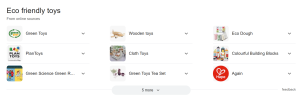
Eco-friendly toys, or green toys, are made from sustainable, non-toxic materials like organic cotton, bamboo, recycled plastics, and responsibly sourced wood. They’re safe for your kids and kinder to the planet, helping reduce waste and avoid harmful chemicals. These toys are not only durable and built to last but also come in minimal, recyclable packaging.


eco friendly toys 4

Source:Google Search


The demand for eco-friendly toys is booming, with the market expected to reach $35 billion by 2025. So, when you choose eco-friendly toys, you’re not just making a safer, healthier choice for your kids—you’re also supporting a movement toward a more sustainable future. It’s a win-win!

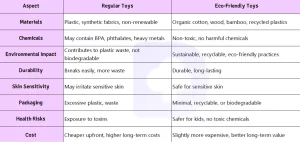
Here’s a quick comparison between Regular Toys and Eco-Friendly Toys when it comes to materials and safety:


regular toys vs eco-friendly toys

How to Spot Eco-Friendly Toys? 


When you’re shopping for toys, it’s easy to get lost in all the options, right? But if you’re trying to make more eco-conscious choices, here’s how you can spot those green, planet-loving toys without breaking a sweat!


Material Magic 


Eco-friendly toys are made with materials that Mother Nature would totally approve of. Here’s what to look for when it comes to eco-friendly materials:


● Wood: Look for toys made from sustainably sourced wood. You know, the kind that comes from forests that actually care about staying around for the future! Plus, it’s usually treated with safe, non-toxic paints or natural dyes.

● Bamboo: It grows fast, like really fast—so it’s a sustainable superstar! Bamboo toys are strong, lightweight, and super eco-friendly.

● Organic Cotton: This one’s a favorite for soft toys. Organic cotton means no pesticides, no chemicals, just pure, gentle softness that’s great for your kid’s delicate skin.

● Recycled Plastic: Old plastic gets a second chance! Recycled plastic toys help keep more waste out of landfills while still being just as fun to play with.


Non-Toxic and Safe 


Okay, this is a big one—because we all want toys that won’t turn into a health hazard, right? Look for toys that proudly scream “Non-Toxic!” on the label. This means they don’t have any of those nasty chemicals like BPA, phthalates, or lead that can sneak into toys. Some eco-friendly toys also use natural paints or dyes, so if you see “natural” or “non-toxic finishes” on the box, you’re on the right track!


Durability


Let’s be honest—kids can be rough on toys. So, if you’re getting eco-friendly toys, you want them to last, right? Eco-friendly toys are made with durability in mind. Think wooden and bamboo toys that can survive a few tumbles or the occasional wild imagination session. Unlike those cheap plastic toys that break after one too many falls, these babies are built to last, meaning fewer trips to the store for replacements (and fewer toys in the landfill). Now, that’s a win for both you and the planet!


Eco-Friendly Packaging 


You know how annoying it is to see a toy stuffed into a huge box with layers of plastic, right? Well, eco-friendly toys usually come with packaging that’s either recyclable or biodegradable. If you see “recyclable” or “minimal packaging” on the label, you’re in the right zone! The idea here is to keep the planet happy—so no wasteful plastic that’ll be around for centuries. Bonus points if the packaging is just cute enough to make you feel good about your purchase!


The Brand’s Green Promise 


Here’s a little detective work for you—check out the brand! Many eco-friendly brands proudly shout about their sustainability efforts. Look for certifications like Fair Trade or Certified Organic, or even something like B Corp (that means the company is walking the walk when it comes to sustainability). Brands that are serious about eco-friendliness are often transparent about where they get their materials and how they treat the planet. If you see any of these eco-certifications, you can rest easy knowing you’re supporting a company that cares.

5 Eco-Friendly Toys You Should Consider 

Now that you know how to choose eco-friendly toys, here are some of the best options to consider in 2025. These toys are not only great for your kids and the environment, but they’re also fun toys for kids that will keep them entertained and engaged!
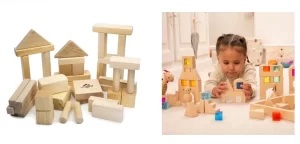
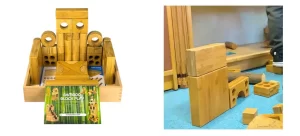
Wooden Building Blocks


Wooden Building Blocks

● Age:3+
● Eco-Friendliness Index:⭐⭐⭐⭐⭐
● Durability:⭐⭐⭐⭐⭐
● Safety:⭐⭐⭐⭐

Wooden building blocks are a classic toy that never goes out of style, and for good reason! Not only are they eco-friendly, but they also help develop a child’s fine motor skills, creativity, and problem-solving abilities. Made from sustainably sourced wood, these blocks are both durable and long-lasting, meaning they can withstand the rough and tumble of childhood play. Plus, they’re timeless, making them a great option to pass down from one generation to the next.Overall, wooden blocks are the go-to choice for parents looking for sustainable and educational fun toys for kids!
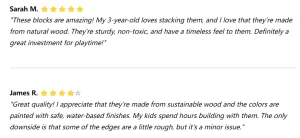
toys comment from users

Based on user reviews, Wooden Building Blocks are super popular! Parents love how they’re high quality, durable, and safe. The best part is they’re made from natural wood and non-toxic paint, so kids can play without a worry. These blocks aren’t just fun—they also spark creativity and help with motor skills. While they’re a bit pricier, most parents think it’s totally worth it because they last longer and are eco-friendly. Overall, wooden blocks are the go-to choice for parents looking for sustainable and educational toys!

Bamboo Play Sets

bamboo set

● Age:5+
● Eco-Friendliness Index:⭐⭐⭐⭐⭐
● Durability:⭐⭐⭐⭐⭐
● Safety:⭐⭐⭐⭐

If you’re looking for an eco-friendly toy that’s both fun and sustainable, bamboo play sets are a fantastic option! Bamboo is one of the fastest-growing plants on the planet, making it an incredibly renewable resource. Its sustainability doesn’t just make it good for the environment—it also makes it a strong, durable material for toys. Whether it’s a bamboo kitchen set, a toy car, or even a pretend playhouse, these play sets are built to last through years of playtime.

In addition, Bamboo has a beautiful, natural aesthetic that many parents love. The warm, smooth texture is inviting, and its light color blends well in most playroom setups. Bamboo play sets often look more stylish and timeless compared to plastic toys, and they’re more likely to match a home’s decor.

Organic Cotton Stuffed Animals
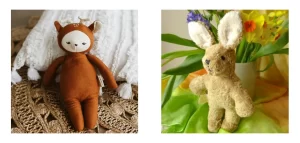
organic annimal toys

● Age:3+
● Eco-Friendliness Index:⭐⭐⭐
● Durability:⭐⭐⭐
● Safety:⭐⭐⭐⭐⭐

When it comes to plush toys, nothing beats the softness and safety of organic cotton stuffed animals. These cuddly companions are perfect for babies and young children, offering a gentle touch that’s kind to their delicate skin. Organic cotton is grown without the use of harmful pesticides or chemicals—making them safe for little ones to snuggle up with.

In addition to being non-toxic, organic cotton is hypoallergenic, which makes it an excellent choice for children with sensitive skin or allergies. The natural fibers in organic cotton are breathable and gentle, ensuring that your child is comfortable while playing with their new favorite stuffed animal. Plus, since organic cotton is cultivated in a more environmentally friendly way, choosing these stuffed animals supports sustainable farming practices.

Not only are organic cotton stuffed animals safe and comfortable, but they’re also fun toys for kids that can quickly become a child’s best friend.When purchasing organic cotton stuffed animals, it’s also important to check what the toys are filled with. Look for ones that use eco-friendly materials like recycled fabric, organic wool, or other sustainable stuffing alternatives. These fillings are safer for your child and better for the planet compared to traditional synthetic fillings that can take years to break down.

Solar-Powered Robots
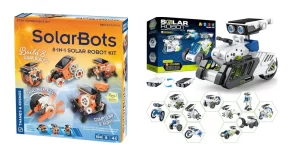
solar bots

● Age:6+
● Eco-Friendliness Index:⭐⭐⭐⭐
● Durability:⭐⭐⭐
● Safety:⭐⭐⭐⭐

If you’re looking for a toy that’s both educational and eco-friendly, solar-powered robots are a fantastic choice! These innovative toys run on the power of the sun, meaning they don’t need batteries to function. Not only does this eliminate the need for disposable batteries (which can harm the environment), but it also introduces your child to the concept of renewable energy in a fun, hands-on way.

Solar-powered robots come in all shapes and sizes—some are simple, while others are more complex, with moving parts and interactive features. As your child watches the robot move and perform tasks, they’ll be learning about how solar energy works, the importance of sustainability, and the potential for clean energy to power the world. This can spark an early interest in science and technology while giving them a better understanding of the environment.

These toys are made with eco-friendly materials and, since they don’t require batteries, they help reduce electronic waste. With no need for constant recharging or battery replacements, solar-powered robots are an ideal way to keep kids engaged while teaching them valuable lessons about sustainability and green technology.

Recycled Fabric Dolls
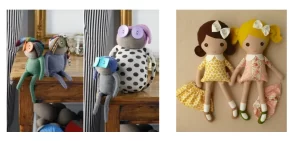
fabric dolls

● Age:3+
● Eco-Friendliness Index:⭐⭐⭐⭐
● Durability:⭐⭐⭐⭐
● Safety:⭐⭐⭐⭐

Looking for a sweet, sustainable gift that sparks creativity? Recycled fabric dolls are the perfect eco-friendly alternative to traditional plastic or synthetic dolls. These dolls are made from repurposed fabrics, which not only gives old materials a second life but also reduces the need for new resources. By choosing recycled fabric dolls, you’re helping to reduce waste and promote a circular economy where materials are reused rather than discarded.

What’s even better? These dolls are incredibly soft and safe for children, making them ideal for imaginative play. The fabrics used in these dolls are often natural and free from harmful chemicals, ensuring that they’re gentle on your child’s skin. Whether they’re made from cotton, linen, or a blend of other fabrics, these dolls are hypoallergenic, making them a great choice for children with sensitivities or allergies.

Recycled fabric dolls come in all kinds of designs, from simple plush figures to more detailed, hand-crafted creations. They can be found in a variety of sizes, making them perfect for both younger children and older kids who enjoy role-playing and storytelling. Since these dolls are made from reclaimed materials, no two are exactly alike, adding a unique charm to each one.

Why Choose DropSure for Your Eco-Friendly Toy Business in 2025?

If you’re in the eco-friendly toy business or planning to start one, working with a reliable supplier is key. Here’s why DropSure is a great choice for your eco-friendly toy needs in 2025:

1. Automated Inventory Synchronization
DropSure keeps your inventory updated in real-time, so you always know what’s in stock. This helps prevent over-ordering or running out of toys, making sure you have what you need without wasting resources.

2. Streamlined Order Processing
Orders are quickly sent to the right supplier, reducing errors and speeding up the delivery process. Your eco-friendly toys will reach customers faster and with fewer delays.

3. Supplier Management & Optimization
DropSure helps you manage suppliers, ensuring that your toys come from sustainable, high-quality manufacturers. This makes it easier to focus on offering great products while staying true to your eco-friendly values.

Blog Buttom

DropSure is Your Best Partner
22 Years Experience
Affiliate Rebates
100% Quality Guarantee
Top-Up Rewards
10+ Global Warehouses
Custom Branding Support
Smart inventory System
24/7 Customer Support
Get a Quote in 24 Hours
Start Sourcing for Free

Keep Learning

In the high-stakes world of e-commerce and dropshipping, there is a dangerous siren song that lures in many new entrepreneurs: the “High-Conversion Trap.” You find a product, the video ad goes viral, the “Add to Cart” rate is through the roof, and for the first 48 hours, you feel like a genius. But then, the “Black Tech” reality of the supply chain hits. By week three, your PayPal account is frozen due to a spike in disputes. Your inbox is a graveyard of angry customer emails. Stripe is threatening to ban your store, and your “profits” have been entirely swallowed by return shipping costs and advertising penalties. In dropshipping, revenue is vanity; profit is sanity; and sustainability is king. Just because a product is easy to sell doesn’t mean it’s a good product to build a business on. To help you navigate the “Red Ocean” of risky inventory, we have compiled the ultimate “Forbidden Catalog.” Here are the 10 most dangerous product categories that will “blow up” your store—even if the conversion rates look like a dream. 1. High-Precision Electronics & “Smart” Gadgets We all love the latest tech—smartwatches that claim to monitor blood pressure, “indestructible” drones, or $20 noise-canceling earbuds. These products have massive click-through rates because they look like expensive “Black Tech” sold at a fraction of the price. The Trap: The failure rate on unbranded, mass-produced electronics is astronomical. When a customer buys a “Smartwatch” and the Bluetooth doesn’t sync or the battery dies after three charges, they don’t blame the factory in Shenzhen—they blame you. The Result: Massive return rates and technical support nightmares you aren’t equipped to handle. 2. Weight Loss and “Bio-Hacking” Supplements Whether […]

In 2026, global e-commerce competition is no longer about whether you should expand overseas—it’s about how efficiently you can acquire customers in increasingly expensive ad environments. Platforms have become more automated, audiences more fragmented, and customer acquisition costs more volatile than ever. For cross-border sellers, especially those targeting the U.S., Europe, and high-income Southeast Asian markets, two advertising approaches dominate the conversation: Standard Shopping Ads (Google Shopping / product listing ads in structured campaigns) Performance Max (PMax), Google’s AI-driven, multi-channel automated campaign system On the surface, both seem similar—they show products, use product feeds, and rely on Google’s ecosystem. But under the hood, they behave very differently. And more importantly, they impact different average order value (AOV) strategies in very different ways. This article breaks down how each system works, where each one excels, and—most importantly—how to decide which is better aligned with your product pricing and profitability structure. 1. Understanding the Core Difference: Control vs Automation Before comparing performance, you need to understand the philosophical difference between these two ad types. Standard Shopping Ads: Structured Control System Standard Shopping Ads are built on a relatively simple logic: You upload a product feed You organize products into campaigns or ad groups You define bidding strategies You control keywords indirectly through product data optimization This system gives advertisers granular control over: Product segmentation Budget allocation Search query targeting (indirectly) Geographic targeting Bid adjustments by product group Think of it as a manual transmission vehicle. You decide how fast to go, when to shift, and where to allocate fuel. Performance Max (PMax): AI-Driven Distribution Engine Performance Max works very differently. Instead of focusing only on Shopping placements, it distributes ads across: Google […]

If you’ve been in eCommerce, dropshipping, Amazon FBA, or private-label selling for more than five minutes, you’ve probably heard this promise before: “Use this product research tool and find winning products in minutes.” Yet here you are—subscribed to one (or three), staring at dashboards full of charts, scores, and trend lines…and still struggling to find products that actually sell. So what’s going on? Is the tool broken?Is the data fake?Or are you just “bad at product selection”? The uncomfortable truth is this:Most product research tools do exactly what they’re designed to do.The real problem is how sellers use them—and more importantly, how they think about product selection. In this article, we’ll break down three of the most common product selection mistakes that cause tools to “fail,” and how to avoid them. If you’ve ever felt like product research just doesn’t work for you, this might be the reset you need. The Illusion of the “Perfect Tool” Before we get into the mistakes, let’s clear up one misconception. There is no such thing as a magic product research tool. Every tool—whether it’s for Amazon, Shopify, TikTok Shop, Etsy, or wholesale sourcing—is built on historical data. That data can tell you what already happened, but it cannot guarantee what will happen next. Tools don’t find winning products.People do—using tools correctly. When sellers fail, it’s rarely because they chose the “wrong” software. It’s because they rely on the tool to think for them instead of with them. And that leads us straight to Mistake #1. Mistake #1: Chasing “Hot” Products Instead of Understanding Demand The Trap of Trend-Chasing Most product research tools highlight the same things: Best sellers Rapidly growing products High sales […]

Recommended for you