< Blogs

Why Is AliExpress So Cheap? The Top 5 Reasons Behind the Low Prices

Vivan Z.
Created on December 12, 2024 – Last updated on February 6, 20257 min read
Written by: Vivan Z.

Aliexpress 2

If you’ve ever browsed AliExpress, you know the drill: shockingly low prices on everything from gadgets to clothing. It almost feels too good to be true, right? But how does AliExpress pull this off?

Let’s break down the top five reasons why this platform offers prices that seem unbeatable and why millions of shoppers keep coming back for more.

What is Aliexpress

AliExpress is a global online retail platform owned by Alibaba Group, one of the largest e-commerce companies in the world. It was launched in 2010 and operates as a marketplace where individuals and businesses can buy a wide variety of products directly from manufacturers and sellers, primarily based in China.
AliExpress is particularly attractive to budget-conscious buyers and entrepreneurs who want access to affordable products for personal use or resale, especially for dropshipping businesses.

5 Reasons Behind the Low Prices

Reason 1: Direct-to-Consumer Model

AliExpress cuts out the middleman. Sellers on the platform are often manufacturers who sell directly to you. That means no distributors, no retailers, and no extra markups.

Think of it this way: traditional retail involves multiple stops in the supply chain. The product goes from the manufacturer to a wholesaler, then to a distributor, and finally to a retailer before it lands in your hands. Each step adds costs. AliExpress skips all that, bringing products straight from the factory to your door. This direct approach keeps prices low and savings high.
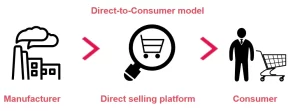
Direct-to-Consumer model 3

For example, that sleek phone case you bought for $3? In a regular store, it might cost $15. Why? Because the store has to account for overheads like rent, utilities, and employee salaries—all costs you don’t pay on AliExpress.

Reason 2: Low Manufacturing Costs in China

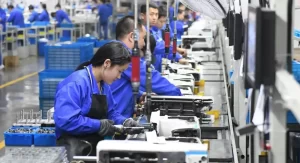
Let’s talk about where most AliExpress products come from—China. With its massive manufacturing industry, China excels at producing goods cheaply. How? Through affordable labor, abundant raw materials, and highly efficient production lines.

Factories in China are built to handle high volumes. They’ve perfected the art of cost-saving without sacrificing speed. When you see a $2 phone case, you’re looking at the power of streamlined manufacturing at work. Plus, China’s robust infrastructure—from shipping ports to highways—makes it easier and cheaper to move goods quickly.
manufacturing

This isn’t just about labor costs, though. China has an entire ecosystem of suppliers and factories that collaborate seamlessly. Need 10,000 phone chargers? There’s a factory for that. Need packaging for those chargers? There’s a supplier next door. This interconnectedness keeps costs low and production efficient.

Reason 3: No Retail Overheads or Branding Costs

AliExpress sellers don’t bother with fancy stores, glossy ads, or Instagram-worthy packaging. They focus on the essentials: selling products online. This no-frills approach eliminates retail overheads.

For you, the buyer, this means no inflated prices to cover storefront rents, utility bills, or marketing campaigns. It’s just straightforward shopping, with savings passed directly to you. Sure, the packaging might be plain, but your wallet stays happy.

Let’s compare: a branded Bluetooth speaker in a retail store might cost $50. On AliExpress, you can find a similar one for $15. The difference? The AliExpress version skips the brand name, flashy marketing, and premium packaging—and you reap the rewards.

Reason 4: Bulk Production and Economies of Scale

AliExpress sellers often produce goods in bulk. Why? Because making thousands of items at once lowers the cost per unit. This is known as economies of scale.

The more they produce, the cheaper it gets. For instance, a seller who makes 100,000 USB cables can negotiate better deals on raw materials and spread out their fixed costs (like factory equipment) over a larger number of items. The result? You get a USB cable for $1.50 instead of $10.

Bulk Production

This approach also means sellers can afford to sell items at razor-thin profit margins. They rely on high volume sales to make up for it. So while they might only make a few cents per item, those cents add up when they’re selling thousands of products every day.

Reason 5: Global Shipping Subsidies

Here’s a surprising fact: shipping from China is often incredibly cheap, sometimes even free. How? Thanks to international shipping subsidies and agreements.

China has deals with many countries that keep shipping costs low for small parcels. Programs like the Universal Postal Union (UPU) help subsidize these shipments. This makes it affordable for sellers to ship items worldwide without passing huge costs onto buyers.

UPU

Of course, this usually means slower shipping times. But when you’re paying next to nothing for delivery, it’s a trade-off many are willing to accept. After all, waiting a few weeks for a $1 pair of socks isn’t so bad when you think about the savings.

The Flip Side of Cheap: Quality and Delivery Time

Of course, there’s a downside to all these savings. Not every product on AliExpress is a winner. Quality can vary widely, and what you see online isn’t always what you get.

Then there’s the waiting game. Cheap shipping often means long delivery times—sometimes weeks or even months. And let’s not forget the occasional lost package. It’s a gamble.
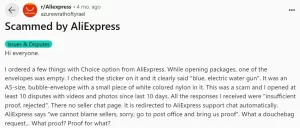
Scammed by AliExpress 2

Sourced:Reddit

For example, that $10 smartwatch might look great in the pictures, but when it arrives, it could feel flimsy or have limited functionality. These are the risks you take when shopping on a platform focused on low prices.

Why DropSure is Your Smart Alternative

What if you could enjoy low prices without the headaches? Meet DropSure. It’s like AliExpress but smarter and more reliable. Here’s what makes DropSure stand out:

– Quality You Can Trust: DropSure works only with vetted suppliers. No more guessing games.
– Faster Shipping: Skip the long waits. DropSure gets your products to you quickly.
– Affordable Prices: You still save money, but without sacrificing quality or convenience.

DropSure is perfect for shoppers who love deals but hate risks. Sign up today and see the difference for yourself.

Final Thoughts

AliExpress keeps prices low by skipping the middleman, leveraging China’s manufacturing power, and benefiting from bulk production and shipping subsidies. It’s a masterclass in cost-cutting.

But with those low prices come trade-offs. Quality isn’t always guaranteed, and delivery times can be frustratingly long. That’s where DropSure shines. Offering reliability, quality, and speed, it’s the perfect alternative for savvy shoppers.

Why settle for less? Upgrade your shopping experience with DropSure today!

Buttom


DropSure is Your Best Partner
22 Years Experience
Affiliate Rebates
100% Quality Guarantee
Top-Up Rewards
10+ Global Warehouses
Custom Branding Support
Smart inventory System
24/7 Customer Support
Get a Quote in 24 Hours
Start Sourcing for Free

Keep Learning

  Successful product selection is rarely accidental. While pricing, supply chains, and marketing execution all matter, the most consistently high-performing products share a deeper commonality: they align with predictable patterns of human psychology. Consumers do not make purchasing decisions purely through logic. Instead, emotions, perceived risk, urgency, and cognitive biases shape behavior long before rational evaluation begins. Among the most powerful psychological forces influencing buying decisions are loss aversion and scarcity perception. Understanding how these principles work — and how to apply them ethically during product selection — allows brands and sellers to identify items naturally positioned for higher conversion, stronger demand momentum, and sustained customer interest. This article explores how behavioral psychology can guide smarter product selection and explains practical frameworks for identifying products that trigger genuine purchasing motivation. Why Psychology Matters More Than Product Features Many sellers focus heavily on specifications: Better materials Lower cost More functions Improved packaging Yet markets repeatedly demonstrate that superior products do not automatically become bestsellers. The difference lies in perceived value rather than objective value. Customers buy when they feel: They might miss an opportunity A problem could worsen without action Availability is limited Others are already benefiting These emotional drivers originate from evolutionary decision-making systems designed to minimize risk and maximize survival advantages. Product selection that aligns with these instincts reduces friction between interest and purchase. Understanding Loss Aversion: The Core Human Bias Loss aversion refers to the psychological tendency for people to feel losses more strongly than equivalent gains. Research consistently shows that losing $100 feels significantly worse than gaining $100 feels good. This imbalance shapes everyday decisions. Consumers are more motivated to avoid negative outcomes than to pursue positive […]

The fourth quarter (Q4) represents the peak sales season for e-commerce businesses, driven by major shopping events such as Black Friday, Cyber Monday, and the holiday season. For sellers aiming to maximize revenue, a well-structured strategy combining data-driven decisions, operational efficiency, and targeted marketing is crucial. Here’s how to set your store up for exponential growth in Q4. 1. Data-Driven Product Selection Success in Q4 starts with choosing the right products: Analyze Market Trends: Use historical sales data and trend analytics to identify categories with rising demand. Focus not just on high-volume items, but also on products with strong profit margins and low saturation. Prioritize Potential Best-Sellers: Evaluate sales velocity, reviews, and competition. A product that is trending but not oversaturated can yield significant returns. Leverage Predictive Tools: Tools that forecast market demand can help you anticipate popular items before competitors, giving you a first-mover advantage. Tips: Regularly monitor “hot product lists” and update your inventory weekly to ensure you’re stocking items that buyers are actively searching for. 2. Optimize Your Store for Conversion High traffic alone does not guarantee revenue. Conversion optimization is essential: Improve Product Listings: Craft clear, benefit-focused product titles and descriptions. Include keywords that match search intent for Q4 shoppers.   Visual Content: High-quality images and short product videos showcasing usage scenarios increase buyer confidence and engagement. A/B Testing: Test different layouts, call-to-actions, and promotional messaging to identify what drives higher click-through and purchase rates. Tips: Prioritize mobile optimization—Q4 shoppers often browse and purchase via smartphones. 3. Strategic Promotions and Discounts Promotions during Q4 are a major driver of sales, but they need to be planned carefully: Limited-Time Offers: Create urgency with flash sales, countdown timers, and exclusive bundles. Early-Bird Campaigns: Launch promotions ahead of major […]

In the early days of dropshipping, you could simply find a trending product on AliExpress, throw together a quick Shopify store, run some Facebook ads, and watch the orders roll in. But those days are gone. Today, competition is fierce, customer expectations are higher, and generic products are everywhere. The dropshipping entrepreneurs who still win big are not the ones racing to the bottom on price—they’re the ones building brands. Brand-driven dropshipping is no longer optional; it’s the new standard. Customers want more than products—they want identity, trust, and consistency. If your store feels like a copy-paste template selling the same items as 500 other sellers, it becomes nearly impossible to scale sustainably. This article is your complete 4,000-word guide to transforming your dropshipping store into a strong, differentiated brand with loyal customers who buy again and again. We’ll cover branding strategies, product selection, storytelling, packaging, customer experience, and retention—all tailored specifically for the dropshipping model. Let’s dive in. 1. The Rise of Brand-Driven Dropshipping 1.1 Why Branding Matters More Than Ever Dropshipping used to be a quick arbitrage business. Buyers didn’t care what the store looked like—they just wanted the product. Now, customers are overwhelmed with options, ads, and impulse-buy offers. Their skepticism is higher, and their willingness to trust a no-name store is lower. Branding solves that problem. A strong brand: Creates trust before the customer ever sees the product Increases perceived value and justifies higher pricing Makes your ads convert better Reduces refund rates Encourages referrals and word-of-mouth Builds long-term customer loyalty You’re no longer competing with “other Shopify stores.” You’re competing with Amazon. And Amazon always wins on speed, convenience, and price. What you can win […]

Recommended for you