















< Blogs

Why Is AliExpress So Cheap? The Top 5 Reasons Behind the Low Prices

Vivan Z.
Created on December 12, 2024 – Last updated on February 6, 20257 min read
Written by: Vivan Z.

Aliexpress 2

If you’ve ever browsed AliExpress, you know the drill: shockingly low prices on everything from gadgets to clothing. It almost feels too good to be true, right? But how does AliExpress pull this off?

Let’s break down the top five reasons why this platform offers prices that seem unbeatable and why millions of shoppers keep coming back for more.

What is Aliexpress

AliExpress is a global online retail platform owned by Alibaba Group, one of the largest e-commerce companies in the world. It was launched in 2010 and operates as a marketplace where individuals and businesses can buy a wide variety of products directly from manufacturers and sellers, primarily based in China.
AliExpress is particularly attractive to budget-conscious buyers and entrepreneurs who want access to affordable products for personal use or resale, especially for dropshipping businesses.

5 Reasons Behind the Low Prices

Reason 1: Direct-to-Consumer Model

AliExpress cuts out the middleman. Sellers on the platform are often manufacturers who sell directly to you. That means no distributors, no retailers, and no extra markups.

Think of it this way: traditional retail involves multiple stops in the supply chain. The product goes from the manufacturer to a wholesaler, then to a distributor, and finally to a retailer before it lands in your hands. Each step adds costs. AliExpress skips all that, bringing products straight from the factory to your door. This direct approach keeps prices low and savings high.
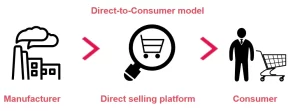
Direct-to-Consumer model 3

For example, that sleek phone case you bought for $3? In a regular store, it might cost $15. Why? Because the store has to account for overheads like rent, utilities, and employee salaries—all costs you don’t pay on AliExpress.

Reason 2: Low Manufacturing Costs in China

Let’s talk about where most AliExpress products come from—China. With its massive manufacturing industry, China excels at producing goods cheaply. How? Through affordable labor, abundant raw materials, and highly efficient production lines.

Factories in China are built to handle high volumes. They’ve perfected the art of cost-saving without sacrificing speed. When you see a $2 phone case, you’re looking at the power of streamlined manufacturing at work. Plus, China’s robust infrastructure—from shipping ports to highways—makes it easier and cheaper to move goods quickly.
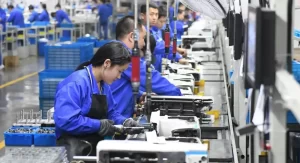
manufacturing

This isn’t just about labor costs, though. China has an entire ecosystem of suppliers and factories that collaborate seamlessly. Need 10,000 phone chargers? There’s a factory for that. Need packaging for those chargers? There’s a supplier next door. This interconnectedness keeps costs low and production efficient.

Reason 3: No Retail Overheads or Branding Costs

AliExpress sellers don’t bother with fancy stores, glossy ads, or Instagram-worthy packaging. They focus on the essentials: selling products online. This no-frills approach eliminates retail overheads.

For you, the buyer, this means no inflated prices to cover storefront rents, utility bills, or marketing campaigns. It’s just straightforward shopping, with savings passed directly to you. Sure, the packaging might be plain, but your wallet stays happy.

Let’s compare: a branded Bluetooth speaker in a retail store might cost $50. On AliExpress, you can find a similar one for $15. The difference? The AliExpress version skips the brand name, flashy marketing, and premium packaging—and you reap the rewards.

Reason 4: Bulk Production and Economies of Scale

AliExpress sellers often produce goods in bulk. Why? Because making thousands of items at once lowers the cost per unit. This is known as economies of scale.

The more they produce, the cheaper it gets. For instance, a seller who makes 100,000 USB cables can negotiate better deals on raw materials and spread out their fixed costs (like factory equipment) over a larger number of items. The result? You get a USB cable for $1.50 instead of $10.
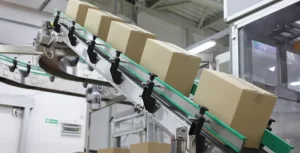
Bulk Production

This approach also means sellers can afford to sell items at razor-thin profit margins. They rely on high volume sales to make up for it. So while they might only make a few cents per item, those cents add up when they’re selling thousands of products every day.

Reason 5: Global Shipping Subsidies

Here’s a surprising fact: shipping from China is often incredibly cheap, sometimes even free. How? Thanks to international shipping subsidies and agreements.

China has deals with many countries that keep shipping costs low for small parcels. Programs like the Universal Postal Union (UPU) help subsidize these shipments. This makes it affordable for sellers to ship items worldwide without passing huge costs onto buyers.
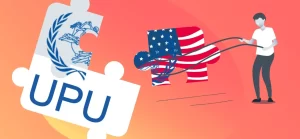
UPU

Of course, this usually means slower shipping times. But when you’re paying next to nothing for delivery, it’s a trade-off many are willing to accept. After all, waiting a few weeks for a $1 pair of socks isn’t so bad when you think about the savings.

The Flip Side of Cheap: Quality and Delivery Time

Of course, there’s a downside to all these savings. Not every product on AliExpress is a winner. Quality can vary widely, and what you see online isn’t always what you get.

Then there’s the waiting game. Cheap shipping often means long delivery times—sometimes weeks or even months. And let’s not forget the occasional lost package. It’s a gamble.
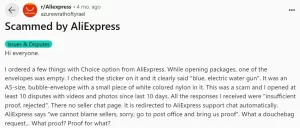
Scammed by AliExpress 2

Sourced:Reddit

For example, that $10 smartwatch might look great in the pictures, but when it arrives, it could feel flimsy or have limited functionality. These are the risks you take when shopping on a platform focused on low prices.

Why DropSure is Your Smart Alternative

What if you could enjoy low prices without the headaches? Meet DropSure. It’s like AliExpress but smarter and more reliable. Here’s what makes DropSure stand out:

– Quality You Can Trust: DropSure works only with vetted suppliers. No more guessing games.
– Faster Shipping: Skip the long waits. DropSure gets your products to you quickly.
– Affordable Prices: You still save money, but without sacrificing quality or convenience.

DropSure is perfect for shoppers who love deals but hate risks. Sign up today and see the difference for yourself.

Final Thoughts

AliExpress keeps prices low by skipping the middleman, leveraging China’s manufacturing power, and benefiting from bulk production and shipping subsidies. It’s a masterclass in cost-cutting.

But with those low prices come trade-offs. Quality isn’t always guaranteed, and delivery times can be frustratingly long. That’s where DropSure shines. Offering reliability, quality, and speed, it’s the perfect alternative for savvy shoppers.

Why settle for less? Upgrade your shopping experience with DropSure today!

Buttom


DropSure is Your Best Partner
22 Years Experience
Affiliate Rebates
100% Quality Guarantee
Top-Up Rewards
10+ Global Warehouses
Custom Branding Support
Smart inventory System
24/7 Customer Support
Get a Quote in 24 Hours
Start Sourcing for Free

Keep Learning

Dropshipping has become popular in recent years. It has low entry barriers and does not require inventory. This makes it a great option for new sellers. However, expanding your business into international markets often brings complex tax policies that can be a headache. Without understanding these in advance, your profit margins may suffer, and you could even face compliance risks. Today, we will talk about tax issues for dropshipping sellers. We will focus on important markets like the U.S., EU, Australia, and Canada. United States: Sales Tax Varies by State   In the U.S., sales tax can be quite complicated since each state has its own regulations. In simple terms, if your dropshipping business creates an “economic nexus” in a state, you must collect sales tax. This happens when you meet a specific sales threshold in that state. Tax rates can be very different. For example, California has an average sales tax of 7.25%. In contrast, Oregon has no sales tax at all. It is important for dropshipping sellers to know where they have an economic nexus. They should also check the tax rates in those states. Sales tax rates in the U.S. can vary a lot. Some rates are close to 10%. However, some states do not collect sales tax at all. For dropshipping sellers, setting the right prices according to state tax rates is essential to ensure profitability. European Union: Uniform Rules for Value-Added Tax (VAT)     Compared to the U.S., the EU has a more unified tax policy. All sellers who sell goods within the EU must pay Value-Added Tax (VAT), regardless of their location. However, each country’s VAT rate varies, such as 19% in Germany […]

In today’s thriving e-commerce environment, retailers face a crucial choice: choosing between direct shipping and dropshipping. The direct shipping model, by shipping products directly from suppliers to consumers, offers better product control and faster logistics, but it may come with challenges in inventory management and costs. Conversely, the dropshipping model, by entrusting order fulfillment to third-party suppliers, lowers initial investment and warehousing costs while expanding product variety, though it might affect profit margins and service quality. In 2025, retailers need to weigh the pros and cons of both models based on their resources, business objectives, and market demands to choose the strategy that best fosters sustainable growth. Direct Shipping: A Detailed Analysis  When you choose the direct shipping order fulfillment method, it means that you hold inventory on your own and ship products directly from your own warehouse or via a third-party logistics provider (3PL) to customers. Although this method requires a higher upfront investment, it can offer you higher profit margins and greater control over the customer experience. Direct Shipping Operation Process As a retailer, the direct shipping model requires you to begin with inventory management. You need to closely monitor market trends and consumer demand to ensure timely procurement and restocking. For example, if you run a clothing store, you must predict which styles will be popular based on seasonal changes, fashion trends, and historical sales data, and then purchase the corresponding inventory accordingly. When a customer places an order on your platform, the order information is transmitted directly to your warehouse management system. Here, the order is processed rapidly, including selecting the correct product, packaging, and preparing it for shipment. For instance, Amazon uses highly automated warehouses […]

Is Dropshipping Dead Nowadays? To put it simply: No, dropshipping is not dead—and it’s far from being on the decline. In fact, the global dropshipping market continues to grow at an impressive rate. According to Statista, the global dropshipping market was valued at $221.3 billion in 2022, and it is projected to reach $931.9 billion by 2030. These figures show that dropshipping is not just surviving, but thriving in the e-commerce ecosystem. Key Reasons Why Dropshipping is Still Alive and Well *E-commerce growth: Online shopping continues to surge globally. In 2023, global e-commerce sales were expected to surpass $6 trillion. As more people buy products online, the demand for low-risk, low-investment business models like dropshipping has only increased. *Accessibility and low entry barriers: Unlike traditional retail, dropshipping requires minimal upfront investment. You don’t need to invest in large quantities of inventory or worry about warehousing. This makes it an attractive option for many entrepreneurs. *Improved supplier networks: Countries like China have advanced their logistics and product manufacturing capabilities. Platforms such as AliExpress, Alibaba, and Dropsure are now more efficient, offering faster shipping times, better-quality control, and robust customer service. Comparing Dropshipping to Traditional Retail: As you can see, dropshipping is far less risky and requires much less capital than traditional retail models, making it ideal for entrepreneurs looking to enter the market with limited investment. Is Dropshipping Easy Now? In the past, dropshipping was considered easy—just find a supplier, set up a website, and start selling. However, the landscape has evolved, and now dropshipping is no longer as “easy” as it once was. Here’s why it’s more challenging: Increased competition: With platforms like Shopify, WooCommerce, and AliExpress making it easier […]

Recommended for you