















 En
En
 10 min read
Running successful advertising campaigns requires continuous monitoring, testing, and improvement. Even a campaign that performs exceptionally well today may experience declining results tomorrow. Audience behavior changes, competition increases, market trends shift, and advertising platforms continue to adjust their systems.
When advertising performance begins to decline, many businesses immediately make major changes, such as increasing budgets, replacing all creative content, or completely rebuilding campaigns. However, these actions may waste valuable data and create new problems.
A better approach is to follow a structured diagnostic process.
A professional optimization checklist helps identify the real reason behind declining performance before making decisions. By examining each stage of the advertising journey—from audience targeting and creative quality to landing page experience and conversion tracking—you can locate problems more accurately and improve campaign efficiency.
This guide provides a complete advertising performance diagnosis checklist designed to help businesses understand why campaigns decline and how to restore better results through systematic optimization.
Why Advertising Performance Declines Over Time
A drop in advertising results does not always mean the campaign is failing.
Performance changes can happen for many reasons, including:
- Audience fatigue
- Increased competition
- Seasonal demand changes
- Creative exhaustion
- Website problems
- Tracking issues
- Market changes
- Budget adjustments
The first step is not making changes immediately.
The first step is understanding what changed.
A sudden decline and a gradual decline usually indicate different problems.
Step One: Confirm That Performance Has Actually Declined
Before diagnosing problems, verify the data.
Many businesses react too quickly based on short-term fluctuations.
Start by comparing:
- Current performance versus previous periods
- Week-over-week results
- Month-over-month results
- Seasonal trends
- Historical campaign performance
Important metrics include:
- Impressions
- Clicks
- Click-through rate
- Cost per click
- Conversion rate
- Cost per conversion
- Return on advertising investment
A single bad day does not always indicate a serious problem.
Look for consistent patterns before making major decisions.
Step Two: Check Tracking and Measurement Accuracy
One of the most overlooked reasons for declining advertising results is inaccurate tracking.
Sometimes the campaign is performing normally, but the data appears worse because measurement systems have problems.
Check:
- Tracking codes
- Conversion events
- Analytics settings
- Tag installation
- Attribution settings
- Website tracking tools
Common tracking problems include:
- Missing conversion events
- Incorrect event triggers
- Website updates breaking tracking
- Duplicate reporting
- Platform discrepancies
Before changing advertisements, make sure you are making decisions based on accurate information.
Step Three: Review Audience Targeting Performance
The right audience is the foundation of advertising success.
Even excellent advertisements may perform poorly if shown to the wrong people.
Review:
- Audience size
- Audience quality
- Customer demographics
- Interest targeting
- Geographic targeting
- Device performance
- Placement performance
Ask these questions:
- Are we reaching the same people too frequently?
- Has the audience become saturated?
- Are new customers still discovering the brand?
- Are certain audience segments performing better?
A declining campaign may simply need audience expansion or refinement.
Check Audience Fatigue
Audience fatigue is one of the most common reasons advertising performance drops.
It happens when users see the same message too many times.
Signs include:
- Lower engagement
- Reduced click-through rate
- Increasing cost per result
- Negative feedback
- Declining conversion volume
To address audience fatigue:
- Refresh creative content
- Test new messages
- Expand audiences
- Adjust frequency
- Introduce new offers
Even successful advertisements eventually lose attention.
Step Four: Analyze Creative Performance
Advertising creative is often the first element to weaken.
Users constantly see new content online, making attention increasingly difficult to capture.
Evaluate:
- Images
- Videos
- Headlines
- Descriptions
- Offers
- Visual style
Ask:
Does the creative still communicate a clear benefit?
Does it stand out from competitors?
Does it match current customer needs?
Does it create curiosity?
Signs That Creative Needs Improvement
Common warning signs include:
Falling Click-Through Rate
This often suggests users are becoming less interested in the message.
Lower Engagement
People may no longer find the content relevant.
Rising Cost Per Result
The platform may need to work harder to generate responses.
Reduced Conversion Quality
The creative may attract attention but not the right customers.
How to Refresh Advertising Creative
Creative improvement does not always require starting from zero.
Try:
- New images
- Different video openings
- Updated headlines
- Stronger customer benefits
- New testimonials
- Different emotional angles
Small changes can create meaningful improvements.
Step Five: Review Your Advertising Message
A strong advertisement communicates value quickly.
When performance drops, review whether your message still matches customer expectations.
A good advertising message should answer:
- What problem does this solve?
- Why is this better than alternatives?
- Why should customers act now?
- What makes this offer valuable?
Weak messages often focus too much on features rather than benefits.
Customers usually care more about outcomes.
For example:
Weak message:
“Made with advanced technology.”
Stronger message:
“Save time every day with a simpler solution.”
Step Six: Examine Landing Page Performance
Advertising does not end when someone clicks.
The landing page determines whether interest becomes action.
A campaign can have:
- Great targeting
- Strong creative
- Low click costs
and still fail because of landing page problems.
Review:
- Page loading speed
- Mobile experience
- Content clarity
- Trust signals
- Form completion process
- Checkout experience
Common Landing Page Problems
Slow Loading Speed
Visitors may leave before seeing your offer.
Message Mismatch
If the landing page does not match the advertisement, users may feel confused.
Weak Call-to-Action
Visitors may not understand what to do next.
Too Much Information
Excessive content can delay decisions.
Lack of Trust
Missing reviews, guarantees, or proof can reduce confidence.
Step Seven: Analyze Conversion Funnel Problems
Advertising performance depends on the entire customer journey.
Review every step:
- Advertisement impression
- Click
- Landing page visit
- Lead or product interest
- Purchase or inquiry
Find where users leave.
For example:
High impressions + low clicks:
Problem may be creative or targeting.
High clicks + low conversions:
Problem may be landing page or offer.
High conversions + low profit:
Problem may be pricing or customer value.
Different problems require different solutions.
Step Eight: Review Your Offer Strategy
Sometimes advertising performance declines because the offer becomes less attractive.
Customers compare options constantly.
Evaluate:
- Pricing
- Discounts
- Promotions
- Bundles
- Guarantees
- Added value
Ask:
Why should customers choose us today?
A strong offer creates urgency and reduces hesitation.
Step Nine: Check Budget and Bidding Strategy
Budget changes can affect performance.
Review:
- Recent budget increases
- Campaign scaling speed
- Cost changes
- Competition levels
- Bid strategies
Large budget increases may sometimes affect efficiency.
Instead of making sudden changes, consider gradual adjustments.
Monitor performance after each change.
Step Ten: Evaluate Competitor Activity
Advertising does not exist in isolation.
Your competitors may influence your results.
They may:
- Launch new promotions
- Increase advertising budgets
- Improve creative quality
- Change pricing
Regularly review:
- Competitor messaging
- Market offers
- Customer expectations
Understanding the market helps you adjust strategically.
Step Eleven: Review Platform Changes
Advertising platforms regularly update:
- Delivery systems
- Targeting options
- Reporting features
- Optimization methods
A campaign that worked previously may require adjustment after platform changes.
Stay informed about:
- New advertising features
- Recommended practices
- Reporting updates
Flexibility is important.
Step Twelve: Test Instead of Guessing
Optimization should be based on evidence.
Avoid changing multiple elements at the same time.
If you change:
- Audience
- Creative
- Budget
- Landing page
all together, you will not know what caused improvement or decline.
Instead:
Test one major variable at a time.
Examples:
- New headline versus old headline
- New image versus old image
- New audience versus current audience
Controlled testing creates clearer insights.
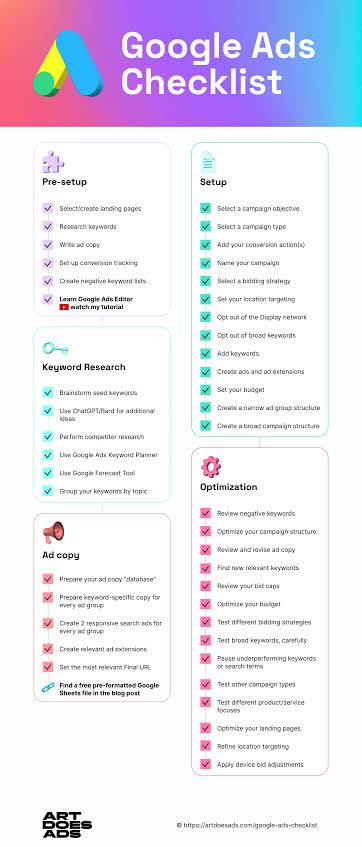
A Complete Advertising Diagnostic Checklist
Use this checklist when performance declines.
Data Accuracy
☐ Are tracking systems working correctly?
☐ Are conversion events recording properly?
☐ Are reports accurate?
Audience
☐ Is the audience still relevant?
☐ Is frequency too high?
☐ Are new customers being reached?
☐ Are some segments performing better?
Creative
☐ Is engagement declining?
☐ Are users seeing the same content too often?
☐ Does the message remain attractive?
☐ Are new creative tests running?
Advertisement Message
☐ Is the benefit clear?
☐ Does it match customer needs?
☐ Does it create interest quickly?
Landing Page
☐ Does it match the advertisement?
☐ Does it load quickly?
☐ Is it mobile-friendly?
☐ Is the conversion process simple?
Offer
☐ Is the value competitive?
☐ Is there a reason to act now?
☐ Are customers receiving enough benefits?
Budget
☐ Were recent budget changes too aggressive?
☐ Is spending aligned with results?
Competition
☐ Have competitors changed their strategy?
☐ Has the market become more competitive?
Common Optimization Mistakes to Avoid
Even experienced advertisers can make mistakes.
Avoid:
Making Changes Too Quickly
Short-term fluctuations are normal.
Ignoring Data Quality
Bad data creates bad decisions.
Focusing Only on Clicks
Traffic does not always equal business results.
Changing Everything at Once
You lose valuable learning opportunities.
Copying Competitors Completely
Your strategy should match your customers.
Building a Long-Term Optimization System
Successful advertising is not about fixing problems only after performance drops.
The best businesses create ongoing improvement systems.
Regular activities include:
- Weekly performance reviews
- Creative testing
- Audience analysis
- Landing page improvements
- Customer feedback collection
Continuous optimization prevents campaigns from becoming outdated.
Final Thoughts
When advertising performance declines, the solution is rarely found by making random changes. A structured diagnostic process provides a clearer path toward improvement.
By reviewing tracking accuracy, audience quality, creative performance, landing page experience, offers, budgets, and market conditions, businesses can identify the real causes behind declining results.
Advertising success comes from continuous learning and adjustment.
A campaign that performs well today may need improvement tomorrow. The brands that achieve long-term growth are those that treat optimization as an ongoing process rather than a one-time task.
Use a professional checklist, analyze each stage of the customer journey, and make decisions based on evidence. With the right approach, declining advertising performance can become an opportunity to discover new strategies, improve efficiency, and build stronger connections with customers.
If you need professional assistance with advertising performance analysis or campaign optimization strategies, feel free to leave us a message for a personalized consultation. We are always happy to help!