















 En

 39 min read
Choosing the right social media platform can make or break an independent eCommerce business. With millions of consumers discovering products, interacting with brands, and making purchasing decisions through social media every day, online store owners face an important question: Should you focus your marketing efforts on TikTok, Meta, or Pinterest?
Each platform offers unique opportunities for customer acquisition, brand awareness, traffic generation, and online sales. However, the platform that works exceptionally well for one eCommerce brand may deliver disappointing results for another.
TikTok has transformed product discovery through short-form videos, viral trends, and creator-driven recommendations. Meta, which includes Facebook and Instagram, provides a sophisticated advertising ecosystem designed to help businesses attract customers, generate purchases, and scale revenue. Pinterest takes a different approach, combining visual discovery with search-driven shopping behavior and long-term content visibility.
For independent online stores, including Shopify stores, WooCommerce websites, direct-to-consumer (DTC) brands, and dropshipping businesses, understanding these differences is essential.
The goal isn’t simply to choose the social media platform with the largest audience or the most viral content. It’s to identify the platform that connects your products with the right customers at a sustainable acquisition cost.
In this comprehensive guide, we’ll compare TikTok, Meta, and Pinterest across audience behavior, advertising capabilities, organic reach, content requirements, conversion potential, marketing costs, and long-term profitability. We’ll also explain how to choose the best platform for your product category, budget, and stage of business growth.
1. Why Social Media Platform Selection Matters for Independent eCommerce Stores
Running a successful online store requires more than having attractive products and competitive prices.
You need a reliable way to reach potential customers, build trust, and turn visitors into paying buyers.
Social media platforms can support every stage of the customer journey, from initial product discovery to repeat purchases.
However, each platform influences purchasing decisions differently.
A TikTok user might discover a kitchen gadget through an entertaining demonstration and purchase it immediately because the product looks useful.
An Instagram user might notice the same product in a lifestyle video, visit the brand’s profile, read customer reviews, and purchase it several days later.
A Pinterest user might discover the product while searching for kitchen organization ideas, save it to a board, and return to purchase it when redecorating their home.
All three platforms can generate sales, but the customer journeys are not identical.
The Hidden Cost of Choosing the Wrong Platform
Many independent online store owners make the mistake of creating accounts on every major social media platform immediately.
They publish videos on TikTok, upload Instagram Reels, manage Facebook advertisements, and create Pinterest Pins simultaneously.
Although this approach seems like a way to maximize exposure, it often creates several problems:
-
Marketing budgets become fragmented.
-
Content quality declines because resources are stretched.
-
Advertising campaigns receive insufficient testing budgets.
-
Teams struggle to maintain consistent posting schedules.
-
Performance data becomes difficult to interpret.
-
Customer acquisition costs increase without corresponding revenue growth.
For smaller businesses, these challenges can quickly drain valuable time and money.
A more effective strategy is to identify one primary platform, build a repeatable customer acquisition process, and expand only when the results justify additional investment.
The best social media platform for your online store is the one that consistently generates profitable customers—not necessarily the one that generates the most views.
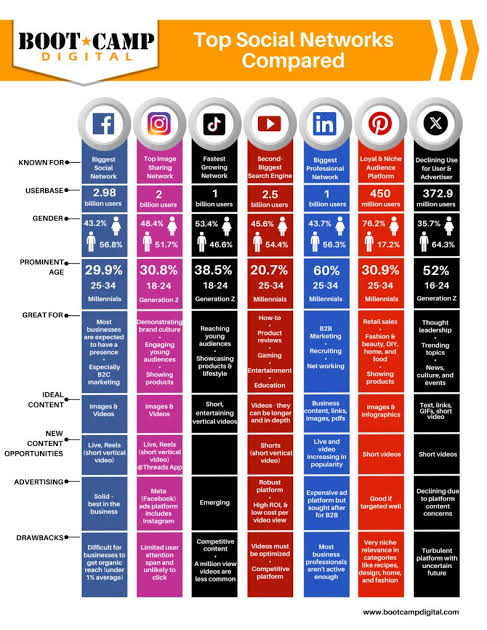
2. TikTok vs. Meta vs. Pinterest: A Quick Comparison
Before examining each platform in detail, let’s compare their main characteristics.
| Feature | TikTok | Meta (Facebook & Instagram) | |
|---|---|---|---|
| Primary user behavior | Entertainment and discovery | Social interaction and discovery | Inspiration, search, and planning |
| Main content formats | Short-form videos, creator content | Reels, images, carousels, Stories | Pins, product images, videos |
| Organic discovery | Strong potential | Competitive, format-dependent | Search and recommendation driven |
| Product discovery | Excellent | Excellent | Excellent |
| Advertising strengths | Creative-led product discovery | Conversion optimization and remarketing | Shopping-intent discovery |
| Content lifespan | Often short, with exceptions | Varies by format | Often longer-lasting |
| Creative production | Video intensive | Flexible | Image and design intensive |
| Best product fit | Demonstrable, trend-driven products | Broad range of consumer products | Visual, lifestyle, and planning products |
| Conversion potential | Strong with product-market fit | Strong with effective tracking and optimization | Strong when aligned with shopping intent |
| Main challenge | Creative fatigue and consistent video production | Competition and acquisition costs | Longer planning-to-purchase cycles |
These comparisons describe general tendencies rather than guaranteed outcomes.
Actual performance depends on product pricing, audience demographics, geographic market, landing page quality, creative execution, and campaign optimization.
3. TikTok for eCommerce: Turning Entertainment Into Product Sales
TikTok has become an important product discovery channel for online retailers.
Unlike traditional shopping environments, where customers actively search for something they already want, TikTok frequently introduces consumers to products they didn’t know existed.
This creates a valuable opportunity for brands selling visually interesting, innovative, or problem-solving products.
How TikTok’s Discovery Model Works
TikTok’s For You feed recommends content based on signals such as user interactions, viewing behavior, and content relevance.
This creates opportunities for brands to reach consumers who don’t already follow their accounts.
For example, imagine an independent online store selling a portable pet hair remover.
A video showing the product removing stubborn pet hair from a couch could attract attention because it demonstrates an immediately recognizable problem.
The viewer doesn’t need to search for a pet hair remover.
The product appears naturally within entertaining or useful content.
If the demonstration is compelling, the viewer may visit the online store and purchase the product.
This process makes TikTok particularly effective for products that benefit from visual demonstrations.
Products That Often Perform Well on TikTok
TikTok can be especially suitable for:
-
Beauty products and skincare accessories
-
Innovative kitchen gadgets
-
Pet supplies and grooming tools
-
Consumer electronics accessories
-
Fashion accessories
-
Fitness accessories
-
Home cleaning products
-
Organization and storage solutions
-
Creative gifts and novelty products
These categories have a common characteristic: their value can often be communicated in a short video.
A product that solves a clear problem, creates a visible transformation, or surprises viewers has a natural advantage.
Advantages of TikTok for Independent Online Stores
Strong Organic Discovery Potential
TikTok offers opportunities to reach new audiences without relying entirely on paid advertising.
An engaging video from a relatively small account can reach users beyond its existing followers.
This is particularly attractive for new businesses with limited advertising budgets.
However, organic reach is unpredictable, and viral exposure doesn’t automatically translate into profitable sales.
Authentic Content Can Outperform Expensive Production
TikTok content often works best when it feels natural.
A smartphone video demonstrating a product can sometimes outperform a polished commercial.
Successful creative approaches include product demonstrations, problem-and-solution videos, honest reviews, comparisons, tutorials, and behind-the-scenes content.
This can reduce production costs for businesses willing to experiment with different creative concepts.
Creator Partnerships Build Trust
Creators can introduce products to audiences that already trust their recommendations.
User-generated content (UGC), sponsored demonstrations, and creator collaborations help brands present products through relatable experiences.
For unfamiliar independent brands, credible social proof can make purchasing decisions easier.
Opportunities for Rapid Product Validation
TikTok can help businesses test product-market fit through creative responses and customer engagement.
If multiple videos highlighting different product benefits attract qualified visitors and generate purchases, the product may have broader market potential.
Still, engagement should be evaluated alongside completed orders, customer acquisition costs, and profit margins.
Challenges of TikTok Marketing
Constant Demand for Fresh Content
TikTok can require substantial creative output.
A successful video concept may become less effective as audiences repeatedly encounter similar content.
Brands need to develop new hooks, demonstrations, storylines, and creator partnerships.
For businesses without video production capabilities, this can become a major operational challenge.
Engagement Does Not Guarantee Revenue
A video might receive hundreds of thousands of views while generating relatively few purchases.
Viewers may watch because the content is entertaining rather than because they intend to buy.
Therefore, businesses should distinguish between attention metrics and sales metrics.
Product-Market Fit Is Critical
Products that require lengthy explanations, extensive comparison shopping, or complex technical evaluation may need a different approach.
TikTok can still work for these products, but the content must effectively simplify their value proposition.
TikTok Ads for Independent Websites
TikTok offers advertising solutions for different sales destinations, including external websites and TikTok Shop.
These destinations should not be confused.
For independent online stores, website-focused campaigns can direct visitors to the brand’s own product pages and checkout.
TikTok Shop campaigns, on the other hand, support purchases within TikTok’s commerce environment in eligible markets, with distinct advertising structures and requirements.
For an independent website, the primary objective should be to generate profitable purchases on the store itself.
Track purchase events, order revenue, and customer acquisition costs rather than assuming that strong video engagement indicates commercial success.
When Should Your Online Store Choose TikTok?
TikTok is a strong primary platform when your business:
-
Sells products that look impressive in videos.
-
Targets audiences comfortable discovering products through short-form content.
-
Can produce or source fresh creative content regularly.
-
Offers products with clear benefits that can be demonstrated quickly.
-
Wants to combine organic discovery with paid advertising.
-
Can handle sudden increases in product demand.
Bottom line: TikTok is particularly attractive for creative-driven eCommerce brands that can turn product demonstrations into attention and attention into purchases.
4. Meta for eCommerce: Facebook and Instagram as Customer Acquisition Engines
Meta remains an important advertising ecosystem for independent online stores.
Through Facebook and Instagram, businesses can reach consumers across multiple content formats and stages of the purchasing journey.
While TikTok is closely associated with entertainment-led discovery, Meta offers a particularly versatile combination of social content, product advertising, audience signals, and conversion-focused campaigns.
For many DTC brands, Meta is worth evaluating as a primary paid acquisition channel.
Why Meta Works for Online Stores
Meta supports different shopping behaviors across Facebook and Instagram.
Instagram is highly visual and can be effective for lifestyle brands, fashion retailers, beauty companies, and products where presentation matters.
Facebook offers opportunities to reach customers through feeds, video content, communities, and other placements.
Because both operate within the wider Meta advertising ecosystem, advertisers can manage campaigns across multiple placements.
This helps businesses experiment with different creative formats without creating completely separate marketing systems.
Key Advantages of Meta Advertising
Conversion-Focused Campaign Optimization
Meta provides campaign objectives designed to support business outcomes, including sales.
Advertisers can use eligible conversion data to help optimize delivery toward purchasing behavior.
This is important because reaching consumers who are likely to buy is generally more valuable than maximizing low-quality traffic.
For Shopify, WooCommerce, and other independent stores, properly configured website purchase tracking is a foundation for meaningful campaign optimization.
Flexible Advertising Formats
Meta supports a wide range of creative formats, including:
-
Single-image advertisements
-
Carousel advertisements
-
Vertical videos and Reels
-
Collection and catalog-based advertising
-
Stories advertisements
-
Product-focused lifestyle content
This versatility benefits stores that sell products requiring different approaches to persuasion.
For example, a home decor brand might use lifestyle photography to introduce a collection, a carousel to compare products, and a video to demonstrate the final result.
Meta’s Reels advertising resources also emphasize vertical creative, audio, and keeping important messages within visible screen areas.
Remarketing Opportunities
Many customers don’t purchase during their first visit.
They may compare alternatives, check shipping information, or postpone their decision.
Meta can support remarketing strategies that reconnect brands with eligible audiences who previously interacted with their businesses.
For example, a store can develop campaigns intended for prior website visitors or shoppers who explored specific products, subject to applicable privacy rules and audience availability.
Remarketing can help recover missed opportunities, especially for products with longer decision cycles.
Catalog-Based Product Advertising
Stores with extensive product catalogs can benefit from advertising approaches that incorporate product information.
Rather than producing an entirely separate advertisement for every item, retailers can use structured catalog data to support product-focused campaigns.
This can be useful for businesses selling clothing, accessories, home goods, and other categories with numerous variations.
Challenges of Meta Marketing
Competition Can Increase Acquisition Costs
Meta attracts advertisers across numerous industries.
Businesses compete for consumer attention, and advertising costs can vary substantially by audience, season, location, and campaign performance.
A profitable campaign during one period may become less efficient as competition changes.
Creative Fatigue Still Matters
Although Meta supports automation, advertising success still depends heavily on compelling creative content.
Repeatedly showing similar advertisements can reduce audience responsiveness.
Brands need to test different product benefits, offers, messages, and visual formats.
Tracking Requires Careful Configuration
Incorrect purchase tracking can lead to misleading performance reports.
Common issues include duplicate purchase events, inconsistent order values, incorrect currency settings, and poor event matching.
Independent stores should ensure their browser-based and server-side tracking implementations work together appropriately.
Meta Advantage+ and Automated Advertising
Meta offers AI-assisted advertising tools intended to simplify certain optimization tasks.
Automated campaign features can help advertisers reduce manual targeting and delivery decisions.
However, automation doesn’t eliminate the need for strong creative assets, accurate conversion tracking, or a profitable business model.
An automated system cannot compensate for a website that loads slowly, an uncompetitive offer, or unreliable fulfillment.
When Should Your Online Store Choose Meta?
Meta may be the strongest primary platform when your business:
-
Has a clear customer profile and established product demand.
-
Wants to optimize campaigns toward website purchases.
-
Offers multiple products or product collections.
-
Needs a combination of prospecting and remarketing.
-
Has reliable purchase tracking and order data.
-
Wants flexibility across images, videos, and catalogs.
-
Can regularly test advertising concepts and offers.
Bottom line: Meta is a versatile option for independent eCommerce brands focused on building a measurable and scalable paid customer acquisition system.
5. Pinterest for eCommerce: Reaching Consumers Through Visual Search and Shopping Intent
Pinterest operates differently from TikTok and Meta.
While TikTok emphasizes entertainment and Meta combines social interaction with advertising, Pinterest functions as a visual discovery and planning platform.
Consumers often visit Pinterest to explore ideas, organize inspiration, and research future purchases.
This creates valuable opportunities for stores selling products connected to lifestyle decisions, personal projects, home improvement, and visual aesthetics.
How Pinterest Influences Purchasing Decisions
Imagine someone planning a bedroom makeover.
They search Pinterest for minimalist bedroom ideas, modern bedside lamps, neutral bedding, and decorative storage solutions.
During this process, they may discover product Pins leading to independent online stores.
Unlike a purely entertainment-driven interaction, the user is already exploring a topic closely connected to potential purchases.
However, the purchase might occur immediately, several days later, or after a longer planning process.
This makes Pinterest particularly useful for businesses that can support customers throughout the inspiration-to-purchase journey.
Categories That Often Fit Pinterest
Pinterest may be especially attractive for:
-
Home decor and furniture
-
Interior design accessories
-
Fashion and outfit inspiration
-
Jewelry and accessories
-
Wedding supplies and decorations
-
Beauty and personal care products
-
Arts, crafts, and DIY supplies
-
Kitchen organization products
-
Gardening accessories
-
Seasonal decorations
-
Personalized gifts
-
Party and event supplies
These categories align naturally with visual inspiration and planning behavior.
Advantages of Pinterest for Independent Online Stores
Content Can Deliver Long-Term Visibility
Pinterest Pins can remain discoverable through search and recommendations beyond their initial publication.
This gives evergreen content the potential to continue generating traffic over time.
For example, a Pin featuring small apartment storage ideas may remain relevant for months or longer.
However, visibility isn’t guaranteed, and Pin performance depends on relevance, quality, competition, and other factors.
Product Discovery Is Closely Connected to Shopping
Pinterest allows businesses to upload product catalogs, create product Pins, and use eligible shopping advertising features.
Product Pins can display product-related information such as pricing and availability, helping users move from inspiration toward purchasing decisions.
For independent stores, this creates a connection between discovery content and product pages.
Strong Opportunities for Evergreen Marketing
Unlike short-lived trends, certain search topics maintain relevance over long periods.
Examples include:
-
Small kitchen storage ideas
-
Minimalist home office accessories
-
Wedding table decorations
-
Capsule wardrobe essentials
-
Gifts for pet owners
-
Apartment balcony decorating ideas
A business can build content around recurring customer interests and seasonal demand.
This makes Pinterest particularly appealing to stores that want to develop a long-term organic traffic channel.
Shopping Advertising Options
Pinterest offers shopping ad formats, including standard product ads, video shopping ads, personalized collections, and carousel shopping ads.
Advertisers can organize products into catalog groups and promote relevant inventory.
This can help stores with strong product photography showcase items to visually interested audiences.
Challenges of Pinterest Marketing
Results Can Take Time
Pinterest marketing may require patience.
A brand building an organic content strategy needs to create relevant Pins, publish consistently, and learn which topics generate meaningful outbound traffic.
It may take time to establish a dependable flow of visitors and orders.
Not Every Product Is a Natural Fit
Products that rely primarily on humor, entertainment, or instant demonstrations might perform better on TikTok.
Highly technical products with limited visual appeal may also struggle unless they connect to a recognizable planning or problem-solving need.
Traffic Doesn’t Always Convert Immediately
Pinterest users may save products for future consideration.
This behavior can produce longer conversion paths.
Stores should examine assisted conversions and delayed purchases without treating every save or click as an immediate buying signal.
When Should Your Online Store Choose Pinterest?
Pinterest is worth prioritizing when your business:
-
Sells visually appealing or lifestyle-oriented products.
-
Serves shoppers planning projects or future purchases.
-
Has strong product photography.
-
Can create useful evergreen content.
-
Wants to build an organic discovery channel over time.
-
Offers seasonal or inspiration-driven collections.
-
Has the patience to evaluate longer purchasing cycles.
Bottom line: Pinterest is particularly suitable for visual eCommerce brands that want to turn consumer inspiration into qualified website traffic and long-term purchasing opportunities.
6. TikTok vs. Meta vs. Pinterest: Which Platform Drives More Sales?
One of the biggest questions independent store owners ask is which social media platform produces the highest return on investment.
Unfortunately, there is no universal winner.
A TikTok campaign selling an innovative cleaning product may generate excellent results, while the same advertising strategy performs poorly for a premium furniture brand.
Similarly, Pinterest may deliver valuable traffic to a home decor business but struggle to generate comparable results for a store selling specialized automotive components.
Meta may offer effective conversion campaigns for an established clothing brand but require significant experimentation before a newly launched store becomes profitable.
Instead of asking which platform is universally better, businesses should evaluate three important factors.
Customer Purchase Intent
Purchase intent describes how likely a user is to buy a product during a particular interaction.
TikTok frequently generates demand by showing users products they weren’t actively searching for.
Meta combines discovery with opportunities to reconnect with people who have previously expressed interest in products.
Pinterest often reaches users who are actively exploring ideas, comparing styles, or planning purchases.
These differences influence conversion timing.
A highly engaging TikTok demonstration might produce an impulse purchase within minutes.
A Pinterest user researching bedroom furniture might return to a product weeks later.
Neither customer journey is automatically better. The more profitable journey depends on your product margins, customer acquisition costs, and ability to convert shoppers.
Website Conversion Rate
Social media performance cannot be evaluated independently of website performance.
Consider two stores receiving identical traffic from Instagram.
Store A has a confusing product page, limited customer reviews, and unexpected shipping fees.
Store B has detailed product information, visible customer reviews, fast loading speeds, and transparent delivery terms.
Store B may produce substantially more purchases from the same advertising budget.
Before increasing advertising spending, businesses should optimize product pages, checkout experiences, payment options, shipping information, and mobile usability.
Customer Lifetime Value
Not every profitable marketing campaign needs to recover its full acquisition cost immediately.
A brand selling consumable products may acquire customers who make repeat purchases over time.
For example, a skincare store might earn relatively little from the first transaction but generate additional profit from future orders.
A furniture business, however, may experience longer intervals between purchases.
Customer lifetime value helps determine how much a business can reasonably spend to acquire a new customer.
The best platform is ultimately the one that attracts valuable customers at a cost your business can sustain.
7. Comparing Advertising Costs and Return on Ad Spend
Advertising cost is another major consideration when choosing between TikTok, Meta, and Pinterest.
Advertisers commonly evaluate cost per thousand impressions (CPM), cost per click (CPC), cost per acquisition (CPA), and return on ad spend (ROAS).
However, these metrics don’t tell the same story.
Why Lower CPC Doesn’t Always Mean Better Results
Imagine three advertising campaigns with the following hypothetical performance.
| Metric | TikTok | Meta | |
|---|---|---|---|
| Advertising spend | $1,000 | $1,000 | $1,000 |
| Website visitors | 2,500 | 1,500 | 2,000 |
| Purchases | 35 | 50 | 30 |
| Average order value | $50 | $50 | $50 |
| Purchase revenue | $1,750 | $2,500 | $1,500 |
| Purchase ROAS | 1.75x | 2.50x | 1.50x |
| Cost per purchase | $28.57 | $20.00 | $33.33 |
Illustrative example only. These figures are not platform benchmarks or predicted results.TikTok produces the most visitors, but Meta generates more completed purchases and revenue.
If the business evaluates performance only through website visits or CPC, TikTok might appear more attractive.
However, when the objective is profitable sales, Meta performs better in this scenario.
Focus on Purchase ROAS, Not Engagement Metrics
For independent online stores, purchase ROAS is one of the most useful advertising metrics.
The formula is:
Purchase ROAS = Revenue from attributed completed purchases ÷ Advertising spend
For example, if an advertising campaign generates $4,000 in purchase revenue from $1,000 in ad spending, its purchase ROAS is 4.0x.
Importantly, purchase revenue should not include the monetary values assigned to add-to-cart events, checkout initiations, or other non-purchase actions.
Those events can help diagnose the conversion funnel, but they are not completed orders.
Stores should also review cost per purchase, profit margin, average order value, refund rates, and repeat purchase behavior.
A 3.0x ROAS may be profitable for one business and unprofitable for another.
Calculate Your Break-Even ROAS
A useful starting formula is:
Break-Even ROAS = 1 ÷ Contribution Margin Before Advertising
For example, if a store retains 40% of revenue after product costs, fulfillment expenses, payment fees, and other variable order costs, its approximate break-even ROAS is:
1 ÷ 0.40 = 2.5x
In this example, a 2.5x ROAS covers the included variable costs and advertising but leaves no contribution toward fixed overhead or profit.
The business should generally aim above this threshold.
This calculation helps store owners compare social media platforms using actual business economics rather than vanity metrics.
8. Which Platform Is Best for Different eCommerce Product Categories?
Product category is one of the strongest factors influencing platform selection.
Different products naturally fit different content formats and customer behaviors.
Fashion and Apparel
Recommended primary platform: Meta
Fashion brands benefit from Instagram’s visual environment, carousel advertisements, lifestyle photography, and product-focused videos.
Meta also offers opportunities for remarketing and catalog-based advertising, which can be valuable for stores with multiple clothing styles, sizes, and collections.
TikTok can provide additional reach through outfit transformations, styling tutorials, and creator partnerships.
Pinterest is also valuable for seasonal outfit inspiration and long-term discovery.
For a small apparel store, Meta may be a practical starting point for paid acquisition, while Pinterest can support evergreen discovery.
Beauty and Skincare
Recommended primary platform: TikTok or Meta
Beauty products are well suited to tutorials, demonstrations, routines, and authentic creator recommendations.
TikTok can help customers discover new products through engaging visual content.
Meta offers opportunities to reach relevant audiences and maintain ongoing customer relationships.
Brands with strong video production capabilities may prioritize TikTok, while businesses with existing sales data and established products may prefer Meta.
All beauty advertising should avoid unsupported claims and comply with platform policies.
Home Decor and Furniture
Recommended primary platform: Pinterest
Home decor products fit Pinterest’s inspiration-driven environment.
Consumers frequently explore decorating ideas, furniture arrangements, color schemes, and seasonal design themes before making purchases.
Pinterest content can introduce products naturally within room designs and lifestyle collections.
Instagram is also valuable for showing completed spaces and building a recognizable brand aesthetic.
Pet Products
Recommended primary platform: TikTok or Meta
Pet products can perform well in videos demonstrating product usefulness.
Examples include grooming brushes, interactive toys, feeding accessories, and cleaning solutions.
TikTok’s entertainment-driven environment fits relatable pet content, while Meta offers flexible product advertisements and remarketing opportunities.
Jewelry and Accessories
Recommended primary platform: Meta or Pinterest
Jewelry brands benefit from visual storytelling, product detail photography, lifestyle imagery, and gift-focused campaigns.
Meta can support conversion-oriented advertising and product collection promotion.
Pinterest is particularly relevant for wedding jewelry, personalized gifts, seasonal accessories, and inspiration-based shopping.
Innovative Gadgets
Recommended primary platform: TikTok
Innovative products that solve recognizable problems are natural candidates for short-form demonstrations.
A strong video can communicate the product’s functionality and customer benefit within seconds.
However, brands must ensure their videos accurately represent the product and avoid exaggerated performance claims.
Digital Products and Educational Resources
Recommended primary platform: Meta or Pinterest
Digital products can benefit from detailed explanations, testimonials, and content that addresses specific customer problems.
Meta may be useful for paid acquisition, while Pinterest can support discovery through tutorials, educational content, and relevant search topics.
The better choice depends on the audience and the complexity of the product.
9. Organic Marketing vs. Paid Advertising: Where Should Small Stores Invest?
Many independent store owners have limited marketing budgets.
This makes it essential to understand the trade-offs between organic social media marketing and paid advertising.
Organic TikTok Marketing
TikTok can be attractive to businesses willing to invest time instead of large advertising budgets.
A store might publish product demonstrations, customer testimonials, tutorials, and entertaining content.
The advantage is the possibility of reaching new audiences without paying for every impression.
The disadvantage is unpredictability.
Organic growth requires experimentation, consistent production, and creative skills.
Organic Instagram and Facebook Marketing
Instagram supports brand building through Reels, Stories, carousels, and community engagement.
Facebook can help businesses develop relationships through Pages, relevant communities, and customer communication.
However, organic audience growth can be challenging, and business owners shouldn’t assume followers will see every post.
Meta may be more effective when organic content supports a broader paid advertising strategy.
Organic Pinterest Marketing
Pinterest offers a different opportunity because content can be discovered through visual searches and recommendations over time.
A small home decor store could create Pins covering decorating ideas, storage solutions, and seasonal design trends.
Each Pin can direct interested users toward relevant product pages or helpful website content.
Pinterest may be an attractive option for stores capable of creating high-quality visual content consistently.
Which Organic Strategy Is Best?
Choose TikTok if you can consistently create engaging videos.
Choose Instagram if brand storytelling, community building, and lifestyle presentation are major strengths.
Choose Pinterest if your products align with visual inspiration and evergreen content.
For paid advertising, Meta is a reasonable first testing candidate for many established stores, but it should not automatically receive the largest budget without evidence.
10. How Much Should You Spend on Social Media Advertising?
There is no fixed advertising budget that guarantees success.
A realistic budget depends on product margins, expected acquisition costs, market competition, and available capital.
Still, independent online stores can use practical testing frameworks.
Example: A $1,500 Monthly Advertising Budget
If an online store has a monthly advertising budget of $1,500, spreading it equally across three platforms might produce insufficient data.
A more focused approach is to select one primary platform and reserve a smaller amount for exploration.
For example:
| Budget allocation | Monthly amount | Purpose |
|---|---|---|
| Primary platform | $1,200 | Test offers, audiences, and creative concepts |
| Secondary platform | $300 | Explore an additional acquisition opportunity |
| Total | $1,500 | Controlled experimentation |
This is an illustrative allocation, not an ideal budget for every advertiser.
Businesses with very small budgets may benefit from concentrating all paid testing on one platform while developing organic content elsewhere.
Start With a Clear Testing Hypothesis
Instead of launching campaigns without a strategy, define a hypothesis.
For example:
“Our product demonstrates a visible cleaning benefit, so short-form TikTok videos featuring before-and-after demonstrations may generate more affordable purchases than static image ads.”
Then test the hypothesis using completed purchase data.
Record campaign spending, revenue, cost per purchase, creative performance, and customer quality.
Avoid making decisions based on one unusually good or bad day.
11. Building a Social Media Strategy for a Shopify or WooCommerce Store
Choosing a platform is only the first step.
A successful customer acquisition system also requires a well-optimized website.
Step 1: Understand Your Ideal Customer
Research who purchases your products and why.
Consider the customer’s age range, interests, shopping preferences, location, and main problems.
Look at existing customer reviews, support inquiries, purchase histories, and product feedback.
These insights can reveal which platform and content style are most suitable.
Step 2: Identify Your Product’s Main Selling Point
Every successful product advertisement needs a clear reason to pay attention.
Examples include convenience, quality, personalization, durability, appearance, or time savings.
Focus on genuine, demonstrable benefits rather than generic claims such as “best product ever.”
Step 3: Optimize Your Website for Mobile Shoppers
Social media traffic frequently arrives through mobile devices.
Your website should offer fast loading, readable text, clear product information, simple navigation, and a convenient checkout process.
Check that prices, shipping costs, taxes, and delivery expectations are communicated clearly.
A confusing mobile experience can waste advertising spending regardless of which platform delivers the traffic.
Step 4: Configure Accurate Conversion Tracking
Install and verify the appropriate tracking systems.
Depending on the platform and store configuration, this may include Meta Pixel, TikTok Pixel, Pinterest Tag, and supported server-side integrations.
Ensure completed purchases are tracked accurately.
Avoid duplicate purchase events and verify the correct currency and transaction values.
Tracking should comply with applicable privacy requirements and consumer consent settings.
Step 5: Create Platform-Specific Content
Avoid assuming that identical creative assets will perform equally across all platforms.
TikTok often benefits from native-looking, engaging video content.
Instagram can combine polished visuals with authentic Reels and customer stories.
Pinterest benefits from clear, attractive imagery with relevant product or inspirational context.
Adapting content to each platform improves the chances of matching audience expectations.
Step 6: Evaluate Customer Quality
Don’t judge campaigns solely by clicks.
Review purchase conversion rates, average order values, refund rates, contribution margins, and repeat purchases.
These metrics reveal whether a platform brings valuable customers rather than temporary attention.
12. Should Independent Online Stores Use All Three Platforms?
Eventually, using multiple platforms may become a powerful growth strategy.
However, launching all three simultaneously is not always practical.
A better approach is to expand in stages.
Stage One: Establish a Primary Acquisition Channel
Start with the platform most closely aligned with your product, audience, and creative resources.
Focus on generating consistent results.
Identify which products, offers, and advertising messages produce purchases.
Build a repeatable process before expanding.
Stage Two: Add a Complementary Platform
Once your primary platform becomes reasonably predictable, introduce a second channel with a different strategic purpose.
For example, a fashion brand might use Meta as its primary sales channel and Pinterest for long-term organic discovery.
A gadget store might use TikTok for product awareness and Meta to support further customer consideration and remarketing.
Stage Three: Build a Diversified Marketing System
As the business grows, each platform can serve a distinct role.
TikTok may generate awareness through creators and entertaining demonstrations.
Meta may support conversion-focused acquisition and customer re-engagement.
Pinterest may capture shoppers researching products and planning purchases.
This creates a broader marketing system without depending entirely on one source of traffic.
However, diversification should improve the business’s overall profitability rather than simply increase marketing activity.
13. A Practical 90-Day Social Media Growth Plan
Independent store owners can use a structured 90-day process to identify their most promising social media platform.
Days 1–30: Research and Setup
Start by reviewing customer demographics, product margins, and existing website performance.
Identify the platform that offers the strongest match between your products and likely buyers.
Prepare the necessary business accounts, product feeds, conversion tracking, and creative assets.
Develop several distinct messaging concepts based on customer problems and product benefits.
During this period, focus on building a reliable testing foundation.
Days 31–60: Launch and Test
Begin advertising with a controlled budget.
Test different creative approaches rather than changing every campaign variable simultaneously.
For TikTok, experiment with hooks, demonstrations, and creator-style videos.
For Meta, test different value propositions, images, videos, and relevant campaign configurations.
For Pinterest, evaluate product imagery, inspirational content, and eligible shopping campaigns.
Monitor website purchase performance while allowing enough time for meaningful observations.
Days 61–90: Optimize and Expand
Review results across several dimensions:
-
Which creative concepts generated the most purchases?
-
Which products achieved the strongest purchase ROAS?
-
Which campaigns attracted higher-value customers?
-
Which landing pages converted visitors most effectively?
-
Which campaigns remained profitable after variable costs?
Pause or revise consistently underperforming approaches.
Allocate more budget to combinations with stronger evidence of profitability.
If performance is stable and the business has sufficient resources, begin exploring a complementary platform.
The objective after 90 days is not necessarily rapid expansion.
It is to develop a clear understanding of where your next marketing dollar is most likely to generate profitable growth.
14. Common Social Media Marketing Mistakes Independent Stores Should Avoid
Even businesses with excellent products can struggle when they make avoidable marketing mistakes.
Choosing a Platform Based Only on Popularity
A platform’s audience size doesn’t guarantee it contains your ideal customers.
Select channels based on customer behavior, product relevance, and measurable business results.
Prioritizing Views Over Purchases
High engagement can create excitement, but views, likes, saves, and shares don’t pay operating expenses.
They can be useful diagnostic signals, but completed purchases and profitability should guide commercial decisions.
Ignoring Creative Quality
Advertising algorithms cannot replace a weak product presentation.
Invest in compelling demonstrations, clear benefits, credible testimonials, and appealing product visuals.
Changing Campaigns Too Frequently
Constantly modifying budgets, targeting, and advertisements makes performance difficult to evaluate.
Use a structured testing process and make changes based on meaningful evidence rather than daily fluctuations.
Scaling Unprofitable Campaigns
Increasing spending on an unprofitable campaign can magnify losses.
Calculate contribution margins and establish realistic acquisition targets before scaling.
Ignoring Post-Purchase Experience
Social media advertising may generate the first sale, but fulfillment, product quality, and customer support determine whether customers return.
Reliable order processing, transparent shipping policies, and responsive support are essential for long-term growth.
Depending Entirely on One Platform
Algorithm changes, advertising policy updates, and increased competition can affect customer acquisition.
Once a primary channel is performing well, gradual diversification can reduce business risk.
15. Frequently Asked Questions About TikTok, Meta, and Pinterest for eCommerce
Is TikTok Better Than Facebook Ads for Dropshipping?
TikTok can be especially effective for dropshipping products that are visually interesting, innovative, or easy to demonstrate.
Facebook and Instagram advertising may be more suitable for products requiring multiple touchpoints, broader creative formats, or established purchase data.
Neither platform guarantees better results.
Dropshipping businesses should compare actual purchase ROAS, cost per acquisition, fulfillment performance, and profit margins.
Is Pinterest Good for Shopify Stores?
Yes. Pinterest can be a valuable traffic and product discovery channel for Shopify stores, particularly those selling home decor, fashion, jewelry, crafts, gifts, and lifestyle products.
Stores can use relevant product catalog integrations and create Pins that direct consumers to their websites.
Results depend on product relevance, content quality, and conversion performance.
Which Platform Is Best for Beginners?
Beginners should choose based on their resources and products.
TikTok may suit entrepreneurs comfortable producing short-form videos.
Pinterest may suit businesses with visually appealing products and an interest in evergreen content.
Meta may suit store owners prepared to manage paid advertising campaigns and measure website purchases.
A beginner with little advertising experience should start with a manageable budget and avoid launching complex campaigns across multiple channels simultaneously.
Which Platform Has the Lowest Advertising Costs?
There is no consistently cheapest platform.
Advertising costs depend on targeting, competition, geography, seasonality, creative quality, and campaign objectives.
A lower CPM or CPC doesn’t necessarily mean a lower cost per purchase.
Evaluate campaigns using completed purchases, acquisition costs, and profitability.
Can Pinterest Generate Sales Without Paid Advertising?
Yes. Organic Pins can direct visitors to independent online stores.
However, generating consistent traffic generally requires relevant content, attractive visuals, and ongoing optimization.
Not every Pin will generate meaningful visibility or sales.
Is Instagram Better Than TikTok for Building a Brand?
Both can help develop brand recognition.
TikTok often emphasizes creative discovery and entertaining content.
Instagram offers a combination of Reels, Stories, profiles, lifestyle imagery, and ongoing audience interaction.
The stronger platform depends on where your customers spend time and how they prefer to engage with brands.
Should a New Store Start With Organic Marketing or Paid Ads?
Businesses with limited cash but strong content production skills may prefer organic marketing.
Stores with validated products, reasonable margins, and advertising budgets may test paid acquisition.
Many successful businesses eventually combine organic content with paid campaigns.
How Long Does It Take to See Results From Social Media Marketing?
Results vary.
Paid campaigns can begin generating measurable traffic quickly, but identifying reliable and profitable campaign patterns often takes longer.
Organic content performance is less predictable.
Businesses should establish realistic testing periods and avoid assuming that a single successful post proves long-term product-market fit.
16. Final Verdict: TikTok, Meta, or Pinterest—which Should Your Online Store Prioritize?
There is no single social media platform that works best for every independent eCommerce store.
Each platform has a different competitive advantage.
Choose TikTok when your products are visually engaging, easy to demonstrate, and capable of attracting attention through authentic short-form videos. It can be an effective channel for product discovery, creator collaborations, and rapid creative experimentation.
Choose Meta when your business needs a versatile paid advertising ecosystem with multiple creative formats, purchase-focused optimization, and opportunities to reach both new and returning customers. Meta is often a strong candidate for businesses seeking a structured customer acquisition system.
Choose Pinterest when your products connect naturally with inspiration, planning, aesthetics, and visual research. Pinterest may be particularly valuable for home decor, fashion, jewelry, seasonal products, and other lifestyle categories with evergreen discovery potential.
For an independent online store with limited resources, the most effective approach is usually to master one primary platform before expanding to others.
Start by identifying your ideal customers and understanding how they discover products. Select the platform that aligns with their shopping behavior. Build compelling content, optimize your website, and track completed purchases accurately.
Once you discover a reliable acquisition strategy, reinvest in profitable campaigns and gradually introduce additional channels.
Remember that social media success isn’t measured by follower counts, video views, or website traffic alone.
It is measured by your ability to acquire customers, deliver valuable products, generate sustainable profits, and encourage repeat business.
In the end, TikTok, Meta, and Pinterest are not necessarily competing alternatives. They can become complementary parts of a successful eCommerce marketing strategy.
The key is knowing which platform deserves your attention first, when to expand, and how to make every marketing dollar work toward long-term business growth.