En
En
 9 min read
In today’s fast-moving eCommerce landscape, few platforms shape product demand as quickly and unpredictably as TikTok. What starts as a viral dance, lifestyle hack, or themed challenge can spark global buying frenzies within weeks. For sellers, dropshippers, and brand builders, the question is no longer whether TikTok drives trends—it’s how to predict which trends will convert into next month’s best-selling products.
This in-depth guide walks through real-world product research methods focused specifically on TikTok’s “Trending Challenges.” You’ll learn how to decode behavioral signals, spot early momentum, analyze content velocity, and translate viral participation into tangible product demand before saturation hits.
If you want to stay ahead of the curve instead of chasing it, this playbook is for you.
Why TikTok Challenges Matter for Product Forecasting
Trending challenges are not random entertainment events. They’re cultural triggers.
On TikTok, a challenge usually includes:
-
A specific hashtag
-
A repeatable action or format
-
Music or sound association
-
A visual pattern
-
A participation prompt
When thousands—or millions—of users replicate a behavior, they are signaling more than engagement. They are revealing desire, identity alignment, and lifestyle aspiration.
Every challenge contains embedded product signals.
For example:
-
Fitness challenges reveal workout gear demand.
-
Glow-up challenges reveal beauty tool interest.
-
Organization challenges reveal home storage needs.
-
Aesthetic room challenges reveal décor and lighting trends.
Instead of asking “What product is trending?”, the better question is:
“What behavior is trending—and what product enables that behavior?”
That mindset shift is where real forecasting begins.
Understanding the TikTok Trend Lifecycle
Before predicting next month’s winners, you must understand TikTok’s trend lifecycle.
A typical challenge evolves through five stages:
1. Seed Stage (Days 1–3)
-
Created by one or two mid-size creators.
-
Engagement rate is high but volume is low.
-
Comments show curiosity: “Where did you get that?”
2. Early Adoption (Days 4–10)
-
Micro-influencers begin participating.
-
Hashtag growth accelerates.
-
Tutorial-style videos appear.
3. Acceleration (Week 2–3)
-
Large creators join.
-
Media outlets may cover the trend.
-
Product links start appearing in bios.
4. Commercialization (Week 3–4)
-
Brands replicate the format.
-
Paid ads appear.
-
Market begins saturating.
5. Saturation & Decline (After Week 4)
-
Engagement drops.
-
Audience fatigue sets in.
-
Late sellers struggle.
Your goal is to identify trends in Stage 1 or Stage 2.
By Stage 3, it may already be too late for meaningful margins.
Step 1: Tracking Trending Challenges the Right Way
Most beginners rely on TikTok’s main “Discover” page. That’s a mistake.
By the time a hashtag reaches the Discover tab, it’s often approaching saturation.
Instead, focus on:
1.1 Micro-Creator Clusters
Search within niches:
-
#smallapartmentliving
-
#morningroutine
-
#gymtok
-
#studytok
-
#beautyhacks
-
#organizationhacks
Watch creators between 10K–100K followers. They are often early adopters of emerging formats.
1.2 Audio-Driven Trends
Tap on rising audio clips. If a sound shows:
-
Under 5,000 videos
-
Rapid daily growth
-
Consistent engagement
It may be entering acceleration.
Products frequently attach themselves to audio trends.
1.3 Comment Mining
The most valuable forecasting tool on TikTok isn’t the view count—it’s the comments.
Look for repeated phrases:
-
“Link?”
-
“Where can I buy this?”
-
“I need this.”
-
“Amazon?”
-
“Does it work?”
When demand language appears before affiliate links dominate, you’re in the prediction window.
Step 2: Decoding Behavioral Signals
Every challenge expresses a behavior. Behaviors create product categories.
Here are common behavioral categories that convert well:
2.1 Transformation Challenges
Examples:
-
Room glow-ups
-
Closet organization resets
-
Fitness 30-day transformations
Signal:
People want tools to replicate the transformation.
Product types:
-
LED lighting
-
Storage systems
-
Resistance bands
-
Adjustable desks
-
Aesthetic décor
2.2 Efficiency Challenges
Examples:
-
“5-minute morning routine”
-
Productivity setups
-
Time-saving hacks
Signal:
Consumers want convenience.
Product types:
-
Digital timers
-
Smart planners
-
Ergonomic accessories
-
Portable blenders
2.3 Identity-Based Challenges
Examples:
-
“That girl” routine
-
Clean girl aesthetic
-
Minimalist workspace
Signal:
People are buying identity, not just products.
Product types:
-
Neutral-toned accessories
-
Matching sets
-
Self-care tools
-
Water bottles
-
Skincare refrigerators
Behavior always comes before buying intent. Track the behavior.
Step 3: Measuring Momentum (Without Guessing)
Predicting next month’s winning products requires quantifiable signals.
Track these metrics:
3.1 Hashtag Velocity
Check:
-
Total video count
-
Growth in 48 hours
-
Engagement-to-view ratio
If a hashtag grows from 800 videos to 4,000 in two days, that’s acceleration.
3.2 Creator Diversity
If only one creator dominates, it’s fragile.
If 200+ creators are participating organically, it’s durable.
3.3 Geographic Spread
Check comments for language diversity.
If viewers from the U.S., UK, Canada, and Australia are participating, demand may scale globally.
Step 4: Validating Through Cross-Platform Signals
TikTok trends often spill into other ecosystems.
Monitor:
-
Amazon search autocomplete
-
Google Trends
-
Pinterest visual boards
-
Instagram Reels adoption
If TikTok activity spikes and Amazon autocomplete suggests related product searches, the buying wave is forming.
When Pinterest boards begin curating the aesthetic, trend longevity increases.
Multi-platform confirmation reduces risk.
Step 5: Estimating Next Month’s Demand Window
Timing matters more than product selection.
Here’s a rough forecasting formula:
-
Week 1: Spot emerging challenge.
-
Week 2: Validate comment demand.
-
Week 3: Source product and test creatives.
-
Week 4: Launch ads before saturation peak.
If you wait until paid ads flood your feed, you’re likely late.
Early movers win margin.
Case Study Pattern: Aesthetic LED Lighting Challenges
Several home décor trends followed this predictable cycle:
-
TikTok challenge around room transformations.
-
Users share “before vs after.”
-
LED strip lights become recurring visual element.
-
Comments fill with purchase questions.
-
Amazon searches spike.
-
Dropshippers enter aggressively.
-
Margins shrink within 30 days.
The sellers who monitored challenge growth in Week 1 had a profitable window.
Those who waited until mainstream coverage struggled.
The lesson:
Trend visibility is not the same as trend opportunity.
How to Avoid False Positives
Not every viral challenge leads to product demand.
Avoid trends that:
-
Require no physical product.
-
Depend purely on humor.
-
Have low replication rate.
-
Show high views but low comments.
Also avoid:
-
Copyright-restricted formats.
-
Overly complex DIY processes.
-
One-time novelty effects.
Focus on repeatable, tool-enabled behaviors.
The Psychology Behind Challenge-Driven Buying
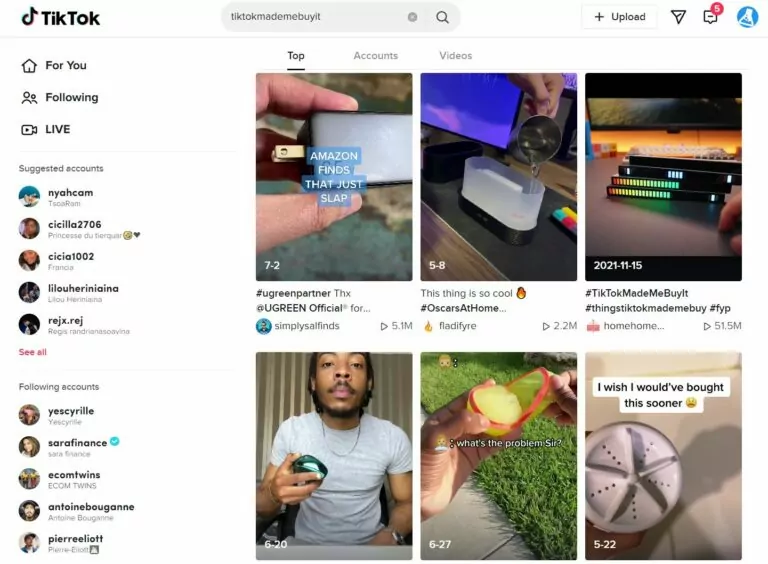
Why do TikTok challenges convert so well?
1. Social Proof
When thousands replicate an action, it feels validated.
2. Fear of Missing Out
Short trend cycles create urgency.
3. Emotional Identity
Participation equals belonging.
4. Visual Demonstration
Products are shown in real-world use.
TikTok doesn’t just advertise products—it demonstrates them.
That demonstration reduces friction and boosts impulse buying.
Turning Challenges Into Product Ideas
Here’s a practical framework:
-
Identify the challenge behavior.
-
Ask: What tool enables this?
-
Ask: Can it be improved or bundled?
-
Check supplier availability.
-
Validate cross-platform signals.
-
Estimate shipping time.
-
Create UGC-style creatives matching the challenge format.
Never copy the challenge blindly. Adapt it into a product narrative.
Advanced Strategy: Challenge Layering
Sometimes the strongest signals come from overlapping trends.
Example:
-
Morning routine challenge
-
Clean aesthetic challenge
-
Productivity desk setup challenge
Overlapping signals point toward:
-
Minimalist desk organizers
-
Adjustable lamps
-
Digital alarm clocks
-
Ergonomic laptop stands
When three behavioral trends intersect, product probability increases.
The 30-Day Forecasting Model
If your goal is predicting next month’s breakout product, follow this monthly rhythm:
Week 1:
Trend scouting and documentation.
Week 2:
Data tracking and comment mining.
Week 3:
Supplier sourcing and creative production.
Week 4:
Soft launch and testing.
Repeat monthly.
Consistency builds predictive intuition.
Common Mistakes Sellers Make
-
Chasing already saturated trends.
-
Ignoring shipping times.
-
Copying viral videos instead of adapting.
-
Overestimating trend lifespan.
-
Failing to analyze engagement quality.
Trend research is about pattern recognition, not hype chasing.
Long-Term Strategy: Building a Trend Radar System
Instead of manually searching daily, build a repeatable system:
-
Save niche hashtags.
-
Follow 50 micro-creators.
-
Track rising audio weekly.
-
Screenshot comment demand patterns.
-
Log hashtag growth metrics.
Over time, you’ll recognize trend acceleration before most sellers do.
TikTok rewards speed—but forecasting rewards structure.
The Future of Challenge-Based Product Discovery
As TikTok evolves, predictive selling will rely on:
-
AI-driven analytics tools
-
Social listening dashboards
-
Creator collaboration data
-
Real-time engagement heatmaps
Platforms like TikTok are increasingly becoming live consumer behavior laboratories.
The sellers who treat TikTok as a research engine—not just an ad platform—will dominate.
Final Thoughts: Predict Behavior, Not Just Products
The biggest mistake in product research is asking:
“What’s selling right now?”
The better question is:
“What behavior is spreading—and what product supports it?”
Trending challenges reveal emotional momentum before commercial saturation.
If you:
-
Track early signals,
-
Validate demand through comments,
-
Confirm cross-platform growth,
-
Launch before paid saturation,
You can consistently identify next month’s breakout opportunities.
In the era of short-form video, trend prediction isn’t luck.
It’s pattern recognition backed by disciplined observation.
And on TikTok, tomorrow’s best-seller is already hiding inside today’s challenge.