














 En

 50 min read
Influencer marketing has become one of the most effective ways for brands to reach potential customers, build credibility, and drive online sales. From emerging direct-to-consumer businesses to established mid-sized companies, brands are increasingly working with social media creators to introduce products, generate engagement, and influence purchasing decisions.
However, one important question continues to challenge marketing teams: Should a brand partner with micro-influencers who have smaller but highly engaged audiences, or invest in mega-influencers who can reach millions of people?
At first glance, the answer may seem obvious. Mega-influencers offer massive exposure, while micro-influencers usually charge less and maintain closer relationships with their followers. But influencer marketing is not simply a competition over follower counts. A creator with 20,000 highly relevant followers may generate more qualified customers than a celebrity with two million general followers.
For small and mid-sized brands, choosing the right influencer can make a significant difference in campaign profitability, brand recognition, and long-term customer acquisition.
The best choice depends on several factors, including marketing objectives, target audience, available budget, product category, brand maturity, and the ability to measure campaign performance.
This guide explores the differences between micro-influencers and mega-influencers, explains their respective strengths and weaknesses, and provides practical strategies to help smaller brands decide where to invest their influencer marketing budgets.
1. Understanding Micro-Influencers and Mega-Influencers
Before comparing these two types of creators, it is important to understand how influencer categories are commonly defined.
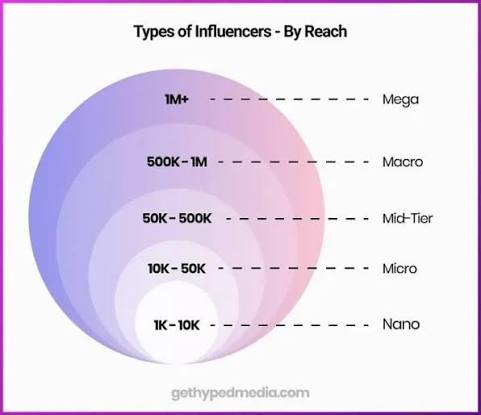
Follower-count classifications vary across platforms and marketing agencies. There is no universal standard, but the following ranges are frequently used as practical guidelines.
What Is a Micro-Influencer?
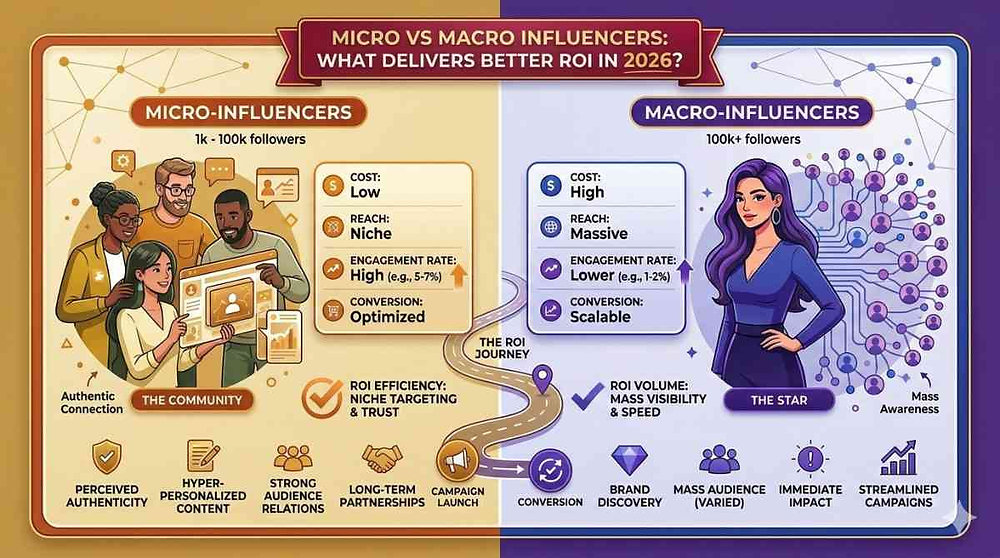
Micro-influencers are content creators who typically have approximately 10,000 to 100,000 followers on a social media platform.
They often focus on a particular niche, such as skincare, fitness, home decoration, parenting, travel, fashion, technology, or sustainable living.
Unlike mainstream celebrities, micro-influencers usually build their audiences around a specific interest or lifestyle. Their followers often share similar preferences, challenges, and purchasing interests.
For example, a micro-influencer who regularly reviews affordable skincare products may have an audience consisting primarily of consumers interested in beauty routines and product recommendations.
A home organization creator might attract renters, homeowners, and people interested in practical storage solutions.
This focused audience can be particularly valuable to small and mid-sized brands because it allows them to communicate with potential customers who already have an interest in their product category.
Micro-influencers are also more likely to interact directly with their followers through comments, direct messages, livestreams, and community discussions.
Their recommendations may feel more like advice from a knowledgeable friend than a traditional advertisement.
What Is a Mega-Influencer?
Mega-influencers are creators with audiences that generally exceed one million followers.
This category often includes celebrities, well-known internet personalities, major entertainers, and established social media figures with broad public recognition.
Their content reaches audiences across multiple demographic groups and geographic markets.
Mega-influencers can generate substantial attention in a short period. A single sponsored post, video, or product appearance may introduce a brand to hundreds of thousands or even millions of people.
For companies seeking large-scale awareness, this level of exposure can be extremely attractive.
However, a large audience does not automatically mean that every follower is a potential customer.
A fashion celebrity may have millions of followers, but only a small percentage may be interested in an unfamiliar home improvement product.
A popular entertainer may generate enormous engagement around lifestyle content without necessarily influencing purchasing decisions in a particular product category.
Therefore, follower count should be treated as one evaluation factor rather than the primary measure of influencer value.
Where Do Mid-Tier Influencers Fit?
Although this article focuses on micro-influencers and mega-influencers, brands should also understand the role of mid-tier creators.
Mid-tier influencers commonly have approximately 100,000 to one million followers.
They can offer a balance between audience size and niche relevance. Some have developed strong personal brands while maintaining meaningful relationships with their communities.
For brands that have moved beyond the early testing stage but cannot yet justify celebrity-level partnerships, mid-tier creators may provide an attractive middle ground.
A smart influencer strategy does not necessarily require choosing only one category. Different creator sizes can support different stages of the customer journey.
2. Micro-Influencers vs. Mega-Influencers: The Key Differences
Both influencer categories can help brands attract attention and generate sales, but they operate differently.
Understanding these differences makes it easier to select the right partnership for a specific campaign.
Audience Size and Reach
The most obvious difference is audience size.
Micro-influencers have relatively small audiences. Their reach is limited compared with large creators, but their followers are often concentrated around a particular interest.
Mega-influencers provide significantly greater exposure. Their content can reach broad audiences, making them suitable for major launches, seasonal campaigns, and large-scale brand awareness initiatives.
For a small brand introducing a new product, reaching 30,000 highly relevant consumers may be more useful than reaching one million people with little interest in the product.
On the other hand, a company launching a nationally distributed product may need the broader exposure that a mega-influencer can provide.
The important question is not simply how many people will see the campaign. It is how many of those people are likely to become interested customers.
Engagement and Audience Interaction
Micro-influencers often maintain closer relationships with their followers.
They may have more opportunities to respond to comments, answer product questions, share personal experiences, and participate in conversations.
This can create a stronger sense of community.
Mega-influencers usually operate on a much larger scale. Their posts may attract thousands of comments, but they cannot personally interact with every follower.
Their audiences may also include people who follow them primarily for entertainment rather than product recommendations.
However, engagement should never be judged by follower count alone.
Brands should evaluate actual engagement patterns, including meaningful comments, shares, saves, questions, and interactions over time.
A creator with a smaller audience but consistent conversations may be more useful than a larger account with mostly passive followers.
Audience Trust and Credibility
Trust is one of the most important elements of influencer marketing.
Consumers are more likely to consider a product when they believe the recommendation comes from someone whose opinions they value.
Micro-influencers often build credibility through repeated content within a specific niche.
A creator who has spent years discussing home fitness equipment may be perceived as a useful source of information by people interested in building a home gym.
A beauty creator who consistently tests skincare products may develop a reputation for practical recommendations.
Mega-influencers can also have strong credibility, particularly when their public image aligns naturally with the product category.
However, their frequent commercial partnerships may make some audiences more cautious about sponsored recommendations.
The key distinction is not that micro-influencers are always more trustworthy. It is that their niche expertise and personal communication style can make their recommendations feel especially relevant.
Pricing and Campaign Costs
Micro-influencers generally require lower fees than mega-influencers.
Some may accept product gifting, affiliate commissions, or relatively modest fixed payments, depending on their audience size, content quality, and partnership expectations.
Mega-influencers can charge substantial fees for sponsored content, especially when they have strong brand recognition or significant demand from advertisers.
Their total campaign costs may also include production expenses, usage rights, exclusivity fees, agency fees, and additional distribution costs.
For smaller businesses, the difference can be significant.
A brand might be able to work with several micro-influencers for the cost of one major creator partnership.
This creates opportunities to test different audiences, content formats, and product messages without committing the entire marketing budget to one campaign.
However, lower creator fees do not automatically guarantee better returns. Brands must also account for product samples, shipping, campaign management, content review, tracking, and coordination.
Conversion Potential
Influencer marketing should ultimately contribute to business objectives.
For ecommerce brands, these objectives may include:
- Generating product purchases.
- Acquiring new customers.
- Increasing qualified website traffic.
- Building email and SMS subscriber lists.
- Encouraging first-time product trials.
- Increasing repeat purchases.
- Improving product awareness among a defined audience.
Micro-influencers can be particularly effective when a product requires explanation, demonstration, or a recommendation from someone familiar with the category.
Mega-influencers may be more effective when the goal is to introduce a brand to a large audience or create widespread demand.
Neither category guarantees higher conversion rates.
Actual results depend on audience relevance, product-market fit, creative quality, offer attractiveness, landing-page experience, and the creator’s ability to communicate the product’s value.
3. Why Micro-Influencers Are Attractive to Small and Mid-Sized Brands
For businesses with limited marketing budgets, micro-influencers offer several practical advantages.
More Affordable Partnerships
Budget flexibility is one of the strongest reasons smaller brands choose micro-influencers.
Instead of spending a large portion of the marketing budget on one major creator, a company can distribute its investment across multiple smaller partnerships.
This approach reduces dependence on a single individual and makes it easier to test different campaign ideas.
For example, a growing skincare brand could collaborate with creators who focus on sensitive skin, affordable beauty, minimalist routines, and ingredient education.
Each creator reaches a slightly different audience.
The brand can then compare traffic quality, product interest, purchases, and customer acquisition costs to identify the strongest partnerships.
This type of testing is especially useful when a company is still learning which customer segments respond best to its products.
Highly Targeted Audiences
Small brands rarely need to reach everyone.
They need to reach the people who are most likely to buy.
A niche creator can help a brand connect with a specific customer group without paying for broad exposure that may have little commercial value.
Consider a company selling ergonomic office accessories.
A general lifestyle influencer might introduce the product to a large audience, but a creator focused on remote work, productivity, or home office design may attract more relevant potential customers.
The same principle applies to:
- Outdoor equipment brands working with hiking creators.
- Pet supply companies partnering with dog and cat creators.
- Sustainable fashion labels collaborating with slow-fashion advocates.
- Kitchenware brands working with home cooking creators.
- Fitness products promoted by workout and wellness specialists.
- Parenting products introduced by family-focused creators.
The closer the relationship between the creator’s content and the product’s purpose, the easier it may be for followers to understand why the product is relevant.
More Natural Product Recommendations
Micro-influencers often integrate products into their existing content.
Rather than producing an advertisement that feels disconnected from their usual posts, they can demonstrate how a product fits into their everyday routines.
For example, a home organization creator could show how storage products solve a real problem in a small apartment.
A fitness creator could demonstrate how a resistance band fits into a short home workout.
A pet creator could document how a particular grooming tool is used during a normal care routine.
These demonstrations provide context.
Instead of simply telling consumers that a product is useful, the creator shows how it works and why someone might need it.
For products that require education, this can be more persuasive than a brief promotional message.
Easier Relationship Building
Smaller creators may be more accessible to emerging brands.
Communication can be more direct, and partnership arrangements may be easier to customize.
A company might work with a creator on several types of content:
- A product introduction.
- An unboxing video.
- A product demonstration.
- A detailed review.
- A follow-up post after several weeks of use.
- A discount-code promotion.
- A short-form video that answers common customer questions.
Repeated collaborations can help build familiarity between the brand and the creator’s audience.
Instead of treating influencer marketing as a one-time transaction, brands can develop long-term partnerships with creators who genuinely understand their products.
More Opportunities for Content Testing
Micro-influencers can also provide brands with a variety of creative approaches.
Different creators may explain the same product in different ways.
One might emphasize convenience, another may focus on affordability, and another may demonstrate durability.
These variations help brands discover which messages resonate most strongly with customers.
For ecommerce businesses, creator-generated content may also become useful material for other marketing channels, subject to the agreed usage rights.
A successful creator video could inspire paid social advertisements, product-page demonstrations, email campaigns, or organic brand content.
However, brands should negotiate content usage rights clearly rather than assuming that payment for a sponsored post automatically grants unlimited advertising rights.
4. The Limitations of Micro-Influencer Marketing
Micro-influencers have many advantages, but they are not a perfect solution.
Smaller brands should understand the challenges before building a campaign around multiple creators.
Limited Individual Reach
A micro-influencer cannot usually provide the same immediate exposure as a celebrity or major online personality.
If a brand wants to generate national attention within a few days, relying on a single small creator may not be sufficient.
The company may need to work with many creators or combine influencer marketing with paid advertising, public relations, and other channels.
More Campaign Management
Working with multiple creators creates additional administrative work.
Each partnership may involve:
- Finding and evaluating creators.
- Negotiating compensation.
- Sending product samples.
- Confirming content requirements.
- Reviewing campaign schedules.
- Tracking unique links and discount codes.
- Monitoring performance.
- Processing payments.
- Managing usage rights.
A campaign involving 15 micro-influencers may require more coordination than one partnership with a single large creator.
Brands should consider this operational cost when comparing campaign options.
Inconsistent Content Quality
Not every micro-influencer has the same level of production skill.
Some create professional videos with excellent lighting, editing, storytelling, and product demonstrations.
Others may have strong audience relationships but produce less polished content.
A smaller brand should evaluate content quality before agreeing to a partnership.
It is also important to remember that high production value is not the only measure of effectiveness. Authenticity, clarity, and audience relevance may matter more than expensive equipment.
Smaller Creators Still Need Verification
A small following does not guarantee an authentic audience.
Some accounts may have purchased followers, artificial engagement, inactive audiences, or suspicious interaction patterns.
Brands should examine recent posts, comment quality, follower growth, and audience demographics before making a decision.
A creator’s niche relevance is valuable only when the audience is genuine and reasonably aligned with the target customer.
5. Why Mega-Influencers Can Still Be Valuable
Although micro-influencers are attractive to smaller companies, mega-influencers should not be dismissed.
There are situations where a large creator can deliver value that smaller creators may struggle to match.
Rapid Brand Awareness
Mega-influencers can introduce a brand to a large audience in a relatively short period.
This can be useful when a company is launching a new product, entering a new market, or trying to increase public recognition.
A large creator may also generate additional attention beyond the original sponsored post.
Followers may discuss the collaboration, share the content, create their own posts, or search for the brand after seeing the promotion.
This secondary attention can extend the campaign’s impact.
However, brands should not assume that every impression represents meaningful interest.
Awareness campaigns need clear objectives and appropriate measurement.
Strong Public Recognition
Some mega-influencers have developed recognizable personal brands.
Their involvement may give a product immediate visibility and make the partnership itself newsworthy.
This can be particularly valuable for brands that want to associate themselves with a certain lifestyle, entertainment category, or cultural trend.
For example, a sportswear company may benefit from a partnership with a well-known athlete whose public image aligns with performance and competition.
A beauty brand may gain attention by working with a major creator known for beauty content.
The relationship between the creator’s public identity and the product is crucial.
A large name alone does not make an effective partnership.
Large-Scale Product Launches
Mega-influencers can help brands create a concentrated burst of attention around an important launch.
This can be useful when a company has enough inventory, customer support capacity, and fulfillment resources to handle a sudden increase in demand.
For instance, a consumer electronics brand launching a new device may benefit from a major creator demonstrating the product to a broad audience.
A fashion label introducing a new collection may use a high-profile partnership to create a sense of occasion.
However, campaign timing must be coordinated with inventory availability, delivery schedules, and promotional plans.
Generating demand that a business cannot fulfill can damage customer trust.
Greater Potential for Mainstream Exposure
Niche creators usually communicate within specific communities.
Mega-influencers may reach beyond those communities and introduce a product to consumers who have never considered the category.
This can help brands expand their addressable audience.
A company that has already established product-market fit may use large creators to reach new customer segments and increase brand recognition.
For small businesses, this strategy generally becomes more attractive once the company has sufficient budget and a reliable way to convert increased attention into sales.
6. The Risks of Working With Mega-Influencers
Large-scale partnerships can produce impressive visibility, but they also carry important risks.
High Upfront Investment
Mega-influencer campaigns can require substantial financial commitments.
The fee may be due before the brand knows how many purchases the campaign will generate.
This creates financial risk for small and mid-sized businesses.
If the campaign underperforms, the company may have limited opportunities to recover its investment.
A brand with a limited budget should avoid spending money on a major influencer simply because the creator is famous.
The partnership must have a clear commercial or strategic purpose.
Audience Relevance May Be Lower Than Expected
A mega-influencer may have millions of followers, but the audience can be highly diverse.
Some followers may live in markets where the product is unavailable.
Others may be outside the brand’s target age range, income group, or product category.
Even a creator with an impressive audience may deliver limited qualified traffic.
Brands should request audience demographic information and examine whether the creator’s followers match the intended customer profile.
Less Personal Interaction
Large creators may receive more comments and messages than they can personally answer.
This can make it difficult to create the kind of detailed product discussion that often supports considered purchases.
If customers need to understand product specifications, installation, compatibility, or maintenance, a short promotional post may not provide enough information.
Brands should consider pairing a major awareness campaign with detailed educational content, product demonstrations, customer reviews, and responsive customer support.
Greater Dependence on One Partnership
A campaign centered on one mega-influencer creates concentration risk.
If the creator becomes involved in controversy, changes their public image, or delivers disappointing results, the brand may face significant consequences.
Working with a broader group of creators can reduce dependence on one personality.
It can also provide a more diverse set of customer perspectives.
Potential Brand Misalignment
A creator’s audience may be large, but their image may not fit the brand.
A premium product may struggle to communicate its positioning through a creator whose content is built around low-cost impulse purchases.
A family-oriented business may not benefit from a partnership with a personality whose public content frequently conflicts with its brand values.
Before signing a major agreement, brands should examine the creator’s history, tone, partnerships, public reputation, and audience expectations.
7. Which Influencer Type Is Better for Different Brand Stages?
A brand’s growth stage should influence its influencer marketing strategy.
The best approach for a new ecommerce store may be very different from the approach used by a company with established brand recognition and a large marketing budget.
Stage One: Newly Established Brands
For a new business, the primary challenges are often limited awareness, uncertain customer demand, and a lack of marketing data.
At this stage, micro-influencers are often a practical starting point.
The brand can work with several relevant creators to test:
- Which customer groups respond best.
- Which product features attract attention.
- Which content formats generate meaningful engagement.
- Which messages encourage website visits.
- Which creators drive actual purchases.
The objective should be learning as well as sales.
A new brand should avoid committing too much money before understanding how customers respond to its products.
Product seeding, small paid collaborations, and affiliate partnerships can provide opportunities to test the market with controlled spending.
Stage Two: Growing Small Businesses
Once a business has initial sales and some evidence of product-market fit, it can begin expanding its creator partnerships.
Micro-influencers can remain an important part of the strategy, but the company may also test mid-tier creators.
The focus should shift from simply generating exposure to building a repeatable customer acquisition process.
Brands can identify creators who consistently generate qualified traffic or purchases and develop longer-term partnerships with them.
They can also test different product bundles, seasonal offers, and promotional messages.
At this stage, it is useful to build a creator performance database.
Instead of judging influencers by popularity, record their campaign results and identify which partnerships produce the best commercial outcomes.
Stage Three: Established Mid-Sized Brands
A mid-sized company may have more resources, stronger brand recognition, and a better understanding of its customer base.
This creates opportunities to combine micro-influencers, mid-tier creators, and selected mega-influencers.
Micro-influencers can maintain niche relevance and support product education.
Mid-tier creators can expand reach while retaining a recognizable content identity.
Mega-influencers can support major launches and broader brand awareness.
The brand should assign each partnership a specific role rather than expecting every creator to deliver the same result.
Stage Four: Brands Entering New Markets
International expansion introduces additional challenges.
A company entering a new country may have limited local recognition and may not fully understand regional consumer preferences.
Local micro-influencers can help the brand understand language, culture, shopping habits, and product expectations.
Their content may also make the brand feel more familiar to local consumers.
A mega-influencer with strong recognition in the target country may accelerate awareness, but the brand should first confirm that the creator’s audience matches the local market.
A combined strategy can be effective: use niche creators to build relevance and a major creator to generate broader attention.
8. How to Choose the Right Influencer for Your Brand
Follower count should never be the only selection criterion.
A good influencer partnership starts with a clear understanding of the brand’s objectives and customers.
Here are the most important factors to evaluate.
Define Your Campaign Objective
Before searching for creators, decide what the campaign needs to accomplish.
Common objectives include:
Brand awareness: Introduce the business to new audiences and increase recognition.
Traffic generation: Encourage relevant users to visit a website or product page.
Sales conversion: Generate purchases through trackable links, discount codes, or affiliate arrangements.
Product education: Explain how a product works and demonstrate its benefits.
Community building: Encourage conversations and develop a group of interested customers.
Content creation: Obtain creator-produced content for approved use across brand marketing channels.
Different objectives require different creator profiles.
If the goal is rapid awareness, a larger influencer may be appropriate.
If the goal is product education among a niche audience, a micro-influencer may be a stronger choice.
Evaluate Audience Demographics
A creator’s audience should match the people the brand wants to reach.
Important factors include:
- Geographic location.
- Age distribution.
- Gender distribution, when relevant to the product.
- Language.
- Consumer interests.
- Purchasing behavior.
- Relevant lifestyle characteristics.
For example, a brand selling premium outdoor equipment may prioritize followers who regularly engage with hiking, camping, and adventure content.
A company selling affordable household products may focus on audiences interested in home improvement, family life, and practical shopping recommendations.
Do not rely exclusively on the creator’s own description of their audience. Request platform analytics or other reasonable evidence where available.
Review Content Quality
Look beyond follower numbers and examine the creator’s recent posts.
Ask the following questions:
- Is the content consistent?
- Does the creator communicate clearly?
- Are product demonstrations easy to understand?
- Does the creator have a recognizable style?
- Do sponsored posts fit naturally into the account?
- Is the creator comfortable explaining product benefits?
- Does the content reflect the brand’s desired image?
A creator who can explain a product clearly may be more valuable than someone who simply produces visually attractive posts.
Examine Engagement Quality
Engagement rate can provide useful context, but it should not be treated as a standalone performance guarantee.
Look at the nature of audience interactions.
Meaningful comments may include product questions, personal experiences, requests for recommendations, and discussions related to the creator’s niche.
Generic comments, repetitive messages, or suspicious engagement patterns may indicate low-quality interaction.
Brands should also remember that engagement rates vary across platforms, account sizes, content formats, and industries.
Compare creators with similar characteristics rather than applying one universal benchmark.
Check Previous Brand Collaborations
Review the creator’s sponsored content history.
A creator who has worked with many competing brands may have limited exclusivity or may appear overly commercial.
However, previous partnerships can also reveal whether the creator has experience producing effective promotional content.
Check whether past sponsored posts received meaningful interaction and whether the products were presented clearly.
It is also useful to identify potential conflicts with existing brand relationships.
Assess Professionalism
A successful partnership requires more than a popular social media account.
Creators should be able to communicate reliably, meet agreed deadlines, follow reasonable campaign requirements, and disclose sponsored relationships appropriately.
Brands should discuss expectations before beginning work.
This includes content format, publishing dates, revisions, payment, usage rights, exclusivity, and performance reporting.
A professional agreement helps both sides understand their responsibilities.
9. How Much Should Small and Mid-Sized Brands Spend?
There is no single influencer marketing budget that works for every business.
The right amount depends on profit margins, available cash flow, average order value, customer lifetime value, and marketing objectives.
A smaller brand should begin with a budget that allows it to test partnerships without creating unnecessary financial pressure.
Start With Controlled Experiments
Instead of immediately committing to a large campaign, allocate a limited test budget to several creators.
For example, a brand could divide its initial budget among five micro-influencers with different but relevant audience profiles.
The purpose is to compare performance.
One creator may generate substantial traffic but few purchases.
Another may produce fewer clicks but a stronger purchase rate.
A third may generate excellent content that can be reused in other marketing activities.
These differences help the brand make better decisions about future spending.
Consider the Total Cost of Each Partnership
The creator’s fee is only one part of the campaign cost.
Other expenses may include:
- Product samples.
- Packaging and shipping.
- Affiliate commissions.
- Content production.
- Usage rights.
- Paid media amplification.
- Agency or management fees.
- Campaign tracking tools.
- Staff time.
A realistic budget should account for all relevant costs.
For example, a campaign involving 10 small creators may have relatively low individual fees but still require substantial time and logistics.
Avoid Choosing Creators Based on Price Alone
The cheapest influencer is not necessarily the best investment.
A creator with a very small but highly relevant audience may generate stronger results than a larger account with weak audience alignment.
Similarly, a more expensive creator may be worth the investment if they consistently produce qualified traffic, purchases, or valuable content.
The goal is not to minimize creator fees. It is to maximize the value generated by the overall campaign.
10. How to Measure Influencer Marketing Performance
One of the biggest mistakes brands make is judging influencer campaigns by likes and views alone.
These metrics can indicate attention, but they do not necessarily demonstrate business impact.
A more effective measurement system should connect campaign activity with the brand’s actual objectives.
Reach and Impressions
Reach measures the number of unique accounts exposed to content.
Impressions measure how many times content was displayed.
These metrics are useful for awareness campaigns.
However, a high number of impressions does not automatically mean that people remember the brand or intend to purchase.
Engagement Metrics
Engagement can include:
- Likes.
- Comments.
- Shares.
- Saves.
- Video interactions.
- Story replies.
- Other platform-specific interactions.
For many campaigns, shares and saves can provide useful evidence of interest because they indicate that viewers found the content worth keeping or distributing.
However, engagement should always be interpreted in context.
A high engagement rate does not necessarily translate into sales.
Click-Through Rate
Click-through rate measures the percentage of impressions or relevant exposures that result in clicks, depending on the platform’s reporting definition.
It can help brands understand whether the creator’s content motivates viewers to take the next step.
If a post generates many impressions but very few clicks, the message, call to action, or audience relevance may need improvement.
Conversion Rate
Conversion rate measures the percentage of visitors who complete a desired action.
For ecommerce campaigns, this may be a completed purchase.
Brands can use unique tracking links, creator-specific discount codes, and appropriate analytics tools to understand how influencer traffic performs.
A high click volume with a low purchase rate may indicate problems with the product offer, landing page, price, shipping information, or audience quality.
Customer Acquisition Cost
Customer acquisition cost, or CAC, measures how much the brand spends to acquire a customer.
A basic campaign-level calculation is:
Customer Acquisition Cost = Total Campaign Cost ÷ New Customers Acquired
For example, if a campaign costs $2,000 and generates 50 new customers, the campaign-level acquisition cost is $40 per customer.
This calculation should include relevant campaign expenses, not just creator payments.
Brands should also distinguish between new customers and existing customers who would likely have purchased anyway.
Return on Ad Spend and Campaign Return
For ecommerce brands, revenue and profitability matter.
A basic revenue-based return calculation is:
Campaign ROAS = Attributed Revenue ÷ Campaign Cost
If a creator campaign costs $1,500 and generates $6,000 in attributed revenue, the campaign ROAS is 4.0.
However, revenue-based ROAS is not the same as profit.
Product costs, shipping, payment processing, discounts, returns, and other expenses must be considered when evaluating whether the campaign is profitable.
A brand should also be careful with attribution. A customer may discover a product through an influencer and purchase later through a search engine or direct visit.
Last-click reporting may not capture every contribution made by the creator.
For a more complete evaluation, combine tracking links and discount codes with customer surveys, new-customer reporting, and broader campaign analysis.
Long-Term Customer Value
Some influencer campaigns may generate customers who purchase repeatedly.
This is especially relevant for products such as skincare, pet supplies, household consumables, supplements, and other replenishable goods.
A creator who attracts loyal customers may deliver greater long-term value than one who generates a large number of one-time discount-driven purchases.
Where possible, compare customer retention and repeat purchase behavior across creator cohorts.
This helps brands evaluate more than the immediate revenue generated by a sponsored post.
11. The Power of Combining Micro-Influencers and Mega-Influencers
Small and mid-sized brands do not have to choose one category permanently.
In many cases, a combined strategy is more effective.
The key is to assign each creator type a clear role.
Use Micro-Influencers to Build Trust
Micro-influencers can provide detailed product demonstrations, practical recommendations, and niche audience engagement.
They can help consumers understand why a product is useful and how it fits into everyday life.
This makes them valuable for product education and targeted customer acquisition.
Use Mega-Influencers to Expand Awareness
Mega-influencers can introduce a brand to a broader audience.
They may be particularly useful for major product launches, seasonal campaigns, and market expansion.
A large creator can help create initial attention, while smaller creators provide more detailed information and continued discussion.
Build a Multi-Level Creator Campaign
Consider a mid-sized home goods brand launching a new collection.
The company could use the following structure:
Phase One: Product Introduction
Work with a small group of relevant micro-influencers to demonstrate product features, share everyday use cases, and gather audience feedback.
Phase Two: Broader Awareness
Partner with one or two larger creators whose audiences overlap with the brand’s target customers.
Use the campaign to introduce the collection to a wider market.
Phase Three: Conversion
Continue working with micro-influencers who generated qualified traffic or purchases.
Use clear offers, product demonstrations, and trackable links to encourage action.
Phase Four: Content Amplification
With appropriate permissions, use the strongest creator content in paid social campaigns, product pages, and email marketing.
This structure connects broad awareness with more targeted product education and conversion activity.
12. How to Find the Right Micro-Influencers
Finding relevant creators is often more important than finding famous ones.
Small brands can use several practical approaches.
Search Within Your Product Niche
Start with the topics your ideal customers already follow.
Search for creators who regularly discuss products, problems, and activities related to your category.
For example, a brand selling window coverings could look for creators who focus on interior design, home renovation, apartment living, and energy-efficient homes.
A pet supply business could explore creators who regularly publish pet care, training, grooming, and animal lifestyle content.
The goal is to find creators whose audiences already have a reason to care about the product.
Explore Relevant Hashtags and Communities
Hashtags can help identify creators who publish content within a specific category.
However, a hashtag alone is not proof of audience relevance.
Review the creator’s overall account and recent posts.
Look for consistent subject matter and genuine interaction rather than accounts that simply use popular hashtags to attract attention.
Analyze Competitor Collaborations
Observing competitor partnerships can reveal which creator categories are active in your industry.
Look at the brands they work with, the content formats they use, and the responses generated by their campaigns.
This research should be used to identify opportunities, not simply copy another brand’s influencer list.
Smaller companies may find opportunities among creators who are relevant to the category but have not yet partnered with many competing businesses.
Build a Creator Database
Maintain a structured list of potential partners.
Useful fields include:
- Creator name and platform.
- Profile link.
- Follower count.
- Main content category.
- Audience location.
- Average views on recent content.
- Engagement observations.
- Previous brand partnerships.
- Estimated collaboration cost.
- Contact information.
- Campaign history.
- Results from previous collaborations.
A database makes it easier to compare creators objectively and develop long-term relationships.
13. Common Influencer Marketing Mistakes Small Brands Should Avoid
Even a well-funded campaign can fail when the strategy is poorly designed.
Here are several mistakes that smaller businesses should avoid.
Mistake One: Choosing Influencers Only by Follower Count
A large audience may look impressive, but it does not guarantee relevant exposure or purchases.
Brands should prioritize audience fit, content relevance, engagement quality, and measurable results.
Mistake Two: Sending Products Without a Clear Objective
Product gifting can be a useful way to introduce a brand to creators.
However, sending free products does not guarantee that a creator will publish content.
If the brand expects a specific deliverable, that expectation should be agreed upon in advance.
Product gifting and paid content partnerships should be treated as different arrangements.
Mistake Three: Overly Controlling the Creator’s Content
Brands need to protect their reputation and ensure that important product information is accurate.
However, excessively restrictive scripts can make content feel unnatural.
A better approach is to provide clear product information, key messages, prohibited claims, and campaign requirements while allowing creators to communicate in their own style.
This preserves both brand accuracy and creator authenticity.
Mistake Four: Failing to Provide Tracking Links
Without proper tracking, brands may struggle to understand which creators generated meaningful results.
Each partnership should use an appropriate tracking method, such as unique links, discount codes, or campaign-specific landing pages.
Tracking should be established before content goes live.
Mistake Five: Ignoring the Landing Page
Influencer content may generate interest, but a poor website experience can prevent purchases.
Before launching a campaign, check:
- Page loading speed.
- Mobile usability.
- Product descriptions.
- Product images and videos.
- Pricing clarity.
- Shipping information.
- Return policies.
- Payment options.
- Customer reviews.
- Checkout functionality.
A successful influencer campaign cannot fully compensate for a confusing or unreliable shopping experience.
Mistake Six: Ending Partnerships Too Quickly
Not every creator produces immediate results.
Some audiences require repeated exposure before they become familiar with a brand.
A single post may generate awareness without producing immediate purchases.
Brands should evaluate the campaign objective and consider whether a longer partnership makes sense.
At the same time, they should not continue paying for partnerships that consistently fail to meet agreed performance or quality standards.
Mistake Seven: Ignoring Advertising Disclosure Requirements
Sponsored content and material relationships should be disclosed in accordance with applicable advertising regulations and platform policies.
Brands should clearly communicate disclosure expectations to creators.
They should also avoid misleading product claims, fabricated testimonials, and unsupported performance statements.
Transparent partnerships protect consumers and help preserve brand credibility.
14. How to Negotiate Better Influencer Partnerships
Negotiation should focus on creating a fair arrangement for both the brand and the creator.
A small company does not necessarily need to offer the highest payment to attract a suitable partner.
It can also provide value through product access, long-term collaboration opportunities, affiliate commissions, and creative freedom.
Combine Fixed Fees With Performance Incentives
Some creators may be open to a hybrid compensation model.
For example, the brand could offer a fixed payment for producing and publishing content, plus an affiliate commission for qualifying purchases.
This structure gives the creator guaranteed compensation while creating an additional incentive tied to results.
The agreement should clearly define how sales are attributed, when commissions are paid, and how returns or cancellations are handled.
Negotiate Content Usage Rights Separately
A creator’s fee for publishing a post does not automatically include unlimited rights for the brand to reuse that content.
Brands should discuss:
- Organic reposting permissions.
- Paid advertising usage.
- Usage duration.
- Geographic restrictions.
- Editing permissions.
- Platform restrictions.
- Creator account advertising permissions, where applicable.
These rights can materially affect the value and cost of a partnership.
Build Long-Term Relationships
Repeated partnerships may create more value than isolated sponsored posts.
When a creator genuinely likes a product and understands the brand, their recommendations may become more natural over time.
Long-term relationships can also reduce the time spent finding and onboarding new partners.
Brands should reward reliable creators and communicate campaign results when appropriate.
15. Which Social Media Platforms Work Best for Each Influencer Type?
The best influencer category can also depend on the platform.
Different platforms encourage different types of content and audience behavior.
Instagram is useful for visual storytelling, product demonstrations, lifestyle content, and community interaction.
Micro-influencers can use Reels, Stories, carousels, and product-focused posts to explain how items fit into daily life.
Mega-influencers can provide broader visibility through major collaborations and large-scale campaign content.
For fashion, beauty, home decor, food, and lifestyle brands, Instagram can support both awareness and product discovery.
TikTok
TikTok is particularly useful for short-form video, product demonstrations, entertainment, and discovery.
Smaller creators may benefit from the platform’s content discovery system because visibility is not determined solely by follower count.
A compelling video can reach viewers beyond the creator’s existing audience.
This makes TikTok attractive for product testing and creative experimentation.
Larger creators can still generate significant attention, particularly when their content has strong entertainment value or connects with an existing trend.
However, brands should not rely on follower count alone when predicting TikTok performance.
YouTube
YouTube is useful for detailed explanations, reviews, tutorials, comparisons, and long-form product demonstrations.
Creators can show how a product works, discuss advantages and limitations, and answer common questions.
This is particularly valuable for products with more complex purchasing decisions.
Micro-influencers may provide highly specialized knowledge, while larger creators can introduce products to broad audiences.
YouTube content can also remain discoverable over time, potentially generating traffic long after the initial publication date.
Pinterest can be valuable for visually oriented product categories such as home decor, fashion, wedding planning, recipes, crafts, and lifestyle inspiration.
Smaller creators can contribute niche content that attracts users researching ideas and products.
For brands that rely on inspiration and planning, Pinterest partnerships may support longer-term product discovery.
The platform’s value should be assessed according to the brand’s audience and customer journey rather than assumed from its visual format alone.
16. A Practical Decision Framework: Micro or Mega?
If your business is still uncertain about which creator category to choose, consider the following framework.
| Business objective | Recommended starting point |
|---|---|
| Limited marketing budget | Micro-influencers |
| Highly specific target audience | Micro-influencers |
| Detailed product demonstrations | Micro-influencers |
| Testing new customer segments | Micro-influencers |
| Generating niche community engagement | Micro-influencers |
| Launching a major product line | Mega-influencers or a mixed strategy |
| Rapid mainstream awareness | Mega-influencers |
| Entering a large new market | A combination of creator sizes |
| Building long-term customer relationships | Micro-influencers and selected mid-tier creators |
| Producing diverse marketing content | Multiple creators across different sizes |
This framework is a starting point, not a universal rule.
The right choice should always be based on actual campaign requirements and available resources.
17. A 90-Day Influencer Marketing Plan for Small and Mid-Sized Brands
A structured 90-day plan can help a brand move from experimentation to a more repeatable influencer marketing process.
Days 1–15: Define the Strategy
Start by identifying the campaign’s main objective.
Choose one primary goal, such as generating first-time purchases, introducing a new product, or increasing awareness within a particular customer group.
Then define:
- Target audience.
- Product priorities.
- Available budget.
- Preferred social media platforms.
- Campaign tracking methods.
- Key performance indicators.
- Brand messaging requirements.
Prepare a list of potential creators whose content and audience match the brand.
Days 16–30: Evaluate and Contact Creators
Review the shortlisted creators.
Check their recent content, audience characteristics, engagement quality, previous partnerships, and professionalism.
Contact a manageable group with a clear partnership proposal.
Explain why the brand believes their audience is relevant.
Avoid sending generic messages that could be copied to hundreds of accounts.
A personalized approach is more likely to attract creators who are genuinely interested in the product.
Days 31–45: Launch the First Test Campaign
Begin with a limited number of collaborations.
Provide products, campaign information, agreed content requirements, tracking links, and publishing schedules.
Allow creators enough time to use the product and produce content.
Monitor early engagement, traffic quality, and audience feedback.
Do not make major spending decisions based only on the first few hours of performance.
Days 46–60: Analyze the Results
Compare creators using metrics that match the campaign objective.
For sales-focused campaigns, examine purchases, new customers, conversion rate, customer acquisition cost, and revenue-based ROAS.
For awareness campaigns, evaluate reach, impressions, audience relevance, and meaningful engagement.
Also review qualitative feedback.
Customer questions may reveal product concerns, missing information, or opportunities to improve the website.
Identify the strongest creators and the content approaches that performed best.
Days 61–75: Expand Successful Partnerships
Increase investment in creators who demonstrate consistent value.
Consider repeat collaborations, additional content formats, or affiliate arrangements.
You can also test new creators who resemble the strongest performers.
At this stage, the goal is to scale what has demonstrated potential rather than simply increase the number of partnerships.
Days 76–90: Build a Repeatable System
Document the campaign process.
Create standard templates for creator outreach, agreements, product information, tracking, reporting, and content approvals.
Develop a preferred creator list and establish a clear process for future campaigns.
At the end of the 90 days, review whether influencer marketing is contributing to profitable customer acquisition, useful content production, or meaningful brand growth.
Use the results to determine the next quarter’s budget and creator mix.
18. The Future of Influencer Marketing: Why Authenticity and Performance Matter More Than Follower Count
Influencer marketing continues to evolve.
Consumers have become familiar with sponsored content, and brands are increasingly expected to demonstrate the value of their marketing investments.
This creates opportunities for creators who offer genuine expertise, distinctive content, and meaningful audience relationships.
Smaller Communities Can Create Stronger Relevance
As social media becomes more crowded, niche communities can provide valuable opportunities for brands.
Consumers often seek recommendations from people who understand their specific interests.
This does not mean every micro-influencer will outperform a major creator.
It means that audience relevance deserves more attention in campaign planning.
Creator Content Is Becoming a Broader Marketing Asset
Influencer partnerships are no longer limited to publishing sponsored posts.
Brands can collaborate with creators to develop product demonstrations, tutorials, testimonials, educational videos, and other content formats.
With the correct permissions, these assets can support multiple marketing channels.
For smaller businesses, this can make creator partnerships more valuable because one collaboration may contribute to both audience reach and content production.
Performance Measurement Is Becoming More Important
Brands increasingly need to understand what happens after a consumer sees a sponsored post.
Did the person visit the website?
Did they add a product to their cart?
Did they complete a purchase?
Did they become a repeat customer?
These questions help businesses move beyond superficial engagement metrics.
A well-designed influencer program should combine creative evaluation with reliable performance tracking.
Long-Term Relationships Can Create Greater Value
One-time campaigns may generate temporary attention.
Long-term creator relationships can build familiarity, consistency, and stronger product understanding.
When a creator repeatedly discusses a brand because they genuinely value its products, the relationship may feel more credible than an isolated advertisement.
For many small and mid-sized businesses, developing a reliable network of long-term partners may be more sustainable than continuously competing for expensive celebrity placements.
19. Frequently Asked Questions
Are Micro-Influencers Better Than Mega-Influencers for Small Businesses?
Micro-influencers are often a practical starting point for small businesses because they can offer niche audiences, more flexible budgets, and opportunities for targeted testing.
However, they are not automatically better in every situation.
If the primary objective is large-scale brand awareness or a major product launch, a mega-influencer may be worth considering.
The right decision depends on the campaign objective, audience relevance, budget, and expected business value.
How Many Micro-Influencers Should a Small Brand Work With?
There is no universal number.
A small brand can begin with a handful of carefully selected creators and expand after reviewing the results.
Starting with too many partnerships can create unnecessary management work.
It is generally better to understand which creators deliver value before increasing campaign volume.
Do Micro-Influencers Have Higher Engagement Rates?
Micro-influencers may achieve strong engagement because they often serve more focused communities and interact closely with followers.
However, engagement varies significantly by platform, content type, industry, and creator.
Brands should compare actual account performance rather than assume that every small creator has a higher engagement rate.
Can Micro-Influencers Generate Sales?
Yes.
Micro-influencers can generate purchases when their audience is relevant, the product meets a real need, and the content provides a compelling reason to buy.
Product demonstrations, personal experiences, clear calls to action, and attractive offers can all contribute to conversion.
Sales should be tracked through appropriate links, discount codes, and analytics.
Should Brands Pay Micro-Influencers or Offer Free Products?
It depends on the partnership.
Product gifting can introduce a product to creators, but it does not guarantee a post.
If a brand requires specific deliverables, timing, or content usage rights, a formal paid agreement is generally more appropriate.
Some partnerships may combine product gifting, fixed compensation, and affiliate commissions.
Is It Worth Paying a Mega-Influencer for One Post?
It can be worthwhile when the creator has strong audience alignment and the campaign has a clear reason to use large-scale exposure.
However, one sponsored post should not be purchased solely because the creator is famous.
Brands should evaluate the audience, campaign cost, expected reach, content quality, and measurement plan before committing.
What Is More Important: Followers or Engagement?
Neither metric should be evaluated in isolation.
Follower count indicates potential audience size, while engagement provides insight into how audiences interact with content.
For most commercial campaigns, audience relevance and measurable business outcomes are more important than either number alone.
Can Small Brands Use Influencer Marketing Without a Large Budget?
Yes.
Small brands can begin with a limited group of niche creators, product seeding, affiliate partnerships, and carefully negotiated content agreements.
The important thing is to set realistic expectations and track results.
A smaller campaign with a clear objective may provide more useful information than an expensive partnership without a defined strategy.
Which Is Better for Ecommerce: Micro-Influencers or Mega-Influencers?
For many ecommerce businesses, micro-influencers offer an attractive starting point because they can demonstrate products to focused audiences.
However, larger creators can help expand awareness and introduce products to new customer groups.
A combination of creator sizes may be appropriate once the brand has sufficient budget and a reliable conversion process.
Conclusion: Small and Mid-Sized Brands Should Choose Relevance Before Popularity
The debate between micro-influencers and mega-influencers is not simply about choosing a smaller audience or a larger one.
It is about understanding what the brand needs to achieve.
Micro-influencers often offer affordability, niche relevance, direct audience interaction, and opportunities for controlled testing. These characteristics make them attractive to small and mid-sized businesses that need to use their marketing budgets carefully.
Mega-influencers offer broader reach, public recognition, and the potential to create significant awareness in a short period. They can be valuable for established brands, major product launches, and campaigns designed to reach large audiences.
Neither category guarantees success.
A small creator with an irrelevant audience may deliver disappointing results. A major influencer with a highly aligned audience may generate significant value. Likewise, a large number of low-quality partnerships can be less effective than a carefully selected group of trusted creators.
For most small and mid-sized brands, the most practical approach is to start with relevant micro-influencers, test different audiences and content styles, and use real campaign data to guide future investment.
As the business grows, it can gradually introduce mid-tier and mega-influencers to expand reach and support larger marketing objectives.
Ultimately, the best influencer is not necessarily the one with the most followers. It is the one who can connect your product with the right people, communicate its value convincingly, and contribute to measurable business growth.
Choose relevance over popularity, build relationships instead of chasing one-time exposure, and let real campaign performance guide your influencer marketing strategy.