En
En
 8 min read
Curious about the cost of starting a dropshipping business in 2024? You might be surprised!
Whether you’re keeping things budget-friendly or looking to scale quickly, this guide breaks down the key expenses you’ll need to plan for.
From hidden supplier charges to the best marketing tactics, you’ll find out how to boost your profits while keeping costs down.
Want to know how much (or how little) you might spend getting started? Dive in to learn more
Start-up Basic Expense
As you embark on your eCommerce journey, some expenses are unavoidable, whether you’re launching a dropshipping store or any other type of online business.
Let’s explore some of the most common startup costs.
- Business registration and licence filling fees
- eCommerce platform and marketplace fees
- Domain and hosting costs
- Marketing costs
- Product sourcing costs
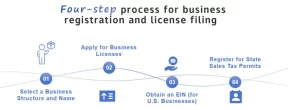
● Business registration and license filing fees
“You might wonder: I just want to start a dropshipping side hustle—do I really need to register a business? While it’s not always mandatory, registering your business offers several benefits and protections.
When creating a dropshipping business, business registration and license filing fees are an essential start-up expense. Depending on your location and business structure, these fees can vary. Typically, registering a business name and obtaining necessary licenses can range from $50 to $500. For online businesses, you might also need to apply for specific permits or licenses related to e-commerce, depending on local regulations. It’s important to research the requirements in your area to ensure compliance and avoid legal issues down the road.
Tips:
Choose the business license that matches your needs—like a Seller’s Permit for selling products or a DBA for using a different business name. Check local regulations or consult a professional to avoid unnecessary fees.
● eCommerce platform and marketplace fees
Whether you choose an eCommerce platform (like Shopify, Wix, or Squarespace) or an online marketplace (such as Etsy, eBay, or Amazon), expect to pay some fees.
Creating a store on an eCommerce platform offers more customization, but you’ll need to work harder to attract traffic. Typically, platforms charge a monthly fee and a transaction fee for each sale. For instance, Shopify’s Basic plan costs $29/month, plus a 2.9% credit card fee and $0.30 per transaction. Higher subscription plans usually reduce these fees.

● Domain and hosting costs
A domain name acts as your store’s unique address online. It boosts credibility, enhances your search engine ranking, and lets you manage your online presence effectively. The price of a domain depends on factors like your chosen keywords, the top-level domain (e.g., .com), and the domain registrar.
● Marketing costs
Establishing a dropshipping business includes various marketing costs, such as social media ads, influencer partnerships, and PPC campaigns, ranging from $100 to $10,000+ monthly. Email marketing, SEO, and content creation typically cost $0 to $3,000+, depending on tools and services. Planning these expenses is key for an effective marketing strategy.
● Product sourcing costs
To build a successful dropshipping business, choosing the right products is crucial. With many suppliers available online, analyzing sourcing methods is key.
Platforms like AliExpress, SaleHoo, and Wholesale2B offer various products from different locations. Product costs vary by item. For ideas, see our article on 15 Dropshipping Niches to Try and 5 to Avoid.
Furthermore, partner with manufacturers to sell products under your brand. For example, Onoxa offers skincare items starting below $5 with a minimum order of 12 pieces—ordering more reduces the cost per item.
How Much Does It Take to Find A Reliable Dropshipping Supplier?
Finding a reliable supplier is a crucial step for any dropshipping business, but it comes with its own set of costs. Whether you’re exploring supplier directories, testing product samples, or attending trade shows, expenses can add up quickly. Understanding these potential costs upfront is essential for planning your budget and ensuring your business starts off on the right foot.
Explore Supplier Directories
You can use directories like Alibaba, SaleHoo, or Oberlo. These platforms may have membership fees, typically ranging from $30 to $70.
Test Product Samples
To check product quality and shipping times, you may need to purchase samples. Depending on the product category, each sample could cost between $10 and $100.
Some suppliers offer free samples, but you often need to cover shipping costs.
Contact Suppliers Directly
You can connect with suppliers directly through platforms like AliExpress or attend global trade shows. This approach usually involves minimal costs, primarily your time and effort for communication.
Build Relationships and Partnerships
The key to success is thorough research, testing samples, and building strong relationships with suppliers to ensure your dropshipping business starts smoothly without unnecessary expenses.
If you want to learn more about this topic, click on our article “How Dropshippers Find Their Best Dropshipping Suppliers?“ . This article explores the key steps and strategies dropshippers need to follow when searching for reliable suppliers, helping you save time and effort while building successful partnerships quickly. Whether you’re a beginner or an experienced seller, our guide offers practical advice and valuable insights to help you stand out in a competitive market.
ADS Promotion Service

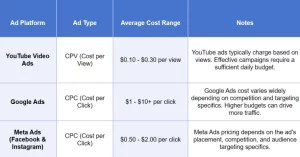
YouTube Video Ads, Google Ads, and Meta Ads (Facebook & Instagram) each provide unique opportunities for advertisers with varying costs and strategies.
YouTube Video Ads charge based on Cost per View (CPV), typically between $0.10 and $0.30. With a daily budget of $10 to $50, businesses can reach a broad audience and create engaging visual content that drives results.
Google Ads operate on a Cost per Click (CPC) model, averaging $1 to $2 per click for search ads, but going higher for competitive industries. A daily budget of $20 to $50 is recommended for smaller campaigns, but larger goals may require scaling up.
Meta Ads (Facebook & Instagram) also use CPC pricing, ranging from $0.50 to $2.00 per click based on targeting and placement. Starting with a $10 to $50 daily budget helps optimize campaigns and refine strategies effectively.
These platforms offer tailored solutions, and understanding their costs ensures efficient and impactful ad spending aligned with business objectives.
Potential Return Back Fee
When it comes to dropshipping or cross-border business, potential return fees are an unavoidable aspect to consider. International logistics can be complex, and in many cases, returning small products may not be feasible due to high shipping costs.
For instance, if you’re dropshipping phone cases from China to the U.S., and a customer decides they no longer want it, returning the product may cost more than the item itself—shipping fees for small packages from the U.S. back to China can easily range from $10 to $20, while the phone case might only be worth $5. In such situations, it’s often more practical to let the customer keep the item and offer a partial or full refund.
However, for larger or higher-value items, like a $200 piece of furniture, the return process becomes necessary. The return shipping fee could be around $50 to $100 depending on the distance and carrier. In this case, charging a restocking or return fee becomes essential to cover these unavoidable costs. Therefore, it’s crucial to prepare for these potential expenses and have a clear after-sales service policy to manage returns efficiently and minimize the impact on your business.
Final Words
In summary, starting a dropshipping business involves several fixed costs, including domain registration and server fees, which can range from $50 to $500 per year. Marketing expenses for online ads may vary widely, from $100 to $10,000+ per month, depending on your strategy and reach. Additionally, finding and working with reliable suppliers can add costs for tools or services, but with Dropsure, you gain access to comprehensive product details and tracking features for free, giving you a competitive edge. By understanding these expenses, you can better prepare for the costs associated with launching and running your dropshipping business. We recommend choosing Dropsure as your go-to platform for its efficiency, affordability, and reliable support, ensuring your business starts on the right track.