En
En
 10 min read
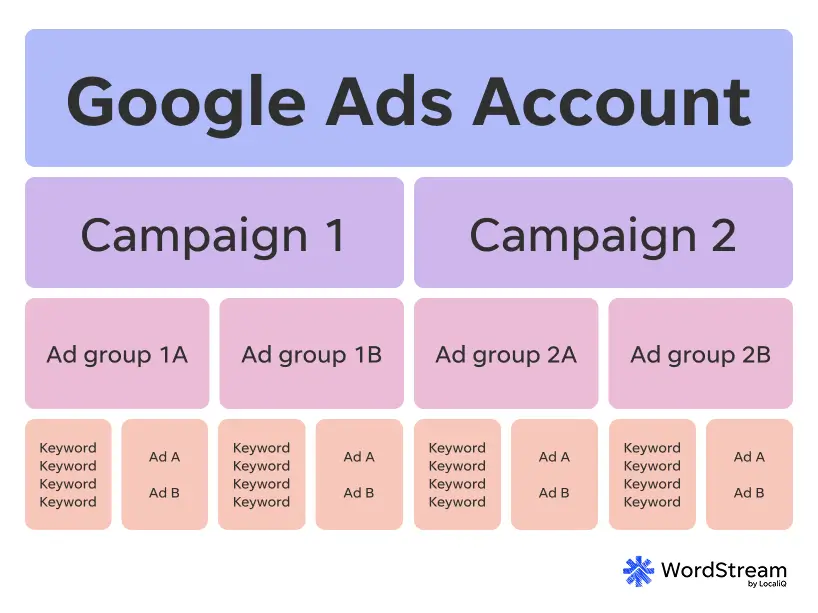
For years, advertisers structured Google Ads accounts around geography.
A typical account looked something like this:
- United States Campaign
- Canada Campaign
- United Kingdom Campaign
- Australia Campaign
- Germany Campaign
Inside each campaign, advertisers duplicated keywords, ads, audiences, and landing pages while adjusting budgets and bids according to regional performance.
This model made sense when automation was limited, audience signals were weak, and campaign management relied heavily on manual optimization.
But in 2026, Google Ads operates very differently.
Smart Bidding systems process billions of signals in real time. Search intent has become more valuable than physical location in many industries. Performance Max, broad match evolution, first-party audience signals, predictive conversion modeling, and AI-driven campaign optimization have fundamentally changed how successful advertisers structure accounts.
Today, many high-performing advertisers are moving away from geographic segmentation and toward intent layering.
Instead of organizing campaigns around where users are located, they organize campaigns around why users are searching.
This shift creates cleaner data, stronger machine learning signals, better budget allocation, and often significantly higher return on ad spend.
Let’s explore why intent-based account architecture is becoming the dominant framework for Google Ads in 2026.
The Problem with Traditional Geographic Segmentation
Historically, geographic segmentation solved several challenges.
Advertisers wanted to:
- Control budgets by country
- Adjust bids based on regional performance
- Customize messaging
- Account for currency differences
- Measure market-specific results
However, modern advertising environments expose the limitations of this structure.
Consider a company selling premium outdoor mosquito repellents globally.
Under a geographic model, the account might contain:
- USA Campaign
- UK Campaign
- Australia Campaign
- Canada Campaign
Each campaign targets similar keywords:
- mosquito repellent
- insect repellent
- bug spray
- tick repellent
The result?
The same intent is fragmented across multiple campaigns.
Instead of feeding Google’s algorithm one large pool of learning data, advertisers divide performance signals into smaller isolated buckets.
This reduces optimization efficiency.
Why Search Intent Is Becoming the Primary Signal
Google’s advertising ecosystem increasingly focuses on intent rather than demographics alone.
When someone searches:
- “best mosquito repellent for camping”
- “natural bug spray for kids”
- “long lasting tick repellent”
their intent often predicts purchasing behavior more accurately than location.
A buyer in Texas searching for “buy mosquito repellent online” may have more in common with a buyer in Florida or Australia than with another user in Texas searching “how mosquitoes survive winter.”
Intent reveals motivation.
Location only reveals geography.
As machine learning becomes more sophisticated, campaign structures that prioritize intent often outperform structures that prioritize location.
What Is Intent Layering?
Intent layering organizes campaigns according to user motivation and buying stage.
Instead of asking:
“Where is this user located?”
You ask:
“What problem is this user trying to solve?”
“What level of purchase readiness exists?”
“What information are they seeking?”
Campaigns become aligned with intent categories rather than regions.
A typical intent-layered account might include:
High Commercial Intent
Users ready to buy.
Examples:
- buy mosquito repellent
- insect repellent spray
- mosquito repellent for camping
Product Comparison Intent
Users evaluating options.
Examples:
- DEET vs picaridin
- best mosquito repellent 2026
- top insect repellent brands
Problem-Aware Intent
Users recognize a problem.
Examples:
- how to stop mosquito bites
- mosquitoes in backyard
- camping bug protection
Educational Intent
Users researching.
Examples:
- why mosquitoes bite some people
- insect repellent ingredients
- mosquito prevention tips
Each campaign serves a different stage of the customer journey.
Why Intent Layering Improves Machine Learning
Modern Google Ads relies heavily on data aggregation.
Machine learning systems perform best when they have:
- More conversions
- Larger datasets
- Consistent behavioral patterns
- Clear optimization signals
Geographic segmentation often divides data unnecessarily.
For example:
Five country campaigns may each generate:
- 20 conversions monthly
Google receives five isolated datasets.
Intent layering may consolidate:
- 100 conversions within one campaign
This larger dataset accelerates learning.
Algorithms identify patterns faster.
Optimization improves more quickly.
The Rise of Broad Match and Intent Understanding
Broad match has evolved dramatically.
In earlier years, advertisers feared broad match because it often generated irrelevant traffic.
Today, Google’s understanding of context, semantics, and user intent is significantly stronger.
For example:
A keyword like:
“mosquito repellent”
may trigger searches involving:
- mosquito spray
- camping insect protection
- bug repellent for hiking
The algorithm evaluates intent rather than simple keyword matching.
As broad match becomes more effective, organizing campaigns by intent naturally complements Google’s understanding of search behavior.
The Three-Layer Intent Framework
Many advanced advertisers now use a three-layer structure.
Layer 1: Bottom-of-Funnel Intent
These users are closest to purchase.
Keywords often include:
- buy
- order
- near me
- best price
- discount
- free shipping
Examples:
- buy bug spray online
- mosquito repellent sale
- insect repellent free shipping
Budget allocation often prioritizes this layer.
Conversion rates tend to be highest.
Layer 2: Mid-Funnel Intent
Users are actively evaluating solutions.
Examples:
- best mosquito repellent
- top camping bug spray
- mosquito repellent reviews
These users may convert later but represent strong commercial potential.
Layer 3: Top-of-Funnel Intent
Users seek education.
Examples:
- mosquito bite prevention
- outdoor insect protection tips
- mosquito season guide
Conversion rates may be lower initially.
However, these campaigns build future demand and remarketing audiences.
Why Geographic Segmentation Still Has a Role
Intent layering does not mean geography becomes irrelevant.
Location still matters in certain situations.
Examples include:
Regulatory Differences
Healthcare products.
Financial services.
Legal services.
Country-specific compliance requirements.
Language Differences
French-speaking markets.
German-speaking markets.
Spanish-speaking markets.
Separate campaigns may still be appropriate.
Significant Economic Differences
Purchasing power varies dramatically between regions.
Pricing strategies may require localized treatment.
Local Service Businesses
A plumber in Chicago should absolutely maintain geographic segmentation.
Intent layering is most powerful for scalable digital and ecommerce businesses.
How Performance Max Accelerates Intent-Based Structures
Performance Max campaigns reinforce the value of intent-first thinking.
Performance Max already evaluates:
- Search behavior
- Website interactions
- Audience signals
- Device usage
- Demographics
- Time patterns
Many location-based optimizations happen automatically.
Advertisers increasingly gain more leverage by improving intent signals rather than multiplying geographic campaigns.
First-Party Data Changes Everything
One of the biggest developments in 2026 is the importance of first-party data.
Advertisers possess valuable information about:
- Buyers
- Subscribers
- Returning customers
- Product viewers
- Cart abandoners
These audiences reflect intent.
A cart abandoner in Canada often resembles a cart abandoner in the United States more than a random Canadian visitor.
Intent-based audiences frequently outperform location-based audiences.
Building an Intent-Layered Account Structure
Consider an outdoor gear brand.
Instead of:
Campaign 1: USA
Campaign 2: Canada
Campaign 3: Australia
Campaign 4: UK
A more modern structure may look like:
Campaign 1: Purchase Intent
Campaign 2: Comparison Intent
Campaign 3: Educational Intent
Campaign 4: Brand Intent
Campaign 5: Remarketing
Locations become settings within campaigns rather than the organizing principle.
This creates a cleaner architecture.
Budget Allocation Becomes Smarter
Intent layering improves budget control.
Instead of assigning budgets by geography, advertisers assign budgets according to opportunity.
Example:
40% Budget:
Purchase Intent
30% Budget:
Comparison Intent
20% Budget:
Remarketing
10% Budget:
Educational Intent
This reflects buyer readiness rather than arbitrary regional divisions.
Better Ad Copy Alignment
Intent-focused campaigns allow stronger messaging.
For purchase intent:
“Shop Long-Lasting Mosquito Repellent”
For comparison intent:
“Compare DEET vs Picaridin Solutions”
For educational intent:
“Learn How to Prevent Mosquito Bites”
Messaging aligns naturally with user expectations.
This often improves click-through rates and engagement.
Landing Pages Become More Effective
Geographic structures often send users from different intent levels to the same landing page.
Intent layering allows greater personalization.
Examples:
Purchase intent:
Product pages.
Comparison intent:
Comparison guides.
Educational intent:
Blog content.
The user journey becomes smoother.
Measuring Performance More Accurately
Intent segmentation reveals insights that geographic segmentation often hides.
You can identify:
- Which intent stage drives revenue
- Which stage generates leads
- Which stage creates future demand
This improves strategic decision-making.
Common Mistakes When Transitioning
Many advertisers make mistakes during the shift.
Mistake 1: Too Many Intent Categories
Keep structures simple.
Four to six intent buckets often outperform twenty highly specific segments.
Mistake 2: Ignoring Search Query Data
Intent assumptions should be validated through actual search behavior.
Analyze search terms regularly.
Mistake 3: Duplicating Keywords Excessively
Modern account structures require less keyword duplication than older frameworks.
Mistake 4: Overriding Machine Learning
Excessive manual segmentation often reduces algorithm efficiency.
Industries That Benefit Most from Intent Layering
Intent-based structures are particularly effective for:
Ecommerce
Product research follows predictable intent stages.
SaaS
Users progress through awareness, evaluation, and purchase phases.
B2B Lead Generation
Intent often predicts lead quality better than location.
DTC Brands
Customer journeys frequently cross multiple touchpoints before conversion.
Subscription Businesses
Lifecycle marketing aligns naturally with intent segmentation.
The Future of Google Ads Account Architecture
The trend is clear.
Google continues moving toward:
- Automation
- Predictive bidding
- Audience modeling
- Intent recognition
- Behavioral analysis
As these capabilities improve, rigid geographic structures become less important.
Advertisers who organize campaigns around user intent provide stronger signals to the platform.
The result is often better scalability, more efficient learning, and improved campaign performance.
Final Thoughts
In 2026, successful Google Ads account structures are increasingly built around understanding why users search rather than simply where they are located.
Geographic segmentation still serves important functions in specific situations, but for many ecommerce brands, SaaS companies, DTC businesses, and lead-generation advertisers, intent layering offers a more scalable and future-oriented framework.
By organizing campaigns around purchase intent, comparison intent, educational intent, and remarketing behavior, advertisers can align account architecture with how modern consumers actually make decisions. This approach strengthens machine learning performance, improves budget allocation, enhances messaging relevance, and creates a clearer path from search to conversion.
The advertisers gaining the greatest advantage today are not necessarily those with the most campaigns or the most complex structures. They are the ones providing the clearest signals about customer intent.
As Google Ads continues evolving, intent-first architecture is increasingly becoming the foundation of sustainable advertising growth.