















< Blogs

Best Dropshipping Websites for Dropshippers

Vivan Z.
Created on November 12, 2024 – Last updated on February 6, 20256 min read
Written by: Vivan Z.

Have you ever dreamed of running your own online store without worrying about inventory or shipping? That’s exactly what dropshipping offers—a low-risk, high-reward path for entrepreneurs. Whether you’re new to e-commerce or looking to level up an existing business, finding the right dropshipping platform can make all the difference. In this post, I’ll walk you through the unique features and benefits of some popular dropshipping sites, so you can get started smoothly and see real growth quickly.

What is Dropshipping? A Quick Overview

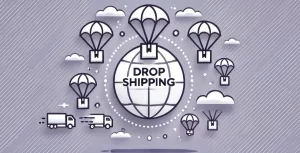
Dropshipping is a type of e-commerce business model where you don’t need to keep inventory. Instead, when a customer places an order, you work with a supplier who ships the product directly to them. This setup means you don’t have to handle stock, shipping, or logistics, making it a low-risk choice for people starting a new business. If you’re curious about how dropshipping works, check out our article What is Dropshipping & How to Start – Beginner Guide to dive deeper into the basics of the industry.
Dropshipping

Best Dropshipping Websites to Know About

Choosing the right dropshipping platform is essential, especially since each one has its own strengths and unique features. Below, I’ve rounded up some of the top dropshipping websites and compared them to help you decide which one best fits your needs.   
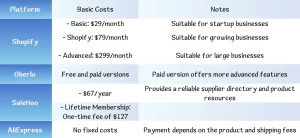
Dropshipping Platform

The table above breaks down the costs of different dropshipping platforms, making it easier for you to pick the one that best suits your needs.
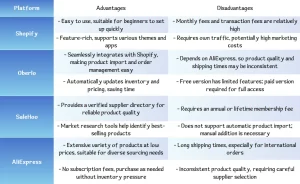
Platform Advantages&Disadvantages

This table provides a clear comparison of the advantages and disadvantages of various dropshipping websites, helping you make a more informed decision.

Finding the Right Dropshipping Platform to Start Your Business

If you’re ready to start your dropshipping journey, choosing the right platform is essential. As a professional dropshipping supplier and platform, DropSure offers low costs, a wide product selection, and efficient logistics services. With DropSure, you can easily kickstart your e-commerce business while receiving continuous tech support and assistance. For more details on DropSure, check out our recommended article. You can also find valuable insights in articles like How Dropshippers Find Their Best Dropshipping Suppliers and The 8 Tips to Know When Choosing Dropship Products.

FAQ

When choosing a dropshipping platform, many people have similar questions. To help you make an informed decision, I’ve put together some of the most common questions and answers about dropshipping. These should give you a clearer picture of the industry and guide you toward finding the right platform for your business.

1.What is Dropshipping, and How Does It Work?
Dropshipping is an e-commerce model where you don’t hold inventory yourself. Instead, you partner with suppliers who handle the storage and shipping. When a customer places an order, the supplier ships the product directly to them, allowing you to focus on sales, marketing, and customer service.
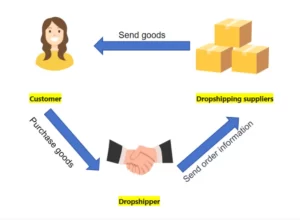
What is Dropshipping

2.What Are the Benefits of Dropshipping?
Dropshipping offers a low-risk way to enter e-commerce. You don’t need to invest in inventory upfront, and you can run your business from anywhere. It also allows you to test different products and niches without much financial commitment. This model is ideal for beginners as well as seasoned business owners looking to diversify their offerings. Portugal Finance

3.How Do I Choose the Best Dropshipping Platform?
Picking the right platform depends on your specific needs. Look for platforms that offer the products you want to sell, provide reliable suppliers, and have tools that integrate with your store smoothly. Platforms like Shopify and Oberlo are popular for their ease of use, while others like SaleHoo focus on supplier vetting. Consider your budget, product niche, and target market to make the best choice.

4.Are There Any Hidden Fees with Dropshipping Platforms?
Each platform has its own fee structure, which may include subscription fees, transaction fees, or additional service costs. Make sure to read the fine print and understand all costs involved. This will help you avoid surprises and better manage your budget. 
Dropshipping3

5.Can I Customize the Products or Branding?
Some platforms and suppliers allow you to add custom branding or labels, a practice known as “private labeling.” However, not all suppliers offer this option, so if branding is important to you, make sure to choose a platform or supplier that provides it.

6.Is Dropshipping Profitable?
Dropshipping can be profitable, but success depends on various factors, such as your product selection, marketing strategy, and pricing. Margins can be thin for some products, so choosing unique, high-demand items and understanding your market is crucial.

7.What Should I Watch Out For in Terms of Product Quality?
Since you’re not handling the products directly, it’s essential to work with reputable suppliers who have quality control measures in place. Check for reviews, request samples if possible, and pay attention to any feedback from customers about product quality. Good suppliers can make or break your business reputation.

8.How Do I Handle Customer Service Issues?
In dropshipping, you act as the intermediary between your customers and suppliers. While suppliers handle shipping, you’re responsible for addressing any customer service issues that arise, such as returns, refunds, and delays. Building a good relationship with your suppliers will help you resolve issues quickly and keep customers happy.

Dropshipping 2

Conclusion

Choosing the right dropshipping platform is a big step toward building a successful online store. I hope this article has given you a clearer idea of each platform’s features so you can decide which one fits your needs best. If you’re after an affordable, efficient dropshipping solution, consider DropSure. With a variety of products and reliable shipping, DropSure can help your business grow.

For more details, just click the chat box below to reach our team. We’re here to offer personalized advice and support to help you get started and keep growing your e-commerce business.

DropSure

DropSure is Your Best Partner
22 Years Experience
Affiliate Rebates
100% Quality Guarantee
Top-Up Rewards
10+ Global Warehouses
Custom Branding Support
Smart inventory System
24/7 Customer Support
Get a Quote in 24 Hours
Start Sourcing for Free

Keep Learning

Google Ads has changed dramatically over the past few years. Manual campaign control is shrinking. Automation is expanding. Machine learning is no longer optional—it is now the foundation of modern advertising performance. At the center of this transformation sits Performance Max (PMax), Google’s AI-driven campaign type that combines Search, Shopping, YouTube, Display, Discover, Gmail, and Maps inventory into a single automated system. For many advertisers, PMax initially looked like a miracle. Launch a campaign, upload creatives, define goals, and let Google’s algorithm find conversions automatically. But by 2026, most experienced advertisers have realized something important: Performance Max is only as smart as the data you feed into it. Poor data creates poor optimization. Weak signals generate weak traffic. Low-quality conversions confuse machine learning. And incomplete business signals often cause Google to optimize for revenue volume instead of actual profitability. The brands seeing the strongest ROI from PMax today are not necessarily spending the most money. They are feeding the platform better, cleaner, and more strategically structured data. This guide explores how advanced advertisers are improving Performance Max ROI in 2026 through smarter data feeding strategies, conversion architecture, audience intelligence, profitability signals, creative feedback loops, and first-party data ecosystems. If you are still optimizing PMax using basic purchase events alone, you are likely leaving significant profit on the table. Why PMax Became the Center of Google Advertising Performance Max was designed to solve several challenges Google faced: Fragmented campaign management Cross-channel attribution complexity Mobile-first user behavior AI-driven bidding scalability Privacy-related signal loss Instead of advertisers manually managing multiple campaign types separately, PMax centralizes optimization into one machine-learning system. Google’s AI now decides: Where ads appear Which audiences to target Which creative […]

As the secondhand fashion economy thrives, Poshmark, one of North America’s largest resale platforms, has attracted millions of users. However, newcomers often prioritize two critical questions: Is Poshmark legal? Are transactions secure here? This article will delve into the platform’s operational mechanisms and provide an essential guide for buyers and sellers before engaging in transactions. Is Poshmark legal Poshmark was founded in 2011 and is headquartered in California, USA. It is a compliant enterprise regulated by law. Its business model is similar to eBay or Etsy, earning profits by connecting buyers and sellers and charging commissions. The platform supports transactions for fashion items such as clothing, shoes, bags, and accessories, and even allows the resale of luxury goods. As of 2025, Poshmark has over 80 million users and was acquired by the Korean internet giant Naver, which further strengthens its financial and operational stability. From a legal perspective, Poshmark requires users to comply with intellectual property laws and prohibits the sale of counterfeit or prohibited items. If a user violates the rules, the platform may freeze the account or hand the case over to judicial authorities. Therefore, as long as users follow the platform’s rules, the transactions themselves are entirely legal. However, legality and safety are not entirely equivalent—personal operational risks in the buying and selling process still need to be guarded against. How to Avoid Pitfalls in the Shopping Process As a buyer, how can you avoid pitfalls in the shopping process? First, be alert to the risks of counterfeit goods and overly embellished product descriptions. Although the Poshmark platform allows individual sellers to upload various products, its authentication service for luxury goods only applies to items with a unit […]

In today’s thriving e-commerce environment, retailers face a crucial choice: choosing between direct shipping and dropshipping. The direct shipping model, by shipping products directly from suppliers to consumers, offers better product control and faster logistics, but it may come with challenges in inventory management and costs. Conversely, the dropshipping model, by entrusting order fulfillment to third-party suppliers, lowers initial investment and warehousing costs while expanding product variety, though it might affect profit margins and service quality. In 2025, retailers need to weigh the pros and cons of both models based on their resources, business objectives, and market demands to choose the strategy that best fosters sustainable growth. Direct Shipping: A Detailed Analysis  When you choose the direct shipping order fulfillment method, it means that you hold inventory on your own and ship products directly from your own warehouse or via a third-party logistics provider (3PL) to customers. Although this method requires a higher upfront investment, it can offer you higher profit margins and greater control over the customer experience. Direct Shipping Operation Process As a retailer, the direct shipping model requires you to begin with inventory management. You need to closely monitor market trends and consumer demand to ensure timely procurement and restocking. For example, if you run a clothing store, you must predict which styles will be popular based on seasonal changes, fashion trends, and historical sales data, and then purchase the corresponding inventory accordingly. When a customer places an order on your platform, the order information is transmitted directly to your warehouse management system. Here, the order is processed rapidly, including selecting the correct product, packaging, and preparing it for shipment. For instance, Amazon uses highly automated warehouses […]

Recommended for you