













 En
En
 14 min read
In New Zealand, as online shopping becomes increasingly mainstream and the local environment continues to support small businesses, more and more entrepreneurs are turning their attention to Dropshipping—a low-cost, highly flexible e-commerce model. This business approach doesn’t require you to hold inventory or invest a large amount of startup capital. With just a computer and a stable internet connection, you can run your own online store from the comfort of your home. For Kiwis looking to build a side hustle or generate online income, it’s an especially attractive option.
As long as you know how to select products that match market demand, and pair them with basic branding and marketing strategies, Dropshipping can become your gateway to carving out a spot in the competitive e-commerce space. In this article, we’ll walk you through how the business model works, the steps to setting up your store, and the key pros and cons—so you can confidently take your first step into New Zealand’s growing dropshipping landscape.
What is Dropshipping?
In New Zealand, dropshipping has become an increasingly popular online retail model, especially among aspiring entrepreneurs. The biggest appeal? You don’t need to purchase inventory upfront or hold stock—you can run a full-fledged online store from home without investing a large amount of capital. Compared to traditional retail, dropshipping has a much lower barrier to entry and offers greater flexibility, making it ideal for those with limited startup funds or people looking to build a side hustle while balancing work and family life.
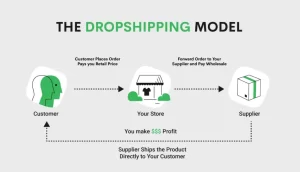
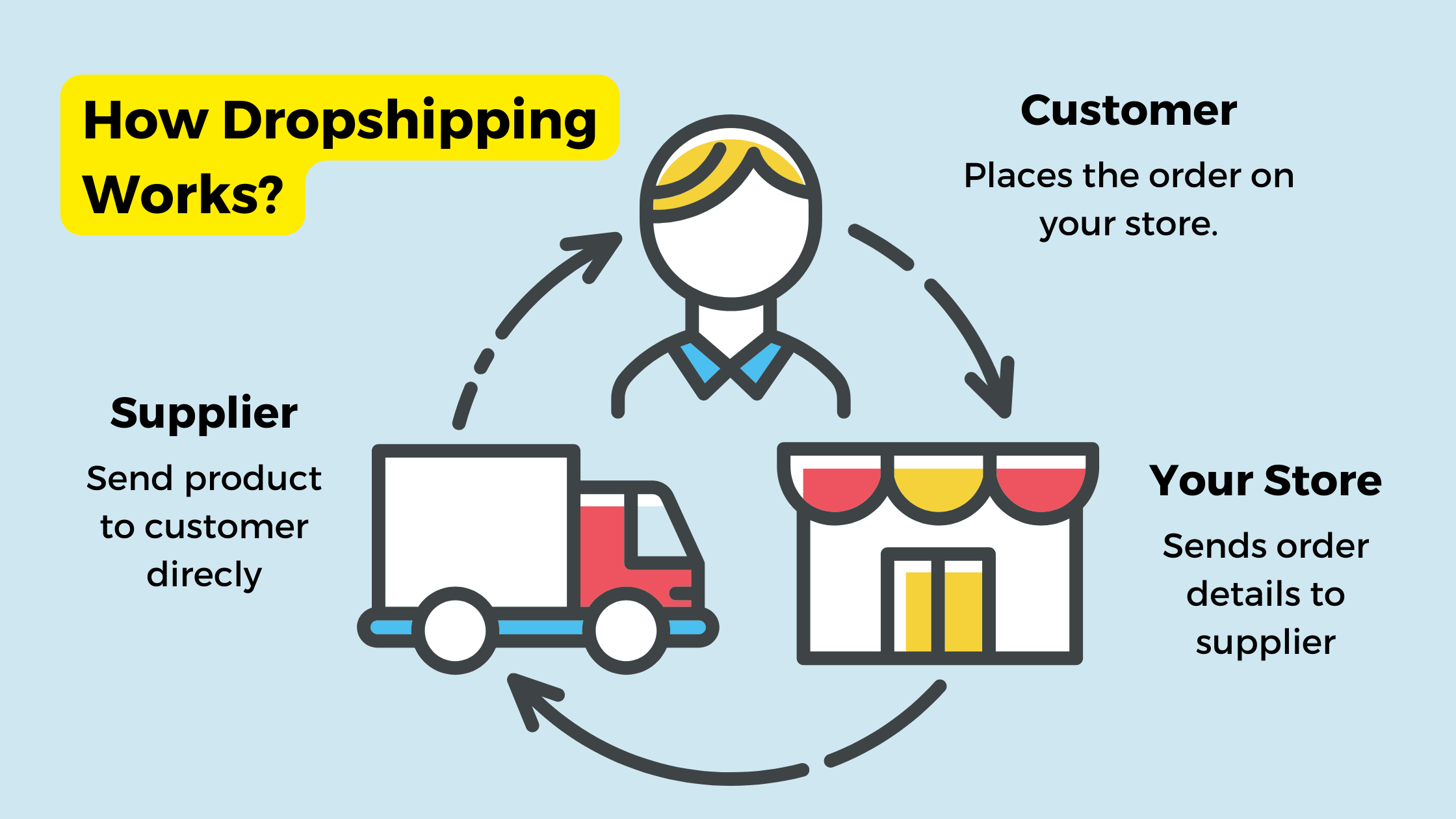
The process is straightforward: set up an online store (popular platforms include Shopify, WooCommerce, and even local sites like Trade Me), choose products from a supplier, and upload the product information to your website. When a customer places an order, you simply forward the order to the supplier, who then ships the item directly to the customer. You don’t have to touch the product or manage any warehouse logistics.
Dropshipping has its advantages and disadvantages, just like any other business model. For those who want to start a business or a side hustle in New Zealand, or those just entering the e-commerce field, this model has several appealing advantages:
Three Major Advantages of Dropshipping
Low Startup Costs and Less Financial Pressure Running a traditional e-commerce store in New Zealand often requires upfront inventory purchases, warehouse rentals, and logistics management, which comes with high costs and pressure. Dropshipping, however, is different. You don’t need to buy products in advance or handle packaging and shipping yourself. All you need to do is build an online store, choose suppliers, and when a customer places an order, the supplier handles the shipping. You can focus on store design, product listing, and marketing, saving you significant upfront investment.
Lower Operating Costs, No Logistics Hassles Traditional e-commerce stores not only incur inventory costs but also require time to manage stock, handle returns, and deal with shipping. Dropshipping, on the other hand, outsources all these tasks to suppliers. You don’t need to rent a warehouse or worry about shipping. Your focus will be on customer communication and marketing. This model can save you a lot of hassle and expenses, especially in New Zealand, where logistics can be expensive and the country is geographically large.
Flexible Working Hours, Location Independence This is one of the main reasons many Kiwis choose dropshipping. Whether you live in Auckland or a small town on the South Island, as long as you have an internet connection, a smartphone, or a computer, you can run your online store. You can work from home, handle orders while taking care of children, or even make money while traveling. For those who want a flexible schedule or dislike traditional 9-to-5 jobs, this lifestyle is highly attractive.
Three Major Disadvantages of Dropshipping
While the dropshipping model has many advantages, it is not without its flaws. For entrepreneurs in New Zealand, understanding these challenges can help you prepare and avoid unnecessary problems. Here are three major disadvantages:
Smaller Profit Margins Since dropshipping is essentially reselling products from third-party suppliers, your profit margins are generally smaller. You only earn the difference in price, and this difference is often much lower than buying products directly and retailing them. Particularly in the competitive New Zealand market, consumers are highly price-sensitive, meaning you may need to compromise on pricing to stay competitive, which further compresses your profit margins.
Limited Control, Reliance on Suppliers One of the biggest challenges with dropshipping is the limited control you have over the products and inventory. If a supplier runs out of stock or the product quality does not meet expectations, you can only communicate to resolve the issue, but you cannot intervene directly. This could affect your brand image and customer satisfaction. For New Zealand sellers, this is especially common when dealing with international suppliers, especially when it involves international logistics and shipping delays.
Customer Experience May Be Limited Since logistics and shipping are generally handled by the supplier, you have little control over the speed and quality of delivery. In New Zealand, due to its large geography, deliveries to remote areas can take longer, which could affect the shopping experience for customers. If delays occur, customer satisfaction can directly be impacted, potentially leading to negative reviews that can harm your brand reputation.
How to Start a Dropshipping Store in New Zealand
Choose the Products and Direction for Your Online Store
Before setting up a dropshipping store, sellers need to decide what type of products they want to sell and what kind of store they want to create. You can choose products based on your interests, or you can select products based on market demand. Once you’ve identified your product category, you can start developing a marketing strategy tailored to your store.
Build Your Brand
After determining your product category, it’s important to name your store, design a logo, and create a website. It’s a good idea to align your store’s name with the type of products you’re selling to make it easier for potential customers to find you online.
Next, you’ll need a store logo. You can either use free online design tools or hire a professional designer to help you. Lastly, depending on your needs, you can choose to register a domain name and build a dedicated store website to list your products. Alternatively, to save costs, you can list your products on established e-commerce platforms.
Use Retail Point-of-Sale Website Platforms to Create Store Pages and Content
Once you have a basic plan for your brand, the next step is to build your store pages using an online retail platform. Currently, several popular platforms can help users create e-commerce websites, such as Shopify, Magento, and Prestashop.
Among these, Shopify stands out as one of the most popular and feature-rich platforms. Let’s take Shopify as an example to show how sellers can set up and enhance their store pages.
Shopify is a cloud-based e-commerce platform that integrates online storefront and business operations. With Shopify, you can customize the appearance of your store, choose themes, edit product details, and manage listings. From launching your store and managing products to processing orders and handling customers, Shopify offers end-to-end solutions for different stages of running an online business. It also supports multiple payment options like PayPal, Amazon Pay, and Google Pay, making transactions smoother for both sellers and buyers.
For dropshipping sellers, Shopify offers a built-in feature called Oberlo, which works seamlessly with platforms like AliExpress. With Oberlo, you can directly import product details and images from AliExpress into your store, and then edit them as needed—saving time and operational costs.
These e-commerce platforms can also connect to logistics and fulfillment services, reducing the technical barriers to entry for new dropshipping entrepreneurs. Shopify’s pricing plans range from USD $29 to $299 per month, depending on the services you need.
Choose a Product Supply Source
After you’ve locked down your product niche, the next step is to find reliable suppliers. Besides platforms like Taobao, AliExpress and 1688 are both great options for sourcing products. Both platforms are owned by Alibaba Group and tend to offer lower prices and a wider range of products compared to Taobao.
Of course, you can also look for suppliers on other platforms—but make sure you understand the quality of the products and clearly communicate with suppliers about delivery times, order quantities, and other important details before making a deal.
Upload Products to Your Online Store / E-Commerce Platforms
Once you’ve built your store framework, you can start listing products on various e-commerce platforms. Dropshipping sellers often choose large platforms like Amazon and eBay due to their high traffic and reputation, which helps products get more exposure and leads to higher sales conversions.
In addition to using major e-commerce platforms, you can also launch your own branded website to showcase your products. With platforms like Shopify, it’s easy to upload and manage your listings. Having your own branded store also builds trust and allows customers to learn more about your products, increasing their willingness to buy.
Promote Your Dropshipping Store
In addition to listing your products, it’s crucial to promote your store and increase visibility among potential buyers. The more people who see your products, the more sales you can make—leading to better profits.
There are many ways to promote your store. You can run paid ads via Google Ads, or advertise on social media platforms. Another common approach is to grow your store’s social media presence. Many dropshipping sellers actively post product photos and videos on platforms like Instagram and Facebook, tapping into their large user bases and visual appeal to drive engagement and sales.
Compared to paid ads, building an organic presence on social media takes time—you’ll need to post regularly and build a following before seeing significant results. However, once you do, it can be a powerful and cost-effective way to boost your sales.
How does Dropshipping make money?
Profit from the “price difference.”
Simply put:
A customer pays you $30 to buy a product, you pay $10 to a supplier to ship it out — $30 – $10 = $20 is your gross profit (subtract ad cost, platform fees, etc., to get net profit).
? Let’s break down the logic behind making money:
Buy low, sell high
For example, you find a product on AliExpress for just $5 (say, a necklace).
You build a Shopify store, add nice photos, branding, and product descriptions — and you sell it for $19.99.
When a customer places an order, you go to AliExpress and place an order for $5 to ship directly to them. You pocket the $15 difference.
Get customers through ads
Most customers find your product by seeing ads on Facebook / Instagram / TikTok / Google and clicking through to order.
So you need to understand a bit of advertising. For example, you sell a $30 product and spend $10 on ads to get one paying customer. Then you still make a net profit of $30 – $10 (product cost) – $10 (ad) = $10.
Use automation + scale to boost income
In the beginning, you’re doing it alone and might make a few hundred dollars a month.
Once you find a winning product, you can scale up ad spend and go from 10 orders a day to 100.
Eventually, you can hire VAs (virtual assistants) to handle orders and customer service, so you can focus on product selection and ad optimization — increasing income without increasing workload.
Earn more through “brand premium”
Someone else is selling the same thing for $10, but you’re selling it for $25 — and people still buy it. Why? Because your store looks more professional, your ad is more appealing, and your description is more compelling.
That’s what people mean when they say “you’re selling the feeling, not the product” in dropshipping — you use presentation and branding to turn ordinary products into high-margin items.
| Stage | Monthly Revenue | Monthly Profit | Difficulty |
| Just Starting | $500 – $2,000 | $100 – $500 | Lots of trial and error |
| Found a Winner | $5,000 – $50,000 | $1,000 – $15,000+ | Strong product + ad skills |
| Built a Brand | $50,000+ | $10,000+ | Team, branding, supply chain |
Conclusion: Embrace the Dropshipping Opportunity in New Zealand
Dropshipping offers a compelling pathway for Kiwis to enter the e-commerce world with minimal risk and maximum flexibility. By leveraging low startup costs, geographic independence, and the growing demand for online shopping, entrepreneurs can carve out a niche in New Zealand’s competitive market. However, success hinges on careful planning: selecting products that align with local or global trends, building a trustworthy brand identity, and partnering with reliable suppliers to mitigate logistical risks.
While challenges like slim profit margins and dependency on suppliers exist, these can be navigated through strategic pricing, relentless optimization of marketing efforts, and a focus on customer experience. The key to thriving lies in combining automation tools (like Shopify’s features) with a deep understanding of your audience’s needs—whether they seek eco-friendly products, unique cultural items, or convenient, affordable goods.
New Zealand’s supportive environment for small businesses, coupled with its tech-savvy consumer base, positions dropshipping as an ideal side hustle or full-time venture. Whether you’re a first-time entrepreneur or looking to diversify your income streams, the groundwork is simple: start small, learn quickly, and scale strategically. With the right mindset and tools, dropshipping can transform your passion or idea into a profitable reality—one order, one customer, and one innovative idea at a time.