














 En

 35 min read
Influencer marketing has become an essential part of modern brand growth. From independent e-commerce stores and direct-to-consumer businesses to established consumer brands, companies are increasingly partnering with content creators to reach targeted audiences, build trust, and generate sales. However, even a promising influencer partnership can underperform when the brand and creator have different expectations.
A creator might produce attractive content that fails to communicate the product’s main benefits. A brand might expect a sales-focused video while the influencer assumes the collaboration is intended to increase awareness. Important details such as posting dates, content formats, usage rights, and payment terms may also be overlooked.
These problems often begin with an unclear collaboration brief.
An influencer marketing brief is more than a document containing product information and posting instructions. It is a practical communication tool that connects a brand’s marketing goals with a creator’s creative approach. A well-written brief explains what the brand wants to achieve, who it wants to reach, what the creator needs to deliver, and how success will be evaluated.
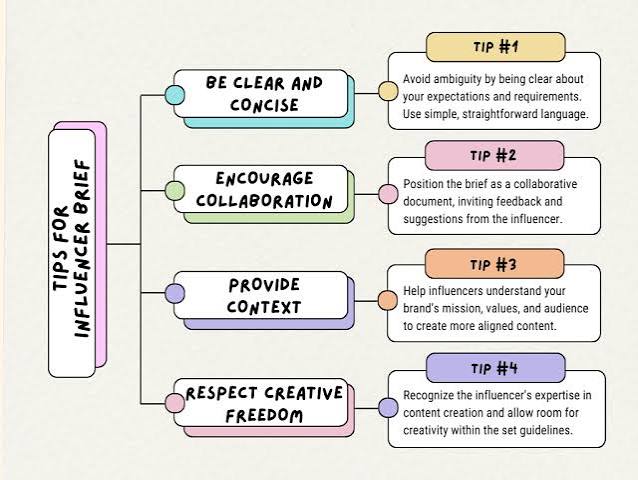
The challenge is finding the right balance. A brief that is too vague leaves creators guessing, while one that is excessively restrictive can make sponsored content feel unnatural. The best briefs provide clear direction without taking away the creator’s individual voice.
This guide explains how to write an effective influencer marketing brief, breaks down each essential section, and provides a reusable template that brands can adapt for different campaigns.
1. What Is an Influencer Marketing Brief?
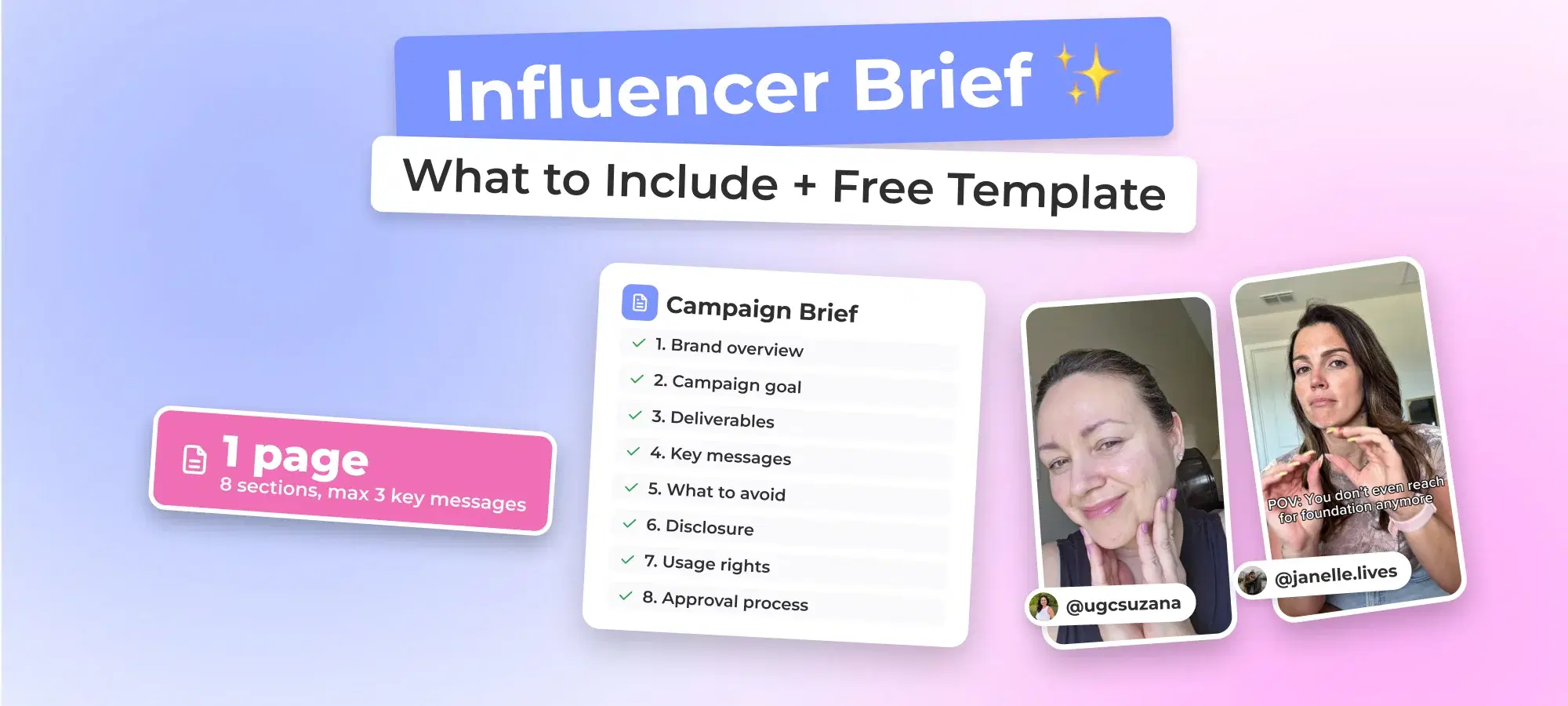
An influencer marketing brief is a document that outlines the expectations, objectives, responsibilities, and requirements of a collaboration between a brand and a content creator.
It is usually prepared by the brand, marketing team, agency, or campaign manager before content production begins. Once approved, it becomes a shared reference point throughout the partnership.
Depending on the campaign, an influencer brief may include:
-
Brand background and product information
-
Campaign objectives
-
Target audience
-
Key messages and product benefits
-
Content formats and deliverables
-
Creative direction and reference examples
-
Mandatory talking points and prohibited claims
-
Posting schedule and deadlines
-
Disclosure and platform requirements
-
Compensation and collaboration terms
-
Content approval procedures
-
Content usage rights
-
Performance metrics and reporting requirements
Not every collaboration needs a lengthy document. A small product-seeding campaign may require only a short set of instructions, while a multi-influencer product launch may need a detailed brief with separate deliverables, timelines, and approval processes.
The purpose remains the same: make sure everyone understands the partnership before work begins.
Why Does a Good Brief Matter?
A strong influencer brief benefits both the brand and the creator.
For brands, it helps maintain consistent messaging, protect brand reputation, reduce production mistakes, and improve campaign management.
For creators, it provides the information needed to understand the product, communicate its value, and produce content that meets the brand’s expectations.
For audiences, it can lead to more relevant, informative, and authentic sponsored content.
Without a clear brief, brands may spend unnecessary time requesting revisions, clarifying expectations, or resolving disagreements about deliverables.
A well-prepared document reduces these risks before they become problems.
2. Start With Clear Campaign Objectives
The first section of an influencer marketing brief should explain why the collaboration is happening.
Many brands make the mistake of beginning with product descriptions or creative instructions. However, creators need to understand the campaign’s purpose before deciding how to communicate the product.
For example, a brand launching a new skincare product may want to introduce the product to new customers, explain its ingredients, encourage product trials, or generate online purchases.
Although these goals may overlap, they require different content strategies.
Common Influencer Marketing Objectives
Brand awareness
The goal is to introduce a brand, product, or service to a larger audience. Campaigns may prioritize reach, impressions, video views, and brand mentions.
Suitable content formats include:
-
Product introduction videos
-
Lifestyle content
-
Unboxing videos
-
Brand storytelling
-
First-impression reviews
Audience engagement
The campaign aims to encourage people to interact with the content and participate in conversations.
Relevant formats include:
-
Question-and-answer videos
-
Product comparisons
-
Tutorials
-
Polls and interactive Stories
-
Personal experiences
Useful performance indicators include comments, shares, saves, and engagement rate.
Website traffic
Some collaborations are designed to bring qualified visitors to a brand’s website or product page.
Common approaches include:
-
Product recommendation videos
-
Tutorials with links
-
Shopping guides
-
Instagram Stories with links
-
Creator-specific tracking links
Lead generation
For brands selling services, subscriptions, or high-consideration products, the goal may be to collect inquiries, sign-ups, or trial registrations.
Sales and conversions
A conversion-focused campaign aims to encourage customers to purchase products.
Common tactics include:
-
Discount codes
-
Affiliate links
-
Product demonstrations
-
Detailed reviews
-
Limited-time promotions
Make Objectives Specific and Measurable
Avoid writing broad statements such as:
“Our goal is to increase brand awareness and sales.”
This does not tell creators what matters most or how they should approach the content.
A stronger objective might be:
“Our primary objective is to introduce the new collection to fashion-conscious consumers aged 20–35. We want creators to demonstrate how the products fit into everyday outfits and encourage interested viewers to visit our online store.”
This gives creators a clearer understanding of the campaign’s purpose.
If the campaign has multiple objectives, identify the primary goal and secondary goals. This prevents conflicting expectations.
For example, a creator should not be expected to produce an entertaining brand-awareness video while simultaneously delivering a highly scripted product demonstration and guaranteeing immediate sales.
3. Introduce the Brand and Product Clearly
Creators cannot communicate a product effectively if they do not understand it.
A good brief should include enough background information to help creators understand the brand’s identity, product positioning, and competitive advantages.
However, this section should not become a long corporate presentation. Focus on information that directly supports content creation.
Brand Background
Include a short introduction covering:
-
What the brand does
-
What makes it different
-
Its target market
-
Its brand personality
-
Its core values
-
Its market positioning
For example:
“Our brand develops practical home organization products for people who want comfortable, functional, and visually appealing living spaces. We focus on thoughtful design, everyday convenience, and accessible pricing.”
This description helps creators understand the brand’s overall identity.
Product Information
The product section should answer several essential questions:
-
What is the product?
-
What problem does it solve?
-
Who is it designed for?
-
What are its most important features?
-
What makes it different from alternatives?
-
What should customers know before purchasing?
Avoid simply listing technical specifications.
Instead, explain how product features translate into practical benefits.
For example:
| Product feature | Customer benefit |
|---|---|
| Lightweight material | Easier to carry during daily activities |
| Adjustable design | More flexible use in different situations |
| Easy-clean surface | Less effort required for maintenance |
| Compact storage | Saves space when not in use |
Creators need to understand both what a product does and why someone might care about it.
Provide Supporting Materials
Depending on the product, useful supporting materials may include:
-
Product photographs
-
Product demonstration videos
-
Technical specifications
-
User manuals
-
Frequently asked questions
-
Product comparison charts
-
Brand guidelines
-
Packaging information
If the product requires assembly, installation, or special handling, explain these details before filming begins.
For complex products, consider arranging a product demonstration or sending a sample to the creator before the content deadline.
A creator who has personally tested a product is often better positioned to produce informative and credible content.
4. Define the Target Audience
A campaign can have excellent creative content and still perform poorly if it reaches the wrong people.
The influencer brief should describe the audience the brand wants to attract.
Avoid defining the audience only through age and gender. These characteristics may be useful, but they rarely provide enough information for creators to develop relevant content.
Build a Practical Audience Profile
Consider including the following information:
Demographics
-
Age range
-
Gender, when relevant
-
Geographic location
-
Language
-
Income range, when relevant
Interests
-
Hobbies
-
Lifestyle preferences
-
Shopping interests
-
Content categories they follow
-
Relevant communities
Purchasing behavior
-
How they discover new products
-
What influences their buying decisions
-
Common objections
-
Preferred shopping channels
-
Price sensitivity
Problems and needs
-
Challenges they experience
-
Problems the product addresses
-
Features they value most
-
Results they hope to achieve
For example, an independent home decor store might target:
“Homeowners and renters aged 25–45 who enjoy practical interior design, follow home improvement creators, and look for affordable ways to improve their living spaces.”
This profile is much more useful than simply stating that the target audience is “adults interested in home products.”
Explain the Audience’s Main Pain Points
Pain points help creators develop content that feels relevant rather than promotional.
For a skincare product, the audience may be concerned about complicated routines, ingredient sensitivity, or inconsistent results.
For an aquarium product, the audience may want easier water maintenance, healthier fish, or more stable tank conditions.
For a fashion accessory, the audience may be looking for versatile styling options, better comfort, or affordable quality.
When creators understand these concerns, they can build content around real customer questions.
5. Identify the Key Messages
The key message section tells creators what information must be communicated.
It is one of the most important parts of an influencer marketing brief because it helps ensure that sponsored content accurately represents the brand.
However, brands should distinguish between essential messages and optional creative suggestions.
Separate Must-Say Messages From Supporting Points
A useful structure includes three levels.
Primary message
The single most important idea audiences should remember.
Example:
“This product makes everyday home organization simpler.”
Supporting messages
Two or three points that explain why the primary message matters.
Examples:
-
Designed for convenient everyday use.
-
Helps organize frequently used household items.
-
Suitable for different living spaces.
Optional talking points
Additional information creators may include if it fits their content.
Examples:
-
Available colors
-
Product dimensions
-
Packaging details
-
Personal usage tips
-
Related products
This structure makes the content easier to understand without overwhelming creators with too many instructions.
Use Customer-Friendly Language
A brief should not force creators to repeat technical marketing language that sounds unnatural.
For example, instead of requiring:
“Experience our revolutionary next-generation multifunctional storage solution.”
Consider:
“Show how this storage product helps keep everyday essentials organized.”
The second statement is more natural and easier for creators to communicate.
Identify Claims That Require Evidence
Product claims must be accurate and supported.
This is especially important for products involving health, beauty, nutrition, financial services, environmental benefits, or performance specifications.
Avoid asking creators to make statements such as:
-
Guaranteed results
-
Completely risk-free
-
Works for everyone
-
Permanently eliminates a problem
-
Clinically proven, without supporting evidence
If a specific claim is approved for use, provide the supporting information and any wording limitations.
Creators should never be expected to invent product results or exaggerate personal experiences.
6. Set Content Deliverables and Formats
A collaboration brief must clearly explain what the creator is expected to produce.
One of the most common causes of influencer campaign disputes is an unclear definition of deliverables.
For example, a brand may assume that a creator will publish one video and three Stories, while the creator believes the agreement includes only one video.
To prevent confusion, list every deliverable separately.
Common Content Formats
Short-form video
Suitable for platforms such as TikTok, Instagram Reels, and YouTube Shorts.
Possible content styles include:
-
Product demonstrations
-
Tutorials
-
Unboxing
-
Before-and-after presentations
-
Personal reviews
-
Lifestyle integration
Long-form video
Suitable for detailed product explanations, comparisons, tutorials, and in-depth reviews.
Static images and carousels
Useful for product photography, styling inspiration, feature explanations, and step-by-step guides.
Stories and temporary content
Useful for announcements, product links, discount codes, and interactive audience engagement.
Live streaming
Can support product demonstrations, real-time questions, and shopping events.
Specify Exact Deliverables
A deliverables table makes expectations easier to understand.
| Content type | Quantity | Main requirement |
|---|---|---|
| TikTok video | 1 | Product demonstration and key benefits |
| Instagram Reel | 1 | Lifestyle-focused product introduction |
| Instagram Stories | 3 frames | Product link and campaign promotion |
| Raw video footage | If agreed | Delivered separately for approved usage |
| Performance report | 1 | Results after the agreed reporting period |
The table should also specify:
-
Video length or expected range
-
Required aspect ratio
-
Image dimensions
-
Whether captions are required
-
Whether subtitles are required
-
Whether the brand must be tagged
-
Whether links or discount codes must be included
-
Whether the creator must provide original files
Do not assume that a creator’s agreement to publish content automatically includes permission to provide raw footage or grant advertising rights.
These should be discussed and agreed upon separately.
7. Provide Creative Direction Without Limiting Creativity
One of the biggest challenges in influencer marketing is balancing brand consistency with creator authenticity.
Brands need content that reflects their identity, but audiences follow influencers because they enjoy their individual personalities, communication styles, and creative approaches.
If a brief becomes too restrictive, the final content may look like a traditional advertisement rather than a genuine creator collaboration.
Describe the Desired Content Style
Instead of writing detailed instructions for every sentence, explain the intended creative direction.
For example:
“We want the video to feel natural, practical, and relatable. Please demonstrate how the product fits into your everyday routine. Focus on real product usage rather than delivering a formal sales presentation.”
This provides direction while allowing creators to develop their own ideas.
Include Visual References
References can help communicate expectations more efficiently than lengthy descriptions.
Useful references include:
-
Similar content formats
-
Preferred camera angles
-
Product demonstration examples
-
Lighting and background styles
-
Editing approaches
-
Caption examples
However, references should serve as inspiration, not instructions to copy another creator’s work.
Establish Brand Visual Guidelines
If visual consistency matters, explain the basics:
-
Brand colors
-
Logo usage
-
Product presentation requirements
-
Background preferences
-
Packaging visibility
-
Required visual assets
-
Restricted visual elements
For example, a premium skincare brand may prefer clean backgrounds, soft lighting, and close-up product shots.
A fitness brand may prefer energetic movement, natural environments, and practical demonstrations.
Explain What Not to Do
Creative restrictions are sometimes necessary.
A short list can prevent avoidable mistakes.
Examples include:
-
Do not display competitor logos prominently.
-
Do not show the product being used incorrectly.
-
Do not make unsupported performance claims.
-
Do not use unlicensed music or copyrighted material without permission.
-
Do not display misleading before-and-after results.
-
Do not publish content before the agreed approval date.
Keep these restrictions relevant to the actual campaign.
8. Include Mandatory and Prohibited Content Requirements
The brief should clearly identify content elements that must appear and content elements that must be avoided.
This is particularly important when campaigns involve product launches, promotions, regulated claims, or specific brand guidelines.
Mandatory Elements
Depending on the collaboration, required elements may include:
-
Brand name
-
Product name
-
Product appearance
-
Main product benefit
-
Brand account tag
-
Campaign hashtag
-
Tracking link
-
Discount code
-
Required disclosure
-
Call to action
For example:
“Please mention the product name naturally in the video, demonstrate at least one key feature, tag our official Instagram account, and include the campaign discount code in the caption.”
Prohibited Elements
A brand may prohibit:
-
False product claims
-
Offensive language
-
Misleading comparisons
-
Competitor attacks
-
Unapproved medical or financial claims
-
Unauthorized use of third-party content
-
Inappropriate or unsafe product demonstrations
It is important to distinguish between brand preferences and genuine compliance requirements.
A preference such as “we prefer a bright background” should not be presented as a legal obligation.
Include Disclosure Requirements
Sponsored influencer content must be disclosed appropriately.
In the United States, the Federal Trade Commission (FTC) expects material connections between creators and brands to be disclosed clearly and conspicuously.
A material connection may include:
-
Payment
-
Free products
-
Discounts
-
Affiliate commissions
-
Other benefits provided in exchange for promotion
A disclosure should be easy for viewers to notice and understand. It should not be hidden among unrelated hashtags or placed where viewers are unlikely to see it.
Depending on the content format, disclosure may need to appear in the video itself, in the caption, or in both.
For example, creators may use clear wording such as:
-
“Ad”
-
“Sponsored by [Brand]”
-
“Paid partnership with [Brand]”
-
“I received this product for free from [Brand].”
The platform’s paid partnership tools may provide additional disclosure support, but brands should not assume that using a platform label automatically satisfies every applicable requirement.
For campaigns involving multiple platforms, explain the disclosure expectations for each format.
9. Establish the Campaign Timeline
An effective influencer brief should include a clear schedule.
Without deadlines, creators may not know when to expect products, submit drafts, make revisions, or publish content.
This can become especially problematic when multiple influencers are participating in the same campaign.
Key Timeline Milestones
A typical influencer campaign may include:
| Milestone | Description |
|---|---|
| Brief delivery | Creator receives campaign instructions |
| Agreement confirmation | Deliverables and terms are confirmed |
| Product shipment | Brand sends the product |
| Product testing | Creator receives and evaluates the product |
| First draft | Creator submits content for review |
| Feedback | Brand provides consolidated comments |
| Final approval | Content is approved for publication |
| Publishing date | Creator publishes the content |
| Reporting date | Creator shares performance results |
Not every campaign needs all these stages. For example, a simple product-seeding partnership may not require formal draft approval.
However, important deadlines should always be agreed upon.
Allow Enough Time for Product Testing
Some products require more time than others.
A clothing creator may need only a few days to try a product and produce styling content.
A skincare creator may need longer to understand texture, application, and personal experience.
A technical product may require installation, configuration, and repeated testing.
The brief should provide a realistic production schedule based on the product’s characteristics.
Define the Revision Process
Brands should explain:
-
How many revision rounds are included
-
What types of changes can be requested
-
How quickly feedback will be provided
-
Whether major creative changes require additional payment
-
What happens if the content does not meet agreed requirements
A reasonable revision process helps protect both parties.
Brands should focus feedback on accuracy, compliance, and agreed deliverables rather than attempting to rewrite every creative decision.
10. Explain Content Approval and Communication Procedures
A campaign may involve several people, including brand managers, marketing agencies, legal reviewers, and creators.
Without a clear approval process, feedback can become inconsistent or delayed.
Identify the Main Contact Person
The brief should include:
-
Contact person’s name or role
-
Email address or preferred communication channel
-
Working hours or response expectations
-
Backup contact, if necessary
Having one primary contact reduces confusion.
Define Who Approves the Content
If several departments need to review the content, identify who has final approval authority.
For example:
-
Marketing reviews brand messaging.
-
Product teams verify technical details.
-
Legal teams review regulated claims.
-
The campaign manager confirms final publication approval.
Creators should not have to resolve conflicting instructions from multiple brand representatives.
Set Feedback Expectations
A useful procedure might look like this:
-
Creator submits the first draft.
-
Brand reviews it within two business days.
-
Brand provides one consolidated feedback document.
-
Creator submits the revised version.
-
Brand confirms final approval.
-
Creator publishes on the agreed date.
The exact schedule can vary, but the process should be agreed upon before production begins.
11. Clarify Compensation and Collaboration Terms
Financial expectations should never be left ambiguous.
An influencer brief may include a summary of the commercial arrangement, although the final agreement should be documented in an appropriate contract or written agreement.
Common Compensation Models
Fixed payment
The creator receives an agreed fee for producing and publishing specific content.
Product gifting
The creator receives products without a guaranteed monetary payment.
Brands should not assume that receiving a free product automatically obligates the creator to publish a positive review or any content at all unless a separate agreement establishes those requirements.
Affiliate commission
The creator earns a commission from purchases made through an assigned tracking link or discount code.
Hybrid compensation
The creator receives a fixed fee plus performance-based commission.
Performance-based payment
Compensation is tied to agreed performance outcomes, subject to clearly defined measurement rules.
What Should the Brief Clarify?
At minimum, explain:
-
Agreed compensation
-
Payment currency
-
Payment schedule
-
Payment method
-
Deliverables covered by the fee
-
Additional charges, if applicable
-
Affiliate commission rate, if applicable
-
Any performance incentives
Also clarify whether the agreed fee includes content production only, organic publishing, paid advertising rights, or additional licensing.
These are separate commercial considerations and should not be treated as interchangeable.
12. Define Content Usage Rights and Exclusivity
Content ownership and usage rights are among the most important issues to clarify before an influencer campaign begins.
A creator may agree to publish a video on their own account without agreeing that the brand can use that video in paid advertisements, on its website, or across other marketing channels.
The brief should make these expectations explicit.
Organic Content Usage
Specify whether the brand can:
-
Repost the content on its social accounts
-
Share the creator’s post in Stories
-
Embed the content on its website
-
Include the content in email marketing
-
Use screenshots or still images from the content
Identify the permitted channels and duration.
Paid Advertising Usage
If the brand wants to use creator content in advertising, clarify:
-
Which platforms are included
-
Whether paid boosting is permitted
-
Whether creator account authorization is required
-
How long the authorization lasts
-
Whether edits or adaptations are allowed
-
Whether additional fees apply
For example, using creator content in a brand’s own social media feed is different from running the content as a paid advertisement through the creator’s account.
Platform-specific authorization systems, such as TikTok’s creator advertising permissions or Meta’s partnership advertising tools, may also involve additional requirements.
Exclusivity
Exclusivity prevents creators from promoting certain competing brands for an agreed period.
If exclusivity is required, specify:
-
Which competitors are included
-
Which product categories are restricted
-
The geographic scope, if relevant
-
The start and end dates
-
Whether the restriction applies to paid and unpaid collaborations
Avoid overly broad restrictions that could unnecessarily limit a creator’s future business opportunities.
Put Rights in Writing
A short sentence such as “The brand may use the content” is usually insufficient.
The agreement should clearly define the permitted use, duration, territory, channels, editing rights, and compensation.
If the campaign involves extensive content licensing, professional legal review may be appropriate.
13. Set Performance Metrics and Reporting Requirements
Influencer campaigns should be evaluated according to their original objectives.
A brand focused on awareness should not judge success only by immediate sales. Similarly, a conversion-focused campaign should not rely exclusively on video views.
The brief should explain which metrics matter and how results should be reported.
Common Influencer Marketing Metrics
| Campaign objective | Relevant metrics |
|---|---|
| Brand awareness | Reach, impressions, views |
| Engagement | Likes, comments, shares, saves |
| Traffic | Link clicks, sessions, click-through rate |
| Lead generation | Leads, registrations, inquiries |
| Sales | Purchases, conversion rate, revenue |
| Affiliate performance | Orders, commission, attributed sales |
Define the Measurement Method
For more reliable reporting, establish the tracking method before publication.
Possible tools include:
-
UTM tracking links
-
Unique discount codes
-
Affiliate dashboards
-
Platform analytics
-
Website analytics tools
-
E-commerce reporting systems
A unique link or discount code can help identify traffic and purchases generated by an individual creator.
However, attribution is not always perfect. Customers may view content on one device and purchase on another, or discover the brand through an influencer before buying through a different channel.
Brands should therefore interpret results in the context of the campaign’s objectives and tracking limitations.
Specify Reporting Requirements
The brief should explain what creators need to submit after publication.
For example:
“Please provide screenshots of available platform insights seven days after publication, including reach, video views, engagement, link clicks, and audience information where available.”
For longer campaigns, brands may request an additional report after 30 days.
Reporting requirements should be realistic and limited to information the creator can actually access.
14. Adapt the Brief to Different Influencer Types
A single template can provide a consistent foundation, but not every creator should receive identical instructions.
Different influencer categories have different strengths, production styles, and audience relationships.
Nano-Influencers
Nano-influencers typically have relatively small audiences and often focus on specific interests or communities.
Their strengths may include:
-
Niche audience relevance
-
Personal communication
-
Community interaction
-
Authentic product experiences
Their briefs should be straightforward and flexible.
Focus on the product’s key benefits, required disclosures, agreed deliverables, and essential deadlines.
Avoid imposing complex production requirements that do not match the creator’s normal content style.
Micro-Influencers
Micro-influencers often combine niche expertise with a more established content presence.
They may be particularly suitable for:
-
Product education
-
Detailed demonstrations
-
Community recommendations
-
Specialized product categories
Their briefs can include more detailed creative direction and audience-specific messaging.
Macro-Influencers
Macro-influencers often have larger audiences and more established production workflows.
Their collaborations may involve:
-
Multi-platform publishing
-
Campaign-specific creative concepts
-
More complex production schedules
-
Detailed commercial agreements
-
Paid content licensing
The brief should clearly define the deliverables, approval process, usage rights, and responsibilities of each party.
UGC Creators
User-generated content creators produce content for brands to use, rather than necessarily publishing it to their own audiences.
Their briefs should focus more heavily on:
-
Video concepts
-
Required shots
-
Product demonstrations
-
Script guidelines
-
Video specifications
-
Raw footage
-
Editing requirements
-
Usage rights
A UGC production brief is not always the same as an influencer publishing brief. Brands should avoid confusing content creation with access to a creator’s audience.
15. Common Influencer Brief Mistakes to Avoid
Even experienced marketing teams can create briefs that make collaborations harder than necessary.
Here are some common mistakes and how to prevent them.
Mistake 1: Writing a Brief That Is Too Vague
Instructions such as “Make an engaging video about our product” provide little practical guidance.
Creators need to know what the campaign is about, which product benefits matter, and what deliverables are expected.
Better approach: Explain the objective, audience, key messages, and required content format.
Mistake 2: Overloading the Creator With Information
A 30-page document filled with corporate background, internal terminology, and unrelated product information can make it difficult to identify the important requirements.
Better approach: Prioritize the information creators actually need. Move optional reference materials into an appendix or separate folder.
Mistake 3: Controlling Every Creative Detail
A highly scripted brief may leave little room for the creator’s own personality.
Better approach: Clearly identify mandatory requirements while allowing flexibility in storytelling, presentation, and editing.
Mistake 4: Focusing Only on Follower Count
A large audience does not automatically mean a creator is suitable for a campaign.
Better approach: Consider audience relevance, content quality, engagement, brand alignment, and previous sponsored content.
Mistake 5: Forgetting Usage Rights
A brand may assume it can reuse influencer content indefinitely after paying for a sponsored post.
Better approach: Define organic and paid usage rights separately and agree on the duration, channels, and compensation in writing.
Mistake 6: Ignoring Disclosure Requirements
Creators may not understand the brand’s expectations regarding advertising disclosures.
Better approach: Include clear disclosure instructions and confirm that the creator understands their responsibilities.
Mistake 7: Setting Unrealistic Deadlines
A campaign that requires immediate product demonstrations may not leave enough time for shipping, testing, and production.
Better approach: Build the timeline around the actual product and the creator’s production schedule.
Mistake 8: Measuring Every Campaign the Same Way
A brand-awareness collaboration and a direct-response campaign have different purposes.
Better approach: Select performance indicators that match the primary campaign objective.
Mistake 9: Providing Feedback Too Late
Delayed feedback can cause creators to miss important publishing dates.
Better approach: Assign a reviewer, set response deadlines, and consolidate feedback.
Mistake 10: Treating Influencers Like Traditional Advertising Channels
Creators have their own audiences, personalities, and communication styles.
Better approach: Give creators a clear understanding of the brand and let them translate the message into content their audiences will find relevant.
16. A Complete Influencer Marketing Brief Template
The following template can be adapted for product launches, brand awareness campaigns, affiliate partnerships, seasonal promotions, and ongoing creator collaborations.
Brands can copy it into a document and customize the sections according to their needs.
Influencer Marketing Collaboration Brief
REUSABLE CAMPAIGN TEMPLATE
1. Campaign Overview
-
Brand name:
-
Campaign name:
-
Campaign period:
-
Main contact:
-
Contact email:
-
Campaign background:
2. Campaign Objectives
-
Primary objective:
-
Secondary objectives:
-
Expected audience action:
-
Key performance indicators:
3. Brand and Product Information
-
Brand introduction:
-
Product name:
-
Product description:
-
Main features:
-
Key customer benefits:
-
Unique selling points:
-
Product website:
-
Supporting materials:
4. Target Audience
-
Age range:
-
Location:
-
Interests:
-
Lifestyle:
-
Shopping behavior:
-
Main pain points:
-
Customer needs:
5. Key Campaign Messages
-
Primary message:
-
Supporting message 1:
-
Supporting message 2:
-
Optional talking points:
-
Claims requiring approved wording:
6. Content Deliverables
-
Required platforms:
-
Content formats:
-
Number of posts:
-
Video length:
-
Required images or footage:
-
Caption requirements:
-
Hashtags:
-
Account tags:
-
Links or discount codes:
-
Raw footage requirements, if applicable:
7. Creative Direction
-
Preferred content style:
-
Suggested content concepts:
-
Visual guidelines:
-
Reference examples:
-
Required product shots:
-
Creative flexibility:
-
Content restrictions:
8. Compliance Requirements
-
Required advertising disclosure:
-
Mandatory brand mentions:
-
Approved product claims:
-
Prohibited claims:
-
Platform-specific requirements:
-
Other applicable guidelines:
9. Campaign Timeline
-
Brief delivery date:
-
Product delivery date:
-
Content production period:
-
First draft deadline:
-
Feedback deadline:
-
Revision deadline:
-
Final approval date:
-
Publishing date:
-
Reporting date:
10. Compensation and Commercial Terms
-
Fixed fee:
-
Product gifting:
-
Affiliate commission:
-
Payment schedule:
-
Additional production fees:
-
Performance incentives:
-
Other agreed terms:
11. Content Usage Rights
-
Organic reposting permissions:
-
Paid advertising permissions:
-
Approved platforms:
-
Usage duration:
-
Geographic scope:
-
Editing permissions:
-
Exclusivity requirements:
-
Additional licensing fees:
12. Performance Reporting
-
Reporting deadline:
-
Reach:
-
Impressions:
-
Views:
-
Engagement:
-
Link clicks:
-
Conversions:
-
Sales:
-
Required analytics screenshots:
13. Final Notes
-
Additional instructions:
-
Questions and clarification:
-
Agreement confirmation:
How to Use This Template Effectively
Do not send the template to every creator without customization.
Before sharing it, complete the sections that are relevant to the campaign and remove information that does not apply.
For example, a product-seeding campaign may not need a detailed performance reporting section if there is no guaranteed publishing obligation.
A paid advertising partnership, on the other hand, should include detailed licensing and authorization requirements.
The goal is not to create the longest possible document. It is to create a brief that answers the creator’s most important questions before production starts.
17. Practical Example: An Influencer Brief for an E-Commerce Product Launch
To understand how the template works in practice, consider an independent e-commerce brand preparing to launch a new home organization product.
The brand wants to work with lifestyle and home improvement creators on Instagram and TikTok.
Here is an example of how the main sections could be completed.
Campaign Overview
Campaign name: Everyday Organization Made Simple
Product: Multifunctional Home Storage Organizer
Campaign objective: Introduce the product to homeowners and renters who are interested in practical home improvement solutions.
Primary goal: Increase product awareness and qualified website traffic.
Secondary goal: Generate purchases through creator-specific discount codes.
Target Audience
Adults aged 25–45 who enjoy home organization, interior design, and practical household solutions.
They often look for affordable ways to improve their living spaces and prefer products that are easy to use and visually appealing.
Key Messages
Primary message:
“Make everyday home organization easier with a practical storage solution.”
Supporting messages:
-
Designed for convenient everyday organization.
-
Suitable for different home environments.
-
Helps keep frequently used items accessible.
Creators should demonstrate the product in a realistic home setting.
Content Deliverables
-
One short-form video for TikTok or Instagram Reels.
-
Three Instagram Story frames.
-
One product link.
-
One unique discount code.
-
Performance screenshots seven days after publication.
Creative Direction
The preferred style is natural, practical, and lifestyle-oriented.
Creators can show how they use the organizer in their own homes, explain why they chose it, and demonstrate how it fits into their daily routines.
The brand does not require a fixed script.
Mandatory Requirements
-
Show the product clearly.
-
Mention the product name.
-
Explain at least two approved product benefits.
-
Include the brand account tag.
-
Use the assigned discount code.
-
Include an appropriate advertising disclosure.
Timeline
-
Week 1: Product shipment and testing.
-
Week 2: Content production.
-
Week 3: Draft review and final approval.
-
Week 4: Content publication.
-
Seven days after publication: Initial performance report.
Performance Evaluation
The brand will review:
-
Video views
-
Audience reach
-
Engagement
-
Link clicks
-
Discount code usage
-
Attributed purchases
This example demonstrates how a brand can translate broad campaign goals into practical creator instructions.
18. How to Improve Influencer Briefs for Long-Term Partnerships
A one-time collaboration and a long-term influencer partnership should not necessarily use the same level of detail.
When a brand works with a creator repeatedly, the brief can gradually become more efficient.
Create a Reusable Brand Information Pack
Instead of repeating the same company background and product details in every campaign, prepare a separate brand information pack.
It can include:
-
Brand introduction
-
Product catalog
-
Brand voice
-
Visual guidelines
-
Approved claims
-
Disclosure requirements
-
Official social media accounts
-
Frequently asked questions
Creators can refer to this document whenever they work with the brand.
Maintain Creator-Specific Notes
Not every creator produces content in the same way.
A brand can maintain internal notes about:
-
Preferred content formats
-
Audience characteristics
-
Previous campaign results
-
Production strengths
-
Communication preferences
-
Successful creative approaches
These notes help the brand prepare more relevant briefs in future collaborations.
Review Past Campaign Performance
After each campaign, identify which instructions helped and which created unnecessary complications.
For example:
-
Did creators understand the key messages?
-
Were there repeated content revisions?
-
Did the creative direction produce natural content?
-
Were the deadlines realistic?
-
Did the selected metrics provide useful insights?
-
Were usage rights clearly understood?
Use these findings to improve the next version of the brief.
Give Creators Room to Contribute Ideas
Long-term partnerships become more valuable when creators are treated as collaborators rather than simply distribution channels.
They may understand their audiences better than the brand does.
Ask for their input on:
-
Content concepts
-
Common audience questions
-
Product positioning
-
Potential objections
-
Platform-specific trends
-
Ways to demonstrate the product naturally
The brand should maintain control over factual accuracy and essential campaign requirements while remaining open to creative suggestions.
19. Final Checklist Before Sending an Influencer Brief
Before sending the document, review it from the creator’s perspective.
Can the creator understand the campaign without needing to ask several basic questions?
Use the following checklist to identify missing information.
Conclusion
A successful influencer marketing campaign starts long before the first video is published. It begins with a clear understanding of the campaign’s purpose, the audience it needs to reach, and the message the brand wants to communicate.
A high-quality influencer marketing brief brings these elements together in one practical document. It explains the product, defines deliverables, establishes creative direction, clarifies commercial terms, and sets expectations for content approval and performance reporting.
However, an effective brief should never become a rigid script that removes the creator’s individuality. Influencers understand their audiences, know which formats work on their platforms, and have developed their own communication styles. Brands should provide clear boundaries while allowing creators enough freedom to produce content that feels natural.
For e-commerce businesses and independent online stores, this balance is particularly important. Influencer partnerships can help introduce products to new audiences, demonstrate practical product benefits, build customer confidence, and encourage purchases. A well-structured brief makes these collaborations easier to manage and more likely to deliver meaningful results.
Ultimately, the best influencer brief is not the one with the most pages or the most detailed instructions. It is the one that gives both parties a shared understanding of what success looks like—and provides enough direction to achieve it together.