














 En
En
 38 min read
For small and medium-sized e-commerce businesses, standing out in today’s competitive digital marketplace is becoming increasingly challenging. Rising advertising costs, growing competition, and declining consumer trust in traditional advertising have forced independent online store owners to rethink how they attract customers and drive sales.
While major brands spend thousands of dollars partnering with celebrities and high-profile influencers, smaller businesses often lack the financial resources to compete at that level.
Fortunately, successful influencer marketing doesn’t require a massive advertising budget.
Micro-influencer marketing offers one of the most practical, affordable, and scalable growth opportunities for small and medium-sized independent e-commerce stores.
By collaborating with content creators who have smaller but highly engaged audiences, e-commerce brands can build authentic relationships, generate valuable content, reach niche communities, and turn social media recommendations into measurable sales.
More importantly, micro-influencer marketing is not limited to traditional sponsored posts. Creative approaches such as product gifting, affiliate partnerships, user-generated content campaigns, community challenges, and long-term brand ambassador programs can help businesses maximize results while keeping expenses under control.
This comprehensive guide explores how micro-influencer marketing works, why it is particularly valuable for independent online stores, and how to build creative, cost-effective campaigns that support sustainable business growth.

1. What Is Micro-Influencer Marketing?
Micro-influencer marketing is a promotional strategy in which brands collaborate with social media creators who maintain relatively small but engaged audiences.
Micro-influencers typically have between 10,000 and 100,000 followers, although definitions vary by platform, industry, and marketing agency.
Unlike celebrities or mega-influencers, micro-influencers often focus on specific subjects, lifestyles, interests, or communities.
For example, a micro-influencer might specialize in:
- Sustainable fashion and eco-friendly clothing
- Home organization and interior decorating
- Pet care and animal accessories
- Fitness equipment and healthy living
- Skincare and beauty products
- Outdoor recreation and camping gear
- Gardening and home improvement
- Consumer electronics and everyday gadgets
- Parenting and family lifestyle products
- Handmade crafts and personalized gifts
Their followers are generally interested in these specific topics rather than simply following a celebrity’s personal life.
This distinction is extremely important for independent e-commerce businesses.
A creator with 15,000 followers who regularly discusses home organization may be significantly more valuable to a storage products store than a lifestyle celebrity with one million followers and little interest in organizational products.
The key advantage is audience relevance.
Understanding Different Influencer Categories
Influencers are commonly divided into several categories based on audience size.
| Influencer Type | Typical Follower Count | Common Characteristics |
|---|---|---|
| Nano-influencer | 1,000–10,000 | Close community relationships and niche audiences |
| Micro-influencer | 10,000–100,000 | Specialized content and engaged followers |
| Mid-tier influencer | 100,000–500,000 | Broader reach and established content production |
| Macro-influencer | 500,000–1 million | Large audiences and substantial brand visibility |
| Mega-influencer | Over 1 million | Celebrity-level exposure and potentially high campaign costs |
These ranges are general guidelines rather than universal standards.
For small e-commerce businesses, nano-influencers and micro-influencers are often excellent starting points because they may be more accessible, flexible, and affordable than larger creators.
2. Why Micro-Influencers Are Ideal for Small Independent E-Commerce Stores
Micro-influencers offer several advantages that align closely with the needs of smaller online businesses.
Lower Collaboration Costs
Large influencers may charge substantial fees for a single sponsored video or social media post.
By contrast, smaller creators may accept more flexible compensation arrangements, including:
- Free products
- Modest fixed payments
- Affiliate commissions
- Performance bonuses
- Exclusive product access
- Long-term partnerships
For a store with a limited marketing budget, these arrangements make influencer marketing more accessible.
For example, instead of investing $2,000 in one large influencer collaboration, a business might divide the same budget among several smaller creators.
This diversification allows the business to test different audiences, creative styles, product presentations, and promotional messages.
Not every collaboration will succeed, but the business can learn which approaches perform best without depending on a single campaign.
Stronger Audience Relationships
Many micro-influencers actively interact with their audiences through comments, direct messages, livestreams, and community discussions.
Their followers may perceive them as approachable individuals who share familiar interests.
When a trusted creator recommends a product, the recommendation can feel more personal than a conventional advertisement.
However, follower count alone does not guarantee trust. Authenticity depends on the creator’s reputation, content quality, and history of honest recommendations.
Businesses should prioritize credible relationships over artificially inflated engagement metrics.
Better Niche Audience Targeting
A major challenge for independent online stores is finding customers who genuinely need their products.
Micro-influencers can help solve this problem by connecting brands with specialized communities.
Consider an independent store selling aquarium accessories.
Instead of advertising broadly to millions of social media users, the store could partner with creators who regularly publish videos about freshwater aquariums, fish care, aquarium maintenance, and aquatic equipment.
These audiences are more likely to understand the products and recognize their usefulness.
The same principle applies to nearly every specialized product category.
More Authentic Product Demonstrations
Many customers want to see how products work before making a purchase.
Micro-influencers can demonstrate products in everyday situations, including their strengths, limitations, and practical uses.
For example, a creator reviewing cordless window blinds might show:
- How the blinds look after installation
- How easily they open and close
- How they fit into different home interiors
- How much light they block
- What installation challenges customers should anticipate
This type of educational content can reduce purchase uncertainty and help customers make better-informed decisions.
3. Strategy One: Product Gifting Campaigns With Creative Content Opportunities
Product gifting is one of the most accessible micro-influencer strategies for small independent stores.
Instead of paying a large sponsorship fee, a business sends products to selected creators for testing and potential promotion.
However, successful gifting campaigns require more than sending free merchandise to random influencers.
Choose Products With Strong Demonstration Potential
Products that are visually interesting, solve recognizable problems, or deliver noticeable benefits are particularly suitable for gifting campaigns.
Examples include innovative kitchen accessories, home organization tools, personalized gifts, pet products, and practical lifestyle gadgets.
A successful gifting campaign begins with a product that naturally inspires useful content.
Personalize Your Outreach
Generic messages often receive limited attention.
Instead, research each creator’s content and explain why the product is relevant to their audience.
For example:
“Hi Sarah, I enjoyed your recent home organization videos, especially your small-apartment storage ideas. We run an independent store specializing in space-saving accessories, and we think our new adjustable organizer could fit naturally into your content. We’d love to send you one to try, with no obligation to post.”
Personalization demonstrates that the brand values the creator’s interests.
Importantly, offering a free product should not automatically create an expectation of guaranteed positive coverage.
If the brand requires specific content, posting deadlines, or usage rights, these expectations should be agreed upon in advance.
Build a Product Gifting Pipeline
Rather than treating gifting as an occasional promotional activity, develop a consistent outreach process.
For example, a store might identify 20 relevant creators each month and offer products to a carefully selected group.
Track acceptance rates, shipping expenses, published content, engagement, referral traffic, and purchases.
Over time, gifting campaigns can reveal which creators genuinely appreciate the products and may be suitable for deeper partnerships.
Best for: Stores with affordable products, strong visual appeal, and healthy product margins.
4. Strategy Two: Affiliate-Based Micro-Influencer Partnerships
Affiliate partnerships offer an attractive alternative to expensive upfront sponsorship agreements.
Under this arrangement, influencers receive commissions when customers purchase through their tracked links or promotional codes.
This model creates an incentive for creators to produce content that attracts interested buyers.
How Affiliate Collaborations Work
Consider an independent store selling fitness accessories.
The store recruits a micro-influencer who publishes home workout tutorials.
The creator receives a unique referral link and a discount code for followers.
When customers purchase eligible products through the tracked promotion, the creator earns a commission according to the agreement.
The store can then evaluate performance using measurable transaction data.
Designing an Attractive Commission Structure
Commissions should reflect the store’s gross margins, operating expenses, customer acquisition targets, and product category.
For illustration, an independent store might offer:
- 10% commission on standard products
- 15% commission after reaching a monthly sales threshold
- Exclusive bonuses for successful product launches
- Additional incentives for repeat content creation
These percentages are examples, not universal recommendations.
A store with thin profit margins may need a lower commission rate, while one with higher-margin products may support more generous incentives.
Combine Commissions With Customer Discounts Carefully
Some brands offer shoppers an exclusive discount while also paying influencers a commission.
For example, customers may receive 10% off while creators earn 10% of eligible sales.
Although this arrangement can encourage purchases, the combined cost can significantly reduce profitability.
Businesses should model the full economics before launching.
Avoid the Last-Click Attribution Trap
A customer may discover a product through an influencer but purchase several days later through another marketing channel.
Tracking systems may fail to credit the influencer accurately.
To evaluate partnerships more fairly, consider referral links, discount code usage, post-purchase surveys, and broader purchase trends together.
Best for: Stores seeking performance-oriented partnerships and creators who are confident recommending products to their audiences.
5. Strategy Three: Turn Micro-Influencers Into User-Generated Content Creators
One of the most overlooked benefits of micro-influencer marketing is content production.
Even when an influencer does not generate substantial direct sales, their videos and photos may become valuable marketing assets.
This approach is closely related to user-generated content, commonly called UGC.
Why Creator-Style Content Matters
Traditional product advertisements often rely on polished promotional photography and carefully written sales messages.
Creator-style content can offer a different perspective.
It may show products being unpacked, tested, compared, installed, or used in real environments.
Customers can observe details that are difficult to communicate through conventional product images.
Types of Content Worth Commissioning
Independent stores can collaborate with micro-influencers to create:
Unboxing videos: Show packaging, product presentation, included accessories, and initial reactions.
Product tutorials: Explain how customers can use or install an item.
Before-and-after demonstrations: Highlight visible changes where claims are accurate and results are representative.
Problem-solving videos: Present a common challenge and demonstrate how the product addresses it.
Product comparisons: Explain differences between alternatives without making unsupported claims.
Lifestyle videos: Show how the product fits naturally into everyday routines.
Repurpose Content Across Marketing Channels
With appropriate written permission, influencer-created content can be reused on product pages, social media profiles, email campaigns, landing pages, and paid advertisements.
For example, a 45-second product demonstration might produce several separate marketing assets.
A short opening clip could introduce the problem, another clip could demonstrate the product, and a final segment could communicate the creator’s experience.
However, brands must obtain the necessary rights before editing, reposting, or using creator content commercially.
Permission to publish a sponsored social media post does not automatically include unlimited advertising rights.
Measure Content Value Separately From Influencer Sales
A creator who generates only three immediate purchases may still produce a video that performs well in future advertising campaigns.
For this reason, small businesses should evaluate two outcomes:
- Direct referral performance
- The long-term marketing value of licensed creative assets
Best for: Stores needing a steady supply of authentic product videos without building an expensive in-house production team.
6. Strategy Four: Build a Nano-Influencer Army
Although micro-influencers are valuable, nano-influencers can make an effective addition to the strategy.
These creators typically have smaller audiences, often between 1,000 and 10,000 followers.
Their communities may be highly specialized, making them suitable for product categories with narrow customer segments.
Why Smaller Can Sometimes Be Better
Imagine a handmade jewelry store targeting customers interested in minimalist accessories.
Instead of hiring one creator with 100,000 followers, the store could collaborate with 20 smaller creators who focus on fashion styling, handmade products, and gift recommendations.
This approach offers multiple content styles and audience entry points.
It also reduces the risk of relying on one influencer’s performance.
Create a Scalable Ambassador System
A successful nano-influencer program should minimize administrative complexity.
Develop a simple application form collecting:
- Social media profile links
- Primary content categories
- Audience location
- Average content performance
- Preferred products
- Collaboration experience
Once approved, creators can receive clear guidelines, referral tracking tools, and relevant product information.
The objective is to build a manageable community rather than recruit as many influencers as possible.
Reward Consistency
Creators who repeatedly produce useful content should receive stronger incentives.
These might include early product access, increased commissions, paid content opportunities, or invitations to participate in product development.
Best for: Niche e-commerce stores seeking grassroots awareness and diversified creator relationships.
7. Strategy Five: Launch Micro-Influencer Product Challenges
Interactive product challenges can make influencer campaigns more engaging than ordinary promotional posts.
Instead of asking creators to display a product, invite them to participate in a themed activity.
Example: A Home Organization Challenge
An independent store selling storage accessories could organize a “Seven-Day Home Organization Challenge.”
Participating creators might demonstrate how they organize different areas of their homes using the store’s products.
Day one could focus on kitchen storage.
Day two might cover bathroom organization.
Later content could explore closets, desks, or small-space living.
This format creates a continuing story rather than a one-time advertisement.
Encourage Audience Participation
Followers could share their own organization ideas using a campaign hashtag.
The brand could feature selected submissions with permission.
This approach can generate additional social content while creating a sense of community.
Make Challenges Relevant and Achievable
An effective challenge should be easy to understand, visually engaging, and naturally connected to the product.
Avoid requiring dangerous activities, excessive purchases, or unrealistic transformations.
For giveaways or contests, establish clear eligibility rules, disclose material conditions, and follow applicable platform policies and local laws.
Best for: Products that support tutorials, creative applications, or visible customer participation.
8. Strategy Six: Create Micro-Influencer Product Launch Teams
Launching a new product can be difficult for an independent store without an established audience.
A coordinated group of micro-influencers can help introduce the product to several relevant communities.
Build Interest Before Launch Day
Rather than publishing every promotional post at once, organize a staged campaign.
During the first phase, creators might introduce the problem the product is designed to solve.
During the second phase, selected influencers can demonstrate the product’s features.
At launch, creators may share their experiences, availability information, and promotional offers.
After launch, additional content can address customer questions and provide more detailed demonstrations.
Use Different Creative Angles
Every influencer should not produce an identical advertisement.
For example, a new portable blender might be promoted through:
- A fitness creator demonstrating post-workout smoothies
- A travel creator discussing portable food preparation
- A student creator sharing quick breakfast ideas
- A lifestyle creator demonstrating everyday convenience
Different perspectives allow the brand to identify which product benefits resonate most strongly with customers.
Coordinate Without Eliminating Authenticity
Provide accurate product specifications and clear campaign objectives, but allow creators reasonable freedom in presentation.
Overly scripted content can reduce credibility.
Best for: New product launches, seasonal collections, and independent brands entering unfamiliar market segments.
9. Strategy Seven: Use Micro-Influencers for Social Commerce and Livestream Selling
Livestream shopping and creator-led product demonstrations can help customers evaluate products in real time.
Depending on the platform and market, creators may be able to showcase products, answer questions, demonstrate features, and direct viewers to purchasing options.
Why Live Demonstrations Can Be Effective
Certain products benefit from explanations that static images cannot provide.
Examples include beauty tools, kitchen equipment, fashion accessories, pet products, and home improvement items.
During a livestream, potential customers can ask about sizing, compatibility, installation, materials, and product performance.
A knowledgeable creator can answer common questions while showing the product in use.
Partner With Specialized Creators
For a small store, a creator with a focused audience and strong presentation skills may be more useful than someone with a large but passive following.
Evaluate previous livestreams before arranging a collaboration.
Pay attention to how clearly the creator explains products and responds to questions.
Prepare the Store for Traffic
Before an event, confirm that product pages load correctly, inventory information is accurate, checkout functions properly, and customer support can handle inquiries.
If the promotion includes limited-time discounts, communicate the terms clearly.
Best for: Products requiring demonstrations or customer education before purchase.
10. Strategy Eight: Build Long-Term Brand Ambassador Partnerships
One-off influencer campaigns can generate temporary attention, but long-term collaborations may help build familiarity and trust.
When creators repeatedly use and discuss a product, followers have more opportunities to understand its practical value.
Why Repeated Exposure Matters
Customers do not always purchase immediately after discovering a product.
They may need to compare prices, read reviews, understand features, or wait until they have a specific need.
A long-term ambassador can introduce products naturally across multiple pieces of content.
Design a Three-Month Ambassador Program
A small independent store might develop a pilot partnership lasting three months.
During the first month, the creator introduces the product and shares initial impressions.
During the second month, the creator publishes educational content, practical demonstrations, or answers to common audience questions.
During the third month, the creator might feature additional product applications or related accessories.
A successful program should remain flexible and should not require creators to present false opinions or guarantee positive reviews.
Offer Benefits Beyond Cash Payments
Ambassador incentives may include exclusive collections, personalized discount codes, creator-specific product bundles, and opportunities to contribute feedback to future product development.
Long-term relationships work best when both the brand and creator receive meaningful value.
Best for: Stores with repeat-purchase potential, complementary product collections, or products that benefit from ongoing demonstrations.
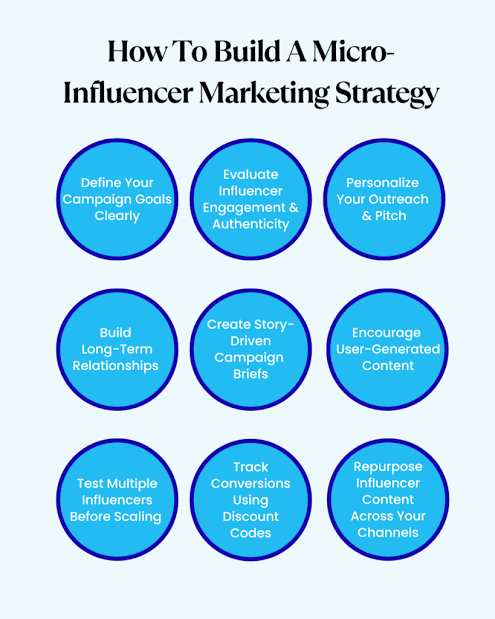
11. Strategy Nine: Collaborate With Multiple Micro-Influencers on One Campaign
Small businesses can improve campaign variety through coordinated creator partnerships.
Rather than asking every influencer to publish unrelated content, establish a shared campaign theme.
Example: A Small-Space Living Campaign
An online store specializing in compact furniture and organization accessories could work with several creators who focus on apartment living.
Each creator could present a different room or household challenge.
One might demonstrate kitchen storage solutions, another could focus on a home office, and another might explore bedroom organization.
Together, their content creates a broader picture of how the store’s products solve everyday problems.
Combine Individual Creativity With Shared Branding
Provide participating creators with consistent information about product features, promotion terms, and campaign timing.
However, each creator should retain a recognizable voice.
This combination supports brand consistency without making every post feel identical.
Track Results by Creator
Use separate tracking links and campaign identifiers to understand which content drives visits, product interest, and purchases.
Compare performance by audience segment and creative format.
Best for: Stores with several related products and enough operational capacity to coordinate multiple partnerships.
12. How to Find the Right Micro-Influencers for Your Store
Finding suitable influencers is more important than simply finding popular creators.
A poorly matched influencer can generate thousands of views without attracting meaningful customer interest.
Start With Your Ideal Customer
Before searching for creators, define the people most likely to purchase your products.
Consider their age range, interests, location, needs, shopping motivations, and preferred social platforms.
For instance, a store selling premium gardening equipment might prioritize creators who publish gardening tutorials rather than general lifestyle entertainment.
Search Social Platforms Strategically
Relevant creators can be discovered through platforms such as Instagram, TikTok, YouTube, and Pinterest.
Search for industry keywords, product categories, niche hashtags, and frequently discussed customer problems.
Review creators who already use products similar to yours.
Evaluate Engagement Quality
Follower count is only one indicator of potential value.
Examine recent posts and look for genuine conversations.
Do followers ask relevant questions?
Does the creator respond thoughtfully?
Are comments related to the content?
Does the audience appear interested in the product category?
These factors may provide useful signals of community quality.
Check Audience Geography
A creator with 40,000 followers may be a poor fit for a U.S.-focused online store if most followers live in markets the store cannot serve economically.
Request relevant audience demographic information when available.
Pay attention to target countries, language, and customer purchasing power.
Look for Brand Compatibility
Review the creator’s tone, production quality, prior sponsorships, and reputation.
A strong partnership should feel like a natural extension of the creator’s existing content.
13. How to Approach Micro-Influencers Without Sounding Like Spam
Influencer outreach should be professional, personalized, and concise.
Creators often receive repetitive promotional messages.
A clear proposal can help your brand stand out.
Sample Micro-Influencer Outreach Email
Subject: Collaboration Opportunity With [Brand Name]
Hi [Creator Name],
I recently discovered your content about [specific topic], and I especially enjoyed your post about [specific example].
We run [Brand Name], an independent online store specializing in [product category].
We believe our [product name] could be a great fit for your audience because [specific reason].
We would love to explore a collaboration, whether through product testing, creative content, or an affiliate partnership.
If you’re interested, we’d be happy to share more details and discuss an arrangement that works for both of us.
Best regards,
[Your Name]
[Brand Name]
Follow Up Respectfully
If a creator does not respond immediately, one polite follow-up after several business days may be appropriate.
Avoid repeated unsolicited messages.
A smaller number of thoughtful outreach attempts often creates better relationships than mass messaging hundreds of creators.
14. Build a Micro-Influencer Marketing Budget That Makes Financial Sense
Cost control is one of the biggest reasons independent stores adopt micro-influencer marketing.
However, low upfront fees do not automatically mean strong profitability.
The full cost of a campaign includes products, shipping, commissions, content fees, discounts, administrative work, and potential advertising rights.
Example: A $1,000 Monthly Pilot Budget
<text preserveWhitespace={true}> </text>
| Expense | Illustrative Budget |
|---|---|
| Product gifting and shipping | $250 |
| Paid creator collaborations | $400 |
| Affiliate commissions | $150 |
| Content licensing | $100 |
| Testing and contingency | $100 |
| Total | $1,000 |
This is a hypothetical budget intended to illustrate how a smaller store might distribute its resources.
Actual allocations should depend on product cost, expected order value, margins, and campaign goals.
Calculate the Real Break-Even Point
Suppose a store sells a product for $60.
The product and fulfillment costs total $25, and payment processing and other variable costs total $5.
The contribution margin before marketing is therefore $30 per order.
If the brand spends $600 on a campaign, it needs 20 incremental orders to cover that campaign cost, assuming no additional discounts, returns, commissions, or other expenses.
That does not mean every campaign must break even immediately.
Some campaigns also generate reusable content or introduce customers who later make repeat purchases.
However, businesses should distinguish measurable revenue from speculative future benefits.
Test Before Scaling
Avoid spending an entire monthly budget on unproven creators.
Begin with several small collaborations, evaluate results, and increase investment in the strongest partnerships.
The objective is not to minimize every expense, but to identify the most productive use of each marketing dollar.
15. Measure Micro-Influencer Marketing Performance With the Right Metrics
Successful influencer marketing depends on measurement.
Likes and views can indicate attention, but they do not necessarily translate into revenue.
Independent stores should monitor several performance indicators.
Engagement Rate
Engagement rate helps estimate how actively an audience interacts with content.
A simple calculation is:
Engagement Rate = (Likes + Comments + Shares) ÷ Followers × 100
For example, a creator with 20,000 followers who receives 800 combined interactions has an engagement rate of 4%.
This calculation provides a starting point, but it should not be treated as a complete measurement of influencer quality.
Some platforms report engagement relative to impressions or reach, which produces different results.
Cost Per Acquisition
Customer acquisition cost measures how much a campaign spends to acquire a new customer.
Customer Acquisition Cost = Campaign Acquisition Cost ÷ New Customers Acquired
Use consistent cost definitions when comparing campaigns.
For influencer partnerships, this may include creator payments, gifted products, shipping, commissions, and relevant production expenses.
Influencer Campaign Return on Ad Spend
Return on ad spend can be calculated by dividing attributable purchase revenue by campaign advertising spend.
ROAS = Attributable Purchase Revenue ÷ Advertising Spend
For example, $2,000 in attributable purchase revenue from $500 in advertising spending produces a ROAS of 4.0.
However, ROAS does not represent profit.
It does not automatically account for product costs, returns, operating expenses, or fulfillment.
For complete influencer program evaluation, brands may also calculate revenue relative to total campaign costs.
Conversion Rate
Track the percentage of referred visitors who complete purchases.
A creator who sends 200 highly interested visitors may generate more purchases than another creator who sends 2,000 visitors with little buying intent.
Content Performance
Track video watch time, saves, shares, landing page behavior, and conversion results when licensed creator content is reused in advertising.
A broader measurement framework helps prevent decisions based entirely on superficial popularity metrics.
16. Connect Influencer Marketing With Your Independent Store’s Sales Funnel
Micro-influencer marketing becomes more powerful when it supports the complete customer journey.
A social media recommendation may introduce a customer to your store, but the website must provide enough information and reassurance to complete the purchase.
Improve Product Landing Pages
Instead of directing every influencer visitor to the homepage, send them to a relevant product page or dedicated landing page.
The page should include clear product benefits, accurate specifications, high-quality images, transparent prices, and easy-to-understand shipping information.
Use Social Proof Responsibly
Customer reviews, creator demonstrations, and testimonials can help shoppers evaluate products.
Only publish genuine endorsements and avoid misleading claims.
If content is sponsored or creators received free products, disclose those relationships appropriately.
Build Email Follow-Up Opportunities
Some customers may browse without purchasing immediately.
Where customers voluntarily provide contact information and applicable consent, email marketing can provide useful follow-up content.
For example, a store might send installation guidance, product comparisons, care instructions, or related recommendations.
Retarget Interested Visitors
Where permitted by applicable privacy and consent requirements, paid advertising can help reconnect with visitors who showed interest but did not purchase.
Creator-produced content may work well as part of this process, provided the business has secured appropriate advertising rights.
The goal is to build a connected marketing system rather than rely on isolated promotional posts.
17. Creative Micro-Influencer Campaign Ideas for Different Product Categories
The most effective influencer campaigns often reflect the specific purchasing behavior of a product category.
Fashion and Accessories
Collaborate with smaller fashion creators to demonstrate outfit combinations, seasonal looks, or accessory styling.
A handbag store might organize a “One Bag, Five Outfits” campaign.
Each creator could show how the same bag fits different occasions.
Home and Garden
Work with home improvement, decorating, and gardening creators on practical demonstrations.
A garden accessories store might organize a balcony makeover series or a seasonal planting project.
This content can show customers realistic applications and product dimensions.
Pet Products
Partner with responsible pet owners who create educational content.
Product demonstrations might explain comfort, fit, cleaning, or practical everyday use.
Avoid content that compromises animal welfare or makes unsupported health claims.
Electronics and Gadgets
Collaborate with technology enthusiasts who enjoy explaining product features.
Useful content could cover setup instructions, compatibility, everyday performance, and comparisons.
Accurate demonstrations are especially important for technical products.
Beauty and Personal Care
Partner with creators who focus on particular routines or product needs.
Encourage clear descriptions of product experience while avoiding exaggerated or unsubstantiated results.
Fitness and Outdoor Equipment
Collaborate with creators who demonstrate practical use in appropriate environments.
Training routines, packing guides, and equipment demonstrations can help shoppers understand product suitability.
The strongest campaign concept usually solves a real customer question while giving the creator an interesting story to tell.
18. Common Micro-Influencer Marketing Mistakes to Avoid
Even affordable collaborations can waste resources when campaigns lack planning.
Choosing Influencers Based Only on Follower Count
A large audience does not guarantee that followers are interested in your products.
Audience relevance, credibility, and content quality should carry substantial weight in selection.
Ignoring Fake Engagement
Artificial followers, automated comments, and purchased interactions can distort performance estimates.
Review engagement patterns and use reliable audience analysis tools when necessary.
Giving Creators Excessively Rigid Scripts
Detailed requirements may be necessary for product accuracy and legal compliance.
However, overly scripted promotional language can make content unnatural.
Provide important information while allowing creators to communicate in their established style.
Failing to Define Usage Rights
Brands sometimes assume they can freely reuse influencer-created videos.
Commercial usage rights should be negotiated explicitly.
Agreements may need to address paid advertisements, editing, duration, territories, and allowed platforms.
Overlooking Disclosure Requirements
In the United States, the Federal Trade Commission expects material relationships between endorsers and brands to be clearly disclosed when applicable.
Payments, free products, and other incentives can create disclosure obligations.
Brands should establish disclosure expectations and monitor sponsored content for compliance.
Judging Results Too Quickly
Some influencer campaigns generate immediate purchases, while others primarily create awareness or educational content.
Use realistic evaluation windows and distinguish direct sales results from longer-term objectives.
Failing to Track Profitability
A campaign may generate impressive revenue while losing money after discounts, commissions, shipping, and product expenses.
Evaluate contribution margin alongside purchasing behavior.
19. A Practical 90-Day Micro-Influencer Marketing Action Plan
A structured rollout helps small e-commerce businesses learn without committing excessive resources.
Days 1–15: Research and Preparation
Define your ideal customer, select products suitable for promotion, and establish campaign objectives.
Choose whether your initial priority is direct sales, product content, awareness, or a combination of these goals.
Create a shortlist of relevant influencers.
Develop basic outreach materials, product information sheets, tracking links, and collaboration agreements.
Days 16–30: Start Small Collaborations
Contact selected creators and negotiate a manageable number of partnerships.
Prioritize creators whose audiences closely match your target customers.
Launch product gifting and affiliate experiments where appropriate.
Record all campaign costs.
Days 31–45: Review Early Performance
Analyze content quality, engagement, website visits, purchases, and customer feedback.
Identify creators who communicate product benefits clearly.
Review whether customers encounter problems on the landing pages or during checkout.
Days 46–60: Expand Winning Formats
Increase investment selectively in partnerships showing strong potential.
Test new creative angles, including tutorials, comparisons, and product demonstrations.
Negotiate content licensing where appropriate.
Consider turning high-quality creator content into paid advertisements with the necessary permissions.
Days 61–75: Develop Ambassador Relationships
Invite promising creators into longer-term partnerships.
Offer incentives aligned with performance, content quality, and audience fit.
Introduce complementary products or new campaign themes.
Days 76–90: Evaluate and Plan the Next Quarter
Compare total campaign costs against purchase revenue, customer acquisition, and reusable content value.
Discontinue weak partnerships, refine promising ones, and decide whether the program is ready for expansion.
Document what worked, what failed, and which assumptions require further testing.
A disciplined 90-day pilot can create a useful foundation for ongoing influencer marketing.
20. Advanced Strategy: Combine Micro-Influencer Marketing With Paid Advertising
Micro-influencer content can support paid advertising when brands have secured appropriate rights.
Instead of relying exclusively on traditional promotional graphics, businesses can test creator-led product demonstrations in advertising campaigns.
Test Different Creative Hooks
The first few seconds of a video often determine whether viewers continue watching.
Different creators may introduce the same product through different angles.
For example:
- “Three mistakes people make when organizing a small closet”
- “How I made better use of my apartment storage”
- “A closer look at this adjustable storage accessory”
- “What to check before buying a new closet organizer”
The goal is to discover which messages attract qualified shoppers rather than simply maximizing views.
Compare Creator Content Against Existing Advertisements
Use comparable audiences, objectives, and measurement conditions where possible.
Evaluate actual purchase performance, not just video engagement.
When advertising platforms combine purchases with other conversion actions, separate purchase-specific results before drawing conclusions about profitability.
Avoid Overreliance on One Winning Video
Advertising performance can change as audiences become familiar with a creative.
Maintain a pipeline of new product demonstrations and alternative messaging angles.
This creates an ongoing role for micro-influencer partnerships beyond their original organic social media exposure.
21. How to Scale Micro-Influencer Marketing Without Losing Control
As an influencer program grows, operational complexity can increase quickly.
Stores may struggle with outreach, product shipments, contracts, content approvals, payments, and tracking.
The solution is to build repeatable workflows.
Maintain a Central Creator Database
Record important information such as creator contact details, niche, audience region, campaign history, compensation terms, content rights, and performance.
A spreadsheet may be sufficient during the early stages.
As the program grows, dedicated creator relationship management software can help coordinate larger numbers of partnerships.
Standardize Collaboration Agreements
Develop templates that clearly specify deliverables, deadlines, compensation, disclosure expectations, approval procedures, and intellectual property rights.
Adapt terms to individual collaborations instead of assuming one agreement fits every campaign.
Use Performance Tiers
Group creators based on relevant business outcomes.
For example, emerging partners might begin with small test campaigns.
Creators producing promising content could receive larger assignments.
Established partners with consistent performance may qualify for longer-term agreements.
Preserve Authenticity
Scaling should not turn every influencer into a scripted advertisement channel.
Encourage honest feedback and allow creators to explain products in ways that remain natural to their communities.
Successful scaling depends on maintaining quality while improving operational efficiency.
22. The Future of Micro-Influencer Marketing for Independent Online Stores
Micro-influencer marketing is likely to remain an important part of the digital commerce landscape because it addresses several enduring business needs.
Consumers want useful product information.
Small businesses need affordable ways to reach relevant audiences.
Content creators want opportunities to build sustainable income through partnerships that fit their interests.
These needs create room for mutually beneficial collaborations.
Several approaches are particularly worth watching.
Smaller, More Specialized Communities
Brands may increasingly prioritize audience relevance over total follower count.
A highly specialized creator can reach customers with clear interests and purchasing needs.
Creator Content as a Long-Term Business Asset
Brands can gain additional value by developing libraries of properly licensed videos and photographs.
Content can support product education, website improvements, email marketing, and advertising.
Performance-Based Partnerships
Affiliate arrangements and hybrid compensation models can help align promotional activity with measurable outcomes.
However, fair fixed compensation may still be necessary for content production, regardless of immediate sales.
Deeper Brand-Creator Relationships
Long-term partnerships can help creators develop stronger product knowledge and support more consistent communication.
This may be particularly valuable for technical or specialized products.
Better Measurement and Operational Tools
Improved attribution, creator analytics, and marketing workflow systems may make influencer programs easier to manage.
Even so, businesses will still need to interpret results carefully because no attribution system perfectly captures every influence on a purchase.
The strongest micro-influencer strategies will combine authentic communication, commercial discipline, and continuous experimentation.
23. Frequently Asked Questions About Micro-Influencer Marketing
How Much Does Micro-Influencer Marketing Cost?
Costs vary widely depending on platform, niche, audience quality, content requirements, usage rights, and creator experience.
Some collaborations involve free products, while others require fixed fees, affiliate commissions, or a combination of compensation methods.
Small stores should establish a test budget that reflects their financial capacity.
How Many Micro-Influencers Should a Small Store Work With?
There is no universal ideal number.
A new program might begin with three to five carefully selected creators and expand after reviewing results.
A smaller number of relevant partnerships is usually easier to manage than a large, poorly coordinated campaign.
Which Platform Is Best for Micro-Influencer Marketing?
The answer depends on the product category and audience.
Instagram can be useful for lifestyle and visual products.
TikTok can support demonstrations and short-form storytelling.
YouTube is valuable for detailed tutorials and product reviews.
Pinterest may be relevant for visually oriented categories such as decorating, fashion, and DIY projects.
Choose platforms based on customer behavior rather than popularity alone.
Are Micro-Influencers Better Than Celebrity Influencers?
Not necessarily.
Celebrity influencers may provide broad awareness, while micro-influencers can offer specialized audiences and more accessible collaboration options.
The better choice depends on campaign objectives, budget, audience fit, and execution quality.
How Long Does It Take to See Results?
Some campaigns produce measurable traffic or purchases shortly after publication.
Others require repeated exposure, additional content, or improvements to the store’s sales funnel.
Businesses should set campaign-specific evaluation periods rather than assume every influencer collaboration will generate immediate sales.
Can a New Shopify Store Use Micro-Influencer Marketing?
Yes.
A newly launched Shopify store can begin with a small product gifting or affiliate program.
However, it should first establish trustworthy product pages, clear policies, reliable fulfillment, and accurate tracking.
Driving traffic to a poorly prepared store can waste valuable promotional opportunities.
Should Influencers Receive Free Products or Cash Payments?
Both arrangements can be appropriate.
Product gifting may work well for low-cost testing, especially when no posting obligation is imposed.
Paid collaborations are more appropriate when the brand requires specific deliverables, deadlines, production standards, or commercial rights.
Affiliate commissions can complement either model.
What Is the Biggest Advantage of Micro-Influencer Marketing?
Its main advantage is the ability to connect products with relevant communities through creators who understand their audiences.
For independent stores, this can create a flexible combination of targeted exposure, educational content, community engagement, and measurable sales opportunities.
Conclusion: Small Influencers Can Create Big Opportunities for Independent E-Commerce Brands
Micro-influencer marketing demonstrates that successful e-commerce growth does not always require celebrity endorsements or enormous advertising budgets.
For small and medium-sized independent online stores, the most valuable partnerships often come from creators who genuinely understand their niche, communicate naturally, and maintain meaningful relationships with followers.
The opportunities extend far beyond conventional sponsored posts.
Product gifting can introduce merchandise to specialized communities. Affiliate programs can align compensation with purchases. Creator-generated content can support product pages and advertising campaigns. Interactive challenges can encourage community participation, while long-term ambassador programs can strengthen brand familiarity.
The key is to approach micro-influencer marketing as a structured business strategy rather than a collection of random promotional experiments.
Start with the right products and creators. Establish clear campaign goals. Track actual purchases and profitability. Secure appropriate content rights. Learn from campaign performance and reinvest in partnerships that demonstrate lasting value.
Most importantly, remember that authenticity and business discipline should work together.
An influencer with a modest following but a genuinely interested audience may deliver more relevant traffic and valuable content than a much larger creator with limited connection to your product category.
For independent e-commerce entrepreneurs, the opportunity is clear: build a network of credible creators, turn authentic product experiences into compelling stories, and develop a repeatable marketing system that grows alongside your business.
With thoughtful planning, creative experimentation, and careful measurement, micro-influencer marketing can become a sustainable and cost-effective engine for increasing visibility, building customer trust, and driving online sales.