














 En
En
 40 min read
In today’s competitive e-commerce landscape, attracting visitors to your independent online store is only half the battle. The real challenge is convincing those visitors to trust your brand, feel confident about your products, and complete a purchase.
For independent e-commerce businesses, especially those operating Shopify, WooCommerce, or other direct-to-consumer websites, building trust can be more difficult than it is for established brands. Customers may discover your products through TikTok, Instagram, Facebook, Pinterest, or YouTube, but they often hesitate before purchasing from an unfamiliar website.
They may wonder whether the product looks as good in real life, whether the quality matches the description, or whether other customers have had positive experiences.
This is where user-generated content (UGC) becomes a powerful marketing asset.
Instead of relying entirely on polished product photography, promotional messages, and branded advertisements, UGC allows potential customers to see how real people experience your products. Customer reviews, unboxing videos, product demonstrations, social media posts, and authentic testimonials can help reduce uncertainty and make your brand more approachable.
For independent online stores, UGC is more than a content trend. It can become an important part of a sustainable customer acquisition, conversion optimization, and brand-building strategy.
In this comprehensive guide, we’ll explore how user-generated content improves social media conversion rates, strengthens customer trust, supports independent online store growth, and helps e-commerce brands turn everyday customers into effective brand advocates.
We’ll also cover practical ways to collect UGC, use it across social media platforms, create compelling UGC advertising campaigns, measure performance, and develop a repeatable content strategy.

1. What Is User-Generated Content (UGC) in E-Commerce?
User-generated content refers to content created by customers, users, or community members rather than directly produced by a brand’s internal marketing team.
In e-commerce, UGC typically features customers sharing their opinions, experiences, images, or videos involving products they have purchased or used.
Common examples include:
- Customer product reviews
- Product ratings
- Unboxing videos
- Real-life product photos
- TikTok product demonstrations
- Instagram Stories featuring purchases
- Facebook customer recommendations
- YouTube product reviews
- Before-and-after comparisons
- Customer testimonials
- Product-related questions and answers
- Social media posts mentioning a brand
UGC can appear organically when customers voluntarily share their experiences. Businesses can also encourage customers to submit content through post-purchase emails, social media campaigns, or review requests.
Organic UGC vs. Paid Creator Content
It’s important to understand the distinction between authentic customer-generated content and paid creator content.
Organic UGC comes from customers who independently share experiences with a brand or product.
For example, someone might purchase a handbag from an independent online store and post a TikTok video explaining its design, storage capacity, and everyday usability.
Paid UGC-style content is created by individuals who receive compensation or products in exchange for producing content.
Unlike traditional influencer partnerships, paid UGC creators may produce videos specifically for a brand’s advertising channels without publishing those videos to their own audiences.
Both approaches can be valuable, but businesses should clearly disclose relevant commercial relationships and avoid presenting paid promotional content as unsolicited customer feedback.
Why UGC Matters for Independent Online Stores
Unlike major marketplaces, independent e-commerce websites must often establish credibility from the beginning.
A shopper visiting an unfamiliar store may not immediately recognize its name or reputation.
UGC helps provide additional context by showing that real customers have interacted with the brand and can describe their experiences.
Rather than asking visitors to trust promotional claims alone, the store can provide authentic customer perspectives that help shoppers make informed decisions.
2. Why Customer Trust Is Essential for Social Media Conversions
Social media platforms are excellent channels for product discovery.
A potential customer may encounter a product in an Instagram Reel, TikTok video, Facebook advertisement, or Pinterest post.
However, product discovery does not automatically lead to a purchase.
Consumers typically move through several stages before completing an order:
- Discovering the product
- Developing interest
- Evaluating its usefulness
- Comparing alternatives
- Assessing the seller’s credibility
- Making a purchase decision
For an unfamiliar independent online store, the trust-building stage can be particularly important.
The Trust Gap Between Social Media and Independent Websites
Social media users are accustomed to seeing promotional content.
They understand that businesses want to sell products.
As a result, some shoppers may approach advertisements with skepticism.
They may question whether professional product photos accurately represent the item or whether promotional claims reflect typical customer experiences.
UGC helps address this uncertainty by showing products outside the controlled environment of a brand photoshoot.
A customer video filmed in a bedroom, kitchen, garden, or office may provide practical information that standard product photography cannot easily communicate.
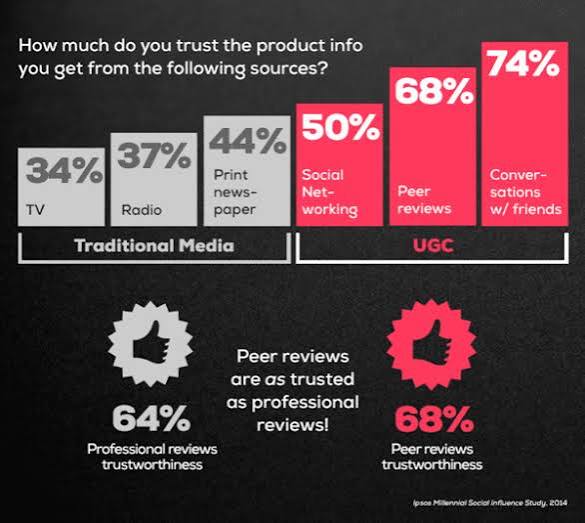
Social Proof and Consumer Behavior
Social proof describes how people use the experiences and behaviors of others to inform their decisions.
When potential customers see relevant feedback from other buyers, they gain additional information about the product and its suitability.
For example, a shopper considering a pair of sunglasses may find a customer video showing the frames on different face shapes more useful than a static promotional image.
Similarly, someone purchasing garden equipment may want to see how the product performs during everyday use.
UGC provides practical evidence that can help customers evaluate whether a product meets their needs.
Why Authenticity Is More Valuable Than Perfection
Professional advertising often emphasizes perfect lighting, carefully arranged products, and scripted messaging.
While high-quality branded content has an important role, consumers may also appreciate realistic product demonstrations.
Authentic UGC can show:
- Actual product dimensions
- Everyday usage scenarios
- Realistic colors and textures
- Product strengths and limitations
- Customer satisfaction
- Practical setup or installation experiences
The goal isn’t to make content look intentionally unprofessional.
It’s to provide an accurate and believable representation of the customer experience.
3. How UGC Improves Social Media Conversion Rates
User-generated content can influence several stages of the customer journey, from initial engagement to the final purchase decision.
Reducing Purchase Uncertainty
Online shopping involves uncertainty because customers cannot physically inspect products before ordering.
UGC helps reduce that uncertainty.
For example, a customer purchasing a storage organizer may want to know whether it fits inside a specific cabinet.
A real customer video demonstrating the organizer’s dimensions and storage capacity may answer that question more effectively than promotional text.
By addressing practical concerns, UGC can make shoppers feel better informed.
Increasing Product Understanding
Many products are easier to understand through demonstrations.
Examples include:
- Beauty tools
- Fashion accessories
- Home organization products
- Kitchen equipment
- Electronic accessories
- Pet supplies
- Gardening tools
- Fitness equipment
Customer-created demonstrations allow viewers to understand product functions and potential use cases.
This can be particularly valuable for products that require explanation before purchase.
Creating Relatable Shopping Experiences
Customers often respond to content featuring people with similar needs, lifestyles, or preferences.
A pet owner may find another pet owner’s experience especially relevant.
A homeowner renovating a small apartment may appreciate videos showing products used in compact spaces.
This relevance helps connect product features with real purchasing motivations.
Supporting Better Advertising Creative
UGC videos can serve as creative assets for paid social advertising.
They may use conversational language, practical demonstrations, and everyday situations that are familiar to social media users.
These characteristics can help brands test different messages and creative approaches.
However, UGC does not automatically outperform professionally produced advertising. Actual results depend on product-market fit, creative quality, audience targeting, pricing, and the overall shopping experience.
Encouraging More Confident Purchase Decisions
When UGC answers common questions and accurately communicates product benefits, shoppers may feel more comfortable proceeding to checkout.
The strongest UGC strategy focuses on helping customers make informed decisions rather than pressuring them to buy.
4. The Most Effective Types of UGC for Independent E-Commerce Stores
Different UGC formats serve different purposes.
A successful content strategy uses several formats across social media and the online store.
Customer Reviews and Ratings
Customer reviews are among the most accessible forms of UGC.
They provide direct feedback about product quality, functionality, delivery, and customer experience.
Detailed reviews can be particularly valuable when they explain how a product was used.
For example, compare these two reviews:
“Great product!”
“This organizer fits perfectly beneath my kitchen sink, holds all my cleaning supplies, and was easy to assemble.”
The second review provides specific information that may help another shopper decide whether the product is suitable.
Encourage customers to share honest, detailed feedback without requiring positive ratings.
Customer Photos
Customer photos show products in real environments.
For fashion products, photos may demonstrate styling possibilities.
For home decor, they can show how items look in different rooms.
For outdoor products, photos can illustrate practical applications.
Customer photos can be featured on product pages, social media accounts, and approved marketing materials.
Unboxing Videos
Unboxing videos capture the experience of receiving and opening a product.
They can show packaging, included accessories, product condition, and first impressions.
For unfamiliar independent stores, this information may help address questions about what customers can expect.
Product Demonstration Videos
Demonstration videos explain how products work.
They are especially useful for products involving installation, assembly, adjustable features, or specialized functions.
A short demonstration may answer several customer questions at once.
Customer Testimonials
Testimonials allow customers to explain what they liked about a product and how it met their needs.
Video testimonials can be particularly engaging because viewers can see and hear the customer’s perspective.
Testimonials should remain truthful and should not imply that unusual outcomes are typical.
Before-and-After Content
Before-and-after content can be useful for categories such as cleaning, organization, decorating, and certain personal care products.
For example, a customer might show a cluttered storage area before installing an organizational product, followed by the resulting arrangement.
Ensure comparisons are genuine, accurately presented, and accompanied by appropriate context.
Social Media Mentions
When customers mention your brand on social media, those posts can contribute to brand discovery and community engagement.
With appropriate permission, relevant posts may be shared through your brand’s channels.
5. How UGC Builds Trust in an Independent Online Store
Building customer trust requires consistent, credible evidence.
UGC can support this process in several ways.
Showing Real Product Ownership
Customer content demonstrates that people have purchased or used the product.
Photos and videos showing real-world use can provide details that polished advertisements may not communicate.
Providing Diverse Customer Perspectives
Different customers evaluate products differently.
One customer may focus on durability.
Another may care more about appearance.
A third may prioritize ease of installation.
Displaying varied experiences helps potential buyers understand a product from multiple perspectives.
Making Customer Feedback More Transparent
A trustworthy review section should reflect genuine customer experiences.
This includes allowing constructive criticism and avoiding misleading editing.
A product page containing only vague five-star reviews may appear less credible than one featuring detailed and varied feedback.
Humanizing the Brand
Independent stores sometimes struggle to communicate personality.
UGC introduces real voices into the shopping experience.
Customers become participants in the brand’s story rather than remaining anonymous transactions.
Creating Community Connections
When customers see others using the same products, they may feel more connected to the brand.
This is especially relevant for niche stores serving specific interests.
Examples include pet ownership, gardening, outdoor recreation, fitness, and home improvement.
6. UGC Strategies for TikTok Marketing
TikTok provides opportunities for independent brands to showcase products through short-form video content.
UGC-style videos can help make products understandable in a format suited to everyday discovery.
Create Strong Opening Hooks
The opening seconds should quickly establish why a viewer might find the video useful.
Examples include:
- “Here’s what I wish I knew before buying this.”
- “I tested this organizer in my small apartment.”
- “Three things I noticed after using this product.”
- “Does this actually work for everyday use?”
- “Here’s how I installed this in five minutes.”
These openings introduce a specific question or experience rather than relying on generic promotional claims.
Show the Product Immediately
Avoid unnecessarily long introductions.
Demonstrate the product early so viewers understand the topic.
Focus on Real Problems
Effective product videos often begin with a relatable problem.
For example, a video about a kitchen organizer might show the difficulty of finding items in a cluttered drawer.
The creator can then demonstrate how the product changes the storage arrangement.
Use Natural Language
Conversational explanations can feel approachable.
Avoid forcing creators to recite complicated advertising scripts.
Include an Appropriate Call to Action
After demonstrating the product, guide interested viewers toward additional information.
Examples include:
“Check the product details to see available sizes.”
“Visit the store to explore the different colors.”
“See the full product specifications before choosing yours.”
The message should match the content and offer a useful next step.
7. How to Use UGC on Instagram
Instagram offers several formats for showcasing authentic customer experiences.
Instagram Reels
Reels can feature short demonstrations, unboxing clips, customer experiences, and practical tips.
A strong Reel typically focuses on one clear idea.
Instagram Stories
Stories can highlight customer mentions, feedback, and limited-time updates.
Brands can also use interactive features to gather product questions or preferences.
Carousel Posts
Carousel posts can present multiple customer experiences or demonstrate several product applications.
For example, a home decor brand could feature a series of customer-submitted room setups.
Customer Highlights
With permission, businesses can organize relevant customer content into accessible profile highlights.
Categories might include customer reviews, product styling, installation examples, and frequently asked questions.
Community Engagement
Responding to genuine comments and customer questions helps create conversations rather than one-way promotions.
This engagement also gives brands insight into common concerns.
8. UGC Strategies for Facebook Advertising
Facebook remains relevant for many independent e-commerce businesses, particularly when targeting audiences interested in home products, lifestyle goods, and practical solutions.
Customer-generated content can be incorporated into paid campaigns to test different approaches.
Customer Testimonial Ads
These ads feature authentic customer feedback.
A customer might explain why they purchased a product and whether it met their expectations.
Product Demonstration Ads
Demonstrations can help audiences understand unfamiliar products.
Show the product being used rather than relying entirely on descriptive claims.
Review-Based Creative
Brands can feature authorized customer feedback within advertising creative.
Avoid editing reviews in ways that change their original meaning.
Collection and Retargeting Campaigns
UGC can also support campaigns aimed at shoppers who previously viewed products or visited the store.
For example, someone who explored a product page but did not purchase may benefit from seeing a video answering common product questions.
Retargeting should comply with applicable privacy requirements and platform policies.
9. How to Collect Authentic UGC From Customers
One of the biggest challenges for independent online stores is collecting enough useful content.
Fortunately, businesses don’t need a massive customer base to begin.
Send Post-Purchase Review Requests
After customers have had a reasonable opportunity to receive and use their products, send a polite request for feedback.
Keep the request simple and convenient.
You can ask customers to share their experience, including what they liked, what could be improved, and how they used the product.
Encourage Photo and Video Submissions
Some customers are willing to share photos or short videos when given clear instructions.
For example, a home decor store might invite buyers to share how a product looks in their living space.
Create a Branded Hashtag
A recognizable hashtag can help organize relevant social media posts.
Choose something easy to remember and distinctive to your brand.
A hashtag campaign should encourage genuine participation rather than artificial engagement.
Engage With Existing Customers
Respond to customers who mention your products.
Thank them for sharing their experiences.
If their content would be useful for marketing, request permission before republishing it.
Use Product Packaging Inserts
A small packaging insert can invite customers to share an honest review or product photo.
Avoid language suggesting that only positive feedback is welcome.
Create Community Challenges
For suitable product categories, invite customers to share practical or creative uses.
A garden supply brand might encourage customers to show their planting arrangements.
A fitness accessory store might invite users to demonstrate different ways they use their equipment.
The challenge should be accessible and relevant to the product.
Offer Carefully Structured Incentives
Some businesses offer incentives for submitting feedback.
If you use incentives, make them available for honest reviews regardless of whether the feedback is positive or negative.
Disclose material incentives where required.
Never reward customers specifically for favorable ratings or fabricate customer experiences.
10. How to Turn Customer Reviews Into High-Converting Content
Customer reviews can support much more than a product rating widget.
A detailed review may reveal the exact concerns, benefits, or situations that matter to prospective buyers.
Identify Common Customer Questions
Read reviews to understand which questions appear repeatedly.
These may involve:
- Product size
- Ease of installation
- Material quality
- Color accuracy
- Durability
- Compatibility
- Maintenance
- Everyday usability
Use these insights to improve product descriptions and create educational social content.
Highlight Specific Product Experiences
Detailed customer feedback often provides useful context.
For example, a review explaining how a product fits in a small room may be relevant to apartment residents.
Create Review-Based Video Concepts
With appropriate rights and disclosure, brands can build videos around recurring customer questions.
A video could demonstrate the product while displaying genuine customer feedback.
Use Reviews to Improve Product Pages
Place relevant reviews near the information shoppers are evaluating.
For example, size-related feedback can support a product sizing guide.
Preserve the Original Meaning
Do not turn mixed feedback into a misleadingly positive testimonial.
Accuracy is essential to maintaining trust.
11. How to Integrate UGC Into Shopify Product Pages
Social media UGC can attract visitors, but an independent website must continue building confidence after they arrive.
Product pages are therefore an important location for customer-generated content.
Display Customer Ratings
Where genuine ratings are available, show them in a clear and understandable format.
Avoid misleading review counts or fabricated ratings.
Add Photo Reviews
Customer-submitted photos can help shoppers visualize products outside professional studio settings.
Feature Product Demonstration Videos
Place relevant videos near product descriptions, specifications, or usage instructions.
Videos should load efficiently and function properly on mobile devices.
Include Customer Questions and Answers
An accessible question-and-answer section can address concerns not fully covered in the product description.
Highlight Verified Purchases Accurately
If your review system supports verified-purchase labels, use them only when verification actually occurred.
Avoid Overloading Product Pages
Excessive widgets, autoplay videos, and large media files can make product pages difficult to navigate.
A useful UGC integration should improve the shopping experience without creating unnecessary distractions.
12. Turning Social Media Visitors Into Paying Customers
A successful UGC strategy connects social media content with an effective shopping experience.
The journey should feel consistent from discovery to checkout.
Match the Advertisement to the Product Page
If a social media video focuses on a particular product feature, the landing page should provide relevant information about that feature.
For example, a video demonstrating a foldable storage rack should lead to a page clearly explaining its dimensions, capacity, materials, and available options.
Maintain Message Consistency
Avoid showing one product variation in the advertisement while directing customers to an unrelated version.
Provide Clear Product Information
UGC builds interest, but shoppers still need factual details.
Include accurate specifications, pricing, availability, shipping policies, and return information.
Optimize Mobile Usability
Many social media visitors browse on mobile devices.
Ensure that product pages are easy to read and navigate.
Buttons, product options, images, and checkout forms should work smoothly on smaller screens.
Reduce Checkout Friction
Unexpected fees, confusing delivery options, and complicated checkout processes can undermine the confidence created by UGC.
Transparency throughout the purchase journey matters.
13. UGC vs. Influencer Marketing: Which Works Better?
UGC and influencer marketing can overlap, but they have different strengths.
| Factor | Organic UGC | Influencer Marketing |
|---|---|---|
| Primary creators | Customers and community members | Creators with established audiences |
| Main value | Customer experiences and social proof | Audience reach and creator credibility |
| Typical content | Reviews, photos, demonstrations | Sponsored posts, recommendations, campaigns |
| Distribution | Customer and brand channels | Creator and brand channels |
| Cost | Collection and management costs | Fees, products, and campaign costs |
| Brand control | Generally limited | Defined through collaboration agreements |
| Trust considerations | Authenticity and review integrity | Authenticity and sponsorship disclosure |
When UGC Is Especially Useful
UGC may be particularly valuable for businesses that already have satisfied customers but limited content production resources.
It can also help brands explain products through real usage examples.
When Influencer Marketing Is Useful
Influencer partnerships can introduce products to audiences that may not already know the brand.
They can be valuable when a creator’s audience closely matches the store’s target customer.
Combining Both Strategies
A business might collaborate with relevant creators for product discovery while collecting genuine customer feedback to support ongoing product evaluation.
This combination can help connect awareness, consideration, and conversion.
14. How UGC Can Improve Paid Social Advertising Performance
Paid social campaigns require continuous creative testing.
UGC provides additional creative formats and messages to evaluate.
Test Different Customer Perspectives
Different buyers may respond to different product benefits.
One video may emphasize convenience.
Another may focus on design.
A third may demonstrate durability or ease of use.
Test Different Video Hooks
Create variations with different opening messages while preserving truthful product information.
Compare Creative Formats
Evaluate customer demonstrations, testimonial videos, product-focused footage, and professional brand advertisements.
Do not assume any single format will always perform best.
Refresh Creative Strategically
Over time, audiences may become less responsive to repeated advertisements.
A library of authorized customer content can provide new creative options.
Maintain Consistent Measurement
Compare campaigns using relevant performance metrics rather than views or engagement alone.
A video that generates many likes doesn’t necessarily generate profitable sales.
15. How to Measure the Conversion Impact of UGC
UGC performance should be evaluated using meaningful business outcomes.
For independent e-commerce stores, purchases and profitability are often more important than superficial engagement metrics.
Key Performance Indicators
| Metric | What It Measures | Why It Matters |
|---|---|---|
| Click-through rate (CTR) | Percentage of ad impressions producing clicks | Indicates how effectively content attracts traffic |
| Cost per click (CPC) | Advertising cost per click | Helps assess traffic acquisition efficiency |
| Add-to-cart rate | Share of visitors adding a product to the cart | Indicates product consideration |
| Checkout initiation rate | Share of visitors starting checkout | Helps evaluate movement toward purchase |
| Purchase conversion rate | Share of visitors completing an order | Measures sales effectiveness |
| Cost per acquisition (CPA) | Advertising cost per acquired purchase | Helps evaluate customer acquisition cost |
| Return on ad spend (ROAS) | Attributed purchase revenue divided by advertising spend | Measures advertising revenue efficiency |
| Average order value (AOV) | Revenue per order | Helps evaluate purchasing behavior |
| Customer acquisition cost (CAC) | Total acquisition cost per new customer | Supports business-level profitability analysis |
Prioritize Actual Purchases
One important mistake is treating add-to-cart events, checkout initiations, and completed purchases as equivalent conversions.
These actions represent different stages of the customer journey.
A UGC campaign may generate substantial engagement and many shopping carts without producing enough completed orders.
For sales-focused advertising, evaluate actual purchase counts and purchase revenue separately from preliminary actions.
Calculate ROAS Correctly
ROAS is calculated using actual attributed purchase revenue:
ROAS = Purchase Revenue ÷ Advertising Spend
For example, if a UGC advertising campaign generates $6,000 in attributed purchase revenue from $2,000 in advertising spend:
ROAS = $6,000 ÷ $2,000 = 3.0
This means the campaign generated $3 in attributed purchase revenue for each $1 spent on advertising.
However, ROAS doesn’t directly account for product costs, shipping, payment fees, returns, or other operating expenses.
A profitable campaign must also support an acceptable contribution margin.
Separate Engagement Metrics From Sales Outcomes
Likes, comments, shares, and video views can provide useful information about audience interest.
However, they should not replace purchase-based performance analysis.
Use Consistent Attribution
When comparing UGC and non-UGC advertising, use comparable attribution settings, audience definitions, and reporting periods.
Keep in mind that advertising platforms may report attributed purchases differently.
For important decisions, compare platform reporting with store order data while accounting for attribution limitations.
16. A Practical UGC Advertising Test for Independent Stores
Rather than replacing all advertising content immediately, begin with a controlled test.
Step 1: Select One Product
Choose a product with adequate inventory, a clear target audience, and enough sales history to support evaluation.
Step 2: Prepare Several Creative Variations
For example:
- Creative A: Traditional product demonstration
- Creative B: Genuine customer testimonial
- Creative C: Customer-style unboxing video
- Creative D: Problem-and-solution demonstration
Step 3: Keep Other Variables as Consistent as Possible
Use comparable audiences, landing pages, offers, and measurement settings.
Where supported, use the advertising platform’s experiment tools to reduce audience overlap and other testing problems.
Step 4: Establish Evaluation Criteria
Choose primary metrics before launching.
For a purchase-focused campaign, these might include purchase conversion rate, CPA, and purchase-based ROAS.
Step 5: Gather Enough Evidence
Avoid declaring a winner after only a few clicks or purchases.
The necessary sample size depends on conversion frequency and the size of the performance difference you want to detect.
Step 6: Review Creative Quality and Sales Results
Examine which content generates profitable purchases and what viewers may have found useful.
Step 7: Scale Carefully
Increase investment in promising creative while monitoring performance.
Results can change as audience reach and spending increase.
17. How to Build a Repeatable UGC Collection System
A scalable UGC strategy requires organization.
Instead of collecting customer content occasionally, build a repeatable process.
Stage 1: Identify Suitable Customers
Start with customers who have received their products and had enough time to evaluate them.
Stage 2: Request Honest Feedback
Use post-purchase messages that invite genuine experiences.
Avoid pressuring customers to publish positive statements.
Stage 3: Make Submission Easy
Provide a convenient method for submitting reviews, photos, or videos.
Explain what types of content are useful without scripting personal experiences.
Stage 4: Obtain Appropriate Permission
Before using customer photos or videos in marketing, secure the required rights.
Stage 5: Organize Content
Create categories such as product type, format, customer question, usage scenario, and permission status.
Stage 6: Review Content for Accuracy
Check factual claims and ensure that edited materials accurately reflect the original content.
Stage 7: Distribute Across Channels
Use approved content on product pages, social media, paid advertisements, and other suitable channels.
Stage 8: Measure Results
Evaluate performance and identify opportunities to improve future content collection.
18. How to Use UGC Throughout the Customer Journey
Not every piece of content should directly ask for a sale.
Different formats can support different stages of the customer journey.
Awareness Stage
At this stage, shoppers are discovering a product or learning about a problem.
Useful content includes short product demonstrations and everyday usage examples.
Consideration Stage
Shoppers may compare alternatives or investigate product specifications.
Detailed customer reviews, comparison videos, and practical demonstrations can help.
Purchase Stage
Customers may want reassurance before paying.
Relevant testimonials, verified reviews, shipping information, and clear product details can reduce uncertainty.
Post-Purchase Stage
Customer-generated tutorials and practical tips may help buyers use their purchases effectively.
Loyalty Stage
Encouraging existing customers to share experiences can support ongoing community engagement and future purchasing relationships.
UGC should help customers at each stage rather than functioning only as advertising material.
19. Using UGC for Email Marketing and Customer Retention
UGC can support communication beyond social media.
Welcome Emails
Introduce new subscribers to your brand through genuine customer experiences.
Product Education Emails
Show practical ways customers use products.
Abandoned Cart Emails
Where permitted and appropriate, feature relevant customer reviews to answer common purchasing concerns.
Avoid exaggerated claims or artificial urgency.
Post-Purchase Emails
Share helpful customer tips and invite honest product feedback after an appropriate period.
New Product Announcements
Customer experiences from related products may help introduce new collections, provided the content is not misleadingly presented as feedback on an untested product.
Loyalty Communications
Highlight community participation and useful customer contributions.
The goal is to build lasting customer relationships, not simply increase email volume.
20. The Role of UGC in Brand Storytelling
Independent e-commerce businesses often compete against larger companies with more substantial marketing resources.
UGC provides a way to develop brand stories based on actual experiences.
Show How Products Fit Into Daily Life
A home organization brand can feature how customers use storage products in different living spaces.
A fashion accessories store can highlight personal styling choices.
A gardening business can showcase customer projects.
Highlight Different Use Cases
A single product may serve multiple purposes.
Customer experiences can reveal applications that aren’t immediately obvious from product descriptions.
Celebrate Customer Creativity
Recognizing creative product uses can encourage participation and demonstrate appreciation for the community.
Build a Recognizable Brand Identity
Over time, recurring themes in customer content may help establish a brand’s personality.
For example, a store serving outdoor enthusiasts might develop a community centered on practical adventures and shared experiences.
Brand storytelling is more credible when it reflects genuine customer behavior.
21. Common UGC Marketing Mistakes to Avoid
UGC can lose effectiveness when brands prioritize volume over credibility.
Mistake 1: Purchasing Fake Reviews
Fabricated customer reviews undermine trust and may violate consumer protection laws.
Never create or purchase misleading testimonials.
Mistake 2: Publishing Content Without Permission
A customer posting a photo publicly doesn’t necessarily authorize a business to use it in advertisements.
Secure appropriate usage rights.
Mistake 3: Hiding All Negative Feedback
Removing legitimate criticism solely because it is unfavorable can create a misleading impression.
Establish reasonable, consistent review moderation standards.
Mistake 4: Using Misleading Edits
Editing customer statements to change their meaning damages credibility.
Mistake 5: Ignoring Disclosure Requirements
Paid endorsements, free products, and other material relationships may require disclosure.
Make disclosures clear and visible.
Mistake 6: Focusing Only on Viral Content
A viral video may attract attention without generating qualified buyers.
Measure actual business outcomes.
Mistake 7: Using the Same Content Everywhere
Different platforms have different audience behaviors and content formats.
Adapt presentation while preserving the authenticity of the original message.
Mistake 8: Ignoring the Landing Page
Excellent UGC cannot fully compensate for confusing product pages, unexpected checkout costs, or poor customer support.
Mistake 9: Overpromising Results
Customer experiences shouldn’t be presented as guarantees.
Use accurate claims with appropriate context.
Mistake 10: Failing to Track Permissions
Businesses should maintain clear records of where and how customer content may be used.
22. Legal and Ethical Considerations for UGC Marketing
Trustworthy UGC marketing requires respect for consumers, creators, and applicable regulations.
Obtain Content Usage Rights
Permission to repost content on social media may not automatically include permission to use it in paid advertising.
Clarify permitted channels, duration, editing rights, and other relevant terms.
Disclose Material Connections
When creators receive money, products, discounts, or other valuable benefits in connection with endorsements, applicable rules may require disclosure.
For businesses marketing to U.S. consumers, the Federal Trade Commission provides guidance on endorsements and material connections.
Avoid Fabricated Testimonials
Never represent fictional people or invented customer experiences as genuine reviews.
Respect Customer Privacy
Avoid publishing customer names, photographs, contact information, or other personal details without appropriate authorization.
Represent Results Accurately
For products involving appearance, performance, or other measurable outcomes, avoid presenting unusual results as typical without appropriate substantiation and context.
Maintain Transparent Review Practices
Businesses should adopt policies that support genuine feedback and reasonable moderation.
Ethical practices aren’t separate from brand trust. They are part of how trust is earned.
23. How Small Independent Stores Can Start UGC Marketing With a Limited Budget
UGC marketing doesn’t require a large production team.
Small businesses can begin with existing customer relationships and gradually develop their content libraries.
Start With Existing Reviews
Review authentic feedback already available through your store.
Identify statements that answer common customer questions.
Obtain necessary permission before repurposing content.
Invite Customers to Share Photos
A simple post-purchase request can encourage participation.
Focus on One Social Platform
Instead of trying to maintain every channel at once, begin where your target customers are most active.
Reuse Approved Content Thoughtfully
One genuine customer video may support several legitimate uses, such as a product page demonstration, an approved social post, or an authorized advertisement.
Prioritize Clear Content Over Expensive Production
Good lighting, audible speech, and a clear demonstration are often more useful than elaborate effects.
Track Results From the Beginning
Even small campaigns should monitor purchases, acquisition costs, and revenue performance.
Build Gradually
As customer participation increases, establish more formal procedures for collecting, organizing, and managing content.
24. A 30-Day UGC Marketing Action Plan
Independent stores can use the following framework to launch a structured UGC initiative.
Week 1: Audit Existing Content
Review product pages, customer reviews, social media mentions, and current advertising.
Identify products that would benefit from additional demonstrations or testimonials.
Choose one or two priority products.
Week 2: Collect Customer Experiences
Send honest review requests to eligible customers.
Invite optional photo or video submissions.
Contact customers whose existing posts may be useful and request appropriate permissions.
Organize received content.
Week 3: Create and Launch Content
Prepare several social media posts and advertising variations.
Focus on different customer questions, product features, or usage situations.
Ensure claims are accurate and disclosures are appropriate.
Launch a limited creative test where sufficient traffic and budget are available.
Week 4: Evaluate and Improve
Review engagement, traffic quality, completed purchases, CPA, and ROAS.
Identify which content helps shoppers understand the product and which approaches produce better commercial outcomes.
Use these findings to refine future requests and creative development.
Thirty days may be enough to establish a basic workflow, but it won’t necessarily produce statistically reliable conversion results for every store.
Businesses with low traffic or infrequent purchases may need a longer evaluation period.
25. Advanced UGC Strategies for Growing E-Commerce Brands
Once a basic UGC program is working, brands can explore more sophisticated approaches.
Segment Content by Customer Needs
Different audiences may prioritize different benefits.
Organize content around customer problems rather than only product categories.
Develop Product-Specific Content Libraries
Maintain separate collections of approved reviews, photos, and videos for individual products.
This makes it easier to match content to advertising campaigns and product pages.
Connect UGC With Customer Service Insights
Customer support conversations can reveal recurring product questions.
Use these insights to guide future demonstrations and educational content.
Test Content Across Different Funnel Stages
A short demonstration may work well for initial product discovery.
A detailed testimonial may be more appropriate for consideration-stage shoppers.
Track Creative Performance Over Time
Monitor whether specific content loses effectiveness as audiences become familiar with it.
Refresh creative when supported by performance evidence.
Encourage Long-Term Customer Participation
Develop relationships with customers who enjoy sharing practical product experiences.
Avoid pressuring them to provide endorsements or making participation dependent on favorable feedback.
Maintain a Consistent Brand Experience
UGC should complement accurate product descriptions, dependable service, transparent policies, and reliable fulfillment.
A strong customer experience creates the foundation for credible customer-generated content.
26. Frequently Asked Questions About UGC and Social Media Conversions
What Does UGC Mean in E-Commerce?
UGC stands for user-generated content. It includes reviews, photographs, videos, social media posts, and other content created by customers or users rather than the brand itself.
How Does UGC Increase Conversion Rates?
UGC can provide practical product information, demonstrate real-world use, reduce uncertainty, and strengthen customer confidence.
Its impact varies depending on content quality, product category, audience, and shopping experience.
Is UGC Better Than Traditional Advertising?
Neither format is universally better.
UGC can provide relatable customer perspectives, while professional advertising can offer strong product presentation and brand consistency.
Testing both approaches helps identify what works for a particular business.
Can Small Shopify Stores Benefit From UGC?
Yes. Small stores can use authentic customer feedback to demonstrate product experiences and build credibility.
They can begin with existing reviews and gradually collect additional content.
What Type of UGC Works Best for Social Media?
The most effective format depends on the platform and product.
Common options include customer demonstrations, testimonials, unboxing videos, and detailed reviews.
How Can I Get UGC Without Paying Influencers?
Invite customers to submit honest feedback, share photos, participate in relevant community activities, or respond to post-purchase requests.
Always respect customer preferences and content rights.
Does UGC Help Build Brand Trust?
It can. Genuine customer perspectives provide information beyond a brand’s own promotional claims.
Trust also depends on product quality, accurate information, reliable service, and transparent business practices.
Can I Use Customer Photos in Facebook Ads?
Only when you have the appropriate rights and permissions.
A public social media post doesn’t automatically grant unrestricted commercial usage rights.
Should I Pay Customers for Reviews?
Incentivized reviews require careful handling.
Any incentives should be available regardless of review sentiment and disclosed as required.
Never pay for fabricated or specifically positive reviews.
How Do I Measure UGC Campaign Success?
Track relevant metrics such as purchase conversion rate, CPA, attributed purchase revenue, and ROAS.
Engagement metrics can supplement the analysis but shouldn’t replace sales outcomes.
Can UGC Reduce Advertising Costs?
UGC may offer additional creative options and sometimes improve advertising efficiency.
However, lower costs aren’t guaranteed.
Results should be verified through consistent testing.
How Many UGC Videos Should I Create?
There is no universal number.
Begin with enough distinct concepts to test different messages and product use cases.
Expand your library according to available resources and performance results.
Is UGC Suitable for Dropshipping Stores?
Yes, provided the content represents genuine product experiences and the store maintains truthful marketing practices.
Dropshipping businesses should pay particular attention to product consistency, shipping accuracy, and customer expectations.
Can UGC Improve Customer Retention?
It can support engagement, education, and community participation.
However, retention also depends heavily on product satisfaction, service quality, and the overall customer experience.
How Long Does It Take to See Results From UGC Marketing?
Results depend on audience size, content quality, campaign spending, traffic volume, and purchase frequency.
Some changes may become visible relatively quickly, while reliable purchase-based conclusions may require extended testing.
27. The Future of UGC in Independent E-Commerce
UGC is likely to remain important as consumers continue discovering products through social platforms and researching purchases across multiple channels.
However, the value of UGC depends increasingly on credibility.
As marketing content becomes easier to produce and automate, genuine customer experiences can help differentiate trustworthy businesses from misleading promotional activity.
Greater Demand for Authenticity
Consumers may become more selective about the content they trust.
Detailed, verifiable experiences can provide more useful information than generic endorsements.
More Integration Between Social Content and Online Stores
Brands can create more consistent shopping experiences by connecting relevant social media content with product pages.
Increased Focus on Video Demonstrations
Short-form videos offer a convenient way to show product features and everyday applications.
Better Content Performance Measurement
Businesses can increasingly evaluate creative based on purchase outcomes rather than engagement alone.
Stronger Emphasis on Transparency
Brands that clearly distinguish organic reviews from paid promotions can support more informed purchasing decisions.
Customer Communities as Long-Term Assets
A loyal community that voluntarily shares experiences can contribute to brand knowledge, product development, and customer relationships.
The most sustainable strategy is to create products and experiences that customers genuinely want to discuss.
Conclusion: Turn Authentic Customer Experiences Into Trust and Sales
For independent online stores, success in social media marketing requires more than attracting attention.
Businesses must also establish credibility, communicate product value, and provide a smooth path from discovery to purchase.
User-generated content helps connect these goals by bringing authentic customer experiences into the marketing process.
Customer reviews, product demonstrations, unboxing videos, testimonials, and real-life photographs can answer important questions that traditional promotional materials may leave unresolved.
When implemented thoughtfully, UGC can help reduce purchase uncertainty, strengthen social proof, improve product understanding, and support conversion-focused advertising.
However, effective UGC marketing isn’t simply about collecting as many videos and reviews as possible.
It requires a consistent commitment to authenticity, customer permission, transparent disclosures, accurate product information, and meaningful performance measurement.
For Shopify stores, dropshipping businesses, direct-to-consumer brands, and other independent e-commerce websites, the most practical approach is to start small.
Collect genuine feedback from existing customers, identify the content that answers important purchasing questions, and test it across relevant social media channels and product pages.
Measure completed purchases, customer acquisition costs, and purchase-based return on ad spend rather than relying exclusively on likes, views, or add-to-cart activity.
Over time, use the results to build a repeatable process for collecting, managing, and distributing high-quality customer content.
Most importantly, remember that trust cannot be manufactured through marketing techniques alone.
A trustworthy brand is built through accurate product descriptions, consistent product quality, dependable fulfillment, responsive customer support, and honest communication.
UGC becomes most powerful when it reflects these genuine customer experiences.
By making authentic customer voices part of your marketing strategy, your independent online store can build stronger relationships, improve purchase confidence, and create a more sustainable foundation for long-term e-commerce growth.