














 En
En
 21 min read
Introduction: Why Social Media Traffic Tracking Matters for Independent Websites
For many independent website owners, social media is one of the most powerful channels for attracting potential customers.
Platforms such as Instagram, Facebook, TikTok, Pinterest, LinkedIn, and X provide opportunities to:
- Build brand awareness
- Drive visitors to a website
- Create customer relationships
- Promote products and services
- Generate sales opportunities
However, many businesses make the same mistake: they focus on how many likes, followers, or views they receive instead of understanding whether social media activities actually contribute to business growth.
A post may receive thousands of views but generate very few website visits.
A video may go viral but bring little revenue.
A campaign may attract significant engagement but fail to convert visitors into customers.
This is why tracking social media traffic performance is essential.
Successful website owners do not simply ask:
“How many people saw my content?”
They ask:
“How many valuable visitors did social media bring?”
“Which platform creates the highest-quality traffic?”
“Which campaigns generate real business results?”
“What actions should we improve next?”
Understanding the right data indicators allows independent websites to make smarter decisions, allocate marketing resources more effectively, and transform social media from a simple communication channel into a measurable growth engine.
1. The Difference Between Social Media Activity and Real Business Results
Before analyzing specific metrics, it is important to understand the difference between surface-level activity and meaningful performance.
Social media platforms provide many visible numbers:
- Likes
- Comments
- Shares
- Followers
- Video views
- Impressions
These numbers can show audience interest, but they do not always represent business value.
For example:
A brand publishes a product video that receives:
- 100,000 views
- 5,000 likes
- 500 comments
At first glance, the campaign appears successful.
However, after checking website data, the business discovers:
- Only 300 people visited the website
- Only 10 users added products to their carts
- Only 2 purchases were completed
The content created attention but failed to create meaningful customer action.
This does not mean engagement is useless.
Instead, it means engagement should be connected with deeper performance indicators.
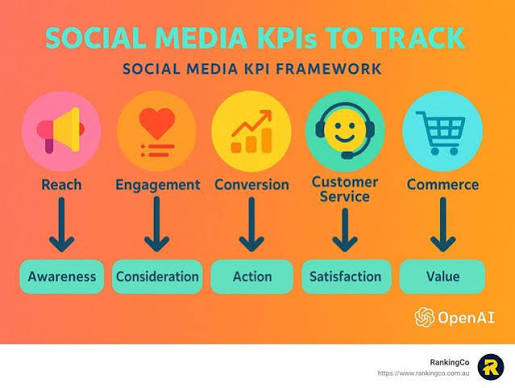
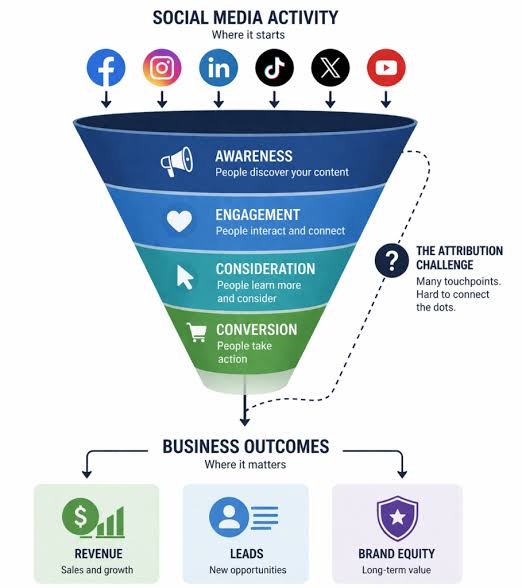
A successful social media strategy requires understanding the complete customer journey:
Social media exposure → Website visit → User interaction → Conversion → Revenue
Tracking every stage helps identify where improvement is needed.
2. Setting Up a Reliable Social Media Tracking System
Before measuring performance, independent website owners need proper tracking foundations.
Without accurate tracking, even the best data analysis becomes unreliable.
2.1 Use Campaign Tracking Links
One of the simplest ways to understand social media traffic sources is by using customized tracking links.
Instead of sharing the same website URL everywhere, create unique links for different campaigns.
For example:
- Instagram product launch link
- Facebook promotion link
- TikTok video campaign link
- Pinterest seasonal campaign link
These links help identify:
- Which platform brings visitors
- Which campaign performs best
- Which content generates interest
A customized tracking system allows businesses to move beyond guessing.
2.2 Connect Website Analytics With Social Media Data
Website analytics tools provide valuable information about visitor behavior.
Important data includes:
- Traffic source
- Visitor location
- Time spent on pages
- Pages viewed
- Conversion actions
- Purchase behavior
Social media platforms show what happens before users arrive.
Website analytics shows what happens afterward.
Combining both perspectives creates a complete picture.
For example:
A social platform may report strong engagement.
Website data can reveal whether those engaged users:
- Explore products
- Subscribe to newsletters
- Request information
- Complete purchases
2.3 Define Clear Goals Before Measuring Results
Different businesses have different objectives.
A website selling products may focus on:
- Revenue
- Orders
- Customer acquisition
A service-based website may focus on:
- Contact requests
- Consultation bookings
- Email subscriptions
A content website may focus on:
- Page visits
- Returning readers
- Newsletter growth
Without clear goals, data becomes difficult to interpret.
The right metrics depend on what the business wants to achieve.
3. Core Social Media Traffic Metrics Every Website Owner Should Track
Not every available metric is equally important.
The following indicators provide deeper insight into social media performance.
3.1 Social Media Referral Traffic
Social media referral traffic measures how many visitors come to your website from social platforms.
This is one of the most basic but important indicators.
It answers:
“Are social media efforts actually bringing people to my website?”
Important details include:
- Total visitors from each platform
- Traffic growth over time
- Most effective social channels
- High-performing campaigns
For example:
A company may discover:
Instagram generates 5,000 visitors monthly.
Pinterest generates 1,500 visitors monthly.
Facebook generates 800 visitors monthly.
This information helps determine where future effort should be invested.
However, traffic volume alone is not enough.
A large number of visitors does not automatically mean valuable traffic.
The next step is understanding visitor quality.
3.2 Visitor Engagement Quality
Two platforms can send the same number of visitors but create completely different results.
Example:
Platform A:
- 10,000 visitors
- Average session duration: 20 seconds
- High bounce rate
Platform B:
- 3,000 visitors
- Average session duration: 4 minutes
- Multiple page visits
Although Platform A produces more traffic, Platform B may create more business value.
Important engagement indicators include:
Average Time on Site
This shows whether visitors find your content useful.
Longer visits often indicate:
- Stronger interest
- Better content matching
- Higher purchase potential
Pages Per Session
This measures how many pages visitors explore.
Higher numbers may suggest:
- Strong website navigation
- Relevant product recommendations
- Good content structure
Bounce Rate
A high bounce rate may indicate:
- Wrong audience targeting
- Weak landing pages
- Slow loading speed
- Unclear messaging
Social media campaigns should attract visitors who are genuinely interested, not just temporary clicks.
4. Conversion Metrics: The Numbers That Connect Traffic With Revenue
For independent websites, conversions are usually the most important measurements.
A conversion occurs when a visitor completes a valuable action.
Examples include:
- Making a purchase
- Filling out a contact form
- Signing up for emails
- Downloading a resource
- Requesting a quote
4.1 Social Media Conversion Rate
The conversion rate shows how effectively social traffic creates desired actions.
A simple calculation:
Conversions ÷ Social Media Visitors × 100 = Conversion Rate
For example:
A campaign brings:
- 2,000 website visitors
- 100 purchases
The conversion rate is:
5%
Comparing conversion rates across platforms helps identify the most valuable traffic sources.
4.2 Revenue Generated From Social Media
Traffic and conversions are important, but revenue provides the clearest business measurement.
A website owner should track:
- Total sales from social visitors
- Revenue by platform
- Revenue by campaign
- Average order value
For example:
Instagram may bring more visitors.
However:
Pinterest may generate fewer visitors but higher-value purchases.
Understanding revenue contribution helps improve budget decisions.
4.3 Customer Acquisition Cost From Social Media
Customer acquisition cost measures how much money is spent to gain a customer.
The calculation includes:
- Advertising expenses
- Content production costs
- Influencer partnerships
- Management time
A simple formula:
Total Social Media Investment ÷ Number of New Customers = Customer Acquisition Cost
A lower cost generally indicates more efficient marketing performance.
However, businesses should also consider customer lifetime value.
A customer acquired at a higher initial cost may still be valuable if they continue purchasing.
5. Social Media ROI Metrics: Measuring Whether Your Efforts Are Worth It
For independent website owners, one of the biggest challenges is determining whether social media investment actually produces business value.
Creating content requires time.
Running advertisements requires money.
Managing communities requires resources.
Without proper measurement, it is difficult to know whether these efforts are creating meaningful returns.
Social media performance should not be judged only by popularity. It should be evaluated by the relationship between investment and results.
5.1 Social Media Return on Investment
Return on investment is one of the most important measurements for evaluating social media effectiveness.
It helps answer:
“Is the money and time spent on social media generating enough value?”
A basic calculation looks at:
Revenue Generated From Social Media – Social Media Costs = Return Value
Costs may include:
- Advertising budget
- Content creation expenses
- Influencer cooperation fees
- Software subscriptions
- Team labor
For example:
A brand spends:
- $2,000 on social advertising
- $1,000 on content production
Total investment:
$3,000
The campaign generates:
$10,000 in sales
The campaign creates positive business value.
However, measurement should go beyond immediate sales.
Some social campaigns create long-term benefits, including:
- Brand recognition
- Email subscribers
- Returning customers
- Customer trust
5.2 Cost Per Click
Cost per click measures how much you pay each time someone clicks your social media advertisement or promotional link.
This metric helps evaluate traffic acquisition efficiency.
A lower cost per click may indicate:
- Strong audience targeting
- Attractive content
- Effective advertising messages
However, cheap clicks are not always valuable.
A campaign may generate inexpensive clicks from users who never purchase.
The best approach is to compare cost per click with conversion performance.
5.3 Cost Per Conversion
Cost per conversion provides deeper insight than cost per click.
A visitor clicking your website does not guarantee business value.
The important question is:
“How much does it cost to generate an actual customer or valuable action?”
Examples:
Campaign A:
- 10,000 clicks
- 50 purchases
- Low click cost
Campaign B:
- 3,000 clicks
- 100 purchases
- Higher click cost
Campaign B may be much more profitable.
Measuring conversions prevents businesses from focusing only on cheap traffic.
5.4 Customer Lifetime Value From Social Media
Many independent websites focus only on the first purchase.
However, long-term customer value is often more important.
A customer acquired through social media may:
- Purchase multiple times
- Recommend the brand
- Follow future promotions
- Subscribe to newsletters
Customer lifetime value helps businesses understand the long-term impact of social channels.
A platform that creates loyal customers may be more valuable than one that creates occasional buyers.
6. Platform-Specific Social Media Performance Tracking
Different social platforms attract different audiences and create different customer behaviors.
A successful independent website should not treat every platform the same.
6.1 Instagram Traffic Analysis
Instagram is highly visual and works especially well for:
- Fashion brands
- Beauty products
- Home design
- Lifestyle products
- Visual storytelling
Important Instagram indicators include:
Profile Visits
Shows whether content encourages users to learn more about the brand.
High profile visits often indicate strong curiosity.
Link Clicks
Measures how many users move from Instagram to your website.
This helps evaluate whether your profile, posts, and stories effectively encourage action.
Product Interaction
For online stores, track:
- Product page visits
- Shopping interactions
- Add-to-cart actions
These reveal whether Instagram traffic has purchase intent.
6.2 Facebook Traffic Analysis
Facebook remains valuable for many businesses because of its diverse audience and advertising options.
Important indicators include:
- Website clicks
- Conversion actions
- Customer comments
- Messenger inquiries
- Advertisement performance
Facebook often performs well for:
- Community building
- Retargeting campaigns
- Customer relationship management
6.3 TikTok Traffic Analysis
TikTok focuses heavily on discovery and entertainment.
Important measurements include:
- Video completion rate
- Profile visits
- Website clicks
- New follower growth
- Conversion behavior
A viral video may create massive awareness, but website data determines whether that attention creates business value.
6.4 Pinterest Traffic Analysis
Pinterest is unique because users often search for ideas and inspiration.
It can be effective for:
- Home products
- DIY brands
- Fashion
- Travel
- Design-related industries
Important metrics include:
- Saves
- Outbound clicks
- Website engagement
- Long-term traffic growth
Pinterest content may continue generating traffic long after publication.
7. Using UTM Tracking to Understand Campaign Performance
One of the most effective ways to track social media traffic accurately is through campaign tracking parameters.
These small additions to website links help identify exactly where visitors come from.
For example, instead of sharing:
yourwebsite.com/product
you can create unique campaign links for:
- Instagram summer promotion
- Facebook product announcement
- TikTok influencer campaign
This allows businesses to understand:
- Which platform performs best
- Which campaign creates conversions
- Which content drives valuable traffic
Why Link Tracking Matters
Without tracking links, website analytics may only show:
“Social traffic”
But this information is incomplete.
You need to know:
- Which platform?
- Which campaign?
- Which post?
- Which audience?
Detailed tracking creates better decision-making.
8. Measuring the Customer Journey From Social Media to Purchase
Customers rarely buy immediately after seeing one social media post.
The buying journey often includes multiple stages.
A typical path may look like:
Stage 1: Awareness
The customer discovers your brand through:
- Videos
- Images
- Influencer recommendations
- Shared content
Important measurements:
- Impressions
- Reach
- Views
Stage 2: Interest
The customer begins exploring.
They may:
- Visit your profile
- Click your website
- Read product information
- Compare options
Important measurements:
- Website visits
- Time on page
- Product views
Stage 3: Consideration
The customer evaluates whether to buy.
They may:
- Add items to cart
- Subscribe to emails
- Request information
Important measurements:
- Cart additions
- Email signups
- Inquiry forms
Stage 4: Conversion
The customer completes the desired action.
Important measurements:
- Purchases
- Revenue
- Customer information collection
Stage 5: Retention
The customer returns and becomes loyal.
Important measurements:
- Repeat purchases
- Email engagement
- Social interactions
Understanding this journey helps businesses improve every stage.
9. Common Mistakes When Measuring Social Media Performance
Many independent website owners collect data but misunderstand what the numbers mean.
Avoiding these mistakes improves decision-making.
Mistake 1: Focusing Only on Followers
A large follower count does not always mean business success.
A smaller audience with strong purchase intent may create better results.
Quality matters more than quantity.
Mistake 2: Measuring Likes Instead of Actions
Likes show interest, but they do not directly indicate business outcomes.
More meaningful questions include:
- Did users visit the website?
- Did they sign up?
- Did they purchase?
Mistake 3: Ignoring Website Behavior
Social platforms show what happens before visitors arrive.
Your website shows what happens afterward.
Ignoring website behavior creates an incomplete picture.
Mistake 4: Comparing Platforms Without Context
Every platform has different strengths.
A platform with fewer visitors may still provide better customers.
Always compare:
- Conversion rate
- Revenue
- Customer quality
not only traffic volume.
10. Building a Practical Social Media Data Analysis Process for Independent Websites
Tracking social media performance becomes much easier when businesses create a consistent analysis process.
Many website owners collect large amounts of data but fail to turn that information into useful decisions.
The goal of tracking is not simply to create reports.
The goal is to understand:
- What is working?
- What is not working?
- Where should resources be invested?
- How can future campaigns perform better?
A practical analysis process should include several key steps.
Step 1: Identify Your Main Business Goals
Before reviewing any numbers, define what success means for your business.
Different goals require different measurements.
For an online store, important goals may include:
- Increasing sales
- Improving conversion rates
- Reducing customer acquisition costs
- Increasing repeat purchases
For a service business, goals may include:
- Generating inquiries
- Increasing consultation requests
- Building a qualified customer list
For a content-focused website, goals may include:
- Growing readership
- Increasing newsletter subscriptions
- Improving returning visitor rates
Clear goals prevent businesses from wasting time analyzing irrelevant data.
Step 2: Select the Most Valuable Metrics
Not every available number deserves attention.
Too much unnecessary data can create confusion.
A strong measurement system focuses on indicators that connect directly with business objectives.
For most independent websites, the most important categories include:
Traffic Metrics
These show whether social media attracts visitors.
Examples:
- Website visits from social platforms
- Traffic growth
- Source distribution
Engagement Metrics
These show whether visitors interact with your content and website.
Examples:
- Time spent on pages
- Pages viewed
- Returning visitors
Conversion Metrics
These show whether visitors take valuable actions.
Examples:
- Purchases
- Signups
- Contact requests
- Downloads
Revenue Metrics
These show actual business impact.
Examples:
- Sales generated
- Average order value
- Customer value
Step 3: Review Data Regularly
Social media performance changes constantly.
A campaign that performs well today may decline later.
Regular reviews help identify trends.
A practical schedule may include:
Weekly Review
Focus on:
- Content performance
- Traffic changes
- Campaign activity
Monthly Review
Analyze:
- Revenue contribution
- Conversion performance
- Platform comparison
Quarterly Review
Evaluate:
- Long-term trends
- Budget allocation
- Strategy adjustments
Consistent analysis creates continuous improvement.
11. How to Improve Social Media Traffic Quality and Website Conversions
Tracking data is only valuable when it leads to action.
Once you understand your performance numbers, the next step is optimization.
11.1 Create Content Based on Customer Intent
Not all social media content attracts the same type of visitor.
Some content creates awareness.
Some content creates purchase interest.
Understanding customer intent helps create better campaigns.
For example:
A product introduction video may attract new audiences.
A comparison guide may attract customers closer to purchasing.
A customer review may help convince hesitant buyers.
The strongest social strategies provide content for different stages of the buying journey.
11.2 Improve Landing Pages for Social Visitors
A common problem is sending social media visitors to general website pages.
Visitors from social platforms often have specific expectations.
A good landing page should:
- Match the message from the social post
- Load quickly
- Explain benefits clearly
- Provide an obvious next step
For example:
If a social advertisement promotes a specific product, sending users directly to that product page usually creates a better experience than sending them to the homepage.
11.3 Test Different Content Formats
Different audiences respond differently to content formats.
Businesses should test:
- Short videos
- Product demonstrations
- Customer stories
- Educational posts
- Behind-the-scenes content
- Limited-time offers
Performance data reveals which formats create stronger results.
11.4 Improve Call-to-Action Messages
A social post should guide users toward the next action.
Weak messages create uncertainty.
Strong calls to action clearly communicate what users should do.
Examples:
- Explore the collection
- Learn more
- Request a quote
- Visit the product page
- Join the community
A clear next step improves the connection between social content and website activity.
12. Advanced Social Media Metrics for Growing Brands
As a business grows, basic measurements may not provide enough information.
More advanced indicators can reveal deeper customer behavior.
12.1 Assisted Conversions
Many customers interact with a brand multiple times before purchasing.
Social media may introduce the customer, while another channel completes the sale.
For example:
A customer:
- Sees a product on Instagram
- Visits the website
- Searches the brand later
- Purchases through direct traffic
If only the final step is measured, social media’s influence may be underestimated.
Assisted conversion analysis helps reveal the complete customer journey.
12.2 Customer Engagement Rate
Engagement rate measures how actively audiences interact with content.
It considers actions such as:
- Comments
- Shares
- Saves
- Clicks
High engagement often indicates stronger audience connection.
However, engagement should always be evaluated together with business results.
12.3 Repeat Customer Rate From Social Channels
A strong social media strategy does not only attract new customers.
It also strengthens relationships with existing customers.
Tracking repeat purchases from social audiences helps measure long-term brand value.
A loyal customer base often produces more sustainable growth than constantly chasing new visitors.
13. The Future of Social Media Performance Tracking
Social media measurement continues to evolve.
Future strategies will rely increasingly on smarter data analysis and customer understanding.
More Focus on Customer Quality
Businesses are moving away from measuring success only through large numbers.
The future focus will be:
- Better customers
- Stronger relationships
- Higher lifetime value
A smaller but highly engaged audience may become more valuable than a large passive audience.
More Integration Between Platforms and Websites
Social media and independent websites are becoming more connected.
Businesses will increasingly analyze:
- Customer behavior
- Shopping patterns
- Content preferences
- Purchase journeys
This creates a more complete understanding of customers.
More Personalized Experiences
Data allows brands to create more relevant experiences.
Future strategies may include:
- Personalized recommendations
- Customized content
- Targeted campaigns
The goal is not simply reaching more people.
The goal is reaching the right people with the right message.
14. A Complete Checklist for Tracking Social Media ROI
Independent website owners can use this checklist to evaluate their social media performance.
Traffic Measurement
✔ Track visitors from each platform
✔ Compare traffic quality
✔ Identify top-performing campaigns
Engagement Measurement
✔ Monitor visitor behavior
✔ Analyze content interaction
✔ Understand audience interests
Conversion Measurement
✔ Track purchases and valuable actions
✔ Compare conversion rates
✔ Identify the strongest traffic sources
Revenue Measurement
✔ Measure sales contribution
✔ Calculate campaign profitability
✔ Evaluate customer value
Optimization
✔ Improve content strategy
✔ Upgrade landing pages
✔ Test different approaches regularly
Conclusion: Turn Social Media Traffic Into Measurable Business Growth
Social media can be one of the most powerful growth channels for an independent website, but only when performance is properly understood.
Likes, followers, and views may show attention, but real business growth comes from deeper measurements.
The most important social media performance indicators include:
- Website referral traffic
- Visitor engagement quality
- Conversion rates
- Revenue contribution
- Customer acquisition costs
- Long-term customer value
By tracking these numbers, businesses can understand which platforms truly create value, which campaigns deserve more investment, and how to improve future results.
The purpose of social media tracking is not simply collecting data.
It is about transforming information into better decisions.
A successful independent website does not rely on guesswork. It uses customer behavior, campaign performance, and measurable results to create smarter strategies.
When social media efforts are connected with real business outcomes, every post, advertisement, and interaction becomes an opportunity for growth.
With the right tracking approach, social media is no longer just a place to share content.
It becomes a powerful channel for attracting customers, building relationships, and creating sustainable business success.