En
En
 12 min read
Running successful Google Ads campaigns is not just about launching ads and increasing budgets. Even well-performing accounts can quietly develop hidden problems over time — wasted ad spend, declining conversion quality, tracking issues, keyword overlap, audience fatigue, or bidding inefficiencies that slowly reduce profitability.
That’s why consistent account audits are critical.
A proper monthly Google Ads audit helps advertisers identify weaknesses before they become expensive problems. Whether you manage campaigns for an e-commerce store, local business, SaaS company, B2B service provider, or marketing agency, regular account health checks can dramatically improve campaign efficiency and long-term performance.
Many advertisers only react when results suddenly decline. But by the time performance drops become obvious, valuable budget may already have been wasted for weeks or months.
This comprehensive guide explains the 7 most important monthly Google Ads account health checks every advertiser should perform, why each audit matters, common mistakes to watch for, and how to maintain healthier, more profitable campaigns over time.
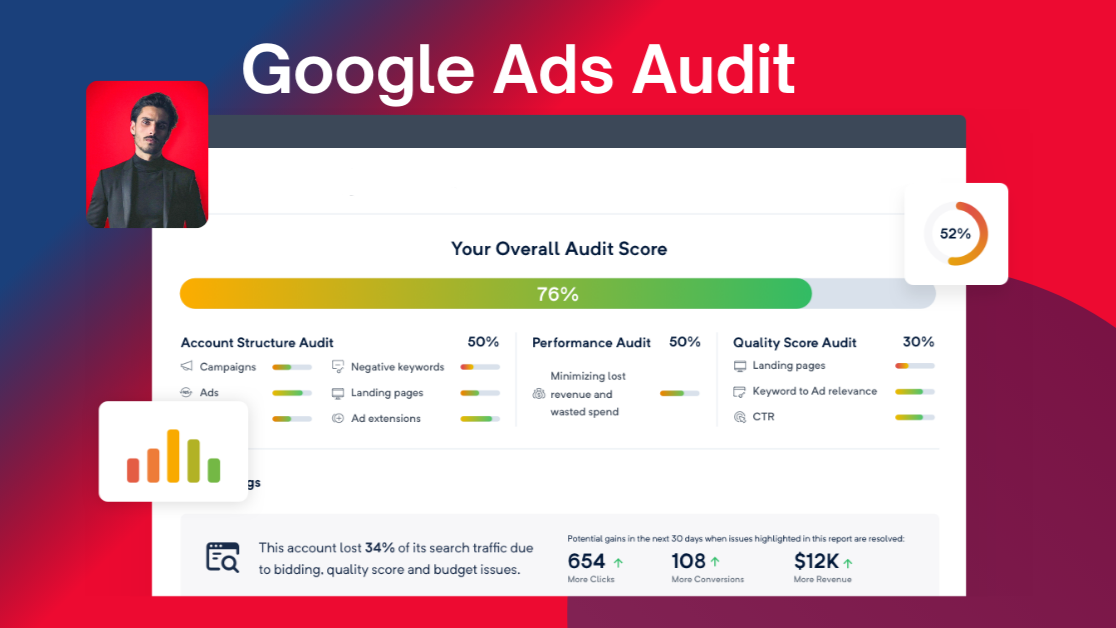
Why Monthly Google Ads Audits Matter
Google Ads accounts are dynamic systems.
Performance constantly changes because of:
- Competitor activity
- Seasonal trends
- Search behavior shifts
- Rising CPCs
- Audience fatigue
- Algorithm updates
- Conversion tracking problems
- Landing page changes
Even highly optimized campaigns gradually drift away from peak efficiency if left unchecked.
Monthly audits help advertisers:
- Reduce wasted spend
- Improve lead quality
- Increase conversion rates
- Catch technical problems early
- Improve Quality Scores
- Strengthen account structure
- Maintain stable scaling
Most importantly, audits shift campaign management from reactive to proactive.
What Makes a Healthy Google Ads Account?
A healthy account is not simply one with high traffic or large budgets.
Strong Google Ads accounts typically demonstrate:
- Reliable conversion tracking
- Clear campaign structure
- Controlled search targeting
- Efficient budget allocation
- Strong ad relevance
- Stable conversion performance
- High-quality traffic
- Consistent optimization processes
Monthly audits help maintain these core foundations.
Monthly Audit Checklist Overview
The seven most important monthly Google Ads account health checks are:
- Conversion tracking accuracy audit
- Search term and keyword quality audit
- Budget allocation and bidding audit
- Ad copy and creative performance audit
- Audience and targeting audit
- Landing page and conversion funnel audit
- Account structure and optimization audit
Let’s break each one down in detail.
1. Conversion Tracking Accuracy Audit
Why Conversion Tracking Is the Foundation of Everything
Without accurate tracking, every optimization decision becomes unreliable.
If conversion data is incorrect, advertisers may:
- Increase budgets on losing campaigns
- Pause profitable keywords
- Misjudge bidding strategies
- Train automated bidding systems with bad data
Tracking problems are far more common than most advertisers realize.
Common Conversion Tracking Problems
Many accounts experience issues such as:
- Duplicate conversions
- Missing conversions
- Broken thank-you pages
- Incorrect attribution
- Tag firing errors
- GA4 import problems
- Phone call tracking failures
- Enhanced conversion misconfigurations
Even small tracking errors can distort campaign optimization significantly.
Monthly Conversion Tracking Checklist
Every month, verify:
Conversion Tags Are Firing Correctly
Use tools such as:
- Google Tag Assistant
- Google Tag Manager preview mode
- Browser inspection tools
Primary Conversions Are Accurate
Focus on your most valuable actions:
- Purchases
- Qualified leads
- Form submissions
- Phone calls
- Demo requests
Duplicate Conversions Are Not Inflating Data
Duplicate firing often creates misleading ROAS and CPA metrics.
Attribution Settings Still Match Business Goals
Review whether your attribution model still aligns with the sales cycle.
Offline Conversion Imports Are Working Properly
For B2B and sales-driven businesses, CRM integration accuracy is essential.
Why This Audit Is Critical for Smart Bidding
Modern Google Ads campaigns increasingly rely on automated bidding systems such as:
- Target CPA
- Target ROAS
- Maximize Conversions
- Maximize Conversion Value
These systems depend entirely on conversion accuracy.
Bad data produces bad automation decisions.
2. Search Term and Keyword Quality Audit
Why Search Intent Changes Constantly
Many advertisers focus heavily on keyword selection during campaign setup but neglect ongoing search term analysis.
Over time, campaigns may begin matching irrelevant or low-intent searches.
This gradually wastes budget and reduces lead quality.
Monthly Search Term Audit Goals
The goal is to answer several key questions:
- Are we attracting the right users?
- Are irrelevant queries increasing?
- Are match types too broad?
- Are negative keywords missing?
- Are high-performing search themes expanding?
Review Actual Search Queries
One of the most important monthly tasks is reviewing the Search Terms Report.
Look for:
- Irrelevant traffic
- Competitor confusion
- Low commercial intent
- Research-only searches
- Geographic mismatches
- Job seeker traffic
- Support-related searches
Add Negative Keywords Aggressively
Negative keywords are one of the most powerful cost-control tools in Google Ads.
Common negative categories include:
- Free
- Cheap
- Jobs
- Careers
- DIY
- Tutorial
- Support
- Meaning
- Definition
Each business requires a customized negative keyword strategy.
Evaluate Match Type Performance
Broad match keywords can generate enormous reach but also increase irrelevance.
Monthly audits should evaluate:
- Broad match efficiency
- Phrase match precision
- Exact match scalability
- Search intent quality
Watch for Keyword Cannibalization
Multiple keywords competing for the same auctions may reduce efficiency.
Look for:
- Overlapping ad groups
- Duplicate intent targeting
- Internal competition
Identify New Keyword Opportunities
Search term reports often reveal:
- Emerging buyer intent
- High-converting long-tail searches
- New product demand
- Seasonal opportunities
Strong advertisers continuously expand profitable search coverage.
3. Budget Allocation and Bidding Audit
Why Budget Waste Happens Quietly
Google Ads accounts often accumulate inefficient budget distribution over time.
Some campaigns become overfunded while stronger opportunities remain constrained.
Monthly audits help rebalance spend strategically.
Key Questions to Ask
Which Campaigns Produce the Best Returns?
Analyze:
- Cost per conversion
- Return on ad spend
- Conversion rate
- Revenue contribution
- Lead quality
Are High-Performing Campaigns Budget-Limited?
Many profitable campaigns lose conversions because budgets cap out early.
Are Poor Performers Consuming Excess Spend?
Some campaigns continue spending despite weak business impact.
Evaluate Bid Strategy Alignment
Different campaign types require different bidding approaches.
Review whether current strategies still fit campaign goals.
Common Bidding Problems
Smart Bidding Without Enough Data
Automated bidding struggles with insufficient conversion volume.
Over-Aggressive ROAS Targets
Targets set unrealistically high may reduce traffic volume dramatically.
Manual Bidding Left Untouched for Months
Manual campaigns require active optimization.
Portfolio Bidding Misalignment
Shared bid strategies may combine campaigns with very different behaviors.
Device Bid Adjustments
Monthly audits should evaluate performance across:
- Mobile
- Desktop
- Tablet
User behavior varies significantly by device.
Geographic Budget Efficiency
Review performance by:
- Country
- State
- City
- ZIP code
- Radius targeting
Location inefficiencies often remain hidden without regular audits.
4. Ad Copy and Creative Performance Audit
Why Ad Fatigue Happens
Even strong ads lose effectiveness over time.
Users repeatedly exposed to the same messaging may stop responding.
Competitors also constantly evolve their own creative strategies.
Monthly Ad Performance Review
Evaluate:
- Click-through rates
- Conversion rates
- Impression share
- Ad strength
- Engagement metrics
Identify Underperforming Ads
Pause ads with:
- Low CTR
- Weak conversion rates
- Poor relevance
- Declining engagement
Test New Messaging Regularly
Strong advertisers continuously test:
- Headlines
- CTAs
- Value propositions
- Emotional triggers
- Pricing language
- Trust signals
Evaluate Responsive Search Ads
Google increasingly prioritizes Responsive Search Ads (RSAs).
Monthly audits should review:
- Asset performance
- Headline combinations
- Description engagement
- Pinning usage
Check Ad Extensions
Extensions improve visibility and CTR.
Audit:
- Sitelinks
- Callouts
- Structured snippets
- Call extensions
- Price extensions
- Promotion extensions
Outdated extensions reduce ad quality.
Align Ads With Landing Pages
Message consistency matters.
If ads promise one thing while landing pages emphasize another, conversion rates often decline.
5. Audience and Targeting Audit
Why Audience Signals Matter More Than Ever
Google Ads increasingly relies on audience behavior rather than just keywords.
Modern targeting includes:
- Remarketing
- In-market audiences
- Customer match
- Affinity audiences
- Demographic targeting
- Similar audiences
Monthly Audience Health Checks
Review:
- Audience overlap
- Performance by segment
- Conversion quality
- Frequency levels
- Audience exclusions
Analyze Remarketing Performance
Remarketing audiences often deliver:
- Lower CPA
- Higher ROAS
- Stronger conversion rates
But stale audiences can become inefficient over time.
Watch Audience Saturation
High frequency may indicate ad fatigue.
This is especially important for:
- Display campaigns
- YouTube campaigns
- Performance Max campaigns
Evaluate Demographic Performance
Analyze results by:
- Age
- Gender
- Household income
- Parental status
Certain segments may consistently underperform.
Exclude Low-Quality Audiences
Monthly audits should remove audiences generating:
- High bounce rates
- Poor lead quality
- Low engagement
- Weak conversion intent
6. Landing Page and Conversion Funnel Audit
Why Google Ads Success Depends on More Than Ads
Even perfect targeting cannot overcome weak landing pages.
Traffic quality and conversion experience must work together.
Monthly Landing Page Audit Areas
Review:
- Page speed
- Mobile usability
- Conversion friction
- Form completion rates
- Messaging alignment
- CTA clarity
Slow Pages Kill Conversions
Page speed directly impacts:
- Bounce rate
- User engagement
- Conversion rate
- Quality Score
Mobile Experience Is Critical
Most industries now receive majority mobile traffic.
Check:
- Mobile load speed
- Button usability
- Form simplicity
- Visual clarity
Analyze User Behavior
Use tools like:
- Heatmaps
- Session recordings
- Scroll tracking
- Funnel visualization
These insights reveal hidden friction points.
Conversion Funnel Leaks
Sometimes the issue isn’t the ad itself.
Leaks may occur because of:
- Long forms
- Weak offers
- Confusing navigation
- Poor trust signals
- Checkout complexity
Landing Page Message Match
Strong message consistency improves user confidence.
The transition from:
- Keyword
- Ad
- Landing page
- Conversion form
should feel seamless.
7. Account Structure and Optimization Audit
Why Structure Determines Long-Term Scalability
Poorly organized accounts become difficult to optimize effectively.
Strong structure improves:
- Reporting clarity
- Budget control
- Optimization speed
- Data analysis
- Automation performance
Monthly Structural Review
Evaluate:
- Campaign organization
- Ad group relevance
- Naming conventions
- Asset organization
- Labeling systems
Signs of Structural Problems
Too Many Keywords Per Ad Group
Large unfocused groups reduce ad relevance.
Duplicate Targeting
Overlapping campaigns may compete internally.
Excessive Campaign Complexity
Too many fragmented campaigns create management inefficiency.
Poor Naming Conventions
Disorganized naming slows reporting and troubleshooting.
Check Optimization Score Carefully
Google’s optimization score can provide useful suggestions, but not all recommendations improve profitability.
Review recommendations critically.
Remove Legacy Clutter
Old experiments, outdated ads, paused campaigns, and unused audiences create unnecessary account complexity.
Monthly cleanup improves account hygiene.
Additional Monthly Google Ads Audit Areas
While the seven core audits are essential, advanced advertisers may also review:
- Impression share loss
- Competitor auction insights
- Asset group performance
- Performance Max diagnostics
- YouTube engagement metrics
- Shopping feed quality
- Merchant Center issues
- Attribution path analysis
Common Google Ads Audit Mistakes
Looking Only at Surface Metrics
High CTR alone means little without conversion quality.
Ignoring Lead Quality
Cheap leads are useless if they never become customers.
Making Too Many Changes at Once
Large simultaneous adjustments make performance diagnosis difficult.
Focusing Only on Google Recommendations
Automated suggestions do not always align with business profitability.
Building a Monthly Google Ads Audit Process
Consistency matters more than occasional deep dives.
Create a repeatable monthly workflow:
- Pull performance reports
- Review conversion tracking
- Analyze search terms
- Audit budgets and bidding
- Review creative performance
- Evaluate audiences
- Check landing pages
- Clean account structure
- Document findings
- Prioritize optimizations
This systematic approach improves long-term campaign stability.
Why Account Audits Improve Scaling
Many advertisers try scaling budgets before fixing inefficiencies.
But scaling unhealthy accounts often amplifies waste.
Healthy account foundations allow businesses to:
- Increase spend more confidently
- Improve automation performance
- Reduce volatility
- Maintain profitability during growth
The Future of Google Ads Auditing
Google Ads management is evolving rapidly with:
- AI-driven automation
- Predictive bidding
- Performance Max expansion
- Privacy-related targeting changes
- First-party data dependence
As automation increases, account audits become even more important because advertisers must verify that algorithms are optimizing toward correct business outcomes.
Human oversight remains essential.
Final Thoughts
A successful Google Ads account is never truly “finished.” Markets evolve, competitors adapt, user behavior changes, and platform algorithms constantly shift. Without regular account health checks, even previously profitable campaigns can gradually decline in efficiency and performance.
Monthly Google Ads audits provide the structure needed to maintain healthy, scalable, and cost-efficient campaigns over time.
By consistently reviewing:
- Conversion tracking
- Search quality
- Budget allocation
- Ad performance
- Audience targeting
- Landing pages
- Account structure
advertisers can uncover hidden inefficiencies before they become expensive problems.
The most successful Google Ads managers are not simply campaign launchers. They are ongoing system optimizers who understand that sustainable advertising performance depends on disciplined analysis, continuous refinement, and proactive account management month after month.