En
En
 11 min read
In the early days of ecommerce, entrepreneurs searching for winning products often began in one place: Amazon’s Best Sellers list. For years, it functioned as a shortcut to understanding consumer demand. If something ranked high on Amazon, it was assumed to be profitable, scalable, and worth selling elsewhere.
But ecommerce has evolved dramatically. Independent online stores now operate in a landscape shaped by social commerce, brand storytelling, creator influence, faster supply chains, and increasingly sophisticated customers. This raises an important question:
Does the Amazon Best Sellers list still provide meaningful guidance for independent store product selection today?
The answer is neither a simple yes nor a no. The list remains valuable—but only when understood correctly and used alongside modern validation methods.
This article explores how the Amazon Best Sellers ranking works, why it became influential, where its limitations lie today, and how independent store owners can extract real strategic value from it without blindly copying trends.
The Original Power of the Amazon Best Sellers List
When ecommerce entrepreneurs first began building independent stores at scale, Amazon represented the largest publicly visible database of real purchasing behavior.
Unlike trend reports or surveys, Amazon rankings reflected actual transactions.
The Best Sellers list offered several advantages:
- Real-time demand signals
- Massive data volume
- Cross-category visibility
- Continuous updates
- Global consumer insights
For early dropshipping sellers especially, this was revolutionary. Instead of guessing what customers wanted, sellers could observe what people were already buying.
Products that consistently appeared on the list typically shared certain traits:
- Broad consumer appeal
- Clear problem-solving functionality
- Affordable pricing
- Easy shipping logistics
- High perceived usefulness
At that time, copying Amazon trends into independent stores often worked because competition was lower and customers were less brand-conscious.
But the environment has changed.
How the Amazon Best Sellers Ranking Actually Works
To understand its current relevance, we first need to clarify what the ranking measures.
Amazon Best Sellers are determined primarily by sales velocity, not total lifetime sales or popularity alone.
Key factors include:
- Recent sales performance
Products that sell quickly within a short period rise rapidly. - Category-specific competition
Rankings exist within subcategories, not just platform-wide. - Short-term momentum
Sudden spikes can temporarily push items upward. - Conversion efficiency
Listings that convert well receive ranking advantages.
This means the list reflects what is selling right now, not necessarily what will sell well in independent stores.
That distinction is crucial.
Amazon rewards transactional efficiency, while independent stores rely heavily on branding, storytelling, and customer trust.
Why Independent Stores and Amazon Operate Under Different Rules
Many beginners assume that a successful Amazon product will automatically succeed in an independent store.
In reality, the two ecosystems function very differently.
1. Customer Intent
Amazon shoppers usually arrive with purchase intent.
They search for specific solutions:
- “phone charger”
- “kitchen organizer”
- “dog nail grinder”
Independent store visitors often arrive through discovery:
- social media ads
- influencer content
- lifestyle storytelling
- curiosity-driven browsing
This means independent stores must create desire, not just fulfill it.
2. Trust Structure
Amazon provides built-in trust mechanisms:
- Reviews
- Fast shipping guarantees
- Easy returns
- Familiar checkout process
Independent stores must build trust themselves through:
- branding
- design
- customer experience
- messaging consistency
A product that succeeds because Amazon supplies trust may struggle outside that environment.
3. Price Competition
Amazon encourages price compression.
Multiple sellers compete on identical listings, driving margins down.
Independent stores, however, can increase perceived value through:
- positioning
- packaging
- niche targeting
- storytelling
Therefore, products chosen solely because they rank highly may already have razor-thin margins unsuitable for standalone brands.
The Biggest Misconception: Best Seller Equals Opportunity
One of the most common mistakes is assuming popularity equals opportunity.
In many cases, the opposite is true.
When a product reaches the top of Amazon rankings, it often means:
- The market is saturated.
- Advertising costs are rising.
- Supply chains are optimized by large sellers.
- Differentiation becomes difficult.
Independent stores entering at this stage compete against established players with economies of scale.
The Best Sellers list frequently reflects mature markets, not emerging ones.
For independent entrepreneurs, early-stage trends are usually more valuable than peak-stage products.
Where Amazon Best Sellers Still Provide Real Value
Despite limitations, dismissing the list entirely would be a mistake.
Used intelligently, it remains a powerful research tool.
1. Validating Demand Categories
Rather than copying products, analyze categories.
Ask:
- What problems are consumers actively paying to solve?
- Which lifestyle segments are growing?
- Are practical or emotional products trending?
Example insights might include growth in:
- home organization
- pet wellness
- ergonomic accessories
- self-care tools
The category signal matters more than the specific item.
2. Understanding Consumer Language
Amazon listings reveal how customers think.
Study:
- product titles
- bullet points
- frequently mentioned benefits
- review wording
These insights help independent stores communicate in customer-centered language rather than brand-centered assumptions.
3. Identifying Feature Expectations
Reviews highlight baseline expectations.
Customers often mention:
- durability
- ease of use
- packaging quality
- battery life
- material feel
Independent stores can use this information to design improved versions rather than replicas.
4. Spotting Problem Gaps
Negative reviews are arguably more valuable than positive ones.
Look for repeated complaints:
- confusing instructions
- poor durability
- unattractive design
- missing accessories
Each complaint represents an opportunity to build a better product experience.
Why Blindly Copying Best Sellers Fails More Often Today
Several structural shifts have reduced the effectiveness of simple replication.
Platform Transparency
Product sourcing platforms now expose trending items quickly. Thousands of sellers can identify the same opportunity simultaneously.
Speed advantages have diminished.
Advertising Inflation
Customer acquisition costs have risen significantly across social platforms.
Selling a generic product without differentiation often becomes unprofitable.
Consumer Sophistication
Modern shoppers recognize generic products easily.
They increasingly prefer:
- niche brands
- authentic storytelling
- aesthetic consistency
- mission-driven companies
A Best Seller without a brand narrative struggles outside Amazon.
Algorithmic Saturation
When many sellers promote identical items, advertising algorithms increase competition intensity, reducing efficiency.
Unique positioning matters more than ever.
The Shift From Product Selection to Market Positioning
The modern independent store succeeds less because of what it sells and more because of how it sells it.
Instead of asking:
“What product is selling best?”
Ask:
“What audience problem is underserved?”
Amazon helps identify problems, not final products.
For example:
- Amazon signal: posture correctors selling well.
- Independent store opportunity: a lifestyle brand focused on remote worker wellness.
The difference transforms competition into differentiation.
A Smarter Framework for Using Amazon Data
Here is a practical method independent store owners can apply.
Step 1: Category Mapping
Browse multiple subcategories instead of top rankings only.
Look for recurring themes across:
- Home improvement
- Pets
- Health accessories
- Organization
- Lifestyle convenience
Patterns reveal long-term demand.
Step 2: Longevity Analysis
Check whether products remain ranked over months.
Stable rankings indicate sustained demand rather than viral spikes.
Step 3: Review Volume Growth
Rising review counts suggest ongoing sales momentum.
Sudden bursts followed by stagnation may indicate short-lived trends.
Step 4: Differentiation Brainstorm
Ask three questions:
- Can the design improve?
- Can targeting become more specific?
- Can branding elevate perceived value?
If none apply, the product may not suit an independent store.
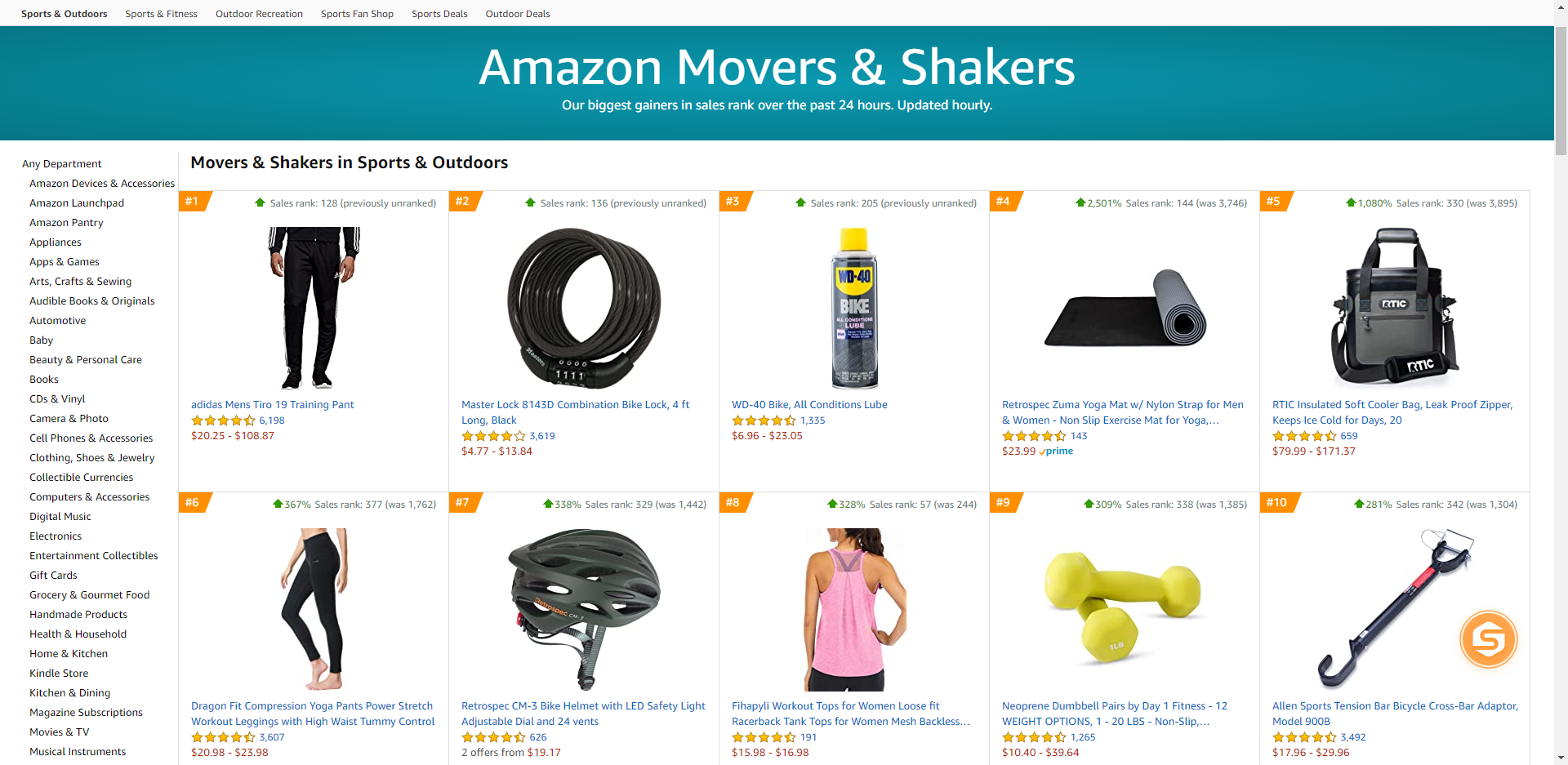
Combining Amazon Insights With Modern Trend Sources
Today’s strongest product research blends multiple data environments.
Amazon shows transactional demand, while other platforms show emerging interest.
Useful complementary sources include:
- Short-form video trends
- Creator product mentions
- Community forums
- Lifestyle content platforms
- Search behavior shifts
When a product appears across several ecosystems simultaneously, confidence increases dramatically.
The Rise of Brand-Led Commerce
Independent ecommerce has moved toward brand identity rather than catalog selling.
Successful stores now emphasize:
- visual coherence
- emotional resonance
- niche expertise
- customer belonging
Amazon Best Sellers rarely reflect these qualities because rankings prioritize volume, not brand depth.
This means independent stores must reinterpret data creatively.
Case Study Pattern: From Commodity to Brand
Consider a hypothetical example.
Amazon Best Seller: reusable water bottles.
Copy approach:
- Same bottle
- Similar price
- Generic messaging
Result: intense competition.
Strategic approach:
- Target hikers only
- Add measurement tracking
- Build sustainability narrative
- Create educational content
Same category, entirely different market position.
Amazon revealed demand—but branding created success.
When Amazon Best Sellers Are Most Useful
They remain highly valuable under specific conditions:
- Entering a new niche and learning fundamentals
- Validating whether demand exists at scale
- Understanding feature expectations
- Studying pricing psychology
- Analyzing customer complaints
They are least useful when used as a shortcut to finding “winning products.”
Signals Independent Stores Should Prioritize More Today
Modern product selection increasingly depends on signals Amazon cannot fully capture.
Emotional Appeal
Products tied to identity perform strongly:
- wellness lifestyles
- productivity culture
- aesthetic living
- hobby communities
Shareability
If customers want to show the product online, independent stores gain organic reach.
Story Potential
Products with narratives outperform purely functional items.
Repeat Purchase Possibility
Consumables and ecosystems often outperform one-time purchases.
Common Mistakes Sellers Make With Best Seller Data
- Choosing overly competitive items
- Ignoring branding requirements
- Competing purely on price
- Misreading short-term spikes as trends
- Copying listings instead of improving experiences
Avoiding these pitfalls dramatically increases success probability.
The Future Role of Amazon Data in Ecommerce Strategy
Amazon will likely remain a powerful demand indicator, but its role is evolving.
Instead of serving as a product discovery engine, it increasingly functions as:
- a market validation database
- a consumer research platform
- a feature benchmarking tool
Independent stores that treat it as inspiration rather than instruction gain the greatest advantage.
A Modern Product Research Philosophy
The most effective mindset shift is this:
Amazon shows what people buy.
Independent stores must show why they should care.
This distinction separates commodity sellers from brand builders.
Winning products today often emerge from combining:
- observable demand
- unique positioning
- emotional resonance
- superior presentation
Amazon contributes only one piece of that puzzle.
Practical Checklist for Independent Store Owners
Before selecting a product based on Best Sellers rankings, confirm:
- Is demand consistent over time?
- Can I improve the customer experience?
- Can I target a specific audience segment?
- Can branding justify higher perceived value?
- Does the product align with a broader niche?
If most answers are yes, Amazon data is serving its purpose correctly.
Final Verdict: Does the Amazon Best Sellers List Still Have Reference Value?
Yes—but its role has fundamentally changed.
It is no longer a shortcut to easy wins.
Instead, it acts as a market intelligence tool that reveals consumer behavior at scale.
Independent stores that succeed today do not copy Amazon’s winners. They interpret them, refine them, and reposition them for audiences seeking identity, experience, and connection—not just transactions.
The entrepreneurs who thrive are those who understand that data alone does not create opportunity. Insight does.
Amazon tells you where demand exists.
Your brand determines whether customers choose you.