En
En
 8 min read
In the e-commerce gold rush, the “blind” nature of dropshipping is both its greatest strength and its most dangerous liability. The promise is intoxicating: build a global storefront from your laptop, never rent a warehouse, and never pack a single box. But there is a ghost in the machine that haunts every aspiring entrepreneur—The Refund Wave.
Imagine this: your Facebook ads finally hit a vein of gold. Your Shopify “cha-ching” notification is ringing every five minutes. You’ve just spent $5,000 on ad spend, and your supplier says everything is shipping out. Then, three weeks later, the emails start.
“This looks nothing like the photo.” “It broke within ten minutes of use.” “The ‘stainless steel’ is actually painted plastic.”
Suddenly, your profit margins evaporate. PayPal freezes your funds due to a high dispute rate, and your ad account is flagged for poor customer feedback. This is the “Dropshipping Death Spiral,” and it is almost always caused by a lack of quality control (QC).
But here is the “Black Tech” secret: You don’t need to fly to a factory in Shenzhen or keep a garage full of inventory to ensure your products are top-tier. You just need a systematic approach to Remote Verification. In this 4,000-word masterclass, we will explore the professional frameworks used by 7-figure sellers to audit quality from across the globe, ensuring that what your customer sees on the screen is exactly what they get in the mail.
1. The Anatomy of a Refund: Why “Blind” Shipping Fails
Before we fix the problem, we must understand the three primary “Quality Gaps” in the dropshipping supply chain:
-
The Material Discrepancy: This is the classic “Expectation vs. Reality.” A supplier uses a high-end studio photo of a genuine silk dress but manufactures the product using a cheap polyester blend to save costs.
-
The Functional Failure: This is common in electronics and “problem-solver” gadgets. The product looks right, but the internal “Black Tech” components (batteries, motors, or chips) are the cheapest possible versions, leading to a high “Dead on Arrival” (DOA) rate.
-
The Transit Trauma: The product leaves the factory in perfect condition, but the packaging is so flimsy that by the time it survives a 5,000-mile journey across the Pacific, it arrives crushed and demoralized.
To defeat the refund wave, your QC strategy must address all three of these pillars remotely.
2. Forensic Supplier Auditing: Beyond the “Star Rating”
Most beginners look at a supplier’s rating on AliExpress and assume a 4.8-star score means they are safe. High-level sellers know that ratings can be manipulated. You need to perform a Digital Forensic Audit.
The “Photo-to-Review” Ratio
Look at the product reviews, but specifically filter for “Reviews with Photos.” Cross-reference the user-uploaded images with the marketing photos.
-
The Red Flag: If the professional photos show a brushed metal finish, but the customer photos show a shiny, reflective plastic, you are looking at a “Material Discrepancy” trap.
-
The Tell: Look at the background of the customer photos. If the product looks consistent across customers in the US, Germany, and Brazil, the factory has high production stability.
The Response Speed Stress Test
Send the supplier a technical question at 2:00 AM their time (or early morning for them). Ask for the specific density of the plastic, the mAh rating of the battery, or the GSM (Grams per Square Meter) of the fabric.
-
Professionalism Check: A middleman will give you a vague answer (“It is very good quality, friend”). A high-quality manufacturer or a professional fulfillment agent will provide a technical data sheet. If they don’t know the specs of what they are selling, they aren’t monitoring the quality.
3. The “Boots on the Ground” Proxy: Using Third-Party Inspection
You don’t need to be there, but someone does. This is where the modern dropshipping landscape has evolved.
Professional Fulfillment Agents
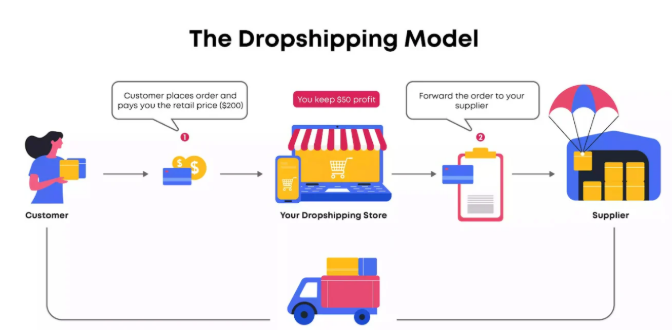
Instead of dropshipping directly from a marketplace like AliExpress, top-tier sellers move to a Fulfillment Agency. These agencies act as your “Black Tech” eyes and ears.
-
The Process: They purchase the stock from the factory in bulk and move it to their own warehouse.
-
The QC Protocol: You can pay a small fee (often $0.50 per item) for them to perform a “light-on” test, a visual inspection, and a packaging reinforcement. They send you high-res videos of the product coming off the line before a single label is printed.
Inspection Services (QIMA, V-Trust)
For higher-ticket items or private label brands, you can hire a professional inspection company. For around $200–$300, a certified inspector will go to the factory, pull a random sample (using the AQL—Acceptable Quality Level—standard), and provide a 20-page report with photos and stress tests. If the batch fails, you don’t pay the factory. This is the ultimate shield against a “Refund Wave.”
4. The “Sample House” Strategy: The Only Way to Sleep at Night
Even if you are dropshipping a $10 item, you must order a sample to your own home. However, you shouldn’t just look at it; you should destructively test it.
The “Torture Test” Framework
When your sample arrives, put it through the “12-Hour Wear Fatigue” or its equivalent for the niche:
-
Electronics: Run the battery from 100% to 0% repeatedly. Does it overheat?
-
Apparel: Wash it three times on a heavy-duty cycle. Does the stitching hold? Does the color bleed?
-
Home Decor: Drop the boxed product from a height of four feet. If it breaks, your customer’s will break too.
The Economic Math: Spending $50 on samples to find out a product is “trash” is an investment that saves you $5,000 in lost ad spend and refund penalties.
5. Reverse Engineering the “Unhappy Path”
A pro-active way to ensure quality is to analyze the failures of your competitors.
Review Mining
Go to Amazon or a competitor’s Facebook ad for the same product. Read the 1-star and 2-star reviews. * Look for Patterns: If every bad review mentions the “zipper,” you now have a specific QC instruction for your fulfillment agent: “Check every zipper three times before shipping.”
-
The Competitive Edge: If you find a recurring flaw that you can fix with your supplier (e.g., “needs better padding”), you can market your product as the “Upgraded Version,” instantly differentiating yourself from the dropshipping clones.
6. Packaging as a Quality Signal
Quality isn’t just the product; it’s the unboxing experience. Standard dropshipping “yellow bag” shipping is a refund magnet. It looks cheap, it arrives wrinkled, and it signals to the customer that the product isn’t valuable.
Custom Packaging (The “Black Tech” of Branding)
Work with your agent to use Custom Mailing Bags or Boxes. * The Psychology: A customer who receives a branded, sturdy box is 40% less likely to complain about a minor defect than a customer who receives a smashed plastic bag.
-
The Protection: Request “Double-Walled” cardboard or “Bubble-Wrap Sleeves.” This reduces the “Transit Trauma” that accounts for a massive percentage of dropshipping refunds.
7. Comparison: Direct Dropshipping vs. Pro-QC Models
8. Conclusion: Quality is a Business Decision
The “Refund Wave” isn’t an act of God; it is a result of a weak link in your supply chain. In the competitive landscape of 2026, you cannot afford to ship garbage.
By leveraging Fulfillment Agents, performing Review Mining, and insisting on Torture Testing your samples, you transform your business from a “churn-and-burn” store into a legitimate brand. You don’t need to touch the product to be responsible for its quality. In the digital age, your “Black Tech” tools and your systematic auditing are your most powerful assets.
Is your current supplier passing the “Stress Test”?
Would you like me to help you draft a Supplier Quality Agreement (SQA) that you can send to your agent to ensure they are checking the specific “red flag” areas of your niche?