















< Blogs

TikTok Product Research Playbook How to Use Tools to Track Viral Trends and Spot the Next Winning Product

Vivan Z.
Created on January 28, 2026 – Last updated on January 28, 20264 min read
Written by: Vivan Z.

TikTok Product Research Playbook
How to Use Tools to Track Viral Trends and Spot the Next Winning Product

If TikTok interest is real, you’ll often see:

  • A delayed sales spike

  • Rapid review accumulation

  • New listings appearing

No sales signal = high risk.


7.2 Search Trend Confirmation

TikTok trends eventually spill into search.

I look for:

  • Rising branded and non-branded queries

  • “Does this really work?” type searches

  • Comparison-based keywords

This confirms that curiosity is turning into purchase intent.


8. Using Ad Libraries to Decode Trend Timing

Ad libraries are not just for copying ads—they’re for timing decisions.

8.1 What Early-Stage TikTok Ads Look Like

Early trend ads often:

  • Use UGC-style creatives

  • Focus on problem awareness

  • Avoid heavy discounts

  • Test multiple hooks quickly

Late-stage ads:

  • Push urgency hard

  • Stack discounts

  • Look repetitive

  • Have dozens of clones

Tools help you spot this transition.


9. The 5 Signals That Tell Me a Trend Is Worth Testing

Before testing any TikTok product, I look for these signals:

  1. Multiple creators posting organically

  2. One or two aggressive trend merchants testing ads

  3. Comment sections full of purchase questions

  4. Early marketplace sales growth

  5. Low brand dominance

If at least 4 out of 5 are present, the product is test-worthy.


10. Filtering Out “Fake Trends”

Not everything viral should be sold.

10.1 Red Flags Tools Help You Catch

Avoid products with:

  • One-hit wonder creators

  • No repeat posting

  • Zero marketplace footprint

  • Extreme return complaints

  • Complex usage explanation

If the product needs a tutorial longer than the video—it won’t scale.


11. Timing: The Most Underrated Skill on TikTok

You don’t need to be first.
You just can’t be last.

11.1 The TikTok Product Lifecycle

  1. Discovery phase

  2. Early adoption

  3. Viral acceleration

  4. Market saturation

  5. Creative fatigue

Tools help you identify phase 2, not phase 4.


12. Why Most Sellers Lose Money Chasing TikTok Trends

They:

  • Enter too late

  • Copy saturated creatives

  • Ignore logistics

  • Scale without validation

Tools don’t remove risk—but they compress uncertainty.


13. How I Personally Use Tools (Step-by-Step)

Here’s my simplified weekly process:

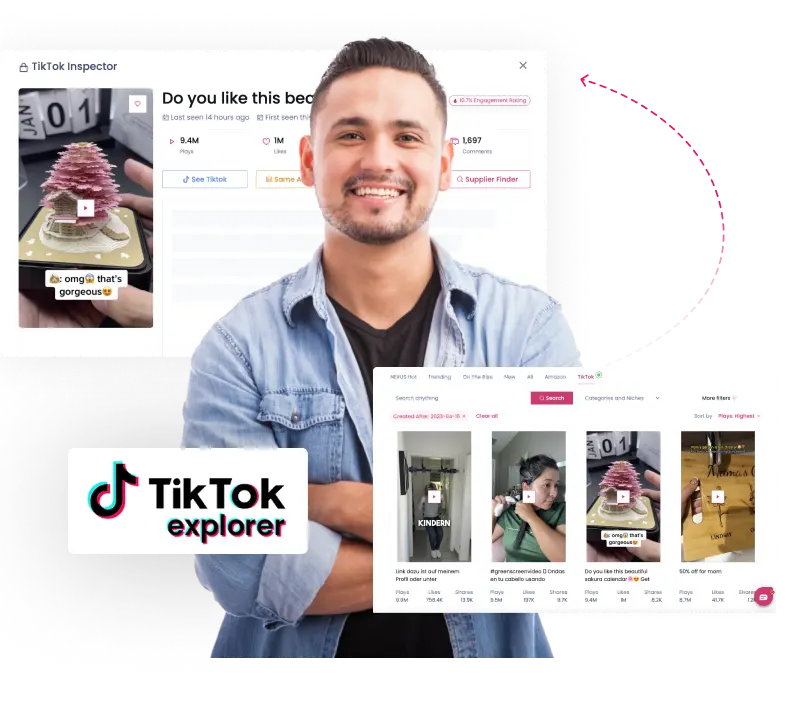
Step 1: Monitor TikTok content velocity
Step 2: Identify active trend merchants
Step 3: Cross-check marketplaces
Step 4: Confirm search interest
Step 5: Analyze ad saturation
Step 6: Decide: test or skip

This process takes hours, not weeks.


14. Tools Don’t Replace Judgment—They Sharpen It

The biggest misconception is that tools “find winning products.”

They don’t.

They:

  • Highlight anomalies

  • Reveal patterns

  • Remove emotional bias

You still decide.

15. Why TikTok Rewards Speed—but Punishes Laziness

TikTok doesn’t care if you’re small or new.

It cares if:

  • Your content hooks attention

  • Your product solves a visual problem

  • Your offer is simple

Tools help you move fast without being reckless.


16. Building a Repeatable TikTok Trend System

One viral product is luck.
Two is coincidence.
Three is a system.

That system starts with:

  • Monitoring trends daily

  • Tracking merchants weekly

  • Trusting data over excitement


17. From Trend Follower to Trend Interpreter

The real goal isn’t chasing trends.

It’s learning to:

  • Read signals

  • Interpret momentum

  • Exit before collapse

  • Reinvest into the next wave

That’s how real TikTok sellers survive long-term.


Conclusion: TikTok Trends Favor the Prepared

TikTok doesn’t reward guesswork.
It rewards awareness, speed, and discipline.

If you rely on scrolling alone, you’ll always be late.
If you rely on tools without thinking, you’ll misread signals.

But if you combine:

  • Smart tools

  • Clear frameworks

  • Human judgment

You stop chasing viral products—and start anticipating them.

And that’s where the real money is made.

DropSure is Your Best Partner
22 Years Experience
Affiliate Rebates
100% Quality Guarantee
Top-Up Rewards
10+ Global Warehouses
Custom Branding Support
Smart inventory System
24/7 Customer Support
Get a Quote in 24 Hours
Start Sourcing for Free

Keep Learning

  **Scam-Proof Your Business: The Most Common Dropshipping Scams and Supplier Traps — And How to Avoid Them** Dropshipping looks simple from the outside: find a supplier, import products to your store, and watch the orders roll in. But the reality is far more complex. Because dropshipping attracts new entrepreneurs—and often people with little sourcing experience—it also attracts a large number of scammers, fake suppliers, dishonest middlemen, and predatory service providers who prey on beginners. Every year, thousands of new store owners lose money, waste months of effort, or completely burn their business because they unknowingly step into one of these “supplier traps.” And in today’s globalized marketplace, the scams are evolving faster, becoming more sophisticated, and harder to detect. This guide will walk you through the most common dropshipping scams, supplier traps, red flags, and practical strategies to protect your business. Whether you’re just starting or already scaling, these insights will help you avoid costly mistakes and build a stable, fraud-free supply chain. Let’s dive in. 1. Why Dropshipping Scams Are So Common Before identifying specific scams, it’s important to understand why dropshipping attracts so many traps. 1.1 Low entry barrier → easy targets Dropshipping doesn’t require: Large capital Warehouse space Manufacturing knowledge Long-term contracts This attracts many beginners who lack sourcing experience—making them ideal targets for scammers. 1.2 Global supply chain complexity When you’re dealing with suppliers from overseas: Communication barriers Legal differences Distance Hard-to-verify operations …make it easier for fraudulent suppliers to operate undetected. 1.3 Trust-based workflow Dropshipping relies on: Suppliers fulfilling orders after you pay Promises about shipping speed Claims about inventory This trust-based system is easily abused. 1.4 Fake suppliers are easy to create A […]

Surprisingly, after the United States wantonly imposed tariffs, a Chinese cross – border e – commerce app quickly gained popularity in the United States. According to a report by Securities China citing the technology website TechCrunch, the Chinese cross – border e – commerce app DHgate has become extremely popular in the United States. The app has jumped to the second place on the free app ranking list of the US App Store, only second to ChatGPT. Meanwhile, on Sunday, April 13th, the number of installations on the iOS platform increased to 117,500, representing a 732% increase compared to the 30 – day average. Among them, the number of downloads in the US market reached 65,100, with a 940% increase. What is DHgate.com? DHgate is a comprehensive online trading platform that primarily offers wholesale and retail services for a wide variety of products. These range from electronics, fashion apparel, home goods, beauty and cosmetics, sports and outdoor gear, to automotive accessories and more. The platform hosts over 1.2 million international sellers and supplies more than 33 million products. Buyers come from over 190 countries around the world, with a global buyer base of over 10 million. It supports multiple languages, including English, French, German, Italian, Portuguese, Russian, and Spanish, as well as Chinese, making it convenient for users across the globe to use. The platform allows importers from around the world to purchase small quantities of Chinese goods at wholesale prices. It offers both individual product sales and discounted prices for bulk purchases. This is especially beneficial for merchants or retailers who can lower their procurement costs by buying in larger quantities. Meanwhile, consumers looking for budget-friendly options can also […]

If you want to do business globally, choosing the right platform is absolutely crucial. In today’s cross-border eCommerce landscape, it’s really a “race to the top.” If you don’t handle a platform well, you could end up not selling anything, losing money, having your account banned, or wasting time. So today, let’s talk about the Top 10 international eCommerce platforms, but not in a vague “they’re all good” way. Instead, we’ll focus on which platform is suitable for what kind of seller, the potential pitfalls, and the advantages of each one. Why Choose an International eCommerce Platform In one sentence: Riding on the shoulders of a platform to go global is way more reliable than going it alone. What can an international platform offer you? Multilingual support: Don’t speak French? No worries — the platform translates your product pages for you. Local payment and logistics services: Like Klarna or Afterpay — popular installment options in Europe are fully supported. Automatic tax and duty calculation: No more scaring off customers with unexpected fees. Localized marketing tools: Set product prices, descriptions, and promotions tailored to each country. SEO and social media tools: Boost your visibility in local markets without hiring a whole team. Compliance protection: From GDPR to HIPAA, the platform helps handle the legal side of things. These features free you up to focus on your products and customers — not get bogged down in tech and admin headaches. Top 10 Recommended International E-Commerce Platforms Shopify  Shopify Best For: Beginners, DTC brands, and independent store owners I see Shopify as the ultimate e-commerce engine built for everyone. It’s a fully hosted, cloud-based solution that lets you launch a professional online store […]

Recommended for you