< Blogs

TikTok Product Research Playbook How to Use Tools to Track Viral Trends and Spot the Next Winning Product

Vivan Z.
Created on January 28, 2026 – Last updated on January 28, 20264 min read
Written by: Vivan Z.

TikTok Product Research Playbook
How to Use Tools to Track Viral Trends and Spot the Next Winning Product

If TikTok interest is real, you’ll often see:

  • A delayed sales spike

  • Rapid review accumulation

  • New listings appearing

No sales signal = high risk.


7.2 Search Trend Confirmation

TikTok trends eventually spill into search.

I look for:

  • Rising branded and non-branded queries

  • “Does this really work?” type searches

  • Comparison-based keywords

This confirms that curiosity is turning into purchase intent.


8. Using Ad Libraries to Decode Trend Timing

Ad libraries are not just for copying ads—they’re for timing decisions.

8.1 What Early-Stage TikTok Ads Look Like

Early trend ads often:

  • Use UGC-style creatives

  • Focus on problem awareness

  • Avoid heavy discounts

  • Test multiple hooks quickly

Late-stage ads:

  • Push urgency hard

  • Stack discounts

  • Look repetitive

  • Have dozens of clones

Tools help you spot this transition.


9. The 5 Signals That Tell Me a Trend Is Worth Testing

Before testing any TikTok product, I look for these signals:

  1. Multiple creators posting organically

  2. One or two aggressive trend merchants testing ads

  3. Comment sections full of purchase questions

  4. Early marketplace sales growth

  5. Low brand dominance

If at least 4 out of 5 are present, the product is test-worthy.


10. Filtering Out “Fake Trends”

Not everything viral should be sold.

10.1 Red Flags Tools Help You Catch

Avoid products with:

  • One-hit wonder creators

  • No repeat posting

  • Zero marketplace footprint

  • Extreme return complaints

  • Complex usage explanation

If the product needs a tutorial longer than the video—it won’t scale.


11. Timing: The Most Underrated Skill on TikTok

You don’t need to be first.
You just can’t be last.

11.1 The TikTok Product Lifecycle

  1. Discovery phase

  2. Early adoption

  3. Viral acceleration

  4. Market saturation

  5. Creative fatigue

Tools help you identify phase 2, not phase 4.


12. Why Most Sellers Lose Money Chasing TikTok Trends

They:

  • Enter too late

  • Copy saturated creatives

  • Ignore logistics

  • Scale without validation

Tools don’t remove risk—but they compress uncertainty.


13. How I Personally Use Tools (Step-by-Step)

Here’s my simplified weekly process:

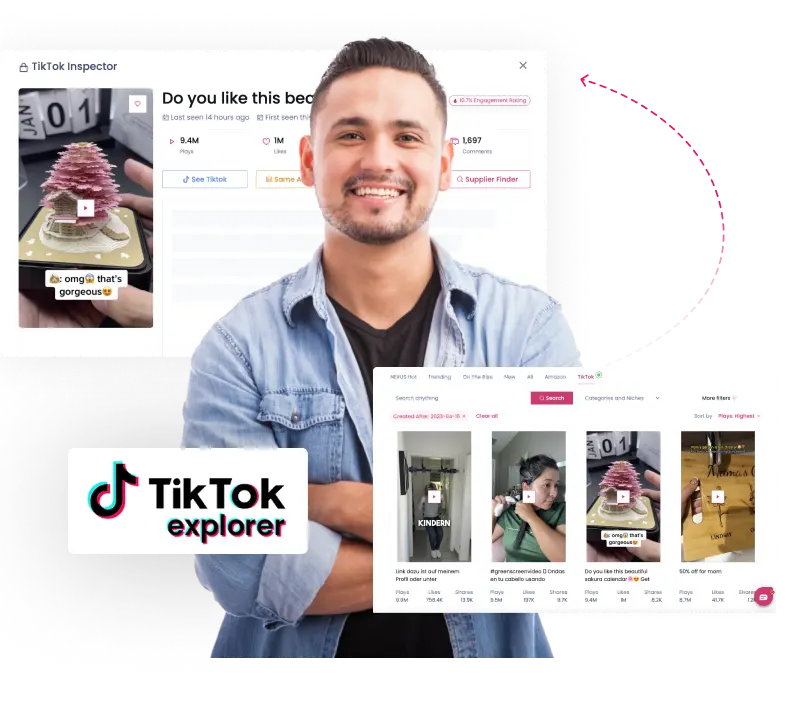
Step 1: Monitor TikTok content velocity
Step 2: Identify active trend merchants
Step 3: Cross-check marketplaces
Step 4: Confirm search interest
Step 5: Analyze ad saturation
Step 6: Decide: test or skip

This process takes hours, not weeks.


14. Tools Don’t Replace Judgment—They Sharpen It

The biggest misconception is that tools “find winning products.”

They don’t.

They:

  • Highlight anomalies

  • Reveal patterns

  • Remove emotional bias

You still decide.

15. Why TikTok Rewards Speed—but Punishes Laziness

TikTok doesn’t care if you’re small or new.

It cares if:

  • Your content hooks attention

  • Your product solves a visual problem

  • Your offer is simple

Tools help you move fast without being reckless.


16. Building a Repeatable TikTok Trend System

One viral product is luck.
Two is coincidence.
Three is a system.

That system starts with:

  • Monitoring trends daily

  • Tracking merchants weekly

  • Trusting data over excitement


17. From Trend Follower to Trend Interpreter

The real goal isn’t chasing trends.

It’s learning to:

  • Read signals

  • Interpret momentum

  • Exit before collapse

  • Reinvest into the next wave

That’s how real TikTok sellers survive long-term.


Conclusion: TikTok Trends Favor the Prepared

TikTok doesn’t reward guesswork.
It rewards awareness, speed, and discipline.

If you rely on scrolling alone, you’ll always be late.
If you rely on tools without thinking, you’ll misread signals.

But if you combine:

  • Smart tools

  • Clear frameworks

  • Human judgment

You stop chasing viral products—and start anticipating them.

And that’s where the real money is made.
DropSure is Your Best Partner
22 Years Experience
Affiliate Rebates
100% Quality Guarantee
Top-Up Rewards
10+ Global Warehouses
Custom Branding Support
Smart inventory System
24/7 Customer Support
Get a Quote in 24 Hours
Start Sourcing for Free

Keep Learning

A Must-Read Guide for Successful Dropshipping In the world of dropshipping, success rarely comes from intuition alone. While creativity and market awareness matter, data-driven product selection has become the defining factor between profitable stores and failed experiments. With millions of products available and fierce competition across platforms like Shopify, Amazon, TikTok Shop, and Etsy, choosing the right product is no longer about guessing trends—it’s about reading the data correctly. This guide will walk you through how to use data analysis tools to precisely select winning products for dropshipping. Whether you are a beginner launching your first store or an experienced seller looking to scale, this article will help you replace uncertainty with clarity and strategy. 1. Why Product Selection Is the Core of Dropshipping Success 1.1 Dropshipping Is a Product-Driven Business Unlike traditional retail, dropshipping offers: No inventory risk Low upfront cost Fast store setup But it also comes with one major challenge: you are selling the same products as thousands of others. Your success depends on: Choosing products with real demand Entering the market before saturation Pricing with healthy margins Solving clear customer problems All of these depend on data. 1.2 The Cost of Poor Product Selection Poor product choices lead to: High ad spend with low conversion rates Chargebacks and refunds Short product life cycles Burned ad accounts Most dropshipping failures are not caused by bad ads or websites—but by selling the wrong product. 2. The Shift from Gut Feeling to Data-Driven Decisions 2.1 Why “Trending Product” Videos Are Not Enough Social media is full of: “Top 10 Winning Products” “This Product Made Me $100K” “TikTok Viral Product Lists” While these videos can inspire ideas, they often show […]

Recently, Amazon Japan was ordered by the Tokyo District Court to pay a fine of 35 million yen (approximately 244,000 USD) and compensate the brand Excel Plan for its losses due to failure in effectively addressing counterfeit sales on its platform. This incident has raised widespread concern in the industry about the issue of counterfeit goods and serves as a wake-up call for sellers involved in dropshipping (cross-border e-commerce). Counterfeit Crisis: The Hidden Threat in the Supply Chain In this case, Excel Plan discovered counterfeit pulse oximeters on the Amazon Japan platform. These inferior products were sold at prices significantly lower than the genuine ones, severely affecting the brand’s market performance. Worse still, after receiving complaints, Amazon not only failed to take down the counterfeit goods promptly but also mistakenly removed the genuine products, causing Excel Plan to suffer heavy losses in just two months—from an initial sales figure of about 100 million yen to a dramatic drop to only around 610,000 yen. This incident serves as a reminder that counterfeit goods not only affect consumers’ purchasing experience but can also seriously harm the interests of brand owners and potentially expose platforms to legal risks. In dropshipping, sellers typically rely on third-party suppliers, making supply chain management crucial. The issue of counterfeit goods, especially in cross-border e-commerce, is not just a quality concern; it also involves multiple risks, including compliance and brand reputation. How to Avoid Counterfeit Issues in Dropshipping? Choose Reliable Suppliers  When selecting a dropshipping supplier, it is essential to choose one with a good reputation and legitimate qualifications. You can ensure the legality and quality of their products by reviewing certifications, past reviews, and product quality reports. […]

Whether you’re scaling your store or planning your first major sales push, the way you prepare in early November will determine your conversion rate, AOV, and overall profit.At DropSure, we’ve helped thousands of sellers get ready for peak season. Here’s a complete checklist to ensure your store is fully prepared for Black Friday and Cyber Monday.   Optimize Your Winning Products Early Don’t wait until the last week of November to choose your hero products. Look for:High demand + low competition Evergreen gifts (pet products, home gadgets, self-care) Fast shipping & stable inventory High margins or strong upsell potential   Focus on 3–5 main offers for your BFCM promotions. Then polish them with:Optimized titles Strong benefit-driven descriptions Clear product videos High-converting images   DropSure users can import products with one click and update product details directly inside the backend — saving days of manual editing.   Build Your BFCM Offer Stack Discount is just one piece of the puzzle. The sellers who crush BFCM use a full offer stack: Sitewide discount (10–25%) BOGO or bundle offer Free shipping threshold Free gift for orders above a certain amount Flash sale products with countdown timers   Your offer should pull customers toward higher AOV — not just lower prices.   Prepare Your Store Pages A clean, fast, trustworthy store converts better during BFCM traffic spikes. Check these items: Page speed optimized (especially on mobile) Simple navigation Product page CTA placed above the fold Trust badges, reviews, UGC visible Clear shipping & return policies   Add a Black Friday landing page so customers instantly know there’s a sale going on.   Strengthen Your Checkout & AOV Boosters During BFCM, your checkout must be […]

Recommended for you