< Blogs

Shopify or WordPress: Which One is Better for Dropshipping?

Vivan Z.
Created on November 21, 2024 – Last updated on February 6, 20255 min read
Written by: Vivan Z.

Shopify vs WordPress

If you’re starting a dropshipping business, Shopify and WordPress are two popular platforms to choose from. Both have their strengths and weaknesses, but the right one depends on your skills, business needs, and future plans. Let me break it down in simple terms to help you decide.


Shopify: Easy and Perfect for Beginners

Shopify

Shopify is made for e-commerce, and it’s super simple to use. Don’t know coding? No problem! Shopify has tons of ready-to-use templates. It’s like building with Lego blocks—you just drag, drop, and create your store. It comes with built-in tools for payments, shipping, and managing orders. This saves you time and lets you focus on selling.

shopify template

Shopify also has a massive app store. You’ll find tools like Oberlo and Importify to quickly add products, Klaviyo and MailChimp for email marketing, and Privy or Upsell to boost sales. These apps make dropshipping smooth and stress-free.
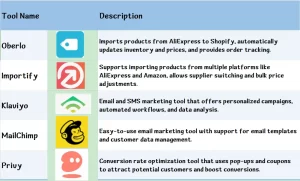
tools

But Shopify isn’t cheap. The basic plan starts at $29/month, and as your store grows, you might pay more, especially if you use third-party payment gateways. Also, if you want very specific designs or functions, Shopify can feel limiting.


WordPress: Flexible and Powerful, but Needs Tech Skills

Wordpress

WordPress, on the other hand, is a powerful option if you want more control. By adding the WooCommerce plugin, you can turn WordPress into a full e-commerce platform. The biggest advantage? Flexibility. You can design your store however you like and customize features such as payment methods or shipping options.
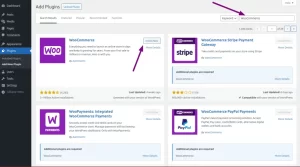
Woocommerce
Searching and showing the WooCommerce plugin via the Add Plugin WordPress screen.

WordPress is open-source, meaning there are endless plugins and resources available. It’s also cheaper—just pay for hosting and a domain, which costs less than Shopify’s monthly fees.

But here’s the catch: WordPress is not beginner-friendly. If you’re not tech-savvy, setting up plugins, payment systems, and optimizing your site can be overwhelming. And when things go wrong, there’s no centralized support. You’ll need to figure it out yourself or rely on online forums.


Who Should Choose Shopify?

Shopify is perfect if you’re new to e-commerce or want to start fast. It’s simple, has everything you need in one place, and their support team is always there to help. You can focus on selling without worrying about technical stuff.


Who Should Choose WordPress?

Go with WordPress if you know a bit about websites or don’t mind learning. It’s highly customizable and great for unique designs or features. Plus, it’s cheaper long-term. If you’re planning to scale and want full control, WordPress is a smart choice.


Which Platform Has Lower Long-Term Costs: Shopify or WordPress?
dropshipping

When comparing Shopify and WordPress, WordPress generally has lower long-term costs, especially if you manage your site efficiently. Here’s why:


WordPress: Lower Long-Term Costs

No Ongoing Subscription Fees
WordPress itself is free. You’ll only pay for hosting (starting around $5–$15/month), a domain (around $10–$20/year), and any plugins or themes you choose to add. Many plugins are free or have affordable one-time fees.

Customizable for Budget
WordPress allows you to scale costs based on your needs. If you’re on a budget, you can use free plugins and themes. As your business grows, you can invest in premium tools without paying a fixed monthly fee.

No Transaction Fees
WordPress doesn’t charge transaction fees unless you use certain payment gateways that have their own fees. You’ll save more as your revenue grows.


Shopify: Higher Costs Over Time

Monthly Subscription Fees
Shopify starts at $29/month and can go up to $299/month for advanced plans. These fees are unavoidable as long as you use the platform.

Transaction Fees
If you use a third-party payment gateway (like PayPal or Stripe), Shopify takes an additional transaction fee (0.5%–2%), which can add up as your sales increase.

App Costs
Many Shopify apps require monthly fees, and these can stack up quickly if you need multiple tools for your store.


Final Advice

If you’re a beginner, Shopify is the way to go—easy, quick, and hassle-free. If you’re more experienced or willing to learn, WordPress gives you more flexibility and control. Either way, pick the one that fits your needs, and take the first step toward building your dropshipping business. Success is waiting for you!

Buttom

DropSure is Your Best Partner
22 Years Experience
Affiliate Rebates
100% Quality Guarantee
Top-Up Rewards
10+ Global Warehouses
Custom Branding Support
Smart inventory System
24/7 Customer Support
Get a Quote in 24 Hours
Start Sourcing for Free

Keep Learning

The dropshipping business model has reshaped global e-commerce by lowering the barrier to entry for entrepreneurs. For years, anyone with an online store and reliable suppliers could sell products worldwide without holding inventory or managing logistics. But the next evolution of dropshipping is already underway. Advances in smart warehousing, artificial intelligence, robotics, and autonomous delivery systems are redefining how products move from manufacturers to customers. What once relied heavily on manual processes, fragmented logistics networks, and long shipping times is rapidly becoming automated, predictive, and data-driven. These changes are not just improving efficiency — they are fundamentally transforming how one-piece fulfillment operates, how online stores compete, and what customers expect from modern e-commerce. In this article, we explore how intelligent warehouses and unmanned delivery technologies are reshaping the future of dropshipping, what opportunities they create, and how sellers can adapt before the industry shifts completely. The Evolution of Dropshipping: From Manual Fulfillment to Intelligent Logistics Traditional dropshipping worked because it separated sales from inventory ownership. A typical process looked like this: A customer places an order online. The seller forwards the order to a supplier. The supplier packages and ships the product directly. The customer receives the item days or weeks later. This model enabled rapid business launches but introduced several limitations: Slow shipping times Limited quality control Inventory uncertainty Poor tracking transparency High dependency on overseas suppliers As e-commerce matured, customer expectations changed dramatically. Fast shipping became standard, real-time tracking became normal, and reliability became a competitive requirement rather than a bonus. The old logistics structure began showing cracks. Smart warehousing emerged as the solution. What Is Smart Warehousing? Smart warehousing refers to storage and fulfillment centers powered by […]

With an 8.5% year-on-year growth, Japan’s e-commerce sector is projected to break through ¥152 trillion in 2024, continuing its dominance as the fastest-growing mature market in Asia. This nation of 120 million high-net-worth consumers is driving unprecedented momentum, fueled by a 94% mobile payment adoption rate and a 28% cross-border e-commerce growth rate—making it a strategic growth engine for global brands. Are you planning to enter the Japanese market, or seeking to understand the platforms Japanese consumers trust most? Mastering the local e-commerce landscape is the first step to success. From generalist platforms to niche verticals, Japan’s ecosystem offers unique opportunities. This article will analyze the top 6 mainstream e-commerce platforms in Japan, helping you decode market trends and seize growth potential. Amazon Japan  ​Platform Website:https://www.amazon.co.jp  Amazon Japan holds a significant position in Japan’s e-commerce market, with an estimated monthly visit count of approximately 601.7 million, highlighting its popularity and substantial market influence. Founded in 1994 by Jeff Bezos in Bellevue, Washington, Amazon began as an online bookstore. Over time, it transformed into a comprehensive shopping platform where consumers can easily purchase a wide variety of products, including books, clothing, food, electronics, and streaming services.  Seller Fee Structure For every transaction that a seller completes, Amazon charges a fee based on a fixed percentage. The sales commission percentage varies depending on the product category. For example, the commission for fashion items may range from 8% to 15%, while consumer electronics typically range between 8% and 15%. If a seller utilizes Amazon’s FBA (Fulfillment by Amazon) service, additional fees will apply. These include storage fees, which are charged for storing products in Amazon’s warehouses and are calculated based on the time period as well as […]

  Successful product selection is rarely accidental. While pricing, supply chains, and marketing execution all matter, the most consistently high-performing products share a deeper commonality: they align with predictable patterns of human psychology. Consumers do not make purchasing decisions purely through logic. Instead, emotions, perceived risk, urgency, and cognitive biases shape behavior long before rational evaluation begins. Among the most powerful psychological forces influencing buying decisions are loss aversion and scarcity perception. Understanding how these principles work — and how to apply them ethically during product selection — allows brands and sellers to identify items naturally positioned for higher conversion, stronger demand momentum, and sustained customer interest. This article explores how behavioral psychology can guide smarter product selection and explains practical frameworks for identifying products that trigger genuine purchasing motivation. Why Psychology Matters More Than Product Features Many sellers focus heavily on specifications: Better materials Lower cost More functions Improved packaging Yet markets repeatedly demonstrate that superior products do not automatically become bestsellers. The difference lies in perceived value rather than objective value. Customers buy when they feel: They might miss an opportunity A problem could worsen without action Availability is limited Others are already benefiting These emotional drivers originate from evolutionary decision-making systems designed to minimize risk and maximize survival advantages. Product selection that aligns with these instincts reduces friction between interest and purchase. Understanding Loss Aversion: The Core Human Bias Loss aversion refers to the psychological tendency for people to feel losses more strongly than equivalent gains. Research consistently shows that losing $100 feels significantly worse than gaining $100 feels good. This imbalance shapes everyday decisions. Consumers are more motivated to avoid negative outcomes than to pursue positive […]

Recommended for you