< Blogs

Pandabuy or Not? Uncover the Truth and Explore Better Options

Vivan Z.
Created on December 9, 2024 – Last updated on February 6, 20257 min read
Written by: Vivan Z.

Are you considering using Pandabuy for your next cross-border shopping spree? With its promise of simplifying purchases from major Chinese e-commerce platforms, Pandabuy has gained attention, especially among international shoppers. But with recent controversies and operational challenges, is it still the best choice? In this article, we’ll dive into what is Pandabuy , the issues it faces, and some great alternatives that might better suit your needs.


What is Pandabuy?
Pandabuy

Pandabuy is a Chinese e-commerce shipping agent platform that specializes in providing shipping services for overseas users who want to purchase products from China. It is widely known for shipping counterfeit luxury goods, including branded clothing and high-priced shoes from companies like Nike.

The platform allows international users to shop on major Chinese e-commerce sites such as Tmall, Taobao, and JD.com, acting as an intermediary to simplify the purchasing process for these products.

Many users, including influencers, frequently showcase and promote counterfeit or replica items (often referred to as “reps”) purchased through Pandabuy on social media platforms like TikTok, Discord, and Reddit, often sharing their “unboxing haul.”

How Does Pandabuy Operate?

Pandabuy’s business model is primarily based on “reverse overseas shopping,” which helps international users purchase products from Chinese e-commerce platforms (such as Taobao, Tmall, and JD) at original prices, and generates profits by providing value-added services. The specific process works as follows:

Order Placement: International users browse and select their desired products on the Pandabuy platform, submitting purchase links or product information to create an order.

Platform Procurement: Pandabuy’s purchasing team buys the corresponding products from Chinese e-commerce platforms based on the user’s order.

Warehousing Service: Once the products are delivered to Pandabuy’s domestic warehouse, the platform provides free warehousing services. Users can choose to combine multiple orders to reduce international shipping costs.

Quality Inspection and Value-Added Services: Pandabuy offers value-added services such as product quality inspection and customized photography to ensure the quality of the products and meet users’ personalized needs.

International Logistics: Users choose the appropriate international shipping method, and Pandabuy is responsible for packaging and sending the products to the user’s country.

Payment and Settlement: The platform supports various international payment methods, allowing users to pay for the product cost, international shipping fees, and any potential value-added service charges.


What Happened to Pandabuy?
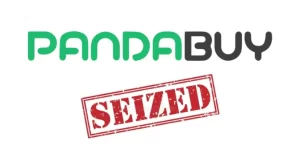
2024 Raid

In April 2024, 16 brands sued Pandabuy, accusing it of being involved in counterfeit sales. Chinese authorities raided its headquarters in Hangzhou and several warehouses. They seized products and started investigating the sellers linked to Pandabuy. Over 200 officials and 50 private investigators participated in the raids. They recovered millions of packages, including counterfeit branded sneakers. According to World Trademark Review, the London City Police began investigating in November 2023, with help from intellectual property organizations, as part of Operation Ashiko. Cantoop, a Chinese intellectual property firm, reported that Pandabuy operates in five cities in China with warehouses the size of nearly 20 football fields.

Pandabuy seized


Is Pandabuy Back?

Pandabuy has not fully resumed operations. Due to recent investigations, most of its services, such as placing orders and processing payments, are temporarily suspended. Users can still browse products but cannot make purchases.

The suspension is linked to issues involving counterfeit goods and regulatory violations. While the platform may restart under a new entity, no clear timeline for resumption has been provided, leaving its future uncertain.


Alternative options to Pandabuy


Dropship model
Sourced Oberlo


The question “Is Pandabuy back?” is still up in the air, but that doesn’t mean we can’t check out other great platforms. Instead of waiting and wondering, why not take this chance to explore some reliable cross-border shopping and dropshipping options that offer convenient services and plenty of products?

If you’re looking for alternatives to Pandabuy, here are a few great platforms to try:


1. CJ Dropshipping

 

CJ Dropshipping


Pros
:

● Offers a one-stop service, including sourcing, warehousing, packaging, and shipping.
● Wide range of flexible product categories across multiple industries.
● Supports global shipping with broad coverage.
● Seamless integration with Shopify, WooCommerce, and other platforms.
● Provides branding customization services (e.g., packaging and product labeling).

Cons:

● Shipping times can vary greatly depending on the destination.
● Best suited for bulk orders; fees for small orders can be higher.
● The interface and operations may require some time to learn.
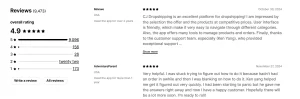
CJ


2. Oberlo (via Shopify)


Oberlo 3

Pros:

● Designed specifically for Shopify, making integration easy and user-friendly.
● Wide supplier network covering global markets.
● Automates product imports and order processing, saving time.
● Simple to use, ideal for beginner sellers.

Cons:

● Only works with Shopify; not compatible with other platforms.
● Heavily reliant on AliExpress suppliers, which may have inconsistent quality.
● Long shipping times can lead to extended customer wait times.
● Combined with Shopify’s monthly fees, overall costs can add up.


3. AliDropship
AliDropship


Pros
:

● Extensive product range from AliExpress suppliers.
● One-time payment, no monthly fees, suitable for budget-conscious sellers.
● Offers automated order management features.
● Supports self-hosted e-commerce websites, giving sellers full control.
● Provides additional services like website development and marketing support.

Cons:

● AliExpress products often vary in quality, requiring careful supplier selection.
● Shipping times can be long, impacting customer satisfaction.

AliDroship 2


4. Spocket

Spocket


Pros
:

● Features suppliers from around the world, focusing on US and European suppliers.
● Faster shipping times compared to platforms relying on Asian suppliers.
● High-quality product selection, often curated.
● Seamless integration with Shopify, WooCommerce, and other platforms.

Cons:

● Limited product categories compared to other platforms like CJ Dropshipping or AliExpress.
● Higher product costs, particularly for premium items.
●Shipping costs may vary significantly based on supplier location.

Spocket 2


5. DropSure


DropSure


Pros
:

● Offers global shopping and dropshipping services.

● Helps sellers source products from China and ship them worldwide.

● Flexible solutions for product selection, logistics, and automation.

● Suitable for scaling cross-border e-commerce businesses.

Cons:

● Still growing as a platform; supplier and product variety may not be as extensive as larger platforms.
● Limited integrations compared to platforms like CJ Dropshipping or Spocket.
● May require sellers to handle additional logistics coordination.

DropSure 3


Pandabuy once stood out as a convenient gateway to Chinese products for global shoppers, but its current operational uncertainties make it less reliable. While the platform may return in the future, exploring alternatives ensures you can still access what you need without unnecessary delays or risks. Whether you’re looking for seamless logistics, better pricing, or secure transactions, there are plenty of other options to consider. Ultimately, the right choice depends on your priorities—but staying informed is always the first step.


 

Blog Buttom

DropSure is Your Best Partner
22 Years Experience
Affiliate Rebates
100% Quality Guarantee
Top-Up Rewards
10+ Global Warehouses
Custom Branding Support
Smart inventory System
24/7 Customer Support
Get a Quote in 24 Hours
Start Sourcing for Free

Keep Learning

For many cross-border e-commerce and dropshipping sellers, AliExpress may be the main supplier channel during the entry stage. However, as business grows, the platform’s shortcomings gradually become apparent — long shipping times, slow customer service response, and inconsistent product quality. In today’s fiercely competitive environment with rising customer expectations, these issues can no longer meet operational needs. Especially with the increasing popularity of emerging platforms like TikTok and TEMU, logistics efficiency and service experience have become critical factors affecting repeat purchases and brand reputation. Continuing to rely on AliExpress not only fails to guarantee customer satisfaction but also seriously limits brand development. Therefore, choosing more efficient, stable, and one-piece dropshipping-supported professional domestic suppliers has become a consensus among more and more sellers. This article will introduce several domestic dropshipping platforms worth your attention, helping you achieve a better balance between efficiency, quality, and customer experience. What Problems Does AliExpress Actually Have? AliExpress is essentially a retail platform targeting C-end consumers, not specifically designed for dropshipping scenarios. Although it has certain advantages in product variety and pricing, as market competition intensifies, its drawbacks have gradually surfaced. It is especially unsuitable for sellers aiming for long-term brand building and operation. Below are the most common problems sellers face and their direct impacts: Problem Impact Long shipping times (often over 7 days) Customers wait too long, leading to order cancellations or negative reviews High shipping costs Profit margins get squeezed, limiting marketing and ad budgets Severe hijacking and unstable links Pages just launched get delisted or copied by competitors first Lack of professional customer service and after-sales support Customer issues can’t be resolved timely, store ratings drop, affecting ranking Unstable product quality control […]

In the fierce competition of cross-border e-commerce, Temu and Amazon represent two distinct business models: Temu uses “ultra-low prices” as its weapon, relying on China’s supply chain resources and Pinduoduo’s traffic support to attract price-sensitive users, focusing on “dirt-cheap” small commodities and fast fashion; Amazon focuses on “quality and efficiency,” with a strict quality control system, global logistics network, and Prime membership ecosystem, catering to consumers across all income levels, especially meeting the long-term value needs of middle and high-income groups. The competition between the two is not just about price wars but also about the essence of consumer demand—choosing between “low-price fast consumption” or “quality assurance + efficient service.” This article will conduct an in-depth comparison from three dimensions: pricing strategy, quality control, and shipping and logistics, revealing their core differences and providing consumers with clear decision-making references. Price Temu Temu has ultimate low price.For example, a T-shirt on Temu might only cost 10 yuan or even lower. It sources directly from Chinese factories, eliminating the middlemen to earn the difference, and also uses platform subsidies to spend money, all to attract users. But the problem is, in order to reduce costs, the clothes might be made of cheap fabric, which pills and unravels after just a few wears. Temu directly connects with factories in Yiwu and Guangzhou, cutting out the middlemen, and with Pinduoduo’s money for subsidies, that’s why the prices can be so low. But the problems are: slow logistics (it may take more than 20 days to receive goods), and the packaging is also simple, making it easy for things to break; Some products may be sold at a loss, relying on attracting new users and […]

Introduction: When Automation Meets Entrepreneurship Dropshipping has long been the favorite business model for entrepreneurs seeking freedom and scalability without the burden of inventory. But in the last few years, the game has changed dramatically. Artificial Intelligence (AI) has stepped onto the scene — not as a gimmick or passing trend, but as a full-scale business revolution. From automated product discovery to intelligent ad targeting, AI has transformed what was once guesswork into a data-driven science. The new reality is clear: the dropshippers who embrace AI are the ones who thrive. In this comprehensive guide, we’ll explore how AI is reshaping every stage of the dropshipping business — from niche selection and supplier vetting to pricing, marketing, customer service, and even predicting future market trends. Chapter 1: AI and the New Age of E-commerce AI’s rise in e-commerce is part of a broader technological shift. Platforms like Shopify, WooCommerce, and AliExpress now integrate directly with AI-powered tools that make business decisions smarter, faster, and more precise. AI isn’t just automating tasks — it’s augmenting intelligence. It helps entrepreneurs work less but achieve more, relying on deep learning and predictive analytics to find hidden patterns in consumer behavior. Let’s look at some of the key areas where AI has already proven to be a game-changer for online sellers. Chapter 2: Product Research — The End of Guesswork 2.1 Traditional Product Hunting vs. AI Product Discovery In the old days, dropshippers spent hours scrolling through AliExpress, TikTok, or product research tools, hoping to stumble upon the next viral item. That method was hit or miss — mostly miss. Today, AI-powered platforms like Niche Scraper, Dropship.io, and Ecomhunt AI use machine learning to […]

Recommended for you